



3 months 1 week ago
Nicias, do you think you can erase with good deeds the wrongs you committed against your mother? What good deed will ever reach her? Her soul is a scorching noon time, without a single breath of a breeze, nothing moves, nothing changes, nothing lives there; a great emaciated sun, an immobile sun eternally consumes her.
▼
Source
source
King Aegistheus, Act 2
2 months 4 weeks ago
We do not have to make self- sacrifice a necessary element of altruism. We can regard people as altruists because of the kind of interests they have rather than because they are sacrificing their interests.
▼
Source
source
Chapter 9: Altruism and Happiness (p. 103)
1 month 4 days ago
The second requirement of a virus-friendly environment - that it should obey a program of coded instructions - is again only quantitatively less true for brains than for cells or computers. We sometimes obey orders from one another, but also we sometimes don't. Nevertheless, it is a telling fact that, the world over, the vast majority of children follow the religion of their parents rather than any of the other available religions. Instructions to genuflect, to bow towards Mecca, to nod one's head rhythmically towards the wall, to shake like a maniac, to "speak in tongues" - the list of such arbitrary and pointless motor patterns offered by religion alone is extensive - are obeyed, if not slavishly, at least with some reasonably high statistical probability.
3 months 1 week ago
The hazards of the generalized prisoner's dilemma are removed by the match between the right and the good.
▼
Source
source
Chapter IX, Section 86, p. 577

3 months 2 weeks ago
But the exceedingly foul deed of Onan, the basest of wretches, follows. Onan must have been a malicious and incorrigible scoundrel. This is a most disgraceful sin. It is far more atrocious than incest and adultery. We call it unchastity, yes a Sodomitic sin. For Onan goes in to her; that is, he lies with her and copulates, and when it comes to the point of insemination, spills the semen, lest the woman conceive. Surely at such a time the order of nature established by God in procreation should be followed. Accordingly, it was a most disgraceful crime to produce semen and excite the woman, and to frustrate her at that very moment.
▼
Source
source
Luther's works Vol. 7 (1965), Lectures on Genesis, Chapters 38-44

2 months 1 day ago
Who is my mother? and who are my brethren? And he stretched forth his hand toward his disciples, and said, Behold my mother and my brethren! For whosoever shall do the will of my Father which is in heaven, the same is my brother, and sister, and mother.
▼
Source
source
12:48-50 (KJV)

2 months 4 days ago
Whenever I happen to be in a city of any size, I marvel that riots do not break out everyday: Massacres, unspeakable carnage, a doomsday chaos. How can so many human beings coexist in a space so confined without hating each other to death?
3 months 4 weeks ago
When your father is alive, observe his will. When your father is dead observe his former actions. If, for three years after the death of your father you do not change from the ways of your father, you can be called a 'real son'.
2 months 4 weeks ago
It is now generally accepted that the roots of our ethics lie in patterns of behavior that evolved among our pre-human ancestors, the social mammals and that we retain within our biological nature elements of these evolved responses. We have learned considerably more about these responses, and we are beginning to to understand how they interact with our capacity to reason.
▼
Source
source
Preface To The 2011 edition, p. xi
1 month 4 weeks ago
Spinoza, for example, thought that insight into the essence of reality, into the harmonious structure of the eternal universe, necessarily awakens love for this universe. For him, ethical conduct is entirely determined by such insight into nature, just as our devotion to a person may be determined by insight into his greatness or genius. Fears and petty passions, alien to the great love of the universe, which is logos itself, will vanish, according to Spinoza, once our understanding of reality is deep enough.
▼
Source
source
p. 14.
4 months 1 week ago
All men by nature desire to know. An indication of this is the delight we take in our senses; for even apart from their usefulness they are loved for themselves; and above all others the sense of sight. For not only with a view to action, but even when we are not going to do anything, we prefer sight to almost everything else. The reason is that this, most of all the senses, makes us know and brings to light many differences between things.

2 months 1 week ago
Do a man dirt, yourself you hurt.
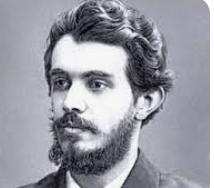
1 month 3 weeks ago
Ethics occupies a central place in philosophy because it is concerned with sin, with the origin of good and evil and with moral valuations. And since these problems have a universal significance, the sphere of ethics is wider than is generally supposed. It deals with meaning and value and its province is the world in which the distinction between good and evil is drawn, evaluations are made and meaning is sought.
▼
Source
source
The Destiny of Man (1931), p. 15
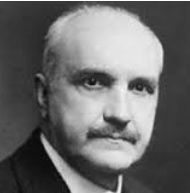
2 months 1 day ago
Even the most inspired verse, which boasts not without a relative justification to be immortal, becomes in the course of ages a scarcely legible hieroglyphic; the language it was written in dies, a learned education and an imaginative effort are requisite to catch even a vestige of its original force. Nothing is so irrevocable as mind.
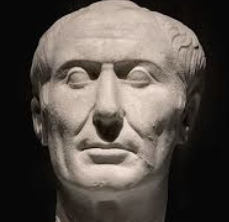
1 month 6 days ago
Every one excels in something in which another fails.
▼
Source
source
Maxim 17
3 months 1 week ago
Yet it seems extraordinary that the justice of increasing the expectations of the better placed by a billion dollars, say, should turn on whether the prospects of the least favored increase or decrease by a penny.
▼
Source
source
Chapter III, Section 26, pg. 157
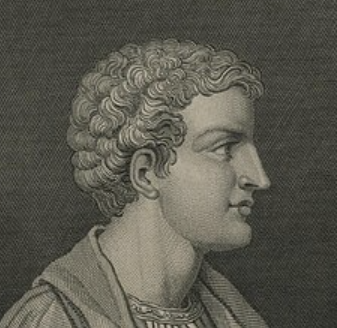
2 months 4 weeks ago
He who has begun has half done. Dare to be wise; begin!
▼
Source
source
Book I, epistle ii, lines 40-41
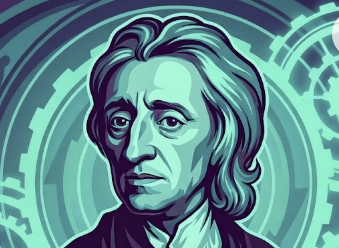
3 months 1 week ago
The good King of France desires only that you would take his word and let him be quiet till he has got the West Indies into his hands and his grandson well established in Spain, and then you may be sure you shall be as safe as he will let you be in your religion, property and trade, to all which who can be such an infidel as not to believe him a great friend?
▼
Source
source
Letter to Peter King (5 April 1701), quoted in Maurice Cranston, John Locke: A Biography (1957; 1985), p. 452
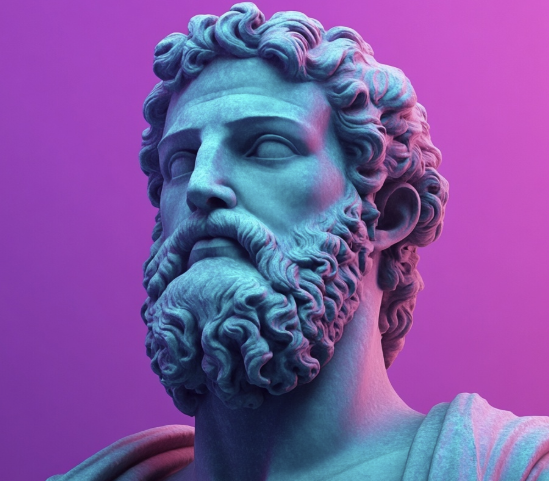
3 months 3 weeks ago
Don't you know that a good and excellent person does nothing for the sake of appearances, but only for the sake of having acted right?
▼
Source
source
Book III, ch. 24, 50.

2 months 4 weeks ago
Men have made an idol of luck as an excuse for their own thoughtlessness. Luck seldom measures swords with wisdom. Most things in life quick wit and sharp vision can set right.

3 months 1 week ago
Money is always to be found when men are to be sent to the frontiers to be destroyed: when the object is to preserve them, it is no longer so.
▼
Source
source
"Charity", 1770
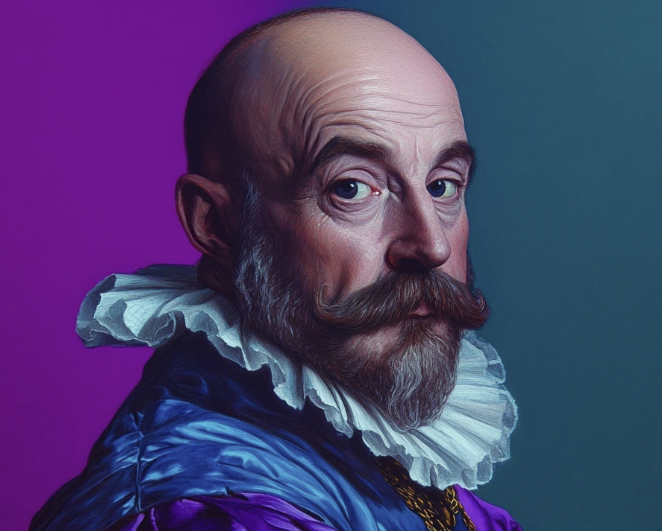
3 months 2 weeks ago
Of all our infirmities, the most savage is to despise our being.
▼
Source
source
Book III, Ch. 13 Variant: Of all the infirmities we have, 'tis the most savage to despise our being. (Charles Cotton translation)

2 months 1 week ago
Justice is itself the great standing policy of civil society; and any eminent departure from it, under any circumstances, lies under the suspicion of being no policy at all.
2 months 1 week ago
But as to our country and our race, as long as the well compacted structure of our church and state, the sanctuary, the holy of holies of that ancient law, defended by reverence, defended by power, a fortress at once and a temple, shall stand inviolate on the brow of the British Sion-as long as the British Monarchy, not more limited than fenced by the orders of the State, shall, like the proud Keep of Windsor, rising in the majesty of proportion, and girt with the double belt of its kindred and coeval towers, as long as this awful structure shall oversee and guard the subjected land-so long as the mounds and dykes of the low, fat, Bedford level will have nothing to fear from all the pickaxes of all the levellers of France.
▼
Source
source
pp. 52-53
3 months 2 weeks ago
A man may be humble through vainglory.
▼
Source
source
Ch. 17
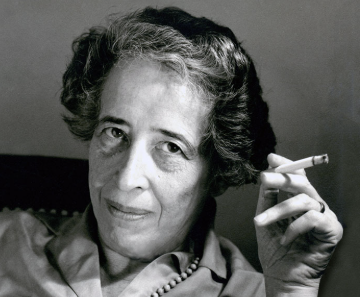
3 months 1 week ago
In politics, love is a stranger, and when it intrudes upon it nothing is being achieved except hypocrisy. All the characteristics you stress in the Negro people: their beauty, their capacity for joy, their warmth, and their humanity, are well-known characteristics of all oppressed people. They grow out of suffering and they are the proudest possession of all pariahs. Unfortunately, they have never survived the hour of liberation by even five minutes. Hatred and love belong together, and they are both destructive; you can afford them only in private and, as a people, only so long as you are not free.
▼
Source
source
Letter to James Baldwin

3 months 1 week ago
It is a waste of energy to be angry with a man who behaves badly, just as it is to be angry with a car that won't go. The difference is that you can compel your car to go to a garage, but you cannot compel Hitler to go to a psychiatrist.
▼
Source
source
A Fresh Look at Empiricism: 1927-42 (1996), p. 544
3 months 1 week ago
Properly understood, then, the desire to act justly derives in part from the desire to express most fully what we are or can be, namely free and equal rational beings with the liberty to choose.
▼
Source
source
Chapter IV, Section 40, p. 256

3 months 3 days ago
Between the fine point of the brush and the steely gaze, the scene is about to yield up its volume.
▼
Source
source
Las Meninas
3 months 3 weeks ago
To wisdom belongs the intellectual apprehension of things eternal; to knowledge, the rational apprehension of things temporal.
▼
Source
source
As quoted in The Anchor Book of Latin Quotations: with English translations (1990) by Norbert Guterman, p. 375

2 months 1 day ago
In the form of the oeuvre, the actual circumstances are placed in another dimension where the given reality shows itself as that which it is. Thus it tells the truth about itself; its language ceases to be that of deception, ignorance, and submission. Fiction calls the facts by their name and their reign collapses; fiction subverts everyday experience and shows it to be mutilated and false.
▼
Source
source
p. 62

1 month 3 weeks ago
Whenever a man talks he lies, and so far as he talks to himself - that is to say, so far as he thinks, knowing that he thinks - he lies to himself. The only truth in human life is that which is physiological. Speech - this thing that they call a social product - was made for lying.
▼
Source
source
Niebla [Mist]
2 months 1 day ago
Although a poem be not made by counting of syllables upon the fingers, yet "numbers" is the most poetical synonym we have for verse, and "measure" the most significant equivalent for beauty, for goodness, and perhaps even for truth. Those early and profound philosophers, the followers of Pythagoras, saw the essence of all things in number, and it was by weight, measure, and number, as we read in the Bible, that the Creator first brought Nature out of the void.
▼
Source
source
Interpretations of Poetry and Religion (1900), p. 251
1 month 1 week ago
An arrogant person considers himself perfect. This is the chief harm of arrogance. It interferes with a person's main task in life-becoming a better person.
▼
Source
source
p. 110
1 month 3 weeks ago
Fate and freedom alike play a part in history; and there are times, as in wars and revolutions, when fate is the stronger of the two. Freedom - the freedom of man and of nations - could never have been the origin of two world wars. These latter were brought about by fate, which exercises its power owing to the weakness and decline of freedom and of the creative spirit of man. Almost all contemporary political ideologies, with their characteristic tendency to state-idolatry, are likewise largely a product of two world wars, begotten as they are of the inexorability's of fate.
▼
Source
source
p. 32
3 months 1 week ago
As a rule we disbelieve all the facts and theories for which we have no use.
▼
Source
source
"The Will to Believe" p. 10
2 months 1 week ago
It is better to be unhappy and know the worst, than to be happy in a fool's paradise!
▼
Source
source
Part 4, Chapter 5
3 months 1 week ago
Separate an individual from society, and give him an island or a continent to possess, and he cannot acquire personal property. He cannot be rich. So inseparably are the means connected with the end, in all cases, that where the former do not exist the latter cannot be obtained. All accumulation, therefore, of personal property, beyond what a man's own hands produce, is derived to him by living in society; and he owes on every principle of justice, of gratitude, and of civilization, a part of that accumulation back again to society from whence the whole came.
▼
Source
source
Means by Which the Fund Is to Be Created
3 months 1 week ago
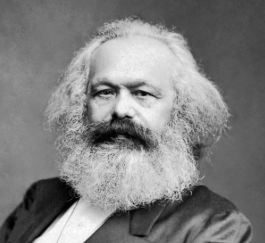
Religious suffering is, at one and the same time, the expression of real suffering and a protest against real suffering. Religion is the sigh of the oppressed creature, the heart of a heartless world, and the soul of soulless conditions. It is the opium of the people.The abolition of religion as the illusory happiness of the people is the demand for their real happiness. To call on them to give up their illusions about their condition is to call on them to give up a condition that requires illusions. The criticism of religion is, therefore, in embryo, the criticism of that vale of tears of which religion is the halo.Criticism has plucked the imaginary flowers on the chain not in order that man shall continue to bear that chain without fantasy or consolation, but so that he shall throw off the chain and pluck the living flower.
1 month 2 weeks ago
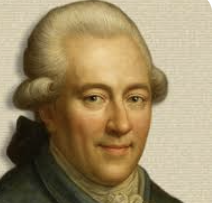
It is a question whether, when we break a murderer on the wheel, we do not fall into the error a child makes when it hits the chair it has bumped into.
▼
Source
source
J 146
3 months 3 weeks ago
And these were the dishes wherein to me, hunger-starven for thee, they served up the sun and the moon.
▼
Source
source
III, 6
3 weeks ago
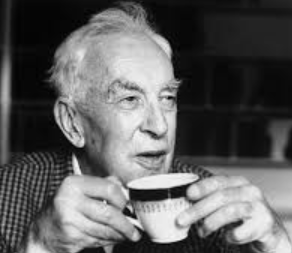
Civilizations die from suicide, not by murder.
▼
Source
source
In Mark Steyn, "It's the Demography, Stupid!", Opinion Journal, WSJ (2006).
2 months 1 week ago
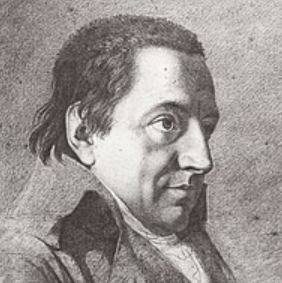
Since it cannot be overlooked by the Doctrine of Knowledge that Actual Knowledge does by no means present itself as a Unity, such as is assumed above but as a multiplicity, there is consequently a second task imposed upon it, - that of setting forth the ground of this apparent Multiplicity. It is of course understood that this ground is not to be derived from any outward source, but must be shown to be contained in the essential Nature of Knowledge itself as such; - and that therefore this problem, although apparently two-fold, is yet but one and the same, - namely, to set forth the essential Nature of Knowledge.
2 months 1 day ago
And, being assembled together with them, commanded them that they should not depart from Jerusalem, but wait for the promise of the Father, which, saith he, ye have heard of me. For John truly baptized with water; but ye shall be baptized with the Holy Ghost not many days hence.
▼
Source
source
1:4-5 (KJV)
2 days ago
If... it be supposed that another way of measuring time is adopted... enunciation of the law would be... translated into another language... much less simple. So that the definition implicitly adopted by the astronomers may be summed up..: Time should be so defined that the equations of mechanics may be as simple as possible... [i.e.,] there is not one way of measuring time more true... only more convenient.
2 months 3 weeks ago
Cato the elder wondered how that city was preserved wherein a fish was sold for more than an ox.
▼
Source
source
Cato the Elder
1 month 1 week ago
Nonviolence does not make sense without a commitment to equality. The reason why nonviolence requires a commitment to equality can best be understood by considering that in this world some lives are more clearly valued than others, and that this inequality implies that certain lives will be more tenaciously defended than others. If one opposes the violence done to human lives-or, indeed, to other living beings-this presumes that it is because those lives are valuable. Our opposition affirms those lives as valuable. If they were to be lost as a result of violence, that loss would be registered as a loss only because those lives were affirmed as having a living value, and that, in turn, means we regard those lives as worthy of grief.
▼
Source
source
p. 28
2 weeks 4 days ago
There is no disease so destructive as lust.
CivilSimian.com created by AxiomaticPanic, CivilSimian, Kalokagathia