


5 months 1 week ago
If self-knowledge does not lead to knowing oneself before God - well, then there is something to what purely human self-observation says, namely, this self-knowledge leads to a certain emptiness that produces dizziness. Only by being before God can one totally come to oneself in the transparency of soberness.
1 month 2 weeks ago
The serpent, the king, the tiger, the stinging wasp, the small child, the dog owned by other people, and the fool: these seven ought not to be awakened from sleep.

3 months 1 week ago
There is not a Musselman alive who would not imagine that he was performing an action pleasing to God and his Holy Prophet by exterminating every Christian on earth, while the Christians are scarcely more tolerant on their side.

4 months 1 week ago
Natural science is throughout either a pure or an applied doctrine of motion.
▼
Source
source
Preface, Tr. Bax, 1883

4 months 6 days ago
And now, at half-past ten o'clock, I hear the cockerels crow in Hubbard's barns, and morning is already anticipated. It is the feathered, wakeful thought in us that anticipates the following day.
▼
Source
source
July 11, 1851

3 months 2 days ago
We do not rush toward death, we flee the catastrophe of birth, survivors struggling to forget it. Fear of death is merely the projection into the future of a fear which dates back to our first moment of life. We are reluctant, of course, to treat birth as a scourge: has it not been inculcated as the sovereign good - have we not been told that the worst came at the end, not at the outset of our lives? Yet evil, the real evil, is behind, not ahead of us. What escaped Jesus did not escape Buddha: "If three things did not exist in the world, O disciples, the Perfect One would not appear in the world. ..." And ahead of old age and death he places the fact of birth, source of every infirmity, every disaster.

5 months 1 week ago
One will rarely err if extreme actions be ascribed to vanity, ordinary actions to habit, and mean actions to fear.
5 days ago
It is impossible to read the works of the economists who since the time of Smith have endeavored to build up and elucidate the science of political economy without seeing how, over and over again, they stumble over the law of wages without once recognizing it. Yet, "if it were a dog it would bite them!" Indeed, it is difficult to resist the impression that some of them really saw this law of wages, but, fearful of the practical conclusions to which it would lead, preferred to ignore and cover it up, rather than use it as the key to problems which without it are so perplexing. A great truth to an age which has rejected and trampled on it, is not a word of peace, but a sword!
1 month 2 weeks ago
Lost time was like a run in a stocking. It always got worse.
▼
Source
source
The Steep Ascent
3 months 2 days ago
We had nothing to say to one another, and while I was manufacturing my phrases I felt that earth was falling through space and that I was falling with it at a speed that made me dizzy.

3 months 1 week ago
I could be content that we might procreate like trees, without conjunction, or that there were any way to perpetuate the world without this trivial and vulgar act of coition; It is the foolishest act a wise man commits in all his life, nor is there anything that will more deject his cooled imagination, when he shall consider what an odd and unworthy piece of folly he hath committed.
▼
Source
source
Section 9

4 months 2 weeks ago
What once sprung from earth sinks back into the earth.
▼
Source
source
Book II, lines 999-1000 (tr. Bailey)

4 months 1 week ago
He is happy, whose circumstances suit his temper; but he is more excellent, who can suit his temper to any circumstances.
▼
Source
source
§ 6.9 : Of Qualities Useful to Ourselves, Pt. 1

3 weeks ago
I shall never be ashamed of citing a bad author if the line is good.
▼
Source
source
Alternate translation: I shall never be ashamed to go to a bad author for a good quotation. Chapter 11, Section 8

2 months 2 weeks ago
Why is it so hard to keep the mind concentrated, and to live up to our good resolutions? The problem is the basically mechanical nature of our left-brain consciousness. We have a kind of robot servant who does things for us: we learn to type or drive a car, painfully and consciously, then our robot takes over, and does it far more quickly and efficiently. Because man is the most complex creature on Earth, he is forced to rely on his robot far more than other animals. The result is that, whenever he gets tired, the robot takes over. For the modern city dweller, most of his everyday living is done by the robot. This is why it takes an emergency to concentrate the mind 'wonderfully', and why we forget so quickly.
▼
Source
source
p. 344
6 days ago
I have often thought that nothing would do more extensive good at small expense than the establishment of a small circulating library in every county, to consist of a few well-chosen books, to be lent to the people of the country under regulations as would secure their safe return in due time.
▼
Source
source
Letter to John Wyche
2 weeks ago
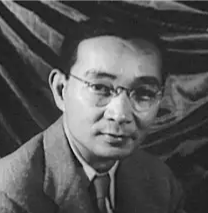
If the early Chinese people had any chivalry, it was manifested not toward women and children, but toward old people. That feeling of chivalry found clear expression in Mencius in some such saying as, "The people with gray hair should not be seen carrying burdens on the street," which was expressed as the final goal of good government.
▼
Source
source
p. 193
5 months 1 week ago
The person who is going to preach ought to live in the Christian thoughts and ideas: they ought to be his daily life. If so, this is the view of Christianity, then you, too, will have eloquence enough and precisely that which is needed when you speak extemporaneously without specific preparation. However, it is fallacious eloquence if someone, without otherwise occupying himself with, without living in these thoughts, once in a while sits down and laboriously collects such thoughts, perhaps in the field of literature, and then works them into a well-composed discourse, which is then committed to memory and delivered superbly, with respect both to voice and diction and gestures.
5 months 1 week ago
The man who does not wish to belong to the mass needs only to cease taking himself easily; let him follow his conscience, which calls to him: Be your self! All you are now doing, thinking, desiring, is not you yourself.
2 weeks 3 days ago
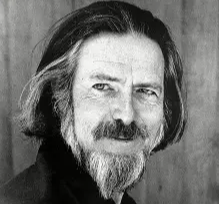
Over the years it has become my firm opinion that sexual activity (even if only through masturbation) is "requisite and necessary, as well for the body as for the soul"; for men and women alike. It stimulates your glands, exercises your pelvis, thrills your nerves, brings mind and body together as one, and culminates in an ecstasy in which there is neither past nor future nor separation between self and other. We need that as we need vitamins, proteins, water, and air.
▼
Source
source
p. 122
3 months 2 days ago
Anyone can escape into sleep, we are all geniuses when we dream, the butcher's the poet's equal there.
4 months 1 week ago
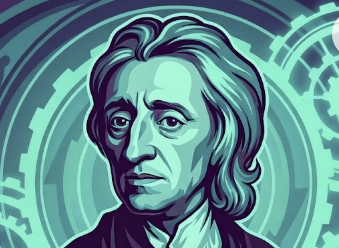
A father would do well, as his son grows up, and is capable of it, to talk familiarly with him; nay, ask his advice, and consult with him about those things wherein he has any knowledge or understanding. By this, the father will gain two things, both of great moment. The sooner you treat him as a man, the sooner he will begin to be one; and if you admit him into serious discourses sometimes with you, you will insensibly raise his mind above the usual amusements of youth, and those trifling occupations which it is commonly wasted in. For it is easy to observe, that many young men continue longer in thought and conversation of school-boys than otherwise they would, because their parents keep them at that distance, and in that low rank, by all their carriage to them.
▼
Source
source
Sec. 95
4 weeks ago
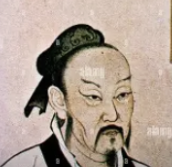
If you let people follow their feelings, they will be able to do good. This is what is meant by saying that human nature is good.
▼
Source
source
Book 6, pt. 1, v. 6

4 months 1 week ago
Why has the Revolution of France been stained with crimes, which the Revolution of the United States of America was not? Men are physically the same in all countries; it is education that makes them different. Accustom a people to believe that priests or any other class of men can forgive sins, and you will have sins in abundance.
▼
Source
source
Worship and Church Bells, 1797
3 months 3 days ago
Independence I have long considered as the grand blessing of life, the basis of every virtue; and independence I will ever secure by contracting my wants, though I were to live on a barren heath.
▼
Source
source
Dedication

4 months 1 week ago
Religion may be purified. This great work was begun two hundred years ago: but men can only bear light to come in upon them by degrees.
▼
Source
source
The critical review, or annals of literature, Volume XXVI, by A Society of Gentlemen (1768) p. 450
1 month 4 weeks ago
This "knowing what to do"... is a matter of having the right purpose, the purpose appropriate to the situation in hand... The one who "knows what to do" is the one on whom you can rely to make the best shot at success, whenever success is possible.
▼
Source
source
"Knowledge and Feeling" (p. 35)

3 months 2 days ago
Few persons care to study logic, because everybody conceives himself to be proficient enough in the art of reasoning already. But I observe that this satisfaction is limited to one's own ratiocination and does not extend to that of other men. We come to the full possession of our power of drawing inferences the last of all our faculties, for it is not so much a natural gift as a long and difficult art.
▼
Source
source
Illustrations of the Logic of Science First Paper - The Fixation of Belief", in Popular Science Monthly, Vol. 12
6 days ago
The wife of my God is matter; they wrestle with each other, they laugh and weep, they cry out in the nuptial bed of flesh. They spawn and are dismembered. They fill sea, land, and air with species of plants, animals, men, and spirits. This primordial pair embraces, is dismembered, and multiplies in every living creature. All the concentrated agony of the Universe bursts out in every living thing. God is imperiled in the sweet ecstasy and bitterness of flesh. But he shakes himself free, he leaps out of brains and loins, then clings to new brains and new loins until the struggle for liberation again breaks out from the beginning.

4 months 6 days ago
None believeth in the soul of man, but only in some man or person old and departed.
▼
Source
source
p. 25

4 months 6 days ago
England, it is true, in causing a social revolution in Hindostan, was actuated only by the vilest interests, and was stupid in her manner of enforcing them. But that is not the question. The question is, can mankind fulfil its destiny without a fundamental revolution in the social state of Asia? If not, whatever may have been the crimes of England she was the unconscious tool of history in bringing about that revolution.
▼
Source
source
"The British Rule in India," New York Daily Tribune, 10 June 1853.


3 months 6 days ago
It was not delight, not wonder that arose among us, it was the peace of heaven. A thousand times have I said it to her and to myself: the most beautiful is also the most sacred. And such was everything in her. Like her singing, even so was her life.

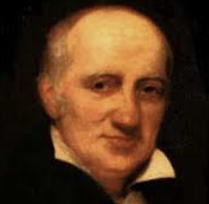
3 months 3 days ago
The man that does not know himself not to be at the mercy of other men, that does not feel that he is invulnerable to all the vicissitudes of fortune, is incapable of a constant and inflexible virtue.
▼
Source
source
Book V, "Of Education"

5 months 3 days ago
Neither perception nor true opinion, nor reason or explanation combined with true opinion could be knowledge. Then our art of midwifery declare to us that all the offspring that have been born are mere wind-eggs and not worth rearing and if you remain barren, you will be less harsh and gentler to your associates, for you will have the wisdom not to think you know that which you do not know.
4 months 1 week ago
Even in those cities which seem to enjoy the blessings of peace, and where the arts florish, the inhabitants are devoured by envy, cares and anxieties, which are greater plagues than any experienced in a town when it is under siege.
4 months 6 days ago
In some lyceums they tell me that they have voted to exclude the subject of religion. But how do I know what their religion is, and when I am near to or far from it? I have walked into such an arena and done my best to make a clean breast of what religion I have experienced, and the audience never suspected what I was about.
▼
Source
source
p. 490
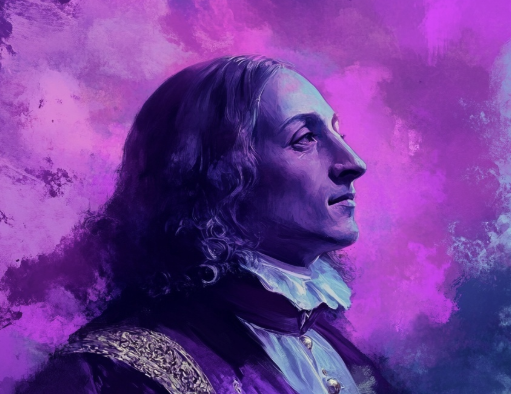
4 months 2 weeks ago
These five rules [above] form all that is necessary to render proofs convincing, immutable, and to say all, geometrical; and the eight rules together render them even more perfect.

3 weeks 6 days ago
By awakening the Heroic that slumbers in every heart, can any Religion gain followers.
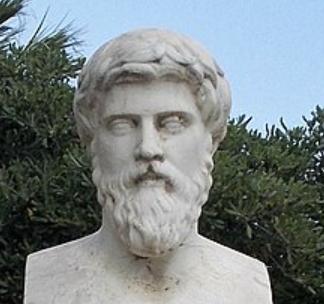
3 months 3 weeks ago
After the battle in Pharsalia, when Pompey was fled, one Nonius said they had seven eagles left still, and advised to try what they would do. "Your advice," said Cicero, "were good if we were to fight jackdaws."
▼
Source
source
Cicero

4 months 1 week ago
Knowledge is not so precise a concept as is commonly thought. Instead of saying "I know this," we ought to say "I more or less know something more or less like this." It is true that this proviso is hardly necessary as regards the multiplication table, but knowledge in practical affairs has not the certainty or the precision of arithmetic. Suppose I say "democracy is a good thing": I must admit, first, that I am less sure of this than I am that two and two are four, and secondly, that "democracy" is a somewhat vague term which I cannot define precisely. We ought to say, therefore: "I am fairly certain that it is a good thing if a government has something of the characteristics that are common to the British and American Constitutions," or something of this sort. And one of the aims of education ought to be to make such a statement more effective from a platform than the usual type of political slogan.
4 months 6 days ago
Do not be too timid and squeamish about your actions. All life is an experiment. The more experiments you make the better.
▼
Source
source
November 11, 1842
3 months 2 days ago
A distant enemy is always preferable to one at the gate.

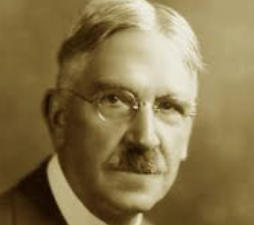
2 months 3 weeks ago
The application of scientific formulations of the principle of probability statistically determined is thus a logical corollary of the principle already stated, that the subject matter of scientific findings is relational, not individual. It is for this reason that it is safe to predict the ultimate triumph of the statistical doctrine.
3 months 2 days ago
When you know quite absolutely that everything is unreal, you then cannot see why you should take the trouble to prove it.

5 months 2 days ago
He kept the middle way, that's all: he was the type of man for whom one has an affection of the mild but steady order - which is the kind that wears best.

3 months 6 days ago
I have been baptised and educated in the Church of England; and have seen no cause to abandon that communion. ... I think that Church harmonises with our civil constitution, with the frame and fashion of our Society, and with the general Temper of the people. I think it is better calculated, all circumstances considered, for keeping peace amongst the different sects, and of affording to them a reasonable protection, than any other System. Being something in a middle, it is better disposed to moderate.
▼
Source
source
Letter to an unknown correspondent (26 January 1791), quoted in Alfred Cobban and Robert A. Smith (eds.), The Correspondence of Edmund Burke, Volume VI: July 1789-December 1791 (1967), p. 215
2 months 2 weeks ago
Exploitation and manipulation produce boredom and triviality; they cripple man, and all factors that make man into a psychic cripple turn him also into a sadist or a destroyer. This position will be characterized by some as "overoptimistic," "utopian," or "unrealistic." In order to appreciate the merits of such criticism a discussion of the ambiguity of hope and the nature of optimism and pessimism seems called for.
▼
Source
source
p. 483
CivilSimian.com created by AxiomaticPanic, CivilSimian, Kalokagathia