


2 months 4 weeks ago
For I came to cause division, with a man against his father, and a daughter against her mother, and a daughter-in-law against her mother-in-law. 36 Indeed, a man's enemies will be those of his own household.
▼
Source
source
10:35,36, New World Translation

3 months 2 days ago
On the frontiers of the self: "What I have suffered, what I am suffering, no one will ever know, not even I."

4 months 1 day ago
It seems to me as good as certain that we cannot get the upper hand against England. The English - the best race in the world - cannot lose! We, however, can lose and shall lose, if not this year then next year. The thought that our race is going to be beaten depresses me terribly, because I am completely German.
▼
Source
source
Writing about the eventual outcome of World War I, in which he was a volunteer in the Austro-Hungarian army (25 October 1914), as quoted in The First World War (2004) by Martin Gilbert, p. 104
2 days ago
One man prays thus: How shall I be able to lie with that woman? Do thou pray thus: How shall I not desire to lie with her? Another prays: How shall I be released from this? Another prays: How shall I not desire to be released? Another thus: How shall I not lose my little son? Thou thus: How shall I not be afraid to lose him? In fine, turn thy prayers this way, and see what comes.
▼
Source
source
IX, 40
6 days ago
I hold the brimming wineglass and relive the toils of my grandfathers and great-grandfathers. The sweat of my labor runs down like a fountain from my tall, intoxicated brow. I am a sack filled with meat and bones, blood, sweat, and tears, desires and visions.

4 months 1 week ago
This life affords no solid satisfaction, but in the consciousness of having done well, and the hopes of another life.
▼
Source
source
Letter to Anthony Collins (23 August 1704), in The Works of John Locke, Vol. X (London, 1823), p. 298; quoted by William Julius Mickle in Voltain in the Shades (London, 1770), p. 7

3 months 6 days ago
What terrible tragedies realism inflicts on people.'
1 month 1 day ago
Woman is degraded and made to believe that nature destined her exclusively to menial domestic labors, which in the combined order will be so abridged as to be performed without oppression to either sex.
▼
Source
source
The Theory of Social Organization

4 months 5 days ago
Of course a war is entertaining. The immediate fear and suffering of the humans is a legitimate and pleasing refreshment for our myriads of toiling workers. But what permanent good does it do us unless we make use of it for bringing souls to Our Father Below? When I see the temporal suffering of humans who finally escape us, I feel as if I had been allowed to taste the first course of a rich banquet and then denied all the rest. It is worse than not to have tasted it at all. The Enemy, true to His barbarous methods of warfare, allows us to see the short misery of His favourites only to tantalize and torment us - to mock the incessant hunger, which, during this present phase of great conflict, His blockade is admittedly imposing.
▼
Source
source
Letter V
4 months 1 day ago
My aim is: to teach you to pass from a piece of disguised nonsense to something that is patent nonsense.
▼
Source
source
§ 464
2 months 3 weeks ago
Some would deny any legitimate use of the word God because it has been misused so much. Certainly it is the most burdened of all human words. Precisely for that reason it is the most imperishable and unavoidable. And how much weight has all erroneous talk about God's nature and works (although there never has been nor can be any such talk that is not erroneous) compared with the one truth that all men who have addressed God really meant him? For whoever pronounces the word God and really means Thou, addresses, no matter what his delusion, the true Thou of his life that cannot be restricted by any other and to whom he stands in a relationship that includes all others.

5 months 3 days ago
For once touched by love, everyone becomes a poet.

3 days ago
What are we, weak and blind human beings! And what is that flickering light we call Reason? When we have calculated all the probabilities, questioned history, satisfied every doubt and special interest, we may still embrace only a deceptive shadow rather than the truth. What decree has He pronounced on the king, on his dynasty, on his family, on France, and on Europe? Where and when will the troubles end, and by how many misfortunes must we purchase our tranquillity? Is it to build that He has overthrown, or are our hardships to last forever? Alas! A dark cloud hides the future and no eye can penetrate its shadows.
▼
Source
source
Chapter VIII, p. 76
2 months 3 weeks ago
Form may then be defined as the operation of forces that carry the experience of an event, object, scene, and situation to its own integral fulfillment.
1 month 3 weeks ago
It will hardly be disputed, I suppose, that the department of literature in which the Eastern writers stand highest is poetry. And I certainly never met with any orientalist who ventured to maintain that the Arabic and Sanscrit poetry could be compared to that of the great European nations. But when we pass from works of imagination to works in which facts are recorded and general principles investigated, the superiority of the Europeans becomes absolutely immeasurable. It is, I believe, no exaggeration to say that all the historical information which has been collected from all the books written in the Sanscrit language is less valuable than what may be found in the most paltry abridgments used at preparatory schools in England. In every branch of physical or moral philosophy, the relative position of the two nations is nearly the same.
3 months 3 weeks ago
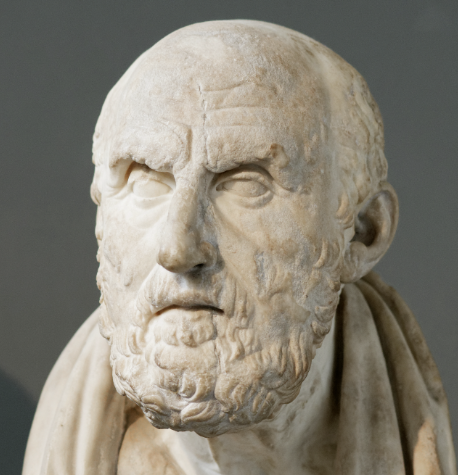
If I knew that it was fated for me to be sick, I would even wish for it; for the foot also, if it had intelligence, would volunteer to get muddy.
▼
Source
source
As quoted by Epictetus, Discourses, ii. 6. 10.

4 months 3 weeks ago
There is no body but eats and drinks. But they are few who can distinguish flavors.
1 month 2 weeks ago
Language steps in where the angels of experience fear to tread.
▼
Source
source
Chapter 1, The Faces of Silence, p. 5

3 weeks 6 days ago
Much has been said of Mahomet's propagating his Religion by the sword. It is no doubt far nobler what we have to boast of the Christian Religion, that it propagated itself peaceably in the way of preaching and conviction. Yet withal, if we take this for an argument of the truth or falsehood of a religion, there is a radical mistake in it. The sword indeed: but where will you get your sword! Every new opinion, at its starting, is precisely in a minority of one. In one man's head alone, there it dwells as yet. One man alone of the whole world believes it; there is one man against all men. That he take a sword, and try to propagate with that, will do little for him. You must first get your sword! On the whole, a thing will propagate itself as it can. We do not find, of the Christian Religion either, that it always disdained the sword, when once it had got one.

4 months 1 week ago
There is little less trouble in governing a private family than a whole kingdom.
▼
Source
source
Book I, Ch. 39
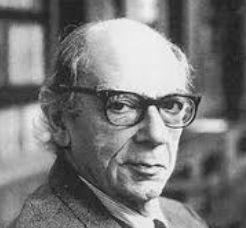
2 months 3 weeks ago
What has been shown by Machiavelli, who is often (like Nietzsche) congratulated for tearing off hypocritical masks, brutally revealing the truth, and so on, is not that men profess one thing and do another (although no doubt he shows this too) but that when they assume that the two ideals are compatible, or perhaps are even one and the same ideal, and do not allow this assumption to be questioned, they are guilty of bad faith (as the existentialists call it, or of "false consciousness," to use a Marxist formula) which their actual behavior exhibits. Machiavelli calls the bluff not just of official morality-the hypocrisies of ordinary life-but of one of the foundations of the central Western philosophical tradition, the belief in the ultimate compatibility of all genuine values. His own withers are unwrung. He has made his choice. He seems wholly unworried by, indeed scarcely aware of, parting company with traditional Western morality.

4 months 6 days ago
Each man is a hero and an oracle to somebody.
▼
Source
source
Quotation and Originality

5 days ago
Ask the questions that have no answers. Invest in the millenium.
▼
Source
source
Manifesto: The Mad Farmer Liberation Front in Farming: A Hand Book

2 months 2 days ago
Maybe somewhere in some other galaxy there is a super-intelligence so colossal that from our point of view it would be a god. But it cannot have been the sort of God that we need to explain the origin of the universe, because it cannot have been there that early.
3 months 2 days ago
Bach: a scale of tears upon which our desires for God ascend.

4 months 5 days ago
Assembled in a crowd, people lose their powers of reasoning and their capacity for moral choice.
▼
Source
source
Chapter 5 (p. 42)
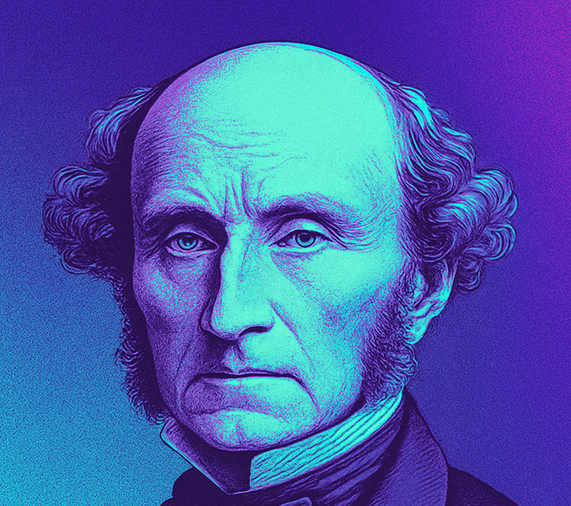
4 months 6 days ago
Stupidity is much the same all the world over. A stupid person's notions and feelings may confidently be inferred from those which prevail in the circle by which the person is surrounded. Not so with those whose opinions and feelings are an emanation from their own nature and faculties.
▼
Source
source
Ch. 1
6 days ago
Beauty is merciless. You do not look at it, it looks at you and does not forgive.

1 month 1 week ago
The heterodox current in Judaism led by Jesus seems to have had no notion of an immortal soul, created by God and then infused into the body: immortality meant being raised from the dead in the body one had in life, then living for ever in a world without decay or corruption. In the Christian religion invented by Paul and Augustine, which was strongly influenced by Plato, immortality meant something quite different - a life out of time, enjoyed by the 'soul' or 'spirit' of the departed. How this Platonic immortality could preserve anything like the persons that once lived was not made clear.
▼
Source
source
Cross-correspondences (pp. 32-3)

2 months 2 weeks ago
That knowledge which adds greatness to character is knowledge so handled as to transform every phase of immediate experience.

4 months 5 days ago
The last peculiarity of consciousness to which attention is to be drawn in this first rough description of its stream is that it is always interested more in one part of its object than in another, and welcomes and rejects, or chooses, all the while it thinks.
▼
Source
source
Ch. 9
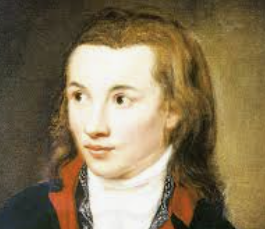
3 months 3 days ago
The art of writing books is not yet invented. But it is at the point of being invented. Fragments of this nature are literary seeds. There may be many an infertile grain among them: nevertheless, if only some come up!
▼
Source
source
Fragment No. 114

4 months 6 days ago
What modern apologists call 'true' Christianity is something depending upon a very selective process. It ignores much that is to be found in the Gospels: for example, the parable of the sheep and the goats, and the doctrine that the wicked will suffer eternal torment in Hell fire. It picks out certain parts of the Sermon on the Mount, though even these it often rejects in practice. It leaves the doctrine of non-resistance, for example, to be practised only by non-Christians such as Gandhi. The precepts that it particularly favours are held to embody such a lofty morality that they must have had a divine origin. And yet ... these precepts were uttered by Jews before the time of Christ.
▼
Source
source
"Can Religion Cure Our Troubles?", in Stockholm newspaper Dagens Nyheter, part II., 11/11/1954
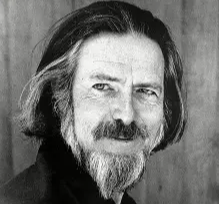
2 weeks 3 days ago
The world is in an extremely dangerous situation, and serious diseases often require the risk of a dangerous cure - like the Pasteur serum for rabies.
▼
Source
source
Inside Information p. 4
3 months 2 days ago
Nothing is so wearing as the possession or abuse of liberty.

5 months 3 days ago
Indeed, it may well be argued that one reason for the decline in science, art, and literature was the increasing absorption of the better minds into a new sort of intellectual pursuit, theology.
3 months 2 days ago
Boredom is connected naturally with time, with the horror of time, with the experience and the consciousness of time. Those who are not aware of time do not become bored. Basically life is only possible if one is not aware of time. If one should happen to want to experience consciously one of those moments that pass, one would be lost; life would become unbearable.
2 months 3 weeks ago
If we ignore the prior work of attention and notice only the emptiness of the moment of choice we are likely to identify freedom with the outward movement since there is nothing else to identify it with. But if we consider what the work of attention is like, how continuously it goes on, and how imperceptibly it builds up structures of value round about us, we shall not be surprised that at crucial moments of choice most of the business of choosing is already over.
▼
Source
source
The Sovereignty of Good (1970) p. 36.

4 months ago
Is it surprising that prisons resemble factories, schools, barracks, hospitals, which all resemble prisons?
▼
Source
source
Discipline and Punish (1977) as translated by Alan Sheridan, p. 228

4 months 4 days ago
It is the same: a chosen one is a man whom God's finger crushes against the wall.
▼
Source
source
Act 2, sc. 4

3 months 1 week ago
Two things in America are astonishing: the changeableness of most human behavior and the strange stability of certain principles. Men are constantly on the move, but the spirit of humanity seems almost unmoved.
▼
Source
source
Book Three, Chapter XXI.


3 months 1 week ago
The main business of religions is to purify, control, and restrain that excessive and exclusive taste for well-being which men acquire in times of equality.
▼
Source
source
Book One, Chapter V.
3 months 2 days ago
"What's wrong - what's the matter with you?" Nothing, nothing's the matter, I've merely taken a leap outside my fate, and now I don't know where to turn, what to run for...
3 months 1 day ago
Since the communists cannot enter upon the decisive struggle between themselves and the bourgeoisie until the bourgeoisie is in power, it follows that it is in the interest of the communists to help the bourgeoisie to power as soon as possible in order the sooner to be able to overthrow it.
4 months 5 days ago
The human imagination has seldom had before it an object so sublimely ordered as the medieval cosmos. If it has an aesthetic fault, it is perhaps, for us who have known romanticism, a shade too ordered. For all its vast spaces it might in the end afflict us with a kind of claustrophobia. Is there nowhere any vagueness? No undiscovered by-ways? No twilight? Can we never really get out of doors?
▼
Source
source
The Discarded Image: An Introduction to Medieval and Renaissance Literature, 1964
1 month 3 weeks ago
Joe Hume talked to me very earnestly about the necessity of an union of Liberals. He said much about Ballot and the Franchise. I told him that I could easily come to some compromise with him and his friends on these matters, but that there were other questions about which I feared that there was an irreconcileable difference, particularly the vital question of national defence. He seemed quite confounded, and had absolutely nothing to say. I am fully determined to make them eat their words on that point, or to have no political connection with them.
▼
Source
source
Journal entry (November 1852), quoted in George Otto Trevelyan, The Life and Letters of Lord Macaulay, Volume II (1876), p. 368

4 months 1 week ago
I die adoring God, loving my friends, not hating my enemies, and detesting superstition.
▼
Source
source
Déclaration de Voltaire, note to his secretary, Jean-Louis Wagnière, 28 February 1778

2 months 2 weeks ago
Information has no scent.

4 months 2 weeks ago
The monuments of wit survive the monuments of power.
▼
Source
source
Essex's Device
CivilSimian.com created by AxiomaticPanic, CivilSimian, Kalokagathia