


3 weeks ago
Nothing that was worthy in the past departs; no truth or goodness realized by man ever dies, or can die.

2 months 3 weeks ago
When one is not understood one should as a rule lower one's voice, because when one really speaks loudly enough and is not heard, it is because people do not want to hear. One had better begin to mutter to oneself, then they get curious.
▼
Source
source
Nietzsche's Zarathustra (1988), p. 30

1 month 4 weeks ago
The bible belt is oral territory and therefore despised by the literati.
▼
Source
source
The Critic, Volume 33, Thomas More Association, 1974, p. 12

Just now
Architecture worth great attention. As we double our numbers every 20 years we must double our houses. Besides we build of such perishable materials that one half of our houses must be rebuilt in every space of 20 years. So that in that term, houses are to be built for three fourths of our inhabitants. It is then among the most important arts: and it is desireable to introduce taste into an art which shews so much.
▼
Source
source
Hints to Americans travelling in Europe, letter to John Rutledge, Jr. (June 19, 1788); in The Papers of Thomas Jefferson, ed. Julian P. Boyd (1956), vol. 13, p. 269


2 months 3 weeks ago
Go and shew John again those things which ye do hear and see: The blind receive their sight, and the lame walk, the lepers are cleansed, and the deaf hear, the dead are raised up, and the poor have the gospel preached to them. And blessed is he, whosoever shall not be offended in me.
▼
Source
source
11:4-6 (KJV)
Just now
Put down all banks, admit none but a metallic circulation that will take its proper level with the like circulation in other countries, and then our manufacturers may work in fair competition with those of other countries, and the import duties which the government may lay for the purposes of revenue will so far place them above equal competition.
▼
Source
source
Letter to Charles Pinckney (1820) ME 15:280
2 weeks 2 days ago
All this talk: the state should do this or that, ultimately means: the police should force consumers to behave otherwise than they would behave spontaneously.

3 months 2 weeks ago
Rest gives relish to labour.
▼
Source
source
Of the Training of Children, 9 (Tr. Babbitt)

4 months 2 days ago
Lead, follow, or get out of the way.
▼
Source
source
George S. Patton: "Lead me, follow me, or get out of my way", as quoted in Pocket Patriot: Quotes from American Heroes (2005) edited by Kelly Nickell, p. 157
1 week 3 days ago
Space and time are commonly regarded as the forms of existence of the real world, matter as its substance. A definite portion of matter occupies a definite part of space at a definite moment of time. It is in the composite idea of motion that these three fundamental conceptions enter into intimate relationship.
▼
Source
source
Introduction
1 month 2 weeks ago
If...we look at the essential characteristics of the Whig and the Tory, we may consider each of them as the representative of a great principle, essential to the welfare of nations. One is, in an especial manner, the guardian of liberty, and the other, of order. One is the moving power, and the other the steadying power of the state. One is the sail, without which society would make no progress, the other the ballast, without which there would be small safety in a tempest.
▼
Source
source
The Earl of Chatham', The Edinburgh Review (October 1844), quoted in T. B. Macaulay, Critical and Historical Essays Contributed to The Edinburgh Review: A New Edition (1852), p. 725
2 weeks 2 days ago
That the individual is of himself a world's history, and possesses his property in the rest of the world's history, goes beyond what is Christian. To the Christian the world's history is the higher thing, because it is the history of Christ or 'man'; to the egoist only his history has value, because he wants to develop only himself not the mankind-idea, not God's plan, not the purposes of Providence, not liberty, and the like. He does not look upon himself as a tool of the idea or a vessel of God, he recognizes no calling, he does not fancy that he exists for the further development of mankind and that he must contribute his mite to it, but he lives himself out, careless of how well or ill humanity may fare thereby.
▼
Source
source
Cambridge 1995, p. 323
3 months 2 weeks ago
Once he saw the officials of a temple leading away some one who had stolen a bowl belonging to the treasurers, and said, "The great thieves are leading away the little thief."
▼
Source
source
Diogenes Laërtius, vi. 45

3 months 2 weeks ago
Man is the measure of all things: of things which are, that they are, and of things which are not, that they are not.
▼
Source
source
As quoted in Theaetetus by Plato section 152a

4 months 4 weeks ago
Perception and knowledge could never be the same.

4 months 1 week ago
All seed except Mary was vitiated [by original sin].
▼
Source
source
Weimar edition of Martin Luther's Works, English translation edited by J. Pelikan [Concordia: St. Louis], Vol. 11, WA, 39, II:107
2 months 1 week ago
Pascal is called the founder of modern probability theory. He earns this title not only for the familiar correspondence with Fermat on games of chance, but also for his conception of decision theory, and because he was an instrument in the demolition of probabilism, a doctrine which would have precluded rational probability theory.
▼
Source
source
Chapter 3, Opinion, p. 23.

4 months 3 days ago
A metaphysics of morals is therefore indispensably necessary, not merely because of a motive to speculation - for investigating the source of the practical basic principles that lie a priori in our reason - but also because morals themselves remain subject to all sorts of corruption as long as we are without that clue and supreme norm by which to appraise them correctly...
2 months 3 weeks ago
The same, without such opinion, DESPAIRE.
▼
Source
source
The First Part, Chapter 6, p. 25
2 months 4 weeks ago
Before abstraction everything is one, but one like chaos; after abstraction everything is united again, but this union is a free binding of autonomous, self-determined beings. Out of a mob a society has developed, chaos has been transformed into a manifold world.
▼
Source
source
Fragment No. 95

1 month 1 week ago
... our descendants may recognize that we are the sociopathic emotional primitives in the grip of an affective psychosis. Jealousy, envy, resentment, ridicule, hate, anger, disgust, spite, contempt, schadenfreude and a whole gamut of nameless but mean-spirited states we undergo each day are a toxic legacy of our Darwinian past. More commonly, perhaps, our genetic make-up ensures we simply feel indifference to the plight of all but a handful of significant others in our lives. Right now, for instance, one knows dimly at some level that there is frightful and preventable suffering in the world. Yet most of us feel no overpowering moral urgency to do anything about it.
▼
Source
source
"Utopian Pharmacology: Mental Health in the Third Millennium MDMA and Beyond", BLTC Research, last updated 2020
3 weeks ago
The most remarkable piece of reading that you may be recommended to take and try if you can study is a book by Goethe-one of his last books, which he wrote when he was an old man, about seventy years of age-I think one of the most beautiful he ever wrote, full of mild wisdom, and which is found to be very touching by those who have eyes to discern and hearts to feel it. It is one of the pieces in "Wilhelm Meister's Travels." I read it through many years ago; and, of course, I had to read into it very hard when I was translating it (applause), and it has always dwelt in my mind as about the most remarkable bit of writing that I have known to be executed in these late centuries. I have often said, there are ten pages of that which, if ambition had been my only rule, I would rather have written than have written all the books that have appeared since I came into the world.


2 months 3 weeks ago
I feel safer with a Pyrrho than with a St. Paul, for a jesting wisdom is gentler than an unbridled sanctity.

1 month 3 weeks ago
Human beings can lose their lives in libraries. They ought to be warned.
▼
Source
source
Him with His Foot in His Mouth, from Him with His Foot in His Mouth and Other Stories (1984) [Penguin Classics, 1998, ISBN 0-141-18023-4], p. 11

4 months 1 day ago
In fact, contempt for happiness is usually contempt for other people's happiness, and is an elegant disguise for hatred of the human race.
▼
Source
source
p. 198
1 day ago
I possess no weapon but love. With that I have come to do battle. Help me!
3 months 5 days ago
The object of all true Philosophy is to frame a system which shall comprehend human life under every aspect, social as well as individual. It embraces, therefore, the three kinds of phenomena of which our life consists, Thoughts, Feelings, and Actions.
▼
Source
source
p. 9
1 day ago
The heart unites whatever the mind separates, pushes on beyond the arena of necessity and transmutes the struggle into love.

4 months 4 days ago
That a joint stock company should be able to carry on successfully any branch of foreign trade, when private adventurers can come into any sort of open and fair competition with them, seems contrary to all experience.
▼
Source
source
Chapter I, Part III, Article I, p. 810.
2 months 3 weeks ago
Hear, and understand: Not that which goeth into the mouth defileth a man; but that which cometh out of the mouth, this defileth a man.
▼
Source
source
15:10-11 (KJV)

1 month 3 weeks ago
What concerns me most here are the ways in which contemporary voices considered to be leftist have abandoned the philosophical ideas that are central to any left-wing standpoint: a commitment to universalism over tribalism, a firm distinction between justice and power, and a belief in the possibility of progress.
▼
Source
source
Polity (2023), p. 5

3 months 2 weeks ago
The Pythagoreans made kindness to beasts a training in humanity and pity.
▼
Source
source
3, 20, 7

2 weeks 1 day ago
Who is everywhere is nowhere. When a person spends all his time in foreign travel, he ends by having many acquaintances, but no friends.
▼
Source
source
Line 2.

2 months 1 week ago
In one sense, I do believe I am "like a man," as Parthe [the writer's sister] says. But how? In having sympathy. ... Women crave for being loved, not for loving. They scream out at you for sympathy all day long, they are incapable of giving any in return, for they cannot remember your affairs long enough to do so. ... They cannot state a fact accurately to another, nor can that other attend to it accurately enough for it to become information. Now is not all this the result of want of sympathy?
▼
Source
source
Letter to Madame Mohl

4 months 1 day ago
A house sold by A to B does not wander from one place to another, although it circulates as a commodity.
▼
Source
source
Vol. II, Ch. VI, p. 152.
Just now
For if experience has ever taught a truth, it is that a plurality in the supreme Executive will forever split into discordant factions, distract the nation, annihilate its energies, and force the nation to rally under a single head, generally an usurper. We have, I think, fallen on the happiest of all modes of constituting the Executive, that of easing and aiding our President, by permitting him to choose Secretaries of State, of Finance, of War, and of the Navy, with whom he may advise, either separately or all together, and remedy their divisions by adopting or controlling their opinions at his discretion; this saves the nation from the evils of a divided will, and secures to it a steady march in the systematic course which the President may have adopted for that of his administration.
3 weeks 2 days ago
Pragmatism starts from assumptions similar to those of empiriocriticism, but differs from the latter by its striking formulations, loose aphorisms, and analytical unscrupulousness.
▼
Source
source
Chapter Seven, Pragmatism and Positivism, p. 166
1 week 3 days ago
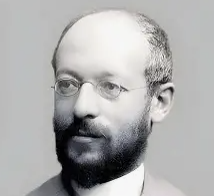
Money expresses all qualitative differences of things in terms of "how much?" Money, with all its colorlessness and indifference, becomes the common denominator of all values; irreparably it hollows out the core of things, their individuality, their specific value, and their incomparability. All things float with equal specific gravity in the constantly moving stream of money. All things lie on the same level and differ from one another only in the size of the area which they cover.
2 weeks 1 day ago
At any rate, if you wish to sift doubtful meanings of this kind, teach us that the happy man is not he whom the crowd deems happy, namely, he into whose coffers mighty sums have flowed, but he whose possessions are all in his soul, who is upright and exalted, who spurns inconstancy, who sees no man with whom he wishes to change places, who rates men only at their value as men, who takes Nature for his teacher, conforming to her laws and living as she commands, whom no violence can deprive of his possessions, who turns evil into good, is unerring in judgment, unshaken, unafraid, who may be moved by force but never moved to distraction, whom Fortune when she hurls at him with all her might the deadliest missile in her armoury, may graze, though rarely, but never wound.

4 months ago
The measure of action is the sentiment from which it proceeds. The greatest action may easily be one of the most private circumstance.
▼
Source
source
Goethe; or, The Writer
2 months 3 weeks ago
We are born to exist, not to know, to be, not to assert ourselves.

4 months 2 days ago
If there were only one religion in England there would be danger of despotism, if there were two they would cut each other's throats, but there are thirty, and they live in peace and happiness.
▼
Source
source
Letters on England, letter 6, "On the Presbyterians" Trans. Leonard Tancock (Harmondsworth, England: Penguin Books, 1980): p. 41, published first in English in 1733.

3 months 1 day ago
People must be governed in a manner agreeable to their temper and disposition; and men of free character and spirit must be ruled with, at least, some condescension to this spirit and this character.
▼
Source
source
Observations on a Late Publication on the Present State of the Nation (1769), page 76.

2 months 2 weeks ago
Not only are we unable to conceive of the full and living God as masculine simply, but we are unable to conceive of Him as individual simply, as the projection of a solitary I, an unsocial I, an I that is in reality an abstract I. My living I is an I that is really a We; my living personal I lives only in other, of other, and by other I's; I am sprung from a multitude of ancestors. I carry them within me in extract, and at the same time I carry within me, potentially, a multitude of descendants, and God, the projection of my I to the infinite - or rather I, the projection of God to the finite - must also be a multitude. Hence, in order to save the personality of God - that is to say, in order to save the living God - faith's need - the need of the feeling and the imagination - of conceiving Him and feeling Him as possessed of a certain internal multiplicity.

5 months 1 day ago
There is no one at the Communion table who retains against you even the least of your sins, no one, unless you yourself do it. So cast them away from yourself, and the recollection of them, lest in it your retain them; and cast the recollection of your having cast your sins away, lest in it you retain them.
2 months 3 days ago
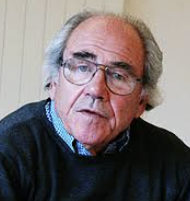
The need to speak, even if one has nothing to say, becomes more pressing when one has nothing to say, just as the will to live becomes more urgent when life has lost its meaning.
▼
Source
source
(p. 30)
2 months 3 weeks ago
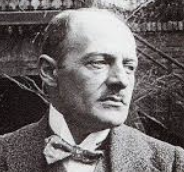
If the awareness of our limitations begins to limit or to dim our value consciousness as well-as happens, for instance, in old age with regard to the values of youth-then we have already started the movement of devaluation which will end with the defamation of the world and all its values. Only a timely act of resignation can deliver us from this tendency toward self-delusion.
▼
Source
source
L. Coser, trans. (1973), p. 59
2 months 4 weeks ago
The poem of the understanding is philosophy.
▼
Source
source
"Logological Fragments," Philosophical Writings, M. Stolijar, trans. (Albany: 1997) #24
CivilSimian.com created by AxiomaticPanic, CivilSimian, Kalokagathia