


3 months 3 weeks ago
Where we find a difficulty we may always expect that a discovery awaits us. Where there is cover we hope for game.
▼
Source
source
Reflections on the Psalms (1958), ch. III: Cursings



3 months 2 days ago
When one compares the talents one has with those of a Leibniz, one is tempted to throw away one's books and go die quietly in the dark of some forgotten corner.
▼
Source
source
Oeuvres complètes, vol. 7, p. 678
2 months 2 weeks ago
As soon as a thought or word becomes a tool, one can dispense with actually 'thinking' it, that is, with going through the logical acts involved in verbal formulation of it. As has been pointed out, often and correctly, the advantage of mathematics-the model of all neo-positivistic thinking-lies in just this 'intellectual economy.' Complicated logical operations are carried out without actual performance of the intellectual acts upon which the mathematical and logical symbols are based. ... Reason ... becomes a fetish, a magic entity that is accepted rather than intellectually experienced.
▼
Source
source
p. 23.

3 months 3 weeks ago
Our aim is precisely to establish the human kingdom as a pattern of values in distinction from the material world. But the subjectivity which we thus postulate as the standard of truth is no narrowly individual subjectivism, for as we have demonstrated, it is not only one's own self that one discovers in the cogito, but those of others too. Contrary to the philosophy of Descartes, contrary to that of Kant, when we say "I think" we are attaining to ourselves in the presence of the other, and we are just as certain of the other as we are of ourselves. Thus the man who discovers himself directly in the cogito also discovers all the others, and discovers them as the condition of his own existence. He realizes that he can't be anything unless others recognize him as such. I cannot obtain any truth whatsoever about myself, except through the mediation of another. The other is indispensable to my existence, and equally so to any knowledge I can have of myself.
▼
Source
source
p. 45

2 months 1 week ago
It is the first step in sociological wisdom, to recognize that the major advances in civilization are processes which all but wreck the societies in which they occur:-like unto an arrow in the hand of a child. The art of free society consists first in the maintenance of the symbolic code; and secondly in fearlessness of revision, to secure that the code serves those purposes which satisfy an enlightened reason. Those societies which cannot combine reverence to their symbols with freedom of revision, must ultimately decay either from anarchy, or from the slow atrophy of a life stifled by useless shadows.
▼
Source
source
Symbolism: Its Meaning and Effect (1927), chapter 3, p. 88; final paragraph of the book.

3 months 3 weeks ago
Some of your hurts you have cured, And the sharpest you still have survived, But what torments of grief you endured From evils which never arrived!
▼
Source
source
Borrowing From the French
3 months 2 days ago
Africans are always vicious... mostly inclined to lasciviousness, vengeance, theft and lies.
▼
Source
source
As quoted in David Johnson, 'Representing the Cape "Hottentots"
3 months 3 weeks ago
The hazards of the generalized prisoner's dilemma are removed by the match between the right and the good.
▼
Source
source
Chapter IX, Section 86, p. 577

2 months 4 weeks ago
The best definition of man is: a being that goes on two legs and is ungrateful.
▼
Source
source
Part 1, Chapter 8 (tr. David Magarshack, 1950) The best definition of man is: a biped, ungrateful.

3 months 4 weeks ago
To those who inquire as to the purpose of mathematics, the usual answer will be that it facilitates the making of machines, the travelling from place to place, and the victory over foreign nations, whether in war or commerce. ... The reasoning faculty itself is generally conceived, by those who urge its cultivation, as merely a means for the avoidance of pitfalls and a help in the discovery of rules for the guidance of practical life.
3 months 4 weeks ago
Belief in eternal hell fire was an essential item of Christian belief until pretty recent times. In this country, as you know, it ceased to be an essential item because of a decision of the Privy Council, and from that decision the Archbishop of Canterbury and the Archbishop of York dissented; but in this country our religion is settled by Act of Parliament, and therefore the Privy Council was able to override Their Graces and hell was no longer necessary to a Christian. Consequently I shall not insist that a Christian must believe in hell. What is a Christian?
▼
Source
source
1927
3 months 3 weeks ago
Why you fool, it's the educated reader who can be gulled. All our difficulty comes with the others. When did you meet a workman who believes the papers? He takes it for granted that they're all propaganda and skips the leading articles. He buys his paper for the football results and the little paragraphs about girls falling out of windows and corpses found in Mayfair flats. He is our problem. We have to recondition him. But the educated public, the people who read the highbrow weeklies, don't need reconditioning. They're all right already. They'll believe anything.
▼
Source
source
Ch. 5: Elasticity, section 1 Miss Hardcastle speaking to Mark Studdock

1 month 3 weeks ago
Evidence is the only good reason to believe anything.
▼
Source
source
Interview shown in AlJazeera ,

3 weeks 1 day ago
In situations of de facto diversity, attempts to impose a single way of life on an entire population is a formula for dictatorship.
1 month 2 weeks ago
We hold that the most wonderful and splendid proof of genius is a great poem produced in a civilized age.
▼
Source
source
p. 5

4 months 3 weeks ago
Economics is on the side of humanity now.

3 months 2 weeks ago
May we be those who shall heal this world.
▼
Source
source
Yasna 30,9

3 months 4 weeks ago
It is so rare to meet with a man out-doors who cherishes a worthy thought in his mind, which is independent of the labor of his hands.
2 months 3 weeks ago
The world is chaos. Nothingness is the yet-to-be-born god of the world.
▼
Source
source
Act IV

2 months 3 weeks ago
A modest man is steady, an humble man timid, and a vain one presumptuous.
▼
Source
source
Ch. 7

2 months 2 weeks ago
Our mass media have little difficulty in selling particular interests as those of all sensible men. The political needs of society become individual needs and aspirations, their satisfaction promotes business and the commonweal, and the whole appeals to be the very embodiment of Reason.
▼
Source
source
p. xli


4 months 3 weeks ago
There always comes a time in history when the person who dares to say that 2+2=4 is punished by death. And the issue is not what reward or what punishment will be the outcome of that reasoning. The issue is simply whether or not 2+2=4.
2 months 3 weeks ago
The first philosophers were astronomers. The heavens remind man ... that he is destined not merely to act, but also to contemplate.
▼
Source
source
Introduction, Z. Hanfi, trans., in The Fiery Brook (1972), pp. 101-102
2 months 2 weeks ago
The empiricist thinks he believes only what he sees, but he is much better at believing than at seeing.
▼
Source
source
"Objections to Belief in Substance", p. 201

4 months 6 days ago
There are also Idols formed by the intercourse and association of men with each other, which I call Idols of the Market Place, on account of the commerce and consort of men there. For it is by discourse that men associate, and words are imposed according to the apprehension of the vulgar. And therefore the ill and unfit choice of words wonderfully obstructs the understanding. Nor do the definitions or explanations wherewith in some things learned men are wont to guard and defend themselves, by any means set the matter right. But words plainly force and overrule the understanding, and throw all into confusion, and lead men away into numberless empty controversies and idle fancies.
▼
Source
source
Aphorism 43

3 months 2 days ago
In America a woman loses her independence for ever in the bonds of matrimony. While there is less constraint on girls there than anywhere else, a wife submits to stricter obligations. For the former, her father's house is a home of freedom and pleasure; for the latter, her husband's is almost a cloister.
▼
Source
source
Book Three, Chapter X.


2 months 2 weeks ago
Perhaps there is nobody who would sacrifice his life for the sake of maintaining that the three angles of a triangle are together equal to two right angles, for such a truth does not demand the sacrifice of our life; but, on the other hand, there are many who have lost their lives for the sake of maintaining their religious faith. Indeed, it is truer to say that martyrs make faith than that faith makes martyrs. For faith is not the mere adherence of the intellect to an abstract principle; it is not the recognition of a theoretical truth, the process in which the will merely sets in motion our faculty of comprehension; faith is an act of the will - it is a movement of the soul towards a practical truth, towards a person, towards something that makes us not merely comprehend life, but that makes us live.

4 months 4 weeks ago
Now, in the solemn silence before God with the lilies and the birds, where accordingly there is nobody at all present, where accordingly there is no other intercourse for thee but with God-there indeed the rule holds good: either hold to Him/or despise Him. There is no excuse, for no one else is present, in any case no one is present in such a wise that thou canst hold to him without despising God; for precisely there in the silence it is clear how close God is to thee.

2 months 1 week ago
The pathos of it all is that the America which is to be protected by a huge military force is not the America of the people, but that of the privileged class; the class which robs and exploits the masses, and controls their lives from the cradle to the grave. No less pathetic is it that so few people realize that preparedness never leads to peace, but that it is indeed the road to universal slaughter.

4 months ago
What I had to say was so clear and I felt it so deeply that I am amazed by the tediousness, repetitiousness, verbiage, and disorder of this writing. What would have made it lively and vehement coming from another's pen is precisely what has made it dull and slack coming from mine. The subject was myself, and I no longer found on my own interest that zeal and vigor of courage which can exalt a generous soul only for another person's cause.
▼
Source
source
On the Subject and Form of This Writing; translated by Judith R. Bush, Christopher Kelly, Roger D. Masters

3 months 4 weeks ago
The individual produces an object and, by consuming it, returns to himself, but returns as a productive and self reproducing individual. Consumption thus appears as a moment of production.
▼
Source
source
Introduction, p. 14.
3 months 2 days ago
In the United States, except for slaves, servants and the destitute fed by townships, everyone has the vote and this is an indirect contributor to law-making. Anyone wishing to attack the law is thus reduced to adopting one of two obvious courses: they must either change the nation's opinion or trample its wishes under foot.
▼
Source
source
Chapter XIV.
1 month 3 weeks ago
Vanity dies hard; in some obstinate cases it outlives the man.
▼
Source
source
Prince Otto, reported in Bartlett's Familiar Quotations, 10th ed. (1919).
3 months 2 weeks ago
I regard Peter as one of the great moralists, because I suspect that more than anyone he has helped to change the attitudes of very many people to the sufferings of animals. Peter is a utilitarian in normative ethics, and a humane attitude to animals is a natural corollary of utilitarianism. Utilitarian concern for animals goes back to Bentham, who, presumably alluding to the Kantians, said that the question was not whether animals can reason, but whether they can suffer.
▼
Source
source
J. J. C. Smart, Reply to Singer, in Philip Pettit, Richard Sylvan and Jean Norman (eds.), Metaphysics and Morality: Essays in Honour of J. J. C. Smart, Oxford, 1987, p. 192
3 months 4 weeks ago
Politics is, as it were, the gizzard of society, full of grit and gravel, and the two political parties are its two opposite halves, - sometimes split into quarters, it may be, which grind on each other. Not only individuals, but States, have thus a confirmed dyspepsia, which expresses itself, you can imagine by what sort of eloquence. Thus our life is not altogether a forgetting, but also, alas! to a great extent, a remembering of that which we should never have been conscious of, certainly not in our waking hours. Why should we not meet, not always as dyspeptics, to tell our bad dreams, but sometimes as eupeptics, to congratulate each other on the ever glorious morning? I do not make an exorbitant demand, surely.
▼
Source
source
p. 495
3 months 3 weeks ago
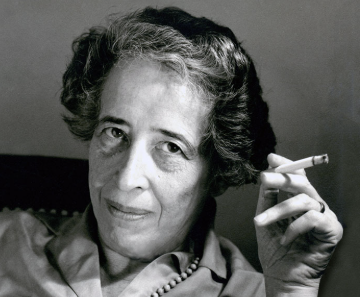
In politics, love is a stranger, and when it intrudes upon it nothing is being achieved except hypocrisy. All the characteristics you stress in the Negro people: their beauty, their capacity for joy, their warmth, and their humanity, are well-known characteristics of all oppressed people. They grow out of suffering and they are the proudest possession of all pariahs. Unfortunately, they have never survived the hour of liberation by even five minutes. Hatred and love belong together, and they are both destructive; you can afford them only in private and, as a people, only so long as you are not free.
▼
Source
source
Letter to James Baldwin
6 days ago
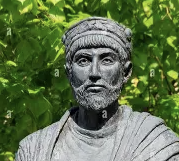
Men's works also are naturally perishable and mutable and subject to every kind of alteration. But since God is eternal, it follows that of such sort are his ordinances also. And since they are such, they are either the natures of things or are accordant with the nature of things. For how could nature be at variance with the ordinance of God? How could it fall out of harmony therewith?
2 months 3 weeks ago
People like us are unhappy in this world and in the next, I guess if we made it to heaven, we'd have to help make it thunder.
▼
Source
source
Scene VI.

1 month 2 weeks ago
I think that New York is not the cultural center of America, but the business and administrative center of American culture.
▼
Source
source
BBC radio interview, The Listener

4 months 2 weeks ago
To be fond of learning is to be near to knowledge. To practice with vigor is to be near to magnanimity. To possess the feeling of shame is to be near to energy.

3 months 3 weeks ago
Quality leadership is neither the product of one great individual nor the result of odd historical accidents. Rather, it comes from deeply bred traditions and communities that shape and mold talented and gifted persons. Without a vibrant tradition of resistance passed on to new generations, there can be no nurturing of a collective and critical consciousness-only professional conscientiousness survives.
▼
Source
source
(p37)
3 months 3 weeks ago
You could send your soul after the good you had expected, instead of turning it to the good you had got. You could refuse the real good; you could make the real fruit taste insipid by thinking of the other.
2 months 2 weeks ago
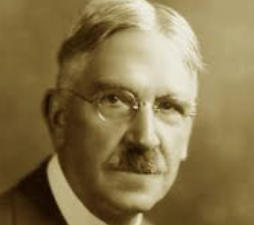
"Relation" in its idiomatic usage denotes something direct and active, something dynamic and energetic. It fixes attention upon the way things bear upon one another, their clashings and unitings, the way they fulfill and frustrate, promote and retard, excite and inhibit one another. Intellectual relations subsist in propositions; they state the connection of terms with one another. In art, as in nature and in life, relations are modes of interaction.
▼
Source
source
p. 139

2 months 3 weeks ago
The world begins and ends with us. Only our consciousness exists, it is everything, and this everything vanishes with it. Dying, we leave nothing. Then why so much fuss around an event that is no such thing?

3 months 3 days ago
There is no road or ready way to virtue.
▼
Source
source
Section 55
3 months 4 weeks ago
Gold is now money with reference to all other commodities only because it was previously, with reference to them, a simple commodity.
▼
Source
source
Vol. I, Ch. 1, Section 3, pg. 81.
CivilSimian.com created by AxiomaticPanic, CivilSimian, Kalokagathia