


4 months 1 week ago
...You could take up the line that some of the gnostics took up - a line which I often thought was a very plausible one - that as a matter of fact this world that we know was made by the devil at a moment when God was not looking. There is a good deal to be said for that, and I am not concerned to refute it.
▼
Source
source
"The Moral Arguments for Deity"

3 weeks ago
But the wise man knows that all things are in store for him. Whatever happens, he says: "I knew it."

3 weeks 6 days ago
He who takes not counsel of the Unseen and Silent, from him will never come real visibility and speech.
▼
Source
source
Bk. III, ch. 11.
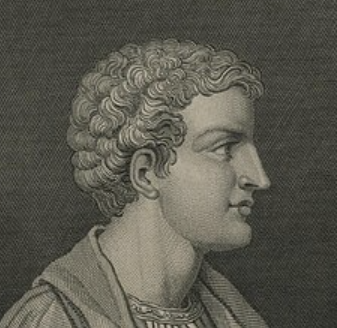
3 months 3 weeks ago
People are enticed by a desire which continually cheats them.'Nothing is enough,' they say, 'for you're only worth what you have.'
▼
Source
source
Book I, satire i, lines 61-62, as translated by N. Rudd
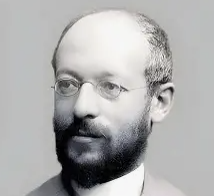
2 weeks 3 days ago
The social game has a deeper double meaning-that it is played not only in a society as its outward bearer but that with its help people actually "play" "society."
▼
Source
source
Sociability (1910) in On Individuality and Social Forms (1971), p. 134

3 months 1 week ago
... people only count their misfortunes; their good luck they take no account of. But if they were to take everything into account, as they should, they'd find that they had their fair share of it.
▼
Source
source
Part 2, Chapter 6 (tr. ?)
3 weeks 6 days ago
The spoken Word, the written Poem, is said to be an epitome of the man; how much more the done Work. Whatsoever of morality and of intelligence; what of patience, perseverance, faithfulness, of method, insight, ingenuity, energy; in a word, whatsoever of Strength the man had in him will lie written in the Work he does. To work: why, it is to try himself against Nature, and her everlasting unerring Laws; these will tell a true verdict as to the man.
3 months 1 week ago
Nor is there any embarrassment in the fact that we're ridiculous, isn't it true? For it's actually so, we are ridiculous, light-minded, with bad habits, we're bored, we don't know how to look, how to understand, we're all like that, all, you, and I, and they! Now, you're not offended when I tell you to your face that you're ridiculous? And if so, aren't you material? You know, in my opinion it's sometimes even good to be ridiculous, if not better: we can the sooner forgive each other, the sooner humble ourselves; we can't understand everything at once, we can't start right out with perfection! To achieve perfection, one must first begin by not understanding many things! And if we understand too quickly, we may not understand well. This I tell you, you, who have already been able to understand. .. and not understand ... so much. I'm not afraid for you now.
▼
Source
source
Part 4, Chapter ?
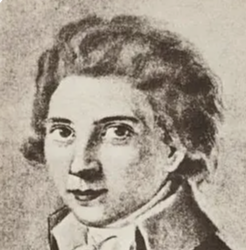
3 months 1 week ago
Wit is the appearance, the external flash of imagination. Thus its divinity, and the witty character of mysticism.
▼
Source
source
Aphorism 26, as translated in Dialogue on Poetry and Literary Aphorisms (1968)
2 months 1 week ago
There is probably no more abused a term in the history of philosophy than "representation," and my use of this term differs both from its use in traditional philosophy and from its use in contemporary cognitive psychology and artificial intelligence.... The sense of "representation" in question is meant to be entirely exhausted by the analogy with speech acts: the sense of "represent" in which a belief represents its conditions of satisfaction is the same sense in which a statement represents its conditions of satisfaction. To say that a belief is a representation is simply to say that it has a propositional content and a psychological mode.
▼
Source
source
P. 12.
2 months 2 weeks ago
In sum, a theory is only accepted if the theory has substantial, non-ad hoc, explanatory successes. This is in accordance with Popper; unfortunately, it is in even better accordance with the 'inductivist' accounts that Popper rejects, since these stress support rather than falsification.
▼
Source
source
The 'corroboration' of theories

4 months 5 days ago
"Ah, Psyche," I said, "have I made you so little happy as that?"
▼
Source
source
Orual
2 weeks 3 days ago
It is especially important for Westerners to understand that high lamas, Zen masters, and Hindu gurus in the discipline of yoga are human beings, not supermen. We must not put them, as we have put Jesus Christ, on pedestals of reverence so high that we automatically exclude ourselves from their states of consciousness.
▼
Source
source
Foreward to The Secret Oral Teachings in the Tibetan Buddhist Sects (1964)], by Alexandra David Neel

2 months 6 days ago
So the majority of the highest classes of that age, even the popes and ecclesiastics, really believed in nothing at all. They did not believe in the Church doctrine, for they saw its insolvency; but neither could they follow Francis of Assisi, Kelchitsky, and most of the sectarians in acknowledging the moral, social teaching of Christ, for that undermined their social position. And so these people remained without any religious view of life. And, having none, they could have no standard with which to estimate what was good and what was bad art, but that of personal enjoyment.
4 months 1 day ago
A sovereign shows himself to be a tyrant if he disregards his honest advisors, or punishes them for what they have said.
3 months 3 weeks ago
A law there is, an oracle of Doom, Of old enacted by the assembled gods, That if a Daemon-such as live for ages- Defile himself with foul and sinful murder, He must for seasons thrice ten thousand roam Far from the Blest; such is the path I tread, I too a wanderer and exile from heaven.
▼
Source
source
tr. Phillip H. De Lacy and Benedict Einarson. Cf. full quotation at Leonard p. 54-55 fr. 115, as paraphrased in Plutarch's Moralia
4 months 1 week ago
As geological time goes, it is but a moment since the human race began and only the twinkling of an eye since the arts of civilization were first invented. In spite of some alarmists, it is hardly likely that our species will completely exterminate itself. And so long as man continues to exist, we may be pretty sure that, whatever he may suffer for a time, and whatever brightness may be eclipsed, he will emerge sooner or later, perhaps strengthened and reinvigorated by a period of mental sleep. The universe is vast and men are but tiny specks on an insignificant planet. But the more we realize our minuteness and our impotence in the face of cosmic forces, the more astonishing becomes what human beings have achieved.
▼
Source
source
"If We are to Survive this Dark Time", The New York Times Magazine, 9/3/1950

3 months 1 week ago
That children dream not the first half year, that men dream not in some countries, with many more, are unto me sick men's dreams, dreams out of the Ivory gate, and visions before midnight.
2 months 4 days ago
Necessity gives the law without itself acknowledging one.
▼
Source
source
Maxim 444

2 months 4 days ago
The specialist is one who never makes small mistakes while moving towards the grand fallacy.
▼
Source
source
(p. 154)
2 months 2 days ago
Fiction is to the grown man what play is to the child; it is there that he changes the atmosphere and tenor of his life.
▼
Source
source
A Gossip on Romance, printed in Longman's Magazine (November 1882).
3 months 3 days ago
I define a Sign as anything which is so determined by something else, called its Object, and so determines an effect upon a person, which effect I call its Interpretant, that the latter is thereby mediately determined by the former.
▼
Source
source
Letter to Victoria, Lady Welby (1908) SS 80-81
1 month 2 weeks ago
I have come to believe that you can get along without anyone - that is, without the close contact of any one person. That is a terrible shock to me, but I think it is true. You do need companionship, but wherever you go, in whatever new environment, you will find people who, to a large degree, take the place of those you left...The intimate companionship goes, I think, when you leave a friend, but friendship stays. It is an inherent possibility of relationship that, once admitted - well, there it is.
5 months 4 days ago
Then we may begin by assuming that there are three classes of men—lovers of wisdom, lovers of honor, lovers of gain?

3 months 1 week ago
In the United States, the majority undertakes to supply a multitude of ready-made opinions for the use of individuals, who are thus relieved from the necessity of forming opinions of their own.
▼
Source
source
Book One, Chapter II.

2 months 2 weeks ago
Religion, mysticism and magic all spring from the same basic 'feeling' about the universe: a sudden feeling of meaning, which human beings sometimes 'pick up' accidentally, as your radio might pick up some unknown station. Poets feel that we are cut off from meaning by a thick, lead wall, and that sometimes for no reason we can understand the wall seems to vanish and we are suddenly overwhelmed with a sense of the infinite interestingness of things.
▼
Source
source
p. 28
4 months 5 days ago
Let us now consider whether justice requires the toleration of the intolerant, and if so under what conditions. There are a variety of situations in which this question arises. Some political parties in democratic states hold doctrines that commit them to suppress the constitutional liberties whenever they have the power. Again, there are those who reject intellectual freedom but who nevertheless hold positions in the university. It may appear that toleration in these cases is inconsistent with the principles of justice, or at any rate not required by them.
▼
Source
source
p. 216
2 months 3 weeks ago
With the disintegration of all that Nietzsche had revered, existence, to him, had become a desert in which only one thing remained, namely that which had relentlessly forced him into this path: truthfulness that knows no limits and is not subject to any condition.
▼
Source
source
p. 45
4 months 1 week ago
The Austrians are a highly civilised race, half-surrounded by Slavs in a relatively backward state of culture. ... Servia, a country so barbaric that a man can secure the throne by instigating the assassination of his predecessor, is engaged constantly in fermenting the racial discontent of men of the same race who are Austrian subjects.
▼
Source
source
War: The Offspring of Fear (1914), quoted in Ray Monk, Bertrand Russell: The Spirit of Solitude, 1872-1921 (1996), p. 373

4 months 1 week ago
Under the ideal measure of values there lurks the hard cash.
▼
Source
source
Vol. I, Ch. 3, Section 1, pg. 116.
2 months 2 weeks ago
It is hardly to be believed how spiritual reflections when mixed with a little physics can hold people's attention and give them a livelier idea of God than do the often ill-applied examples of his wrath.
▼
Source
source
A 11
2 months 3 weeks ago
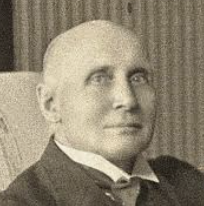
In formal logic, a contradiction is the signal of a defeat; but in the evolution of real knowledge it marks the first step in progress towards a victory.
▼
Source
source
Ch. 12: "Religion and Science", p. 260
3 weeks 6 days ago
Fire is the best of servents; but what a master!
▼
Source
source
Bk. II, ch. 9.
4 months 1 week ago
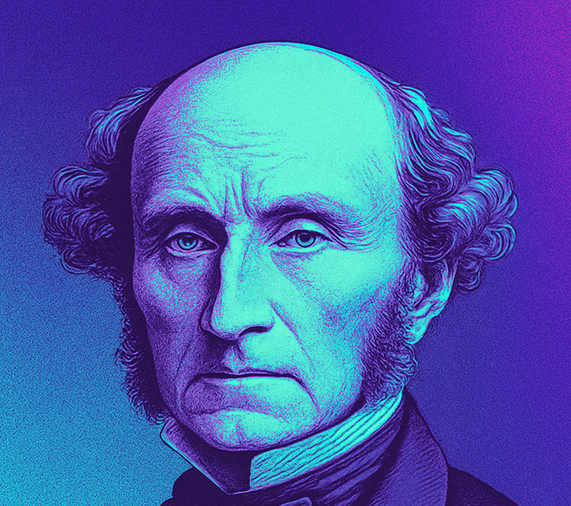
I never turned recreant to intellectual culture, or ceased to consider the power and practice of analysis as an essential condition both of individual and of social improvement. But I thought that it had consequences which required to be corrected, by joining other kinds of cultivation with it. The maintenance of a due balance among the faculties, now seemed to me of primary importance. The cultivation of the feelings became one of the cardinal points in my ethical and philosophical creed.
▼
Source
source
(pp. 143-144)
3 months 1 week ago
The surface of American society is covered with a layer of democratic paint, but from time to time one can see the old aristocratic colours breaking through.
▼
Source
source
Chapter II.

4 months 1 week ago
I am as desirous of being a good neighbor as I am of being a bad subject.
3 months 2 days ago
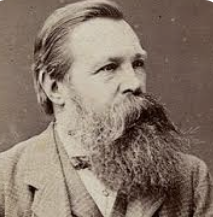
When all capital, all production, all exchange have been brought together in the hands of the nation, private property will disappear of its own accord, money will become superfluous, and production will so expand and man so change that society will be able to slough off whatever of its old economic habits may remain.
3 months 3 weeks ago
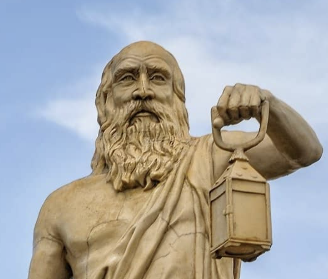
When Alexander the Great addressed him with greetings, and asked if he wanted anything, Diogenes replied "Yes, stand a little out of my sunshine."
▼
Source
source
From Plutarch, Alexander, 14. Cf. Diogenes Laërtius, vi. 38, Cicero, Tusculan Disputations, v. 32

2 months 3 weeks ago
Don Quixote made himself ridiculous; but did he know the most tragic ridicule of all, the inward ridicule, the ridiculousness of a man's self to himself, in the eyes of his own soul? Imagine Don Quixote's battlefield to be his own soul; imagine him to be fighting in his soul to save the Middle Ages from the Renaissance, to preserve the treasure of his infancy; imagine him an inward Don Quixote, with a Sancho at his side, inward and heroic too - and tell me if you find anything comic in the tragedy.
3 months 3 weeks ago
Force without wisdom falls of its own weight.
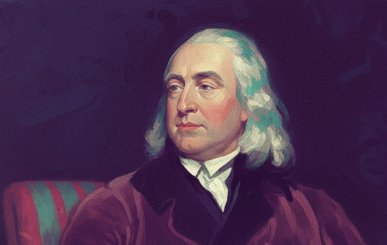
4 months 1 week ago
Want keeps pace with dignity. Destitute of the lawful means of supporting his rank, his dignity presents a motive for malversation, and his power furnishes the means.
▼
Source
source
The Rationale of Reward, 1811


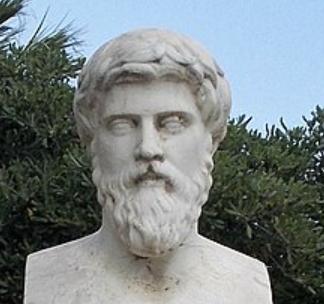
3 months 3 weeks ago
Thrasyllus the Cynic begged a drachm of Antigonus. "That," said he, "is too little for a king to give." "Why, then," said the other, "give me a talent." "And that," said he, "is too much for a Cynic (or, for a dog) to receive."
▼
Source
source
45 Antigonus I

2 months 4 weeks ago
He that dippeth his hand with me in the dish, the same shall betray me. The Son of man goeth as it is written of him: but woe unto that man by whom the Son of man is betrayed! it had been good for that man if he had not been born.
▼
Source
source
26:23-24 (KJV)
3 months 6 days ago
What man calls Absolute Being, his God, is his own being. The power of the object over him is therefore the power of his own being. Thus, the power of the object of feeling is the power of feeling itself; the power of the object of reason is the power of reason itself; and the power of the object of will is the power of will itself.
▼
Source
source
Introduction, Z. Hanfi, trans., in The Fiery Brook (1972), p. 102
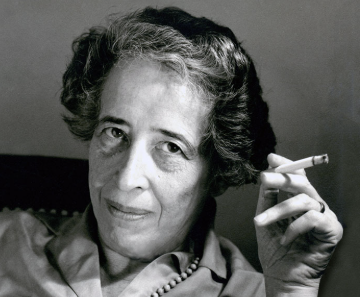
4 months 5 days ago
The emotions I feel are no more meant to be shown in their unadulterated state than the inner organs by which we live.
▼
Source
source
pp. 31-32
4 months 1 week ago
Most people would sooner die than think; in fact, they do so.

1 month 1 day ago
In a liberal society you're not going to agree on the deepest... moral frameworks, but you are going to agree on factual information, and... if you can't agree on factual information it's very hard to deliberate in common... on what needs to be done in the future, and that's the situation we now face.
▼
Source
source
23:00
3 weeks 6 days ago
No Dilettantism in this Mahomet; it is a business of Reprobation and Salvation with him, of Time and Eternity: he is in deadly earnest about it! Dilettantism, hypothesis, speculation, a kind of amateur-search for Truth, toying and coquetting with Truth: this is the sorest sin. The root of all other imaginable sins. It consists in the heart and soul of the man never having been open to Truth; - "living in a vain show." Such a man not only utters and produces falsehoods, but is himself a falsehood. The rational moral principle, spark of the Divinity, is sunk deep in him, in quiet paralysis of life-death.
2 months 2 weeks ago
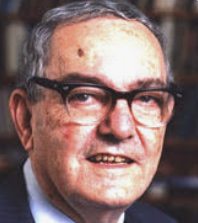
The first consequence of the principle of bounded rationality is that the intended rationality of an actor requires him to construct a simplified model of the real situation in order to deal with it. He behaves rationally with respect to this model, and such behavior is not even approximately optimal with respect to the real world. To predict his behavior we must understand the way in which this simplified model is constructed, and its construction will certainly be related to his psychological properties as a perceiving, thinking, and learning animal.
▼
Source
source
p. 198; Cited in P. Slovic (1972, p. 2).
CivilSimian.com created by AxiomaticPanic, CivilSimian, Kalokagathia