


1 month 6 days ago
In America, conscription is unknown; men are enlisted for payment. Compulsory recruitment is so alien to the ideas and so foreign to the customs of the people of the United States that I doubt whether they would ever dare to introduce it into their law.
▼
Source
source
Chapter XIII.

3 weeks 3 days ago
I have cast fire upon the world, and see, I am guarding it until it blazes.

3 months 2 days ago
For whoever has what he has from the God himself clearly has it at first hand; and he who does not have it from the God himself is not a disciple. Let us assume that it is otherwise, that the contemporary generation of disciples had received the condition from the God, and that the subsequent generations were to receive it from these contemporaries, what would follow?
2 months 2 days ago
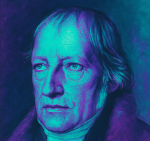
The necessities of the time have accorded to the petty interests of every day life such overwhelming attention : the deep interests of actuality and the strife respecting these have engrossed all the powers and the forces of the mind - as also the necessary means - to so great an extent, that no place has been left to the higher inward life, the intellectual operations of a purer sort; and the better natures have thus been stunted in their growth, and in great measure sacrificed.
▼
Source
source
p. x Inaugural Address, delivered at Heidelberg on the 28th October(1816), Lectures on the history of philosophy, translated from German by E. S. Haldane in Three Volumes (1892-96) full text.
1 month 2 weeks ago
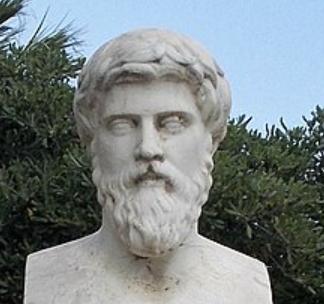
For many, as Cranton tells us, and those very wise men, not now but long ago, have deplored the condition of human nature, esteeming life a punishment, and to be born a man the highest pitch of calamity; this, Aristotle tells us, Silenus declared when he was brought captive to Midas.
2 months 3 days ago
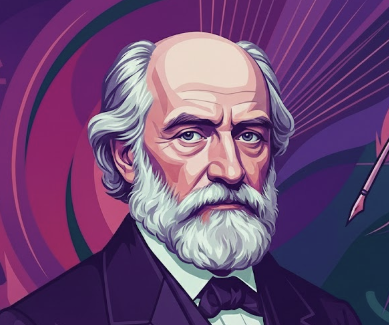
A great affliction of all Philistines is that idealities afford them no entertainment, but to escape from boredom they are always in need of realities.
▼
Source
source
E. Payne, trans. (1974) Vol. 1, p. 345
3 weeks 3 days ago
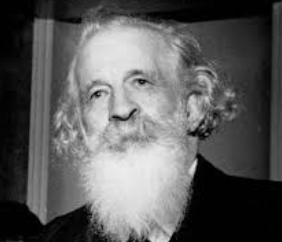
Childhood lasts all through life. It returns to animate broad sections of adult life.... Poets will help us to find this living childhood within us, this permanent, durable immobile world.
▼
Source
source
Introduction, sect. 6

2 months 4 weeks ago
It is no one's privilege to despise another. It is only a hard-won right after long experience.
3 weeks 6 days ago
The abolition of private property is, doubtless, the shortest and most significant way to characterize the revolution in the whole social order which has been made necessary by the development of industry - and for this reason it is rightly advanced by communists as their main demand.

2 months ago
I entered the [Communist] Party because its cause was just and I will leave it when it ceases to be just.
▼
Source
source
Hugo to Hoederer, Act 5, sc. 3

4 weeks ago
Nothing is indefensible - from the absurdest proposition to the most monstrous crime.

2 weeks ago
The custom of procuring abortions has reached such appalling proportions in America as to be beyond belief... So great is the misery of the working classes that seventeen abortions are committed in every one hundred pregnancies.
▼
Source
source
Mother Earth

2 months 2 days ago
I do not believe that I am now dreaming, but I cannot prove that I am not. I am, however, quite certain that I am having certain experiences, whether they be those of a dream or those of waking life.
▼
Source
source
Human Knowledge: Its Scope and Limits (1948), p. 172
3 weeks 3 days ago
Master, we saw one casting out devils in thy name; and we forbad him, because he followeth not with us. And Jesus said unto him, Forbid him not: for he that is not against us is for us.
▼
Source
source
Luke 9:49-50 (KJV)

2 months 2 days ago
The church is a sort of hospital for men's souls, and as full of quackery as the hospital for their bodies. Those who are taken into it live like pensioners in their Retreat or Sailors' Snug Harbor, where you may see a row of religious cripples sitting outside in sunny weather.
▼
Source
source
Pearls of Thought (1881) p. 43
1 week 4 days ago
If countries were named after the words you first hear when you go there, England would have to be called Damn It.
▼
Source
source
F 33
4 weeks 1 day ago
Privilege is a regulation rendering a few men, and those only, by the accident of their birth, eligible to certain situations. It kills all liberal ambition in the rest of mankind, by opposing to it an apparently insurmountable bar. It diminishes it in the favored class itself, by showing them the principal qualification as indefeasibly theirs. Privilege entitles a favored few to engross to themselves gratifications which the system of the universe left at large to all her sons; it puts into the hands of those few the means of oppression against the rest of their species; it fill them witth vain-glory, and affords them every incitement to insolence and a lofty disregard to the feeling and interests of others.
▼
Source
source
Book V, Chapter 11, "Moral Effects of Aristocracy"

2 months 2 days ago
Every hero becomes a bore at last.
▼
Source
source
Uses of Great Men

6 months 1 week ago
If we merely wait for the appropriate moment we will never live to see it, because this [appropriate moment] cannot arrive without the subjective conditions of the maturity of the revolutionary force being fulfilled - it can only arrive after a series of failed attempts.
2 months 4 weeks ago
He believes in that mummery a good deal less than I do, and I don't believe in it at all.

2 months 1 week ago
Who loves not woman, wine, and song / Remains a fool his whole life long.
▼
Source
source
As quoted by Anonymous, "On Luther's Love for and Knowledge of Music" in The Musical World. Vol VII, No. 83 (Oct 13, 1837).
2 months 2 days ago
A house sold by A to B does not wander from one place to another, although it circulates as a commodity.
▼
Source
source
Vol. II, Ch. VI, p. 152.

2 weeks 1 day ago
Christianity was an epidemic rather than a religion. It appealed to fear, hysteria and ignorance. It spread across the Western world, not because it was true, but because humans are gullible and superstitious.
▼
Source
source
p. 212

2 weeks 1 day ago
Today's fashion magazines may carry an article about the dangers of anorexia while bombarding its readers with images of emaciated young bodies representing the height of beauty and desirability.
▼
Source
source
As quoted in Feminism is for Everybody: Passionate Politics (2014), p.34
1 week 4 days ago
There are very many people who read simply to prevent themselves from thinking.
▼
Source
source
G 29

2 months 1 day ago
To aspire to be superhuman is a most discreditable admission that you lack the guts, the wit, the moderating judgment to be successfully and consummately human.
▼
Source
source
Spinoza's Worm," p. 75
4 weeks ago
I don't understand why we must do things in this world, why we must have friends and aspirations, hopes and dreams. Wouldn't it be better to retreat to a faraway corner of the world, where all its noise and complications would be heard no more? Then we could renounce culture and ambitions; we would lose everything and gain nothing; for what is there to be gained from this world?

2 weeks 1 day ago
The erotic is never free of secrecy.

1 month 1 week ago
All things are artificial, for nature is the Art of God.
▼
Source
source
Section 16

1 month 3 weeks ago
Do not repeat slander; you should not hear it, for it is the result of hot temper.
▼
Source
source
Maxim no. 23.
2 weeks ago
I do not mean to deny the biologic, physiologic, or psychologic factors in creating crime; but there is hardly an advanced criminologist who will not concede that the social and economic influences are the most relentless, the most poisonous germs of crime.

2 months 3 weeks ago
War is the father and king of all, and has produced some as gods and some as men, and has made some slaves and some free.
4 weeks ago
I define a Sign as anything which is so determined by something else, called its Object, and so determines an effect upon a person, which effect I call its Interpretant, that the latter is thereby mediately determined by the former.
▼
Source
source
Letter to Victoria, Lady Welby (1908) SS 80-81
2 weeks 3 days ago
Both are torn halves of an integral freedom, to which however they do not add up.
▼
Source
source
On high culture and popular culture, in a letter to Walter Benjamin
1 month 3 weeks ago
Philosophy is not politics, and we do our best, within our all-too-human limitations, to seek the truth, not to score points against opponents. There is little satisfaction in gaining an easy triumph over a weak opponent while ignoring better arguments against your views.
▼
Source
source
'Last Generation': A Response, The New York Times, June 16, 2010.

2 months 4 days ago
Religion, which should most distinguish us from the beasts, and ought most particularly elevate us, as rational creatures, above brutes, is that wherein men often appear most irrational, and more senseless than beasts.
▼
Source
source
Book IV, Ch. 18

3 weeks 3 days ago
Ideas, aspirations, and objectives that, by their content, transcend the established universe of discourse and action are either repelled or reduced to terms of this universe.
▼
Source
source
p. 12
3 weeks 3 days ago
Blessed are the poor in spirit, for theirs is the kingdom of heaven. Blessed are those who mourn, for they will be comforted. Blessed are the meek, for they will inherit the earth. Blessed are those who hunger and thirst for righteousness, for they will be filled. Blessed are the merciful, for they will be shown mercy. Blessed are the pure in heart, for they will see God. Blessed are the peacemakers, for they will be called sons of God. Blessed are those who are persecuted because of righteousness, for theirs is the kingdom of heaven. Blessed are you when people insult you, persecute you and falsely say all kinds of evil against you because of me. Rejoice and be glad, because great is your reward in heaven, for in the same way they persecuted the prophets who were before you.
▼
Source
source
5:1 12 (NIV) Often referred to as "The Beatitudes" this is the start of "The Sermon on the Mount".
4 weeks 1 day ago
Government was intended to suppress injustice, but it offers new occasions and temptations for the commission of it.
▼
Source
source
"Summary of Principles" 2.4

2 weeks 4 days ago
There is no tyranny in the world more hateful than that of ideas. Ideas bring ideophobia, and the consequence is that people begin to persecute their neighbors in the name of ideas. I loathe and detest all labels, and the only label that I could now tolerate would be that of ideoclast or idea breaker.
▼
Source
source
Recalled by Walter Starkie from a conversation he had with Unamuno, as related in the Epilogue of Unamuno.
4 weeks ago
Detachment from the world as an attachment to the ego... Who can realize the detachment in which you are as far away from yourself as you are from the world?

2 months 5 days ago
The qualities most useful to ourselves are, first of all, superior reason and understanding, by which we are capable of discerning the remote consequences of all our actions, and of foreseeing the advantage or detriment which is likely to result from them: and secondly, self-command, by which we are enabled to abstain from present pleasure or to endure present pain, in order to obtain a greater pleasure or to avoid a greater pain in some future time. In the union of those two qualities consists the virtue of prudence, of all the virtues that which is most useful to the individual.
▼
Source
source
Chap. II.
4 weeks ago
The terrifying experience and obsession of death, when preserved in consciousness, becomes ruinous. If you talk about death, you save part of yourself. But at the same time, something of your real self dies, because objectified meanings lose the actuality they have in consciousness.
3 weeks 3 days ago
It is not politics that can bring true liberty to the soul; that must be achieved, if at all, by philosophy;
▼
Source
source
"The Irony of Liberalism"
2 months 1 day ago
It had been, when I read it, only a vaguely pregnant piece of nonsense. Now it was all as clear as day, as evident as Euclid. Of course the Dharma-Body of the Buddha was the hedge at the bottom of the garden. At the same time, and no less obviously, it was these flowers, it was anything that I-or rather the blessed Not-I, released for a moment from my throttling embrace-cared to look at.
▼
Source
source
describing his experiment with mescaline, pp. 18-19

2 months 4 days ago
Newton... (after having remarked that geometry only requires two of the mechanical actions which it postulates, namely, to describe a straight line and a circle) says: geometry is proud of being able to achieve so much while taking so little from extraneous sources. One might say of metaphysics, on the other hand: it stands astonished, that with so much offered it by pure mathematics it can effect so little. In the meantime, this little is something which mathematics indispensably requires in its application to natural science, which, inasmuch as it must here necessarily borrow from metaphysics, need not be ashamed to allow itself to be seen in company with the latter.
▼
Source
source
Preface, Tr. Bax (1883) citing Isaac Newton's Principia
4 weeks ago
Each of us believes, quite unconsciously of course, that we alone pursue the truth, which the rest are incapable of seeking out and unworthy of attaining. This madness is so deep-rooted and so useful that it is impossible to realize what would become of each of us if it were someday to disappear.
2 weeks 3 days ago
Whoever is versed in the jargon does not have to say what he thinks, does not even have to think it properly. The jargon takes over this task.
▼
Source
source
p. 9
2 weeks 1 day ago
The rather more dubious side of Nietzsche's 'evolutionism' is his glorification of the warrior -- particularly when, as an exemplification of the warrior-hero, he chooses an archetypal 'spoilt brat' like Cesare Borgia. Nietzsche's own physical weakness and consequent inability to escape the atmosphere of the study leads him to take a rather unrealistic view of the man of action.
▼
Source
source
p. 87
2 months ago
The extreme nature of dominant-end views is often concealed by the vagueness and ambiguity of the end proposed.
▼
Source
source
Chapter IX, Section 83, p. 554
CivilSimian.com created by AxiomaticPanic, CivilSimian, Kalokagathia