

3 months 2 weeks ago
I see the situation of man in the world of planetary technicity not as an inexitricable and inescapable destiny, but I see the task of thought precisely in this, that within its own limits it helps man as such achieve a satisfactory relationship to the essence of technicity. National Socialism did indeed go in this direction. Those people, however, were far too poorly equipped for thought to arrive at a really explicit relationship to what is happening today and has been underway for the past 300 years.
▼
Source
source
As translated by William Richardson in Risk and Meaning, Nicolas Bouleau (translated by Dené Oglesby and Martin Crossley), ed. Springer, 2011

2 weeks 1 day ago
Not a May-game is this man's life; but a battle and a march, a warfare with principalities and powers. No idle promenade through fragrant orange-groves and green flowery spaces, waited on by the choral Muses and the rosy Hours: it is a stern pilgrimage through burning sandy solitudes, through regions of thick-ribbed ice. He walks among men; loves men, with inexpressible soft pity,-as they cannot love him: but his soul dwells in solitude, in the uttermost parts of Creation. In green oases by the palm-tree wells, he rests a space; but anon he has to journey forward, escorted by the Terrors and the Splendours, the Archdemons and Archangels. All Heaven, all Pandemonium are his escort. The stars keen-glancing, from the Immensities, send tidings to him; the graves, silent with their dead, from the Eternities. Deep calls for him unto Deep.
2 months 2 weeks ago
Every good mathematician is at least half a philosopher, and every good philosopher is at least half a mathematician.
▼
Source
source
Attributed to Frege in: A. A. B. Aspeitia (2000), Mathematics as grammar: 'Grammar' in Wittgenstein's philosophy of mathematics during the Middle Period, Indiana University, p. 25
2 weeks 1 day ago
Philosophy complains that Custom has hoodwinked us, from the first; that we do everything by Custom, even Believe by it; that our very Axioms, let us boast of Free-thinking as we may, are oftenest simply such Beliefs as we have never heard questioned. Nay, what is Philosophy throughout but a continual battle against Custom; an ever-renewed effort to transcend the sphere of blind Custom, and so become Transcendental?
▼
Source
source
Bk. III, ch. 8.

4 months 1 week ago
Inasmuch as love grows in you, in so much beauty grows; for love is itself the beauty of the soul.
▼
Source
source
as translated by H. Browne and J. H. Meyers, The Nicene and Post Nicene Fathers (1995)

2 months 2 weeks ago
One of the greatest delusions of the average man is to forget that life is death's prisoner.

2 months 3 weeks ago
All persons possessing any portion of power ought to be strongly and awfully impressed with an idea that they act in trust and that they are to account for their conduct in that trust to the one great Master, Author, and Founder of society.
1 week 3 days ago
I love men too, not merely individuals, but every one. But I love them with the consciousness of egoism; I love them because love makes me happy, I love because loving is natural to me, because it pleases me. I know no 'commandment of love'.
▼
Source
source
Cambridge 1995, p. 258
2 months 3 weeks ago
Whoever hasn't yet arrived at the clear realization that there might be a greatness existing entirely outside his own sphere and for which he might have absolutely no feeling; whoever hasn't at least felt obscure intimations concerning the approximate location of this greatness in the geography of the human spirit: that person either has no genius in his own sphere, or else he hasn't been educated to the level of the classic.
▼
Source
source
Lucinde and the Fragments, P. Firchow, trans. (1991), "Critical Fragments," § 36

3 months 3 weeks ago
Standing on the bare ground, - my head bathed by the blithe air, and uplifted into infinite space, - all mean egotism vanishes. I become a transparent eye-ball; I am nothing; I see all; the currents of the Universal Being circulate through me; I am part or particle of God.
▼
Source
source
Nature
1 month 4 days ago
The king who is situated anywhere immediately on the circumference of the conqueror's territory is termed the enemy.The king who is likewise situated close to the enemy, but separated from the conqueror only by the enemy, is termed the friend (of the conqueror).
▼
Source
source
Book VI, "The Source of Sovereign States"

1 week 2 days ago
Would you not think him an utter fool who wept because he was not alive a thousand years ago? And is he not just as much of a fool who weeps because he will not be alive a thousand years from now? It is all the same; you will not be, and you were not. Neither of these periods of time belongs to you.
1 month 2 weeks ago
The real reason people are conservatives is that they are attached to the things that they love, and want to preserve them from abuse and decay. They are attached to their family, their friends, their religion, and their immediate environment. They have made a lifelong distinction between the things that nourish and the things that threaten their security and peace of mind.
▼
Source
source
Conservatism and the Conservatory,, National Review

1 month 3 weeks ago
Electric circuitry profoundly involves men with one another. Information pours upon us, instantaneously and continuously.

2 months 1 week ago
The vanity of the passing world and love are the two fundamental and heart-penetrating notes of true poetry. And they are two notes of which neither can be sounded without causing the other to vibrate. The feeling of the vanity of the passing world kindles love in us, the only thing that triumphs over the vain and transitory, the only thing that fills life again and eternalizes it.
3 months 3 weeks ago
When our life ceases to be inward and private, conversation degenerates into mere gossip. We rarely meet a man who can tell us any news which he has not read in a newspaper, or been told by his neighbor; and, for the most part, the only difference between us and our fellow is, that he has seen the newspaper, or been out to tea, and we have not. In proportion as our inward life fails, we go more constantly and desperately to the post-office.
▼
Source
source
p. 491
2 months 2 weeks ago
We must now turn to the question of how the existence of archetypes can be proved. Since archetypes are supposed to produce certain psychic forms, we must discuss how and where one can get hold of the material demonstrating these forms. The main source, then, is dreams, which have the advantage of being involuntary, spontaneous products of nature not falsified by any conscious purpose. By questioning the individual one can ascertain which of the motifs appearing in the dream are known to him... Consequently, we must look for motifs which could not possibly be known to the dreamer and yet behave functionally of the archetype known from historical sources.
▼
Source
source
p. 48

4 months 2 weeks ago
Those who were best able to provide themselves with the means of security against their neighbors, being thus in possession of the surest guarantee, passed the most agreeable life in each other's society; and their enjoyment of the fullest intimacy was such that, if one of them died before his time, the survivors did not mourn his death as if it called for sympathy.
1 month 3 weeks ago
Literature is idiosyncratic arrangements in horizontal lines in only twenty-six symbols, ten arabic numbers, and about eight punctuation marks.
▼
Source
source
Public conversation with Lee Stringer, in Like Shaking Hands With God

3 months 3 weeks ago
I think people who are unhappy are always proud of being so, and therefore do not like to be told that there is nothing grand about their unhappiness. A man who is melancholy because lack of exercise has upset his liver always believes that it is the loss of God, or the menace of Bolshevism, or some such dignified cause that makes him sad. When you tell people that happiness is a simple matter, they get annoyed with you.
▼
Source
source
Letter to W. W. Norton, 17 February, 1931
2 days ago
What is it that we humans depend on? We depend on our words... Our task is to communicate experience and ideas to others. We must strive continually to extend the scope of our description, but in such a way that our messages do not thereby lose their objective or unambiguous character ... We are suspended in language in such a way that we cannot say what is up and what is down. The word "reality" is also a word, a word which we must learn to use correctly.
▼
Source
source
Quoted in Philosophy of Science Vol. 37 (1934), p. 157, and in The Truth of Science : Physical Theories and Reality (1997) by Roger Gerhard Newton, p. 176
4 months 1 week ago
Those of our pleasures which come most rarely give the greatest delight.
▼
Source
source
Fragment 33 (Oldfather translation)

3 months 3 weeks ago
...wickedness, when you examine it, turns out to be the pursuit of some good in the wrong way. You can be good for the mere sake of goodness: you cannot be bad for the mere sake of badness. You can do a kind action when you are not feeling kind and when it gives you no pleasure, simply because kindness is right; but no one ever did a cruel action simply because cruelty is wrong - only because cruelty was pleasant or useful to him. in other words badness cannot succeed even in being bad in the same way in which goodness is good. Goodness is, so to speak, itself: badness is only spoiled goodness.
▼
Source
source
Book II, Chapter 2, "The Invasion"

2 months 2 weeks ago
The will is a unity of two different aspects or moments: first, the individual's ability to abstract from every specific condition and, by negating it, to return to the absolute liberty of the pure ego; secondly, the individual's act of freely adopting a concrete condition, freely affirming his existence as a particular, limited ego.
▼
Source
source
P. 185
3 months 3 weeks ago
Passing from quantity to quality of population, we come to the question of eugenics. We may perhaps assume that, if people grow less superstitious, government will acquire the right to sterilize those who are not considered desirable as parents. This power will be used, at first, to diminish imbecility, a most desirable object. But probably, in time, opposition to the government will be taken to prove imbecility, so that rebels of all kinds will be sterilized. Epileptics, consumptives, dipsomaniacs and so on will gradually be included; in the end, there will be a tendency to include all who fail to pass the usual school examinations. The result will be to increase the average intelligence; in the long run, it may be greatly increased. But probably the effect upon really exceptional intelligence will be bad. Mr. Micawber, who was Dickens's father, would hardly have been regarded as a desirable parent. How many imbeciles ought to outweigh one Dickens I do not profess to know.
2 months 1 week ago
Parents will strip themselves of everything, will sacrifice everything for the physical well-being of their child, will wake nights and stand in fear and agony before some physical ailment of their beloved one; but will remain cold and indifferent, without the slightest understanding before the soul cravings and the yearnings of their child, neither hearing nor wishing to hear the loud knocking of the young spirit that demands recognition. On the contrary, they will stifle the beautiful voice of spring, of a new life of beauty and splendor of love; they will put the long lean finger of authority upon the tender throat and not allow vent to the silvery song of the individual growth, of the beauty of character, of the strength of love and human relation, which alone make life worth living.
2 weeks 1 day ago
For the whole Past, as I keep repeating, is the possession of the Present; the Past had always something true, and is a precious possession. In a different time, in a different place, it is always some other side of our common Human Nature that has been developing itself. The actual True is the sum of all these; not any one of them by itself constitutes what of Human Nature is hitherto developed. Better to know them all than misknow them. "To which of these Three Religions do you specially adhere?" inquires Meister of his Teacher. "To all the Three!" answers the other: "To all the Three; for they by their union first constitute the True Religion."

4 months 3 weeks ago
He kept the middle way, that's all: he was the type of man for whom one has an affection of the mild but steady order - which is the kind that wears best.

2 months 2 weeks ago
But if it bee well considered, The praise of Ancient Authors, proceeds not from the reverence of the Dead, but from the competition and mutual envy of the Living.
▼
Source
source
Review and Conclusion, p. 395
1 month 2 weeks ago
For my part, I travel not to go anywhere, but to go. I travel for travel's sake. The great affair is to move.
▼
Source
source
Travels with a Donkey in the Cévennes (1878).

4 months 1 week ago
But there is nothing sweeter than to dwell in towers that rise On high, serene and fortified with teachings of the wise, From which you may peer down upon the others as they stray This way and that, seeking the path of life, losing their way: The skirmishing of wits, the scramble for renown, the fight, Each striving harder than the next, and struggling day and night, To climb atop a heap of riches and lay claim to might.
▼
Source
source
Book II, lines 7-13 (tr. Stallings)
2 months 2 weeks ago
People think they have taken quite an extraordinarily bold step forward when they have rid themselves of belief in hereditary monarchy and swear by the democratic republic. In reality, however, the state is nothing but a machine for the oppression of one class by another, and indeed in the democratic republic no less than in the monarchy.
▼
Source
source
Introduction to 1891 edition of Karl Marx's, The Civil War in France
3 months 3 weeks ago
He needs no library, for he has not done thinking; no church, for he is himself a prophet; no statute book, for he hath the Lawgiver; no money, for he is value itself; no road, for he is at home where he is.
▼
Source
source
December 26, 1839
2 months 2 weeks ago
Surrender of individuality by the many to someone who is taken to be a superindividual explains the retrograde movement of society. Dictatorships and totalitarian states, and belief in the inevitability of this or that result coming to pass are, strange as it may sound, ways of denying the reality of time and the creativeness of the individual.
2 months 2 weeks ago
The teacher of love teaches struggle. The teacher of lifeless isolation from the world teaches peace.


3 months 3 weeks ago
A reproach can only hurt if it hits the mark. Whoever knows that he does not deserve a reproach can treat it with contempt.
2 months 2 weeks ago
Language transcends us and yet, we speak.
▼
Source
source
p. 349
3 months 2 weeks ago
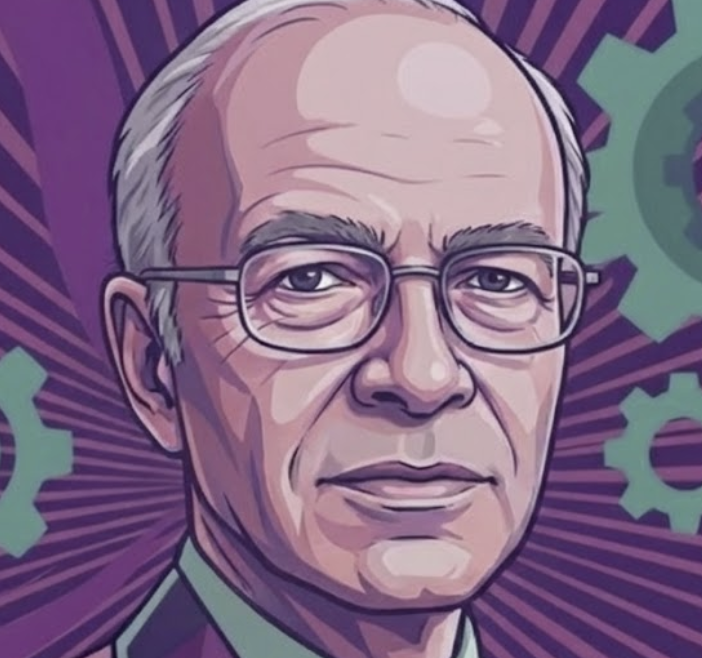
Philosophy is not politics, and we do our best, within our all-too-human limitations, to seek the truth, not to score points against opponents. There is little satisfaction in gaining an easy triumph over a weak opponent while ignoring better arguments against your views.
▼
Source
source
'Last Generation': A Response, The New York Times, June 16, 2010.

4 months 3 days ago
You worry whether the drought will end. It is far better that you pray that God may water your mind lest virtue wither away in it. You are greatly concerned with money that is lost or being wasted, or you worry about the advance of old age. I think it much to be desired that you provide first of all for the needs of your soul.

3 months 3 weeks ago
If we take a survey of ages and of countries, we shall find the women, almost - without exception - at all times and in all places, adored and oppressed. Man, who has never neglected an opportunity of exerting his power, in paying homage to their beauty, has always availed himself of their weakness He has been at once their tyrant and their slave.
2 months 2 weeks ago
I must also have a dark side if I am to be whole.

3 months 4 weeks ago
There is no art which one government sooner learns of another than that of draining money from the pockets of the people.
▼
Source
source
Chapter II, Part II, Appendix to Articles I and II.
5 days ago
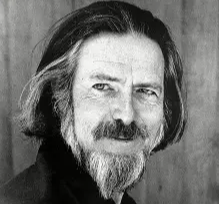
Over the years it has become my firm opinion that sexual activity (even if only through masturbation) is "requisite and necessary, as well for the body as for the soul"; for men and women alike. It stimulates your glands, exercises your pelvis, thrills your nerves, brings mind and body together as one, and culminates in an ecstasy in which there is neither past nor future nor separation between self and other. We need that as we need vitamins, proteins, water, and air.
▼
Source
source
p. 122
5 days ago
The old view was that delicacy of language was part of the nature, the sacred nature, of eros and that to speak about it in any other way would be to misunderstand it. What has disappeared is the risk and the hope of human connectedness embedded in eros. Ours is a language that reduces the longing for an other to the need for individual, private satisfaction and safety.
▼
Source
source
pp. 13-14.

4 months 3 weeks ago
Miniaturization doesn't actually make sense unless you miniaturize the very atoms of which matter is composed. Otherwise a tiny brain in a man the size of an insect, composed of normal atoms, is composed of too few atoms for the miniaturized man to be any more intelligent than the ant. Also, miniaturizing atoms is impossible according to the rules of quantum mechanics.
CivilSimian.com created by AxiomaticPanic, CivilSimian, Kalokagathia