


4 months 1 week ago
The heathen really make their self-invented notions and dreams of God and idol. Ultimately, they put their trust in that which is nothing. So it is with all idolatry. For it happens not merely by erecting an image and worshipping it, but rather it happens in the heart. For the heart seeks help and consolation from creatures, saints, or devils. It neither cares for God, nor looks to Him for anything better than to believe that He is willing to help.
▼
Source
source
"On Infant Baptism," Large Catechism
5 months 3 days ago
Now any dogma, based primarily on faith and emotionalism, is a dangerous weapon to use on others, since it is almost impossible to guarantee that the weapon will never be turned on the user.
3 months 3 weeks ago
I never believed in a God. [...] There may have been times when I wondered if there might be a God, but it always seemed to me wildly implausible that a God worth worshipping could allow the Holocaust to occur.
▼
Source
source
From an interview, as cited by Dan Goldberg "Peter Singer: is he really the most dangerous man in the world?", The Jewish Chronicle

3 months 6 days ago
I considerd a general War against Jacobins and Jacobinism, as the only possible chance of saving Europe, (and England as included in Europe) from a truly frightful revolution. ... It is my Protest against the delusion, by which some have been taught to look upon this Jacobin contest at home as an ordinary party squabble about place or Patronage; and to regard this Jacobin War abroad as a common War about Trade, or Territorial Boundaries, or about a political Balance of power among Rival or jealous States.
▼
Source
source
Letter to the Duke of Portland (29 September 1793), quoted in P. J. Marshall and John A. Woods (eds.)
3 months 2 days ago
The idea of an all-powerful divine Being is present everywhere, unconsciously if not consciously, because it is an archetype. There is in the psyche some superior power, and if it is not consciously a god, it is the "belly" at least, in St. Paul's words. I therefore consider it wiser to acknowledge the idea of God consciously, for, if we do not, something else is made God, usually something quite inappropiate and stupid such as only an "enlightened" intellect could hatch forth.
▼
Source
source
C. G. Jung. 2014. Collected Works of C.G. Jung, Volume 7: Two Essays in Analytical Psychology. Princeton University Press. p. 71
2 weeks 2 days ago
Woe to that nation whose literature is disturbed by the intervention of power. Because that is not just a violation against "freedom of print", it is the closing down of the heart of the nation, a slashing to pieces of its memory. The nation ceases to be mindful of itself, it is deprived of its spiritual unity, and despite a supposedly common language, compatriots suddenly cease to understand one another Woe to that nation whose literature is cut short by the intrusion of force. This is not merely interference with freedom of the press but the sealing up of a nation's heart, the excision of its memory.
▼
Source
source
Variant translation, as quoted in TIME
1 month 3 weeks ago
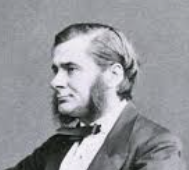
Our reverence for the nobility of manhood will not be lessened by the knowledge, that Man, is in substance and in structure, one with the brutes; for, he alone possesses the marvellous endowment of intelligible and rational speech, whereby, in the secular period of his existence, he has slowly accumulated and organized the experience which is almost wholly lost with the cessation of every individual life in other animals; so that now he stands raised upon it as on a mountain top, far above the level of his humble fellows, and transfigured from his grosser nature by reflecting, here and there, a ray from the infinite source of truth.
▼
Source
source
Ch.2, p. 132
2 weeks ago
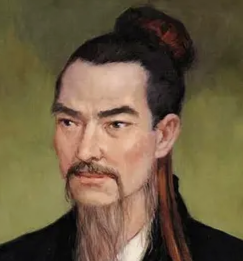
All states in the world, large or small, are cities of Heaven, and all people, young or old, honourable or humble, are its subjects; for they all graze oxen and sheep, feed dogs and pigs, and prepare clean wine and cakes to sacrifice to Heaven. Does this not mean that Heaven claims all and accepts offerings from all? Since Heaven does claim all and accepts offerings from all, what then can make us say that it does not desire men to love and benefit one another? Hence those who love and benefit others Heaven will bless. Those who hate and harm others Heaven will curse, for it is said that he who murders the innocent will be visited by misfortune. How else can we explain the fact that men, murdering each other, will be cursed by Heaven? Thus we are certain that Heaven desires to have men love and benefit one another and abominates to have them hate and harm one another.
▼
Source
source
Book 1; On the necessity of standards
2 months 2 weeks ago
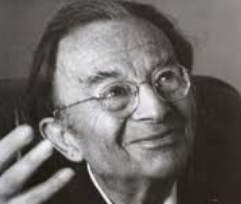
Among most Christians the Old Testament is little read in comparison to the New Testament. Furthermore, much of what is read is often distorted by prejudice. Frequently the Old Testament is believed to express exclusively the principles of justice and revenge, in contrast to the New Testament, which represents those of love and mercy; even the sentence, "Love your neighbor as yourself," is thought by many to derive from the New, not the Old Testament. Or the Old Testament is believed to have been written exclusively in the spirit of narrow nationalism and to contain nothing of supranational universalism so characteristic of the New Testament.
▼
Source
source
You Shall Be as Gods: A Radical Interpretation of the Old Testament and Its Tradition (1966) "Introduction"
4 months 5 days ago
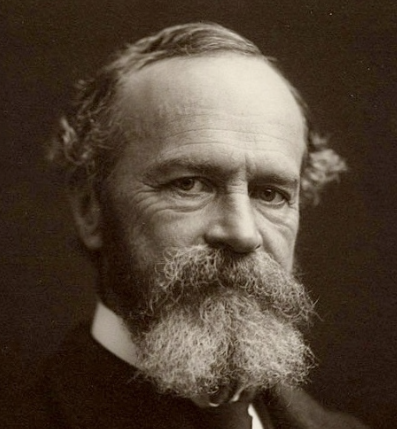
I will now confess my own utopia. I devoutly believe in the reign of peace and in the gradual advent of some sort of socialistic equilibrium. The fatalistic view of the war function is to me nonsense, for I know that war-making is due to definite motives and subject to prudential checks and reasonable criticisms, just like any other form of enterprise. And when whole nations are the armies, and the science of destruction vies in intellectual refinement with the science of production, I see that war becomes absurd and impossible from its own monstrosity. Extravagant ambitions will have to be replaced by reasonable claims, and nations must make common cause against them.



2 months 3 days ago
When the evolutionary process shifts from biology to software technology the body becomes the old hardware environment. The human body is now a probe, a laboratory for experiments.
▼
Source
source
(p. 180)
2 months 3 weeks ago
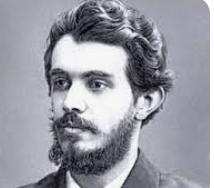
Berdyaev has been categorized as a Christian existentialist and a mystical philosopher. He never avoided the label of "mystic" since he felt it was the mystics of the world who came closest to understanding the role of spirit. Many of the philosophers he quoted were mystics - Meister Eckhart, Angelus Silesius and especially Jacob Boehme. The influence of Dostoevsky was central to his thought. Nevertheless, Berdyaev is not a naively irrational thinker; he brings an enormous fund of philosophical knowledge combined with the profundity of his own thought to support his view of existence. There are no dogmas in his writings to offend one's intellectual conscience.
▼
Source
source
Richard Schain, in In Love with Eternity : Philosophical Essays and Fragments (2005), Ch. 7 : Nikolai Alexandrovich Berdyaev - A Champion of the Spirit, p. 47
4 months 6 days ago
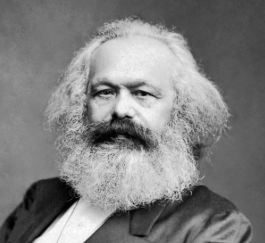
In civil law the existing property relationships are declared to be the result of the general will. The jus utendi et abutendi itself asserts on the one hand the fact that private property has become entirely independent of the community, and on the other the illusion that private property itself is based solely on the private will, the arbitrary disposal.
▼
Source
source
ibid, pp. 188

3 weeks 5 days ago
The eye of the intellect "sees in all objects what it brought with it the means of seeing."
▼
Source
source
Varnhagen von Ense's Memoirs.
2 days ago
To live your brief life rightly, isn't that enough?
▼
Source
source
(Hays translation) X, 31
5 months 6 days ago
How will one part of the infinite be above, and another below? Or how will it have extremes or a middle? Further still, every sensible body is in place; but the species and differences of place are upward and downward, before and behind, to the right hand and to the left: and these things not only thus subsist with relation to us, and by position, but have a definite subsistence in the universe itself. But it is impossible that these things should be in the infinite: and... that there should be an infinite place. But every body is in place; and therefore it is also impossible that there should be an infinite body. ...Therefore ...there is not an infinite body in energy.
3 months 1 day ago
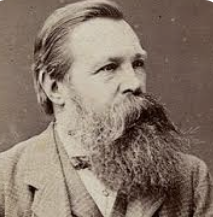
Democracy would be wholly valueless to the proletariat if it were not immediately used as a means for putting through measures directed against private property and ensuring the livelihood of the proletariat.
2 months 3 weeks ago
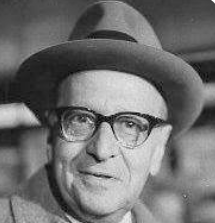
If it were not for the founder of the school, Charles S. Pierce, who has told us that he 'learned philosophy out of Kant,' one might be tempted to deny any philosophical pedigree to a doctrine that holds not that our expectations are fulfilled and our actions successful because our ideas are true, but rather that our ideas are true because our expectations are fulfilled and our actions successful. describing the pragmatist view,
▼
Source
source
p. 42.
2 months 4 weeks ago
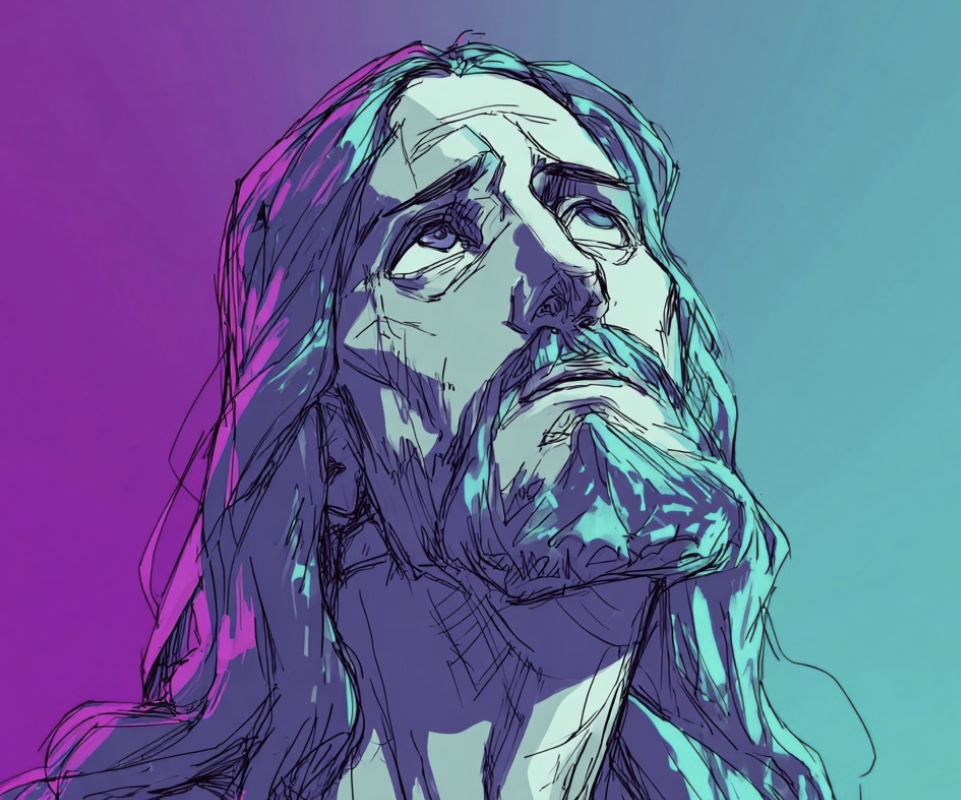
What is exalted among men is an abomination in the sight of God.
▼
Source
source
16:15 ESV
2 days ago
Disturbance comes only from within-from our own perceptions.
▼
Source
source
(Hays translation) IV, 4

3 months 1 day ago
Once we begin to want, we fall under the jurisdiction of the Devil.

2 months 3 weeks ago
Warmth, warmth, more warmth! for we are dying of cold and not of darkness. It is not the night that kills, but the frost.
4 months 1 week ago
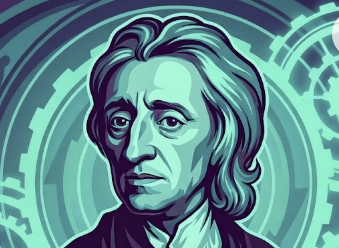
And if he be too forward to venture upon his own strength and skill, and perplexity and trouble of a misadventure now and then, that reaches not his innocence, his health, or reputation, may not be an ill way to teach him more caution.
▼
Source
source
Sec. 94
3 months 1 day ago
From the moment when labour can no longer be converted into capital, money, or rent, into a social power capable of being monopolized, i.e., from the moment when individual property can no longer be transformed into bourgeois property, into capital, from that moment, you say individuality vanishes.

4 months 6 days ago
The great majority of men and women, in ordinary times, pass through life without ever contemplating or criticising, as a whole, either their own conditions or those of the world at large. They find themselves born into a certain place in society, and they accept what each day brings forth, without any effort of thought beyond what the immediate present requires. Almost as instinctively as the beasts of the field, they seek the satisfaction of the needs of the moment, without much forethought, and without considering that by sufficient effort the whole conditions of their lives could be changed.
▼
Source
source
Introduction, p. 4
4 days ago
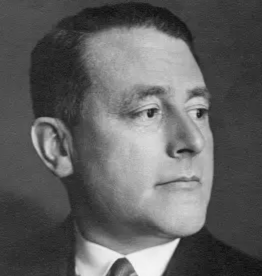
A definition of the political can be obtained only by discovering and defining the specifically political categories.

2 months 4 weeks ago
The precarious ontological link between Logos and Eros is broken, and scientific rationality emerges as essentially neutral.
▼
Source
source
p. 147
5 months 3 days ago
There is no belief, however foolish, that will not gather its faithful adherents who will defend it to the death.

4 months 1 day ago
If you tried to doubt everything you would not get as far as doubting anything. The game of doubting itself presupposes certainty.
3 months 2 days ago
The great problems of life - sexuality, of course, among others - are always related to the primordial images of the collective unconscious. These images are really balancing or compensating factors which correspond with the problems life presents in actuality. This is not to be marvelled at, since these images are deposits representing the accumulated experience of thousands of years of struggle for adaptation and existence.
▼
Source
source
Ch. 5, p. 271
4 months 6 days ago
The position of the revolutionary party in Germany is certainly difficult at the moment, but, with some critical analysis of the circumstances, clear nevertheless. As to the "governments," it is obvious from every point of view, if only for the sake of Germany's existence, that the demand must be put to them not to remain neutral, but, as you rightly say, to be patriotic. But the revolutionary point is to be given to the affair simply by emphasising the antagonism to Russia more strongly than the antagonism against Boustrapa.
▼
Source
source
Letter to Friedrich Engels (18 May 1859), quoted in Karl Marx and Friedrich Engels, Selected Correspondence, 1846-1895 (1943), p. 122

4 months 5 days ago
It is time to be old, To take in sail: - The god of bounds, Who sets to seas a shore, Came to me in his fatal rounds, And said: 'No more!
▼
Source
source
Terminus
3 months 1 day ago
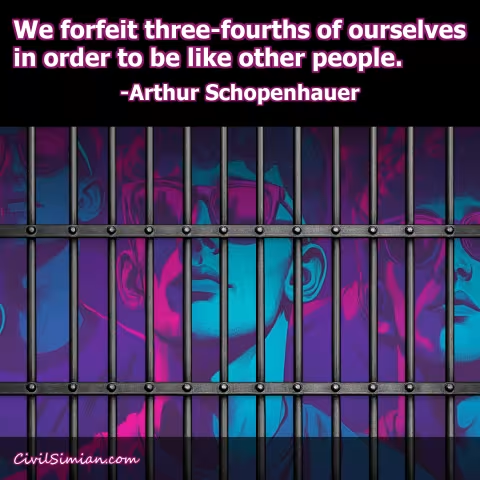
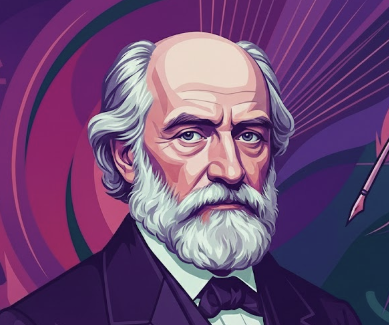
The reaction against your own thought in itself lends life to thought. How this reaction is born is hard to describe, because it identifies with the very rare intellectual tragedies. - The tension, the degree and level of intensity of a thought proceeds from its internal antinomies, which in turn are derived from the unsolvable contradictions of a soul. Thought cannot solve the contradictions of the soul. As far as linear thinking is concerned, thoughts mirror themselves in other thoughts, instead of mirroring a destiny.
4 months 1 week ago
It is the courage to make a clean breast of it in the face of every question that distinguishes the philosopher. He must be like Sophocles' Oedipus, who, seeking enlightenment concerning his terrible fate, pursues his indefatigable inquiry even though he divines that appalling horror awaits him in the answer. But most of us carry with us the Jocasta in our hearts, who begs Oedipus, for God's sake, not to inquire further.
▼
Source
source
Letter to Johann Wolfgang von Goethe (November 1815)
4 months 5 days ago
Plato was synthesis of Europe and Asia, and a decidedly Oriental element pervades his philosophy, giving it a sunrise color.
▼
Source
source
Quoted in Swami Abhedananda, India and Her People, 6th ed., Calcutta: Ramakrishna Vedanta Math, 1945
4 weeks ago
It seems to us that the past is our property. Well, on the contrary - we are its property, because we are not able to make changes in it, while it fills the whole of our existence.
▼
Source
source
Original: "Otóż przeciwnie - to my jesteśmy jej własnością, ponieważ nie jesteśmy w stanie dokonać w niej zmian, ona natomiast wypełnia całość naszego istnienia." Klucz niebieski albo opowieści biblijne zebrane ku pouczeniu i przestrodze
2 months 4 weeks ago
Power as is really divided, and as dangerously to all purposes, by sharing with another an Indirect Power, as a Direct one.
▼
Source
source
The Third Part, Chapter 42, p. 315
3 days ago
There is nothing but violence in the universe; but we are spoiled by a modern philosophy that tells us all is good, whereas evil has tainted everything, and in a very real sense, all is evil, since nothing is in its place.
▼
Source
source
Chapter III, p. 31
2 months 1 week ago
Simulation is no longer that of a territory, a referential being or substance. It is a generation by models of a real without origin or reality: a hyperreal.
▼
Source
source
"The Precession of Simulacra," p. 1
4 months 6 days ago
Self-respect will keep a man from being abject when he is in the power of enemies, and will enable him to feel that he may be in the right when the world is against him.
▼
Source
source
Authority and the Individual (1949), p. 59

5 months 2 days ago
Every rebellion implies some kind of unity.

3 months 2 weeks ago
Love is a God, who cooperates in securing the safety of the city.
▼
Source
source
As quoted in Deipnosophists by Athenaeus, xiii. 561c.
4 weeks 1 day ago
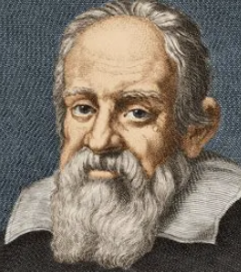
My purpose is to set forth a very new science dealing with a very ancient subject. There is, in nature, perhaps nothing older than motion, concerning which the books written by philosophers are neither few nor small; nevertheless I have discovered by experiment some properties of it which are worth knowing and which have not hitherto been either observed or demonstrated. Some superficial observations have been made, as, for instance, that the free motion [naturalem motum] of a heavy falling body is continuously accelerated; but to just what extent this acceleration occurs has not yet been announced; for so far as I know, no one has yet pointed out that the distances traversed, during equal intervals of time, by a body falling from rest, stand to one another in the same ratio as the odd numbers beginning with unity.
▼
Source
source
Author, Third Day. Change of Position
2 months 3 weeks ago
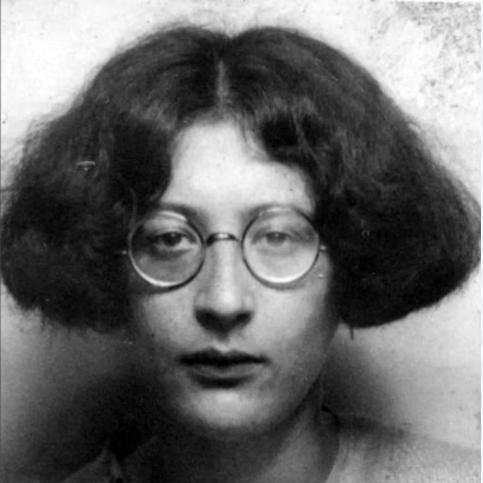
I have sometimes told myself that if only there were a notice on church doors forbidding entry to anyone with an income above a certain figure, and a low one, I would be converted at once.
▼
Source
source
Letter to Georges Bernanos (1938), in Seventy Letters, as translated by Richard Rees (Wipf and Stock: 1965), p. 105
3 months 6 days ago
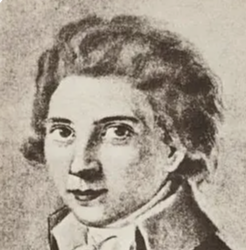
Think of something finite molded into the infinite, and you think of man.
▼
Source
source
"Selected Ideas (1799-1800)", Dialogue on Poetry and Literary Aphorisms, Ernst Behler and Roman Struc, trans. (1968) #98
4 months 1 week ago
The truth can wait, for she lives a long life.
▼
Source
source
Willen in der Natur (On the Will in Nature), 1836;

4 months 5 days ago
Our psychological experiences are all equally facts. There is nothing to choose between them. No psychological experience is "truer," so far as we are concerned, than any other. For even if one should correspond more closely to things in themselves as perceived by some hypothetical non-human being, it would be impossible for us to discover which it was. Science is no "truer" than common sense, or lunacy, or art, or religion. It permits us to organize our experience profitably; but tells us nothing about the real nature of the world to which our experiences are supposed to refer. From the internal reality, by which I mean the totality of psychological experiences, it actually separates us. Art, for example, deals with many more aspects of this internal reality than does science, which confines itself deliberately and by convention to the study of one very limited class of experiences - the experiences of sense.
▼
Source
source
"One and Many," p. 5-6
CivilSimian.com created by AxiomaticPanic, CivilSimian, Kalokagathia