


4 months 3 days ago
If we allow them any influence in our conscience, they become the cloak of evil, heresies and blasphemies.
▼
Source
source
Marthin Luther, Comment, ad Galat., 310. As cited by Rev. Msgr. Patrick F. O'Hare (1916), The Facts about Luther, p. 119. OCLC 4200594.

2 months 1 week ago
The universities are schools of education, and schools of research. But the primary reason for their existence is not to be found either in the mere knowledge conveyed to the students or in the mere opportunities for research afforded to the members of the faculty. Both these functions could be performed at a cheaper rate, apart from these very expensive institutions. Books are cheap, and the system of apprenticeship is well understood. So far as the mere imparting of information is concerned, no university has had any justification for existence since the popularization of printing in the fifteenth century. Yet the chief impetus to the foundation of universities came after that date, and in more recent times has even increased. The justification for a university is that it preserves the connection between knowledge and the zest of life, by uniting the young and the old in the imaginative consideration of learning.

1 week 3 days ago
Virtue alone affords everlasting and peace-giving joy; even if some obstacle arise, it is but like an intervening cloud, which floats beneath the sun but never prevails against it.

2 months 2 weeks ago
As the great words of freedom and fulfillment are pronounced by campaigning leaders and politicians, on the screens and radios and stages, they turn into meaningless sounds which obtain meaning only in the context of propaganda, business, discipline, and relaxation. This assimilation of the ideal with reality testifies to the extent to which the ideal has been surpassed. It is brought down from the sublimated realm of the soul or the spirit or the inner man, and translated into operational terms and problems. Here are the progressive elements of mass culture. The perversion is indicative of the fact that advanced industrial society is confronted with the possibility of a materialization of ideals. The capabilities of this society are progressively reducing the sublimated realm in which the condition of man was represented, idealized, and indicted. Higher culture becomes part of the material culture. In this transformation, it loses the greater part of its truth.
▼
Source
source
pp. 57-58
1 week 3 days ago
To preserve the life of citizens, is the greatest virtue in the father of his country.
▼
Source
source
The quote is from a Roman tragedy Octavia; Act 2, Line 444, where Seneca advises Nero against carrying out his tyrannical plans. Seneca's attribution to the play is generally discredited by modern scholarship.

4 months 3 weeks ago
Parmenides: Whatever the subject of your hypothesis, if you suppose that it is or is not, or that it experiences any other affection, you must consider what happens to it and to any other particular things you may choose, and to a greater number and to all in the same way; and you must consider other things in relation to themselves and to anything else you may choose in any instance, whether you suppose that the subject of your hypothesis exists or does not exist, if you are to train yourself completely to see the truth perfectly.

3 months ago
Time which antiquates Antiquities, and hath an art to make dust of all things.
▼
Source
source
Chapter V

3 months 3 weeks ago
There is a physical relation between physical things. But it is different with commodities.
▼
Source
source
Vol. I, Ch. 1, Section 4, pg. 83.
1 week 3 days ago
That man lives badly who does not know how to die well.
▼
Source
source
Chapter 11, Section 4
2 weeks 2 days ago
Ever since prehistoric antiquity one field of study after another has crossed the divide between what the historian might call its prehistory as a science and its history proper. These transitions to maturity have seldom been so sudden or so unequivocal as my necessarily schematic discussion may have implied. But neither have they been historically gradual, coextensive, that is to say, with the entire development of the fields within which they occurred.
▼
Source
source
p. 22

4 months 2 days ago
The entire method consists in the order and arrangement of the things to which the mind's eye must turn so that we can discover some truth.
▼
Source
source
Rules for the Direction of the Mind: X.379 As quoted in Clarke, Desmond M. (2006). Descartes : a Biography. Cambridge Press. p. 67. ISBN 978-0-521-82301-2.

2 months 2 weeks ago
The cry of equality pulls everyone down.
▼
Source
source
Quoted in The Observer September 13, 1987.

3 months 3 weeks ago
Of all forms of caution, caution in love is perhaps the most fatal to true happiness.
3 months 2 weeks ago
It is also the becoming-space of the spoken chain - which has been called temporal or linear; a becoming-space which makes possible both writing and every correspondence between speech and writing, every passage from one to the other.The activity or productivity connoted by the a of différance refers to the generative movement in the play of differences. The latter are neither fallen from the sky nor inscribed once and for all in a closed system, a static structure that a synchronic and taxonomic operation could exhaust. Differences are the effects of transformations, and from this vantage the theme of différance is incompatible with the static, synchronic, taxonomic, ahistoric motifs in the concept of structure.
▼
Source
source
p. 28
2 months 2 weeks ago
Dialectical thought understands the critical tension between "is" and "ought" first as an ontological condition, pertaining to the structure of Being itself. However, the recognition of this state of Being - its theory - intends from the beginning a concrete practice. Seen in the light of a truth which appears in them falsified or denied, the given facts themselves appear false and negative.
▼
Source
source
p. 133

2 months 1 week ago
Someone has said that it requires less mental effort to condemn than to think. The widespread mental indolence, so prevalent in society, proves this to be only too true. Rather than to go to the bottom of any given idea, to examine into its origin and meaning, most people will either condemn it altogether, or rely on some superficial or prejudicial definition of non-essentials.


1 month 3 weeks ago
I urge you to please notice when you are happy, and exclaim or murmur or think at some point, "If this isn't nice, I don't know what is."
▼
Source
source
Knowing What's Nice, an essay from In These Times
4 days ago
The good effects that emanate from the same source are equally diffused upon the earth. Different regions become partakers in these benefits in different ways; so that neither their production comes to an end, nor does the Deity confer his blessings upon the recipient world with any degree of variation. For where the substance is the same, so is the action thereof, in the case of Divine Powers; especially with him who is king of them all, namely, the Sun; of whom the motion is the most simple amongst all the bodies that move in a contrary direction to the world, which fact that most excellent philosopher, Aristotle, adduces to prove the superiority of that luminary to the others.

3 months 3 weeks ago
The original scriptures of most religions are poetical and unsystematic. Theology, which generally takes the form of a reasoned commentary on the parables and aphorisms of the scriptures, tends to make its appearance at a later stage of religious history. The Bhagavad-Gita occupies an intermediate position between scripture and theology; for it combines the poetical qualities of the first with the clear-cut methodicalness of the second... one of the clearest and most comprehensive summaries of the Perennial Philosophy ever to have been made. Hence its enduring value, not only for Indians, but for all mankind.

3 months 3 weeks ago
No congress, nor mob, nor guillotine, nor fire, nor all together, can avail, to cut out, burn, or destroy the offense of superiority in persons. The superiority in him is inferiority in me.
▼
Source
source
p. 65

3 months 3 weeks ago
Farewell to the monsters, farewell to the saints. Farewell to pride. All that is left is men.
▼
Source
source
Act 10, sc. 4
1 week 3 days ago
War prosperity is like the prosperity that an earthquake or a plague brings.
▼
Source
source
p 186

4 months 1 week ago
What does love look like? It has the hands to help others. It has the feet to hasten to the poor and needy. It has eyes to see misery and want. It has the ears to hear the sighs and sorrows of men. That is what love looks like.
▼
Source
source
As quoted in Quote, Unquote (1977) by Lloyd Cory, p. 197

3 months 3 weeks ago
It is sad that often, to be a good patriot, one must be the enemy of the rest of mankind.
▼
Source
source
"Country"

2 months 1 week ago
We are now living in an age of literary exhaustion; we get used to the bleak landscape. Cyril Connolly said that the writer's business is to produce masterpieces; but what masterpieces have been produced in the past fifty years?
▼
Source
source
p. 11

1 month 3 weeks ago
New media are new archetypes, at first disguised as degradations of older media.
▼
Source
source
Arts in society, Volume 3, 1964, p. 240

3 months 2 weeks ago
If there is a kind of "proof" of the sincerity of the parrhesiastes, it is his courage... Saying something dangerous-different from what the majority believes-is a strong indication that he is a parrhesiastes.

3 weeks ago
It is no coincidence that the ABM Treaty was signed midway between the delinking of the U.S. dollar from the gold standard in 1971 and the first oil crisis in 1973. These were the years not only of monetary and economic crises but also of both the beginning of the destruction of the welfare state and the shift of the hegemony of economic production from the factory to more social and immaterial sectors. One might think of these various transformations as different faces of one common phenomenon, one grand social transformation.
▼
Source
source
39

2 months 1 week ago
I have told you that... we know nothing save what we have first, in one way or another, desired; and it may even be added that we can know nothing well save what we love, save what we pity.
1 week 3 days ago
One crime has to be concealed by another.
5 days ago
All the future of socialism resides in the autonomous development of workers' syndicates.
▼
Source
source
As quoted in Essays in Political Philosophy, Vidya Dhar Mahajan, Doaba House, Lahore, 1943 p. 41

4 months 2 days ago
Who does not in some sort live to others, does not live much to himself.
▼
Source
source
Book III, Ch. 10
1 month 3 weeks ago
Older cliches are retrieved both as inherent principles that inform the new ground and new awareness, and as archetypal nostalgia figures with transformed meaning in relation to the new ground.
▼
Source
source
p. 105
4 months 2 days ago
It ought to be remembered that there is nothing more difficult to take in hand, more perilous to conduct, or more uncertain in its success, than to take the lead in the introduction of a new order of things. Because the innovator has for enemies all those who have done well under the old conditions, and lukewarm defenders in those who may do well under the new. This coolness arises partly from fear of the opponents, who have the laws on their side, and partly from the incredulity of men, who do not readily believe in new things until they have had a long experience of them.
▼
Source
source
The Prince (1513), Ch. 6; translated by W. K. Marriott

2 months 3 weeks ago
Free trade is not based on utility but on justice.

2 months 3 weeks ago
Imaginary pains are by far the most real we suffer, since we feel a constant need for them and invent them because there is no way of doing without them.
2 months 1 week ago
I believe that the man choosing progress can find a new unity through the full development of all his human forces, which are produced in three orientations. These can be presented separately or together: biophilia, love for humanity and nature, and independence and freedom.
3 months 2 weeks ago
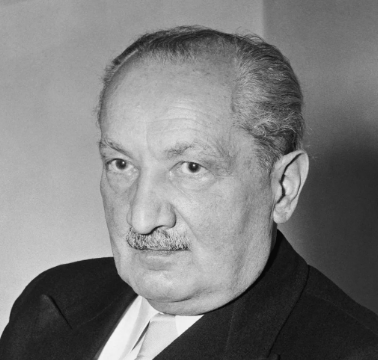
The Geschick of being: a child that plays... Why does it play, the great child of the world-play Heraclitus brought into view in the aiôn? It plays, because it plays. The "because" withers away in the play. The play is without "why." It plays since it plays. It simply remains a play: the most elevated and the most profound. But this "simply" is everything, the one, the only... The question remains whether and how we, hearing the movements of this play, play along and accommodate ourselves to the play.
▼
Source
source
The Principle of Reason (1955-1956) as translated by Reginald Lilly
2 months 2 weeks ago
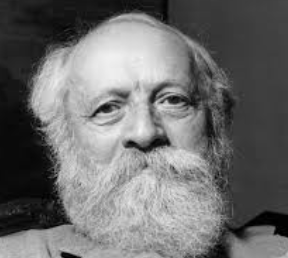
The world is not divine sport, it is divine destiny. There is divine meaning in the life of the world, of man, of human persons, of you and of me. Creation happens to us, burns itself into us, recasts us in burning - we tremble and are faint, we submit. We take part in creation, meet the Creator, reach out to Him, helpers and companions.
5 days ago
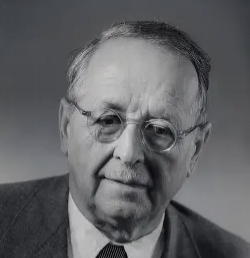
On a certain level of generality A which I call the ground level, you have certain theorems that have been proved and certain unsolved problems P of recognised interest. Suppose you discover a generalisation of one of these theorems and thereby rise to a higher level of generality A'. Write it up, but lock it away in a drawer - unless or until it serves to solve one of the problems P on the ground level... But the deeper one drives the spade the harder the digging gets; maybe it has become too hard for us unless we are not given some outside help, be it even by such devilish devices as high-speed computing machines.
▼
Source
source
At the Princeton Bicentennial, 17-19 December 1946

3 months 4 weeks ago
Custom, then, is the great guide of human life. It is that principle alone which renders our experience useful to us, and makes us expect, for the future, a similar train of events with those which have appeared in the past. Without the influence of custom, we should be entirely ignorant of every matter of fact beyond what is immediately present to the memory and senses. We should never know how to adjust means to ends, or to employ our natural powers in the production of any effect. There would be an end at once of all action, as well as of the chief part of speculation. Variant (perhaps a paraphrase of this passage): It is not reason which is the guide of life, but custom.
2 months 2 weeks ago
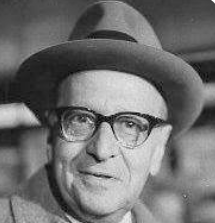
If by enlightenment and intellectual progress we mean the freeing of man from superstitious belief in evil forces, in demons and fairies, in blind fate-in short, emancipation of fear-then denunciation of what is currently called reason is the greatest service reason can render.

2 months 3 weeks ago
Nature must not win the game, but she cannot lose. And whenever the conscious mind clings to hard and fast concepts and gets caught in its own rules and regulations-as is unavoidable and of the essence of civilized consciousness-nature pops up with her inescapable demands.
▼
Source
source
Alchemical Studies
2 months 1 week ago
I have always noticed that deeply and truly religious persons are fond of a joke, and I am suspicious of those who aren't.
▼
Source
source
As quoted in Church and Home, Vol. 1 (1964) by United Methodist Church, and Evangelical United Brethren Church, p. 21.

2 months 1 week ago
He who does not realize to what extent shifting fortune and necessity hold in subjection every human spirit, cannot regard as fellow-creatures nor love as he loves himself those whom chance separated from him by an abyss. The variety of constraints pressing upon man give rise to the illusion of several distinct species that cannot communicate.
▼
Source
source
p. 192
2 months 3 weeks ago
Though we may prefer ourselves to the universe, we nonetheless loathe ourselves much more than we suspect. If the wise man is so rare a phenomenon, it is because he seems unshaken by the aversion which, like all beings, he must feel for himself.
2 weeks ago
Children and fools speak the truth; and somehow they find happiness in their sincerity.
▼
Source
source
Ch. 1 : Our life begins
3 months 2 weeks ago
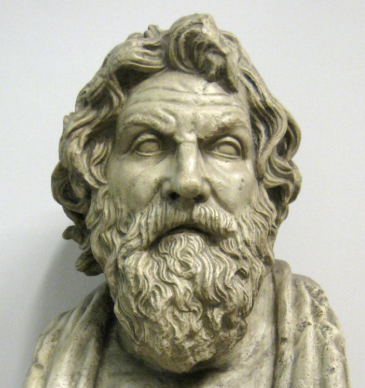
I'd rather be mad than feel pleasure.
▼
Source
source
§ 3; quoted also by Eusebius of Caesarea, Praeparatio Evangelica xv. 13
CivilSimian.com created by AxiomaticPanic, CivilSimian, Kalokagathia