


4 months 3 days ago
If a woman becomes weary and at last dead from bearing, that matters not; let her only die from bearing, she is there to do it.
▼
Source
source
Sermon Von dem ehelichen Stande (1519), p. 41 - as quoted in The Ethic of Freethought: A Selection of Essays and Lectures (1888) by Karl Pearson

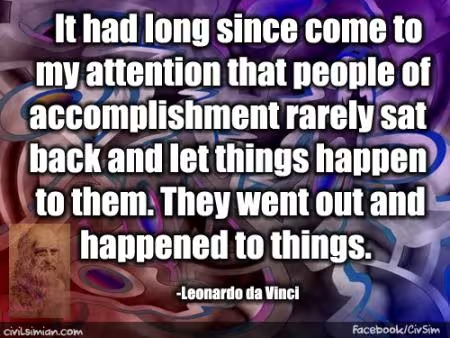

3 months 3 weeks ago
Unjust laws exist: shall we be content to obey them, or shall we endeavor to amend them, and obey them until we have succeeded, or shall we transgress them at once?
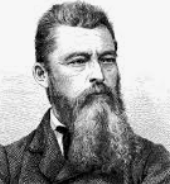
2 months 3 weeks ago
To theology, ... only what it holds sacred is true, whereas to philosophy, only what holds true is sacred.
▼
Source
source
Lecture II, R. Manheim, trans. (1967), p. 11

3 months 3 weeks ago
We see in tragedy the noblest men, after a long conflict and suffering, finally renounce forever all the pleasure of life and the aims till then pursued so keenly, or cheerfully and willingly give up life itself.
▼
Source
source
Book 1

2 weeks 2 days ago
The true Church of England, at this moment, lies in the Editors of its Newspapers. These preach to the people daily, weekly; admonishing kings themselves; advising peace or war, with an authority which only the first Reformers, and a long-past class of Popes, were possessed of; inflicting moral censure; imparting moral encouragement, consolation, edification; in all ways diligently "administering the Discipline of the Church."
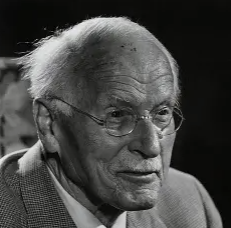
2 months 3 weeks ago
Every step closer to my soul excites the scornful laughter of my devils, those cowardly ear-whisperers and poison-mixers. It was easy for them to laugh, since I had to do strange things.
▼
Source
source
P. 234
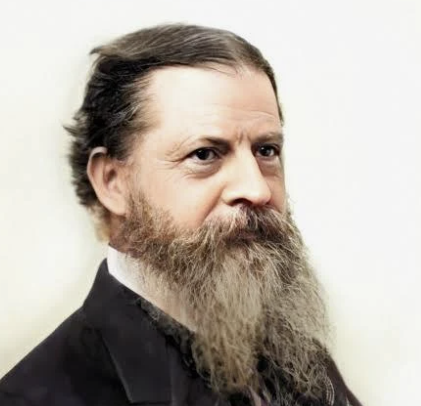
2 months 3 weeks ago
Feeling which has not yet emerged into immediate consciousness is already affectible and already affected. In fact, this is habit, by virtue of which an idea is brought up into the present consciousness by a bond that has already been established between it and another idea while it was still in futuro.
3 months 2 weeks ago
The distance between oneself and other persons and other species can fall anywhere on a continuum. Even for other persons the understanding of what it is like to be them is only partial, and when one moves to species very different from oneself, a lesser degree of partial understanding may still be available. The imagination is remarkably flexible. My point, however, is not that we cannot know what it is like to be a bat. I am not raising that epistemological problem. My point is rather that even to form a conception of what it is like to be a bat and a fortiori to know what it is like to be a bat, one must take up the bat's point of view.
▼
Source
source
p. 172, note 8.

4 months 1 week ago
Knowledge is the conformity of the object and the intellect.
2 months 3 weeks ago
As the mathematics are now understood, each branch - or, if you please, each problem, - is but the study of the relations of a collection of connected objects, without parts, without any distinctive characters, except their names or designating letters. These objects are commonly called points; but to remove all notion of space relations, it may be better to name them monads. The relations between these points are mere complications of two different kinds of elementary relations, which may be termed immediate connection and immediate non-connection. All the monads except as serve as intermediaries for the connections have distinctive designations.
▼
Source
source
p. 268
4 months 3 days ago
Dear rulers ... I maintain that the civil authorities are under obligation to compel the people to send their children to school. ... If the government can compel such citizens as are fit for military service to bear spear and rifle, to mount ramparts, and perform other martial duties in time of war, how much more has it a right to compel the people to send their children to school, because in this case we are warring with the devil, whose object it is secretly to exhaust our cities and principalities of their strong men.
▼
Source
source
letter to the German rulers (1524), as quoted in The History of Compulsory Education in New England, John William Perrin, 1896

4 months 3 weeks ago
There are limits beyond which your folly will not carry you. I am glad of that. In fact, I am relieved.
2 months 3 weeks ago
A subject interests me and holds my attention only so long as it presents me with difficulties, only so long as I am at odds with it and have, as it were, to struggle with it; but once I have mastered it I hurry on to something else, to a new subject; for my interest is not confined to any particular field or subject; it extends to everything human. This does not mean that I am an intellectual miser or egoist, who amasses knowledge for himself alone; by no means! What I do and think for myself, I must also think and do for others. But I feel the need of instructing others in a subject only so long as, while instructing others, I am also instructing myself.
▼
Source
source
Lecture I, , R. Manheim, trans. (1967), p. 2

2 months 3 weeks ago
He who has never envied the vegetable has missed the human drama.
▼
Source
source
p. 178, first American edition
4 months 1 week ago
I will speak in a low voice, just so as to let the judges hear me. For men are not wanting who would be glad to excite that people against me and against every eminent man; and I will not assist them and enable them to do so more easily.
▼
Source
source
Cicero, The Orations of Marcus Tullius Cicero; Translation by C.D. Yonge., 1856.
2 weeks 2 days ago
Money is miraculous. What miraculous facilities has it yielded, will it yield us; but also what never-imagined confusions, obscurations has it brought in; down almost to total extinction of the moral-sense in large masses of mankind!
2 months 2 weeks ago
Thought without language, says Lavelle, would not be a purer thought; it would be no more than the intention to think. And his last book offers a theory of expressiveness which makes of expression not "a faithful image of an already realized interior being, but the very means by which it is realized."
▼
Source
source
p. 8

2 months 3 weeks ago
Reflect how you are to govern a people who think they ought to be free, and think they are not. Your scheme yields no revenue; it yields nothing but discontent, disorder, disobedience; and such is the state of America, that after wading up to your eyes in blood, you could only end just where you begun; that is, to tax where no revenue is to be found, to - my voice fails me; my inclination indeed carries me no farther - all is confusion beyond it.
2 months 1 week ago
The aim is to replace economic oligarchies by the State, which has a will-to-power of its own and is quite as little concerned with the public good; and a will-to-power, moreover, which is not economic but military and therefore much more dangerous to any good folk who have a taste for staying alive. And on the bourgeois side what on earth is the sense of objecting to State control in economic affairs if one accepts private monopolies which have all the economic and technical disadvantages of State monopolies and possibly some others as well?
▼
Source
source
p. 230

4 months 1 week ago
Yes, you see the Trinity if you see charity.
▼
Source
source
De Trinitate VIII 8,12.

3 months 6 days ago
You will know that wretched men are the cause of their own suffering, who neither see nor hear the good that is near them, and few are the ones who know how to secure release from their troubles. Such is the fate that harms their minds; like pebbles they are tossed about from one thing to another with cares unceasing. For the dread companion Strife harms them unawares, whom one must not walk behind, but withdraw from and flee.
▼
Source
source
As quoted in Divine Harmony: The Life and Teachings of Pythagoras by John Strohmeier and Peter Westbrook

1 month 3 weeks ago
In television, images are projected at you. You are the screen. The images wrap around you. You are the vanishing point.
▼
Source
source
The diplomat, Issues 197-208, 1966, p. 20
3 months 3 weeks ago
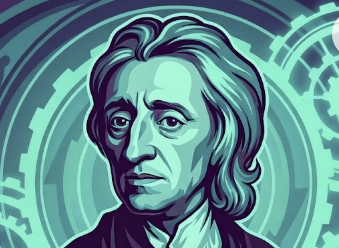
This life affords no solid satisfaction, but in the consciousness of having done well, and the hopes of another life.
▼
Source
source
Letter to Anthony Collins (23 August 1704), in The Works of John Locke, Vol. X (London, 1823), p. 298; quoted by William Julius Mickle in Voltain in the Shades (London, 1770), p. 7
1 month 3 weeks ago
Every innovation scraps its immediate predecessor and retrieves still older figures - it causes floods of antiques or nostalgic art forms and stimulates the search for museum pieces.
3 weeks 4 days ago
I agree with Paul that love is more important than faith and hope; but so are honesty, integrity, and moral courage. The world needs less faith and more love and nobility.
▼
Source
source
Preface
1 month 4 weeks ago
Such would be the successive phases of the image:it is the reflection of a profound reality;it masks and denatures a profound reality;it masks the absence of a profound reality;it has no relation to any reality whatsoever: it is its own pure simulacrum.In the first case, the image is a good appearance-representation is of the sacramental order. In the second, it is an evil appearance-it is of the order of maleficence. In the third, it plays at being an appearance-it is of the order of sorcery. In the fourth, it is no longer of the order of appearances, but of simulation.
2 months 2 weeks ago
It is questionable whether there does not exist in man an obscure and blind will to make war; an impulse towards change, towards emergence from the familiarities of everyday life and from the stabilities of well-known conditions - something like a will to death as a will to annihilation and self-sacrifice, a vague enthusiasm for the upbuilding of a new world.
3 days ago
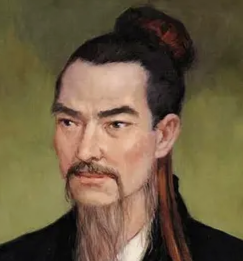
If one does not preserve the learned in a state he will be injuring the state; if one is not zealous (to recommend) the virtuous upon seeing one, he will be neglecting the ruler. Enthusiasm is to be shown only to the virtuous, and plans for the country are only to be shared with the learned. Few are those, who, neglecting the virtuous and slighting the learned, could still maintain the existence of their countries. Book 1; Befriending the Learned Variant translation: To enter upon rulership of a country but not preserve its scholars will result in the downfall of the country. To see the worthy but not hasten to them will make the country's ruler less able to perform his duties. To the unworthy is due no attention. The ignorant should remain without inclusion in the state's affairs. To impede the virtuous and neglect the scholarly and still maintain the survival of the state has yet to be, indeed.
6 days ago
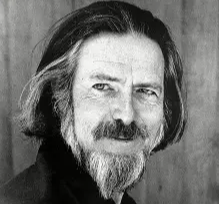
Just as no thing or organism exists on its own, it does not act on its own. Furthermore, every organism is a process: thus the organism is not other than its actions. To put it clumsily: it is what it does. More precisely, the organism, including its behavior, is a process which is to be understood only in relation to the larger and longer process of its environment. For what we mean by "understanding" or "comprehension" is seeing how parts fit into a whole, and then realizing that they don't compose the whole, as one assembles a jigsaw puzzle, but that the whole is a pattern, a complex wiggliness, which has no separate parts. Parts are fictions of language, of the calculus of looking at the world through a net which seems to chop it up into bits. Parts exist only for purposes of figuring and describing, and as we figure the world out we become confused if we do not remember this all the time.
▼
Source
source
p. 73

4 months 3 weeks ago
Great novelists are philosopher-novelists who write in images instead of arguments.

1 month 2 days ago
The irony of scientific progress is that in solving human problems it creates problems that are not humanly soluble. Science has given humans a kind of power over the natural world achieved by no other animal. It has not given humans the ability to remodel the planet according to their wishes. The Earth is not a clock that can be wound up and stopped at will. A living system, the planet will surely rebalance itself. It will do so, however, without any regard for humans.
▼
Source
source
Sweet Morality (p. 212)
3 weeks ago
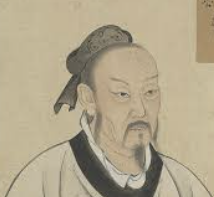
Human nature is evil, and goodness is caused by intentional activity.
▼
Source
source
Quoted in: Fayek S. Hourani (2012) Daily Bread for Your Mind and Soul, p. 336

3 months 3 weeks ago
All human activity is prompted by desire. There is a wholly fallacious theory advanced by some earnest moralists to the effect that it is possible to resist desire in the interests of duty and moral principle. I say this is fallacious, not because no man ever acts from a sense of duty, but because duty has no hold on him unless he desires to be dutiful. If you wish to know what men will do, you must know not only, or principally, their material circumstances, but rather the whole system of their desires with their relative strengths.
▼
Source
source
(wav audio file of Russell's voice)
1 month 3 weeks ago
In tetrad form, the artefact is seen to be not netural or passive, but an active logos or utterance of the human mind or body that transforms the user and his ground.
▼
Source
source
p. 99
3 months 6 days ago
Those alone are dear to Divinity who are hostile to injustice.
▼
Source
source
Pythagorean Ethical Sentences From Stobæus
1 week 3 days ago
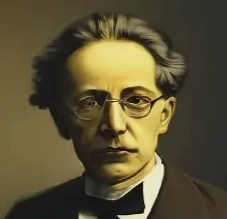
Human or general needs can be satisfied through society; for satisfaction of unique needs you must do some seeking. A friend and a friendly service, or even an individual's service, society cannot procure you. And yet you will every moment be in need of such a service, and on the slightest occasions require somebody who is helpful to you. Therefore do not rely on society, but see to it that you have the wherewithal to - purchase the fulfilment of your wishes.
▼
Source
source
Cambridge 1995, p. 243
3 months 2 weeks ago
For why do you hasten to remove things that hurt your eyes, but if anything gnaws your mind, defer the time of curing it from year to year?
▼
Source
source
Book I, epistle ii, lines 37-39; translation by C. Smart

2 months 2 weeks ago
I came to set fire to the earth, and I wish it were already on fire!
▼
Source
source
12:49 (CEV)

3 months 2 weeks ago
The perfect disciplinary apparatus would make it possible for a single haze to see everything constantly. A central point would be both the source of light illuminating everything, and a locus of convergence for everything that must be known: a perfect eye that nothing would escape and a centre towards which all gazes would be turned.
▼
Source
source
Part Three, The Means of Correct Training
2 months 3 weeks ago
As long as one believes in philosophy, one is healthy; sickness begins when one starts to think.
4 months 3 weeks ago
There's nothing like deduction. We've determined everything about our problem but the solution.
2 months 2 weeks ago
The secret thoughts of a man run over all things, holy, prophane, clean, obscene, grave, and light, without shame, or blame...
▼
Source
source
The First Part, Chapter 8, p. 34
6 days ago
It is the fate of every truth to be an object of ridicule when it is first acclaimed. It was once considered foolish to suppose that black men were really human beings and ought to be treated as such. What was once foolish has now become a recognized truth. Today it is considered as exaggeration to proclaim constant respect for every form of life as being the serious demand of a rational ethic. But the time is coming when people will be amazed that the human race existed so long before it recognized that thoughtless injury to life is incompatible with real ethics. Ethics is in its unqualified form extended responsibility to everything that has life.

2 months 3 weeks ago
What terrible tragedies realism inflicts on people.'
2 months 3 weeks ago
The deep critical thinker has become the misfit of the world. This is not a coincidence. To maintain order and control you must isolate the intellectual, the sage, the philosopher, the savant before their ideas awaken people.

4 months 2 days ago
As far as physicians go, chance is more valuable than knowledge.
▼
Source
source
Ch. 37

3 weeks ago
It is not easy for any of us to stop measuring the world against the standard of Europe, but the concept of the multitude requires it of us. It is a challenge. Embrace it.
1 month 3 weeks ago
Even pacifist agitation or the nation-wide fever of big sports competitions acts as a spur to war fever in circumstances like ours. Any kind of excitement or emotion contributes to the possibility of dangerous explosions when the feelings of huge populations are kept inflamed even in peacetime for the sake of the advancement of commerce. Headlines mean street sales. It takes emotion to move merchandise. And wars and rumors of wars are the merchandise and also the emotion of the popular press.
▼
Source
source
p. 7

3 months 6 days ago
That which exercises reason is more excellent than that which does not exercise reason; there is nothing more excellent than the universe, therefore the universe exercises reason.
▼
Source
source
As quoted in De Natura Deorum by Cicero, ii. 8.; iii. 9.
CivilSimian.com created by AxiomaticPanic, CivilSimian, Kalokagathia