

6 days ago
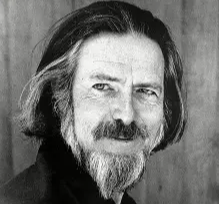
I want to make one thing absolutely clear. I am not a Zen Buddhist, I am not advocating Zen Buddhism, I am not trying to convert anyone to it. I have nothing to sell. I'm an entertainer. That is to say, in the same sense, that when you go to a concert and you listen to someone play Mozart, he has nothing to sell except the sound of the music. He doesn't want to convert you to anything. He doesn't want you to join an organization in favor of Mozart's music as opposed to, say, Beethoven's. And I approach you in the same spirit as a musician with his piano or a violinist with his violin. I just want you to enjoy a point of view that I enjoy.
▼
Source
source
Alan Watts, on Zen

2 weeks 2 days ago
The force that had been lent my father he honorably expended in manful well-doing. A portion of this planet bears beneficent traces of his strong hand and strong head. Nothing that he undertook to do but he did it faithfully and like a true man. I shall look on the houses he built with a certain proud interest. They stand firm and sound to the heart all over his little district.
2 months 1 week ago
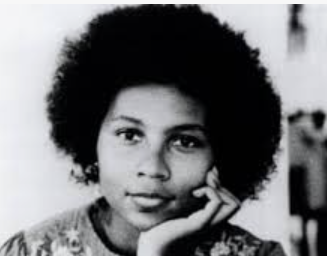
As more and more women acquired prestige, fame, or money from feminist writings or from gains from feminist movement for equality in the workforce, individual opportunism undermined appeals for collective struggle. Women who were not opposed to patriarchy, capitalism, classism, or racism labeled themselves "feminist." Their expectations were varied. Privileged women wanted social equality with men of their class; some women wanted equal pay for equal work; others wanted an alternative lifestyle. Many of these legitimate concerns were easily co-opted by the ruling capitalist patriarchy.
▼
Source
source
p. 7.

2 months 2 weeks ago
Are ye come out as against a thief with swords and staves for to take me? I sat daily with you teaching in the temple, and ye laid no hold on me. But all this was done, that the scriptures of the prophets might be fulfilled.
▼
Source
source
26:55-56 (KJV)
2 months 1 week ago
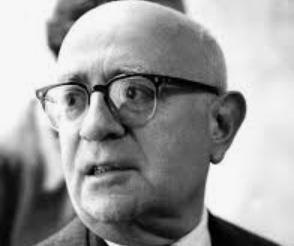
In organized groups such as the army or the Church there is either no mention of love whatsoever between the members, or it is expressed only in a sublimated and indirect way, through the mediation of some religious imagine in the love of whom the members unite and whose all-embracing love they are supposed to imitate in their attitude towards each other. ... It is one of the basic tenets of fascist leadership to keep primary libidinal energy on an unconscious level so as to divert its manifestations in a way suitable to political ends.
▼
Source
source
"Freudian Theory and the Pattern of Fascist Propaganda," The Essential Frankfurt School Reader (1982), p. 123

3 months 3 weeks ago
Yes, Lord, you are innocence itself: how could you conceive of Nothingness, you who are plenitude? Your gaze is light and transforms all into light: how could you know the half-light in my heart?
▼
Source
source
Act 3, sc. 6
2 months 3 weeks ago
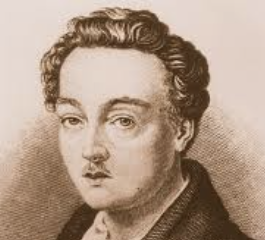
One must love humanity in order to reach out into the unique essence of each individual: no one can be too low or too ugly.
▼
Source
source
Lenz (1835).

1 week 3 days ago
Tis the first art of kings, the power to suffer hate.
2 months 2 weeks ago
Although the formulations of science now offer the most advanced knowledge of nature, men continue to use obsolete forms of thought long discarded by scientific theory. In so far as these obsolete forms are superfluous for science, the fact that they persist violated the principle of the economy of thought, that characteristic trait of the bourgeois temper.
▼
Source
source
p. 133.

3 months 3 weeks ago
It is sad that often, to be a good patriot, one must be the enemy of the rest of mankind.
▼
Source
source
"Country"
2 months 3 weeks ago
Christianity set itself the goal of fulfilling man's unattainable desires, but for that very reason ignored his attainable desires. By promising man eternal life, it deprived him of temporal life, by teaching him to trust in God's help it took away his trust in his own powers; by giving him faith in a better life in heaven, it destroyed his faith in a better life on earth and his striving to attain such a life. Christianity gave man what his imagination desires, but for that very reason failed to give him what he really and truly desires.
▼
Source
source
Lecture XXX, Atheism alone a Positive View

4 months 3 weeks ago
The Autarch maintained his indifferent calm, but a certain lack of certainty was gathering, and he did not like to experience a lack of certainty. He liked nothing which made him aware of limitations. An Autarch should have no limitations, and on Lingane he had none that natural law did not impose.
1 month 3 weeks ago
The popularity of the paranormal, oddly enough, might even be grounds for encouragement. I think that the appetite for mystery, the enthusiasm for that which we do not understand, is healthy and to be fostered. It is the same appetite which drives the best of true science, and it is an appetite which true science is best qualified to satisfy.
2 months 2 weeks ago
The spectacle of what religions have been in the past, of what certain religions still are to-day, is indeed humiliating for human intelligence. What a farrago of error and folly!'
▼
Source
source
Chapter II : Static Religion

3 months 3 weeks ago
Thus heaven I've forfeited, I know it full well. My soul, once true to God, is chosen for hell.
▼
Source
source
"The Pale Maiden" (1837) ballad

2 months 3 weeks ago
To kill someone for committing murder is a punishment incomparably worse than the crime itself. Murder by legal sentence is immeasurably more terrible than murder by brigands.
▼
Source
source
Part 1, Chapter 2

3 months 3 weeks ago
Physics is mathematical not because we know so much about the physical world, but because we know so little: it is only its mathematical properties that we can discover.
▼
Source
source
An Outline of Philosophy Ch.15 The Nature of our Knowledge of Physics, 1927

1 month 3 weeks ago
There is no connection between the elements in an electric world, which is equivalent to being surrounded by the human unconscious.
▼
Source
source
(p. 260)
3 months 3 weeks ago
I have been merely oppressed by the weariness and tedium and vanity of things lately: nothing stirs me, nothing seems worth doing or worth having done: the only thing that I strongly feel worth while would be to murder as many people as possible so as to diminish the amount of consciousness in the world. These times have to be lived through: there is nothing to be done with them.
▼
Source
source
Letter to Gilbert Murray, March 21, 1903

2 months 3 weeks ago
Nothing deserves to be undone, doubtless because nothing deserved to be done.
3 months 3 weeks ago
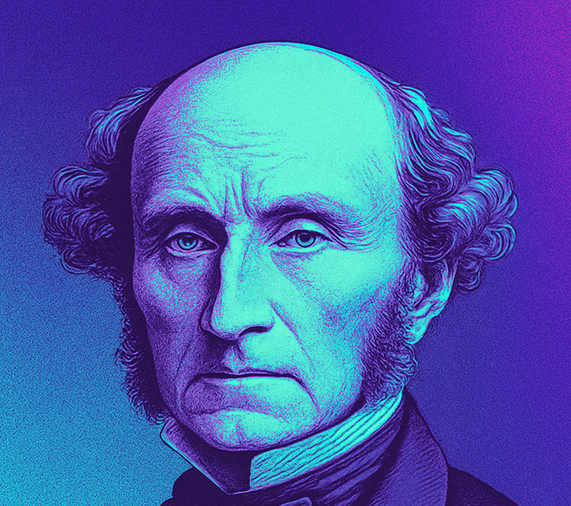
Malthus's population principle was quite as much a banner, and a point of union among us, as any opinion specially belonging to Bentham. This great doctrine, originally brought forward as an argument against the indefinite improvability of human affairs, we took up with ardent zeal in the contrary sense, as indicating the sole means of realizing that improvability by securing full employment at high wages to the whole labouring population through a voluntary restriction of the increase of their numbers.
▼
Source
source
(p. 105)
4 months 3 weeks ago
Of all the books I have ever worked on, I think Asimov's Guide to Shakespeare gave me the most pleasure, day in, day out. For months and months I lived and thought Shakespeare, and I don't see how there can be any greater pleasure in the world, any pleasure, that is, that one can indulge in for as much as ten hours without pause, day after day indefinitely.
2 months 3 weeks ago
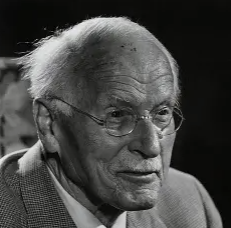
The seat of faith, however, is not consciousness but spontaneous religious experience, which brings the individual's faith into immediate relation with God. Here we must ask: Have I any religious experience and immediate relation to God, and hence that certainty which will keep me, as an individual, from dissolving in the crowd?
▼
Source
source
p 85

3 months 4 weeks ago
The virtue of frugality lies in a middle between avarice and profusion, of which the one consists in an excess, the other in a defect of the proper attention to the objects of self-interest.
▼
Source
source
Section II, Chap. I.
2 months 1 week ago
It is the first step in sociological wisdom, to recognize that the major advances in civilization are processes which all but wreck the societies in which they occur:-like unto an arrow in the hand of a child. The art of free society consists first in the maintenance of the symbolic code; and secondly in fearlessness of revision, to secure that the code serves those purposes which satisfy an enlightened reason. Those societies which cannot combine reverence to their symbols with freedom of revision, must ultimately decay either from anarchy, or from the slow atrophy of a life stifled by useless shadows.
▼
Source
source
Symbolism: Its Meaning and Effect (1927), chapter 3, p. 88; final paragraph of the book.
3 months 4 weeks ago
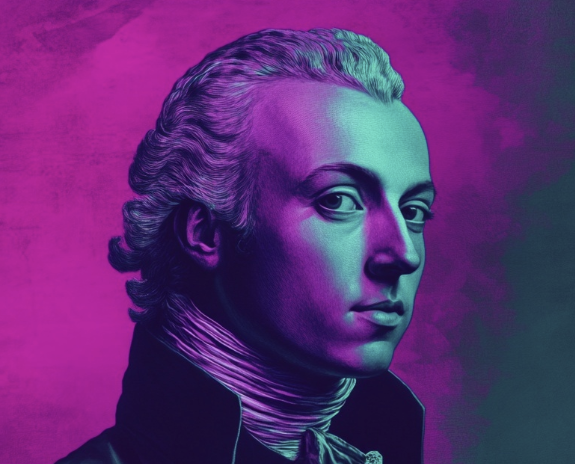
Collectively, the more civilized men are, the more they are actors. They assume the appearance of attachment, of esteem for others, of modesty, and of disinterestedness, without ever deceiving anyone, because everyone understands that nothing sincere is meant. Persons are familiar with this, and it is even a good thing that this is so in this world, for when men play these roles, virtues are gradually established, whose appearance had up until now only been affected. These virtues ultimately will become part of the actor's disposition. To deceive the deceiver in ourselves, or the tendency to deceive, is a fresh return to obedience.
▼
Source
source
Kant, Immanuel (1996), page 37
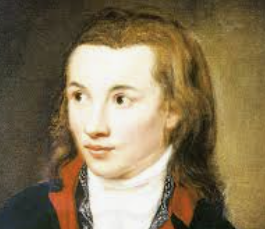
2 months 3 weeks ago
The world must be romanticized. In this way the originary meaning may be found again.
▼
Source
source
As quoted in The Experience of the Foreign : Culture and Translation in Romantic Germany (1992) by Antoine Berman Variant translation: Romanticize the world.
1 month 3 weeks ago
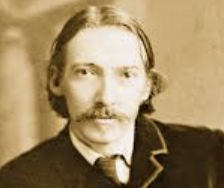
Is there anything in life so disenchanting as attainment?
▼
Source
source
The Suicide Club, The Adventure of the Hansom Cabs.
1 month 2 weeks ago
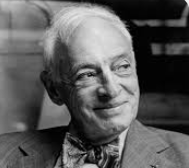
As a scholar [Allan Bloom] intends to enlighten us, and as a writer he has learned from Aristophanes and other models that enlightenment should also be enjoyable. To me, this is not the book of a professor, but that of a thinker who is willing to take the risks more frequently taken by writers. It is risky in a book of ideas to speak in one's own voice, but it reminds us that the sources of the truest truths are inevitably profoundly personal. ... Academics, even those describing themselves as existentialists, very seldom offer themselves publicly and frankly as individuals, as persons.
▼
Source
source
p. 12

3 months 4 weeks ago
His character does not appear more extraordinary and unusual by the mixture of so much absurdity with so much penetration, than by his tempering such violent ambition, and such enraged fanaticism with so much regard to justice and humanity.
▼
Source
source
Volume III, Chapter LXI; referring to Oliver Cromwell
3 months 3 weeks ago
There are two things which make it impossible to believe that this world is the successful work of an all-wise, all-good, and, at the same time, all-powerful Being; firstly, the misery which abounds in it everywhere; and secondly, the obvious imperfection of its highest product, man, who is a burlesque of what he should be.
▼
Source
source
"On the Sufferings of the World"
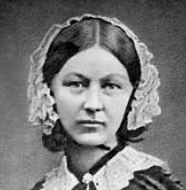
2 months 1 week ago
The Church is now more like the Scribes and Pharisees than like Christ... What are now called the "essential doctrines" of the Christian religion he does not even mention.
▼
Source
source
As quoted in The Life of Florence Nightingale (1913) by Edward Tyas Cook, p. 392
2 months 3 weeks ago
People like us are unhappy in this world and in the next, I guess if we made it to heaven, we'd have to help make it thunder.
▼
Source
source
Scene VI.
3 months 2 weeks ago
Science does not stand still, and neither does philosophy, although the latter has a tendency to walk in circles.
▼
Source
source
Afterword To The 2011 Edition, p. 187


3 months 2 weeks ago
If people did not sometimes do silly things, nothing intelligent would ever get done.
▼
Source
source
p. 50e

2 months 2 weeks ago
An autonomous electorate, free because it is free from indoctrination and manipulation, would indeed be on a "level of articulate opinion and ideology" which is not likely to be found. Therefore, the concept has to be rejected as "unrealistic"-has to be if one accepts the factually prevailing level of opinion and ideology as prescribing the valid criteria for sociological analysis. And-if indoctrination and manipulation have reached the stage where the prevailing level of opinion has become a level of falsehood, where the actual state of affairs is no longer recognized as that which it is, then an analysis which is methodologically committed to reject transitive concepts commits itself to a false consciousness. Its very empiricism is ideological.
▼
Source
source
p. 117

4 months 3 weeks ago
Wonder is the feeling of a philosopher, and philosophy begins in wonder.
2 months 3 weeks ago
Of what I am, I know no more than that I am, but here no tie is necessary between subject and object. My own being is this tie, I am at once the subject knowing, and the object known of; and this reflection or return of the knowledge on itself is what I designate by the term I, if I have any determinate meaning.
▼
Source
source
Jane Sinnett, trans 1846 p. 50
2 months 2 weeks ago
Not everyone who says to Me, 'Lord, Lord,' shall enter the kingdom of heaven, but he who does the will of My Father in heaven. Many will say to Me in that day, 'Lord, Lord, have we not prophesied in Your name, cast out demons in Your name, and done many wonders in Your name?' And then I will declare to them, 'I never knew you; depart from Me, you who practice lawlessness!'
▼
Source
source
Matthew 7:21-23 (NKJV) (Also Luke 6:24; 13:26, 27)
2 weeks 3 days ago
Carnap made a detailed analysis of Heidegger's statement, "Nothing nihilates," in order to show that it is purely verbal, devoid of empirical meaning. (Incidentally, this is the only sentence from existentialist philosophy the majority of contemporary positivists appear familiar with.)
▼
Source
source
Chapter Eight, Logical Empiricism, p. 187

2 months 3 weeks ago
France has always more or less influenced manners in England; and when your fountain is choked up and polluted, the stream will not run long, or not run clear, with us, or perhaps with any nation. This gives all Europe, in my opinion, but too close and connected a concern in what is done in France. Excuse me, therefore, if I have dwelt too long on the atrocious spectacle of the 6th of October, 1789, or have given too much scope to the reflections which have arisen in my mind on occasion of the most important of all revolutions, which may be dated from that day, I mean a revolution in sentiments, manners, and moral opinions.
3 months 3 weeks ago
My education, which was wholly his work, had been conducted without any regard to the possibility of its ending in this result; and I saw no use in giving him the pain of thinking that his plans had failed, when the failure was probably irremediable, and, at all events, beyond the power of his remedies. Of other friends, I had at that time none to whom I had any hope of making my condition intelligible. It was however abundantly intelligible to myself; and the more I dwelt upon it, the more hopeless it appeared.
▼
Source
source
(p. 135)
3 months 3 weeks ago
He chooses the most feared, most hated man in order to worship him as a god, feeling sure that he is alone in perceiving the god's secret virtues.
▼
Source
source
p. 165
3 months 1 week ago
Soul, indeed, is a certain medium between an impartible essence, and an essence which is divisible about bodies. But intellect is an impartible essence alone. And qualities and material forms are divisible about bodies. Not everything which acts on another, effects that which it does effect by approximation and contact; but those natures which effect any thing by approximation and contact, use approximation accidentally.
6 days ago
The clock of communism has stopped striking. But its concrete building has not yet come crashing down. For that reason, instead of freeing ourselves, we must try to save ourselves from being crushed by its rubble.
▼
Source
source
How We Must Rebuild Russia in Komsomolskaya Pravda
1 month 3 weeks ago
For him who loves labor, there is always something to do.
▼
Source
source
Maxim 219

3 months 3 weeks ago
Scientific theories are distinguished from myths... in being criticizable, and... open to modifications... They can be neither verified nor probabilified.
2 months 2 weeks ago
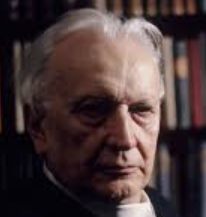
Nietzsche, driven by the absolute demand of his existential truthfulness, could not abide the bourgeois world, even when its representative had human nobility.
2 months 3 weeks ago
Modern man may assert that he can dispense with them, and he may bolster his opinion by insisting that there is no scientific evidence of their truth. But since we are dealing with invisible and unknowable things (for God is beyond human understanding, and there is no mean of proving immortality), why should we bother with evidence?
▼
Source
source
p. 75-76
CivilSimian.com created by AxiomaticPanic, CivilSimian, Kalokagathia