

2 weeks 2 days ago
It would be silly, of course, to be either 'for' or 'against' modernity tout court, not only because it is pointless to try to stop the development of technology, science, and economic rationality, but because both modernity and antimodernity may be expressed in barbarous and antihuman terms.
▼
Source
source
"Modernity on Endless Trial"

4 months 1 day ago
Physicians have this advantage: the sun lights their success and the earth covers their failures.
▼
Source
source
Ch. 37


2 weeks ago
The most remarkable piece of reading that you may be recommended to take and try if you can study is a book by Goethe-one of his last books, which he wrote when he was an old man, about seventy years of age-I think one of the most beautiful he ever wrote, full of mild wisdom, and which is found to be very touching by those who have eyes to discern and hearts to feel it. It is one of the pieces in "Wilhelm Meister's Travels." I read it through many years ago; and, of course, I had to read into it very hard when I was translating it (applause), and it has always dwelt in my mind as about the most remarkable bit of writing that I have known to be executed in these late centuries. I have often said, there are ten pages of that which, if ambition had been my only rule, I would rather have written than have written all the books that have appeared since I came into the world.

2 months 3 weeks ago
The effect of liberty to individuals is, that they may do what they please: we ought to see what it will please them to do, before we risk congratulations.

2 months 2 weeks ago
The third category of which I come now to speak is precisely that whose reality is denied by nominalism. For although nominalism is not credited with any extraordinarily lofty appreciation of the powers of the human soul, yet it attributes to it a power of originating a kind of ideas the like of which Omnipotence has failed to create as real objects, and those general conceptions which men will never cease to consider the glory of the human intellect must, according to any consistent nominalism, be entirely wanting in the mind of Deity.
▼
Source
source
Lecture II : The Universal Categories, §3. Laws: Nominalism, CP 5.62

2 months 3 days ago
To be content with life - or to live merrily, rather - all that is required is that we bestow on all things only a fleeting, superficial glance; the more thoughtful we become the more earnest we grow.
▼
Source
source
K 29

2 months 2 weeks ago
The State is always, whatever be its form - primitive, ancient, medieval, modern - an invitation issued by one group of men to other human groups to carry out some enterprise in common. That enterprise, be its intermediate processes what they may, consists in the long run in the organisation of a certain type of common life. ... [As Renan says,] "To have common glories in the past, a common will in the present; to have done great things together; to wish to do greater; these are the essential conditions which make up a people.... In the past, an inheritance of glories and regrets; in the future, one and the same programme to carry out.... The existence of a nation is a daily plebiscite."
▼
Source
source
Chapter XIV: Who Rules The World?
4 months 6 days ago
It is necessary to have regard to the person whom we wish to persuade, of whom we must know the mind and the heart, what principles he acknowledges, what things he loves; and then observe in the thing in question what affinity it has with the acknowledged principles, or with the objects so delightful by the pleasure which they give him.
4 months 1 day ago
The art of dining well is no slight art, the pleasure not a slight pleasure.

4 months 3 weeks ago
Now just as the historical gives occasion for the contemporary to become a disciple, but only it must be noted through receiving the condition from the God himself, since otherwise we speak Socratically, so the testimony of contemporaries gives occasion for each successor to become a disciple, but only it must be noted through receiving the condition from the God himself.

4 months 3 weeks ago
Socialism itself can hope to exist only for brief periods here and there, and then only through the exercise of the extremest terrorism. For this reason it is secretly preparing itself for rule through fear and is driving the word 'justice' into the heads of the half-educated masses like a nail so as to rob them of their reason... and to create in them a good conscience for the evil game they are to play.
4 days ago
Important though the general concepts and propositions may be with which the modern industrious passion for axiomatizing and generalizing has presented us, in algebra perhaps more than anywhere else, nevertheless I am convinced that the special problems in all their complexity constitute the stock and core of mathematics; and to master their difficulties requires on the whole the harder labor.
▼
Source
source
The Classical Groups

1 month 3 weeks ago
Cartoons drove the photo back to myth and dream screen.

1 month 3 weeks ago
Society in shipwreck is a comfort to all.
▼
Source
source
Maxim 144

2 months 2 weeks ago
Verily I say unto thee, That this night, before the cock crow, thou shalt deny me thrice.
▼
Source
source
26:34 (KJV) Said to Peter.
2 months 3 weeks ago
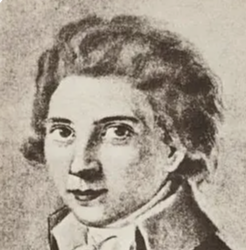
Whoever hasn't yet arrived at the clear realization that there might be a greatness existing entirely outside his own sphere and for which he might have absolutely no feeling; whoever hasn't at least felt obscure intimations concerning the approximate location of this greatness in the geography of the human spirit: that person either has no genius in his own sphere, or else he hasn't been educated to the level of the classic.
▼
Source
source
Lucinde and the Fragments, P. Firchow, trans. (1991), "Critical Fragments," § 36
2 weeks 2 days ago
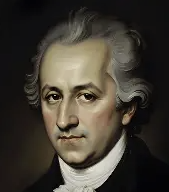
One of the most striking signs of the decay of art is the intermixing of different genres.
▼
Source
source
Propylaea (1798) Introduction
2 days ago
A political, economic, and social order created merely for the sake of temporal life is exclusively characteristic of the modern world, that is, of the antitraditional world.
2 months 3 weeks ago
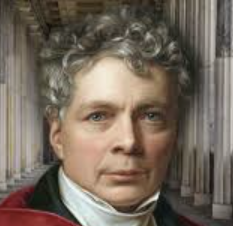
What is Europe really but a sterile trunk which owes everything to oriental grafts?
▼
Source
source
Letter of 18 December 1806 to Windischmann, quoted by Rene Gerard, L'Orient et la pensée romantique allemande, Paris 1963,, p. 213. quoted in Poliakov, L. (1974).
4 months 1 day ago
I am further of opinion that it would be better for us to have [no laws] at all than to have them in so prodigious numbers as we have.
▼
Source
source
Book III, Ch. 13. Of Experience
2 months 2 weeks ago
No doubt the spirit or energy of the world is what is acting in us, as the sea is what rises in every little wave; but it passes through us, and cry out as we may, it will move on. Our privilege is to have perceived it as it moves.
▼
Source
source
p. 199

2 months 6 days ago
Yet it must be acknowledged that there is a fundamental difference between the sexual impulse in men and women. Her need is for a lover, a protector, a father for her children. His desire is for mastery, conquest, to be allowed to use her body for his own satisfaction. He feels like a bee, burying itself in a flower, apparently doing nothing for the flower but taking its sweetness. If he loves her, then his desire is mixed with a kind of pity.
4 months 3 weeks ago
Of things said without any combination, each signifies either substance or quantity or qualification or a relative or where or when or being-in-a-position or having or doing or being affected. To give a rough idea, examples of substance are man, horse; of quantity: four-foot, five-foot; of qualification: white, grammatical; of a relative: double, half, larger; of where: in the Lyceum, in the market-place; of when: yesterday, last-year; of being-in-a-position: is-lying, is sitting; of having: has-shoes-on, has-armour-on; of doing: cutting, burning; of being-affected: being-cut, being-burned.
1 month 1 week ago
It will hardly be disputed, I suppose, that the department of literature in which the Eastern writers stand highest is poetry. And I certainly never met with any orientalist who ventured to maintain that the Arabic and Sanscrit poetry could be compared to that of the great European nations. But when we pass from works of imagination to works in which facts are recorded and general principles investigated, the superiority of the Europeans becomes absolutely immeasurable. It is, I believe, no exaggeration to say that all the historical information which has been collected from all the books written in the Sanscrit language is less valuable than what may be found in the most paltry abridgments used at preparatory schools in England. In every branch of physical or moral philosophy, the relative position of the two nations is nearly the same.

3 months 1 week ago
Coition is a slight attack of apoplexy. For man gushes forth from man, and is separated by being torn apart with a kind of blow.
▼
Source
source
Freeman (1948), p. 150

3 months 3 weeks ago
The past treatment of Africans must naturally fill them with abhorrence of Christians; lead them to think our religion would make them more inhuman savages, if they embraced it; thus the gain of that trade has been pursued in opposition to the Redeemer's cause, and the happiness of men: Are we not, therefore, bound in duty to him and to them to repair these injuries, as far as possible, by taking some proper measures to instruct, not only the slaves here, but the Africans in their own countries? Primitive Christians laboured always to spread their Divine Religion; and this is equally our duty while there is an Heathen nation: But what singular obligations are we under to these injured people!
4 months 3 weeks ago
I will make an attempt to attain freedom, the youthful soul says to itself; and is it to be hindered in this by the fact that two nations happen to hate and fight one another, or that two continents are separated by an ocean, or that all around it a religion is taught with did not yet exist a couple of thousand years ago. All that is not you, it says to itself.

3 months 3 weeks ago
Both in thought and in feeling, even though time be real, to realise the unimportance of time is the gate of wisdom.
▼
Source
source
p. 167
2 months 5 days ago
Society triumphs over many. They wish to regenerate the world with their institutions, with their moral philosophy, with their love. Then they sink to living from breakfast till dinner, from dinner till tea, with a little worsted work, and to looking forward to nothing but bed. When shall we see a life full of steady enthusiasm, walking straight to its aim, flying home, as that bird is now, against the wind - with the calmness and the confidence of one who knows the laws of God and can apply them?

1 week 1 day ago
I forbid you to be cast down or depressed. It is not enough if you do not shrink from work; ask for it.

4 months 2 days ago
Lastly, there are Idols which have immigrated into men's minds from the various dogmas of philosophies, and also from wrong laws of demonstration. These I call Idols of the Theater, because in my judgment all the received systems are but so many stage plays, representing worlds of their own creation after an unreal and scenic fashion.
▼
Source
source
Aphorism 44

3 months 3 weeks ago
To eat is to appropriate by destruction.
▼
Source
source
Part 3: Being-For-Others
2 weeks 2 days ago
Nothing is great but truth, and the smallest truth is great. The other day I had a thought, which I put like this: Even a harmful truth is useful, for it can be harmful only for the moment and will lead to other truths, which must always become useful, very much so. Conversely, even a useful error is harmful, for it can be useful only for the moment, enticing us into other errors, which become more and more harmful.
▼
Source
source
Letter to Charlotte von Stein (1787) in Goethe's World View: Presented in His Reflections and Maxims (1963), Edited with an Introduction by Frederick Ungar, Translated by Heinz Norden, pp. 72-73, Frederick Ungar Publishing Company, New York.
3 months 3 weeks ago
Intuitionism is not constructive, perfectionism is unacceptable.
▼
Source
source
Chapter I, Section 9, pg. 52

3 months 3 weeks ago
Metaphysics has as the proper object of its enquiries three ideas only: God, freedom, and immortality.
▼
Source
source
B 395
4 months 3 weeks ago
Magister Adler was deeply moved by something higher, but now when he wants to express his thoughts in words, wants to communicate, he confuses the subjective with the objective, his altered subjective state with an external event, the dawning of a light upon him with the coming into existence of something new outside him, the falling of the veil from his eyes with his having had a revelation. Subjectively his emotion is carried to the extreme; he wants to select the most powerful expression to describe it and by means of a mental deception grasps the objective qualification: having had a revelation.
2 days ago
One indeed is the Creator of all things, but many are the creative powers revolving in the heavens; we must, therefore, place the influence of the Sun as intermediate with respect to each single operation affecting the earth. Moreover, the principle productive of Life is vastly superabundant in the Intelligible World; our world, also, is evidently full of generative life. It is therefore clear that the life-producing power of the sovereign Sun is intermediate between these two, since the phenomena of Nature bear testimony to the fact; for some kinds of things the Sun brings to perfection, others of them he brings to pass, others he regulates, others he excites, and there exists nothing that, without the creative influence of the Sun, comes to light and is born.

1 month ago
Echoing the Christian faith in free will, humanists hold that human beings are - or may someday become - free to choose their lives. They forget that the self that does the choosing has not itself been chosen.
▼
Source
source
Beyond the Last Thought: Freud's cigars and the long way round to Nirvana (p. 86)

3 months 3 weeks ago
I like a church, I like a cowl, I love a prophet of the soul, And on my heart monastic aisles Fall like sweet strains or pensive smiles; Yet not for all his faith can see, Would I that cowled churchman be. Why should the vest on him allure, Which I could not on me endure?
▼
Source
source
The Problem, st. 1

2 weeks 4 days ago
On the left you had a different aspect of individual autonomy that was pushed to an extreme, which really had to do with the autonomy that individuals have to create their own lifestyles. ...The basic concept of liberal autonomy has to do with your ability to make moral choices, but as time went on the emphasis came to be not on making the right moral choices within an existing moral framework, but rather to be able to make up that framework on your own, that that was the ultimate expression of individual human freedom, and it has obvious problems for a society because all societies have to be based on shared norms that allow people to coordinate their actions, to communicate, and the like... If you believe that the rules can be... set by anybody and that transgressing existing rules is automatically a good thing, you're not going to have... a stable society.
▼
Source
source
15:05
3 months 3 weeks ago
Covetousness, and the desire of having in our possession, and under our dominion, more than we have need of, being the root of all evil, should be early and carefully weeded out, and the contrary quality of a readiness to impart to others, implanted. This should be encourag'd by great commendation and credit, and constantly taking care that he loses nothing by his liberality.
▼
Source
source
Sec. 110
4 months 1 day ago
This return of Republics back to their principles also results from the simple virtue of one man, without depending on any law that excites him to any execution: none the less, they are of such influence and example that good men desire to imitate him, and the wicked are ashamed to lead a life contrary to those examples.
▼
Source
source
Book 3, Ch. 1
2 months 3 weeks ago
Ah! why do women condescend to receive a degree of attention and respect from strangers different from that reciprocation of civility which the dictates of humanity and the politeness of civilization authorize between man and man? And why do they not discover, when, "in the noon of beauty's power", that they are treated like queens only to be deluded by hollow respect. Confined, then, in cages like the feathered race, they have nothing to do but to plume themselves, and stalk with mock majesty from perch to perch.
▼
Source
source
Ch. 4

2 months 3 weeks ago
It's easier for a Russian to become an atheist than for anyone else in the world.
▼
Source
source
Part 4, Chapter 7
2 weeks ago
A million blockheads looking authoritatively into one man of what you call genius, or noble sense, will make nothing but nonsense out of him and his qualities, and his virtues and defects, if they look till the end of time. He understands them, sees what they are; but that they should understand him, and see with rounded outline what his limits are,-this, which would mean that they are bigger than he, is forever denied them. Their one good understanding of him is that they at last should loyally say, "We do not quite understand thee; we perceive thee to be nobler and wiser and bigger than we, and will loyally follow thee."

1 month 2 weeks ago
I don't want to sound callous. I mean, even if I have nothing to offer, that doesn't matter, because that still doesn't mean that what anybody else has to offer therefore has to be true.

4 months 3 weeks ago
It is very likely that there are many, many planets carrying life, even intelligent life, throughout the universe, because there are so many stars. By sheer chance, even if those chances are small, a great many life forms and a great many intelligences may exist.
1 month 1 week ago
Whatever part of the animal fabric-whatever series of muscles, whatever viscera might be selected for comparison-the result would be the same-the lower Apes and the Gorilla would differ more than the Gorilla and the Man.
▼
Source
source
Ch.2, p. 101
CivilSimian.com created by AxiomaticPanic, CivilSimian, Kalokagathia