



2 weeks 3 days ago
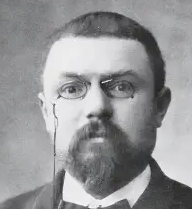
He has begun by supposing that light has a constant velocity... the same in all directions. This... could never be verified directly by experiment... The postulate... resembling the principle of sufficient reason... furnishes us with a new rule for the investigation of simultaneity.

7 months 4 weeks ago
This is probably the fundamental dimension of 'ideology': ideology is not simply a 'false consciousness', an illusory representation of reality, it is rather this reality itself which is already to be conceived as 'ideological' - 'ideological' is a social reality whose very existence implies the non-knowledge of its participants as to its essence -that is, the social effectivity, the very reproduction of which implies that the individuals 'do not know what they are doing'. 'Ideological is not the false consciousness of a (social) being but this being itself in so far as it is supported by "false consciousness"'. Thus we have finally reached the dimension of the symptom, because one of its possible definitions would also be 'a formation whose very consistency implies a certain non-knowledge on the part of the subject': the subject can 'enjoy his symptom' only in so far as its logic escapes him - the measure of the success of its interpretation is precisely its dissolution.

2 months 6 days ago
The problem is that sex is the most dangerous way of trying to achieve personal growth, because the life force has mixed it so liberally with a string sense of "magic", which, in the attempt at possession turns out to be an illusion. The attempt to possess a woman through an act of sex is as frustrating as trying to possess the scent of a rose by cooking and eating it.
▼
Source
source
p. 250

1 week 1 day ago
That man lives badly who does not know how to die well.
▼
Source
source
Chapter 11, Section 4
2 days ago
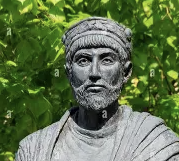
No wild beasts are such enemies to mankind as are most of the Christians in their deadly hatred of one another.
▼
Source
source
Reported in Ammianus, Res gestae, bk. 22, ch. 5, sec. 4
2 months 3 days ago
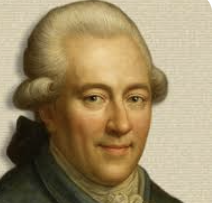
All mathematical laws which we find in Nature are always suspect to me, in spite of their beauty. They give me no pleasure. They are merely auxiliaries. At close range it is all not true.
▼
Source
source
As quoted in Lichtenberg : A Doctrine of Scattered Occasions (1959) by Joseph Peter Stern, p. 84

1 week 1 day ago
No furniture so charming as books.
▼
Source
source
Vol. I, ch. 9, p. 289

2 months 3 weeks ago
Friendship and domestic happiness are continually praised; yet how little is there of either in the world, because it requires more cultivation of mind to keep awake affection, even in our own hearts, than the common run of people suppose. Besides, few like to be seen as they really are; and a degree of simplicity, and of undisguised confidence, which, to uninterested observers, would almost border on weakness, is the charm, nay the essence of love or friendship, all the bewitching graces of childhood again appearing.
▼
Source
source
Letter 12
2 months 3 weeks ago
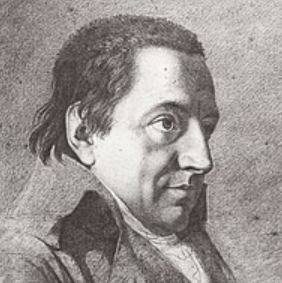
I know now that I shall. But all Actual Knowledge brings with it, by its formal nature, its schematised apposition; - although I now know of the Schema of God, yet I am not yet immediately this Schema, but I am only a Schema of the Schema. The required Being is not yet realised. I shall be. Who is this I? Evidently that which is, - the Ego gives in Intuition, the Individual. This shall be. What does its Being signify? It is given as a Principle in the World of Sense. Blind Instinct is indeed annihilated, and in its place there now stands the clearly perceived Shall. But the Power that at first set this Instinct in motion remains, in order that the Shall my now set it (the Power) in motion, and become its higher determining Principle. By means of this Power, I shall therefore, within its sphere, - the World of Sense, - produce and make manifest that which I recognise as my true Being in the Supersensuous World.

4 months 3 weeks ago
If you suspect that my interest in the Bible is going to inspire me with sudden enthusiasm for Judaism and make me a convert of mountain‐moving fervor and that I shall suddenly grow long earlocks and learn Hebrew and go about denouncing the heathen — you little know the effect of the Bible on me. Properly read, it is the most potent force for atheism ever conceived.
3 months 2 weeks ago
Anything can be made to look good or bad by being redescribed.
▼
Source
source
Contingency, Irony, and Solidarity (1989), p. 73

4 months 2 days ago
No Man is wise at all Times, or is without his blind Side.
▼
Source
source
The Alchymyst, in Colloquies of Erasmus, Volume I.

3 months 3 weeks ago
What does not exist must be something, or it would be meaningless to deny its existence; and hence we need the concept of being, as that which belongs even to the non-existent.
▼
Source
source
Principles of Mathematics (1903), p. 450

3 months 3 weeks ago
Hatred and anger are the greatest poison to the happiness of a good mind.
▼
Source
source
Section II, Chap. III.

4 months 2 weeks ago
All systems of morality are based on the idea that an action has consequences that legitimize or cancel it. A mind imbued with the absurd merely judges that those consequences must be considered calmly. It is ready to pay up. In other words, there may be responsible persons, but there are no guilty ones, in its opinion. At very most, such a mind will consent to use past experience as a basis for its future actions.
2 months 3 weeks ago
There is nothing whatever in Existence but immediate and living Thought:-Thought, I say, but by no means a thinking substance, a dead body in which thought inheres,-with which no-thought indeed a no-thinker is full surely at hand:-Thought, I say, and also the real Life of this Thought, which at bot tom is the Divine Life; both of which-Thought and , this its real Life-are molten together into one inward organic Unity; like as, outwardly, they are one simple, identical, eternal, and unchangeable Unity.
▼
Source
source
P. 56

4 months 1 day ago
Mother Mary, like us, was born in sin of sinful parents, but the Holy Spirit covered her, sanctified and purified her so that this child was born of flesh and blood, but not with sinful flesh and blood. The Holy Spirit permitted the Virgin Mary to remain a true, natural human being of flesh and blood, just as we. However, he warded off sin from her flesh and blood so that she became the mother of a pure child, not poisoned by sin as we are. For in that moment when she conceived, she was a holy mother filled with the Holy Spirit and her fruit is a holy pure fruit, at once God and truly man, in one person.
▼
Source
source
The Precious and Sacred Writings of Martin Luther (1905) edited by John Nicholas Lenker; republished as Sermons of Martin Luther (1996), p. 291

1 month 1 week ago
I think we have reached a stage now where we need to find solutions to economic injustice in the same place and in the same ways that we find solutions to sustainability. Sustainability on environmental grounds and justice in terms of everyone having a place in the production and consumption system - these are two aspects of the same issue. They have been artificially separated and have to be put back again in the Western way of thinking.
▼
Source
source
1998

2 months 5 days ago
The "dreams of youth" have become a proverb. That organisations, early rich, fall far short of their promise has been repeated to satiety. But is it extraordinary that it should be so? For do we ever utilise this heroism? Look how it lives upon itself and perishes for lack of food. We do not know what to do with it. We had rather that it should not be there. Often we laugh at it. Always we find it troublesome. Look at the poverty of our life! Can we expect anything else but poor creatures to come out of it?
1 month 2 weeks ago
Books are good enough in their own way, but they are a mighty bloodless substitute for life.
▼
Source
source
An Apology for Idlers.
1 month 1 week ago
It may be that the public mind of India may expand under our system till it has outgrown that system; that by good government we may educate our subjects into a capacity for better government, that, having become instructed in European knowledge, they may, in some future age, demand European institutions. Whether such a day will ever come I know not. But never will I attempt to avert or to retard it. Whenever it comes, it will be the proudest day in English history.
▼
Source
source
Speech in the House of Commons

2 weeks ago
We will not praise Mahomet's moral precepts as always of the superfinest sort; yet it can be said that there is always a tendency to good in them; that they are the true dictates of a heart aiming towards what is just and true.

3 months 3 weeks ago
Skepticism is slow suicide.
▼
Source
source
p. 240

2 months 2 weeks ago
This is the pure form of servitude: to exist as an instrument.
▼
Source
source
p. 33
1 week 6 days ago
I know how unfashionable it is now to acknowledge in life or history any genius loftier than ourselves. Our democratic dogma has leveled not only all voters but all leaders; we delight to show that living geniuses are only mediocrities, and that dead ones are myths. ... Since it is contrary to good manners to exalt ourselves, we achieve the same result by slyly indicating how inferior are the great men of the earth. In some of us, perhaps, it is a noble and merciless asceticism, which would root out of our hearts the last vestige of worship and adoration, lest the old gods should return and terrify us again. For my part, I cling to this final religion, and discover in it a content and stimulus more lasting than came from the devotional ecstasies of youth.
▼
Source
source
The Greatest Minds and Ideas of All Time (2002) edited by John Little, Ch. 1 : The Shameless Worship of Heroes
1 month 2 weeks ago
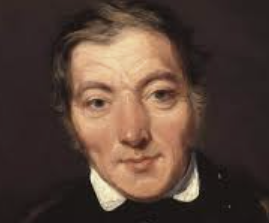
Man is the creature of circumstances.
▼
Source
source
"The Philanthropist"

2 months 4 weeks ago
Time which antiquates Antiquities, and hath an art to make dust of all things.
▼
Source
source
Chapter V
2 months 3 days ago
Erudition can produce foliage without bearing fruit.
▼
Source
source
C 26

2 months 1 week ago
Life is an offensive, directed against the repetitious mechanism of the Universe.
▼
Source
source
p. 102.

3 months 1 week ago
To a wise man, the whole earth is open; for the native land of a good soul is the whole earth.
▼
Source
source
Freeman (1948), p. 166 \
3 months 3 weeks ago
All movements go too far.
3 months 1 week ago
'Tis not in strength of body nor in gold that men find happiness, but in uprightness and in fulness of understanding.
3 months 3 weeks ago
Give me health and a day, and I will make the pomp of emperors ridiculous.
▼
Source
source
Beauty

2 months 6 days ago
Capitalism lacks narrativity.

2 months 6 days ago
Every daring attempt to make a great change in existing conditions, every lofty vision of new possibilities for the human race, has been labelled Utopian.
▼
Source
source
"Socialism: Caught in the Political Trap", a lecture (c. 1912), published in Red Emma Speaks, Part 1 (1972) edited by Alix Kates Shulman
2 months 3 weeks ago
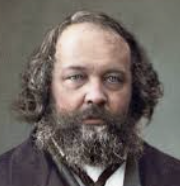
I hate Communism because it is the negation of liberty and because humanity is for me unthinkable without liberty. I am not a Communist, because Communism concentrates and swallows up in itself for the benefit of the State all the forces of society, because it inevitably leads to the concentration of property in the hands of the State, whereas I want the abolition of the State, the final eradication of the principle of authority and the patronage proper to the State, which under the pretext of moralizing and civilizing men has hitherto only enslaved, persecuted, exploited and corrupted them. I want to see society and collective or social property organized from below upwards, by way of free association, not from above downwards, by means of any kind of authority whatsoever.
▼
Source
source
As quoted in Michael Bakunin (1937) by E.H. Carr, p. 356
2 months 1 day ago
We favor hypotheses for their simplicity and explanatory power, much as the architect of the world might have done in choosing which possibility to create.
▼
Source
source
Chapter 15, Inductive Logic, p. 142.

2 months 2 weeks ago
I believe in the salvation of humanity, in the future of cyanide . . .

2 months 1 week ago
What nationalist educators often fail to recognize is that merely being taught by teachers who are black has not and will not solve the problem if the teachers have been socialized to internalize racist thinking.

2 months 3 weeks ago
Even there, in the mines, underground, I may find a human heart in another convict and murderer by my side, and I may make friends with him, for even there one may live and love and suffer. One may thaw and revive a frozen heart in that convict, one may wait upon him for years, and at last bring up from the dark depths a lofty soul, a feeling, suffering creature; one may bring forth an angel, create a hero! There are so many of them, hundreds of them, and we are to blame for them.
3 months 3 weeks ago
The infliction of cruelty with a good conscience is a delight to moralists. That is why they invented Hell.
▼
Source
source
Ch. 1: The Value of Scepticism

3 months 3 weeks ago
I do not understand! I understand nothing! I cannot understand nor do I want to understand! I want to believe! To Believe!
▼
Source
source
Act 1
4 months 3 weeks ago
The purpose of aphorisms is to keep fools who have memorised them from having nothing to say.
3 months 3 weeks ago
It is amusing to hear the modern Christian telling you how mild and rationalistic Christianity really is and ignoring the fact that all its mildness and rationalism is due to the teaching of men who in their own day were persecuted by all orthodox Christians.
▼
Source
source
"Sources of Intolerance"
1 month 2 weeks ago
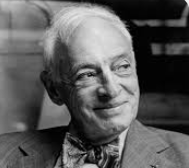
All a writer has to do to get a woman is to say he's a writer. It's an aphrodisiac.
▼
Source
source
As quoted in "Dailer's Choice" by Harriet Van Horne, in New York Magazine Vol. 10, No. 13 (28 March 1977), p. 80

2 months 1 week ago
Conscience is deceived by the social. Our supplementary energy (imaginative) is to a great extent taken up with the social. It has to be detached from it. That is the most difficult of detachments.
▼
Source
source
p. 123

4 months 3 weeks ago
It was a purely Christian satisfaction to me that if ordinarily there was no one else there was one who in action tried a little to do the doctrine about loving the neighbor, alas, one who precisely by his act also received a frightful into what an illusion Christendom is and indeed, particularly later, also into how the common people let themselves be seduced by wretched journalists, whose striving and fighting for equality can only lead, if it leads to anything, since it is in the service of the lie, to making the elite, in self-defense, proud of their aloofness from the common man, and the common man brazen in his rudeness.
3 months 3 weeks ago
Mark what 'tis his mind aims at in the question, and not what words he expresses it in: and when you have informed and satisfied him in that, you shall see how his thoughts will enlarge themselves, and how by fit answers he may be led on farther than perhaps you could have imagine. For knowledge is grateful to the understanding, as light to the eyes.
▼
Source
source
Sec. 118
3 months 3 weeks ago
A book can never be anything more than the impression of its author's thoughts [Ein Buch kann nie mehr seyn, als der Abdruck der Gedanken des Verfassers]. The value of these thoughts lies either in the matter about which he has thought, or in the form in which he develops his matter - that is to say, what he has thought about it.
CivilSimian.com created by AxiomaticPanic, CivilSimian, Kalokagathia