


3 months 2 weeks ago
It is not how things are in the world that is mystical, but that it exists.
▼
Source
source
(6.44) Variant translation: The mystical is not how the world is, but that it is. Original German: Nicht wie die Welt ist, ist das Mystische, sondern dass sie ist.
4 months 1 day ago
I am entirely of the opinion that the papacy is the Antichrist. But if anyone wants to add the Turk, then the Pope is the spirit of the Antichrist, and the Turk is the flesh of the Antichrist. They help each other in their murderous work. The latter slaughters bodily and by the sword, the former spiritually and by doctrine.
▼
Source
source
330

3 months 3 weeks ago
When you live alone you no longer know what it is to tell a story: the plausible disappears at the same time as the friends. You let events flow by too: you suddenly see people appear who speak and then go away; you plunge into stories of which you can't make head or tail: you'd make a terrible witness.
▼
Source
source
Diary entry of Tuesday, 30 January
1 day ago
What is patriotism but love of the good things we ate in our childhood? I have said elsewhere that the loyalty to Uncle Sam is the loyalty to doughnuts and ham and sweet potatoes and the loyalty to the German Vaterland is the loyalty to Pfannkuchen and Christmas Stollen. As for international understanding, I feel that macaroni has done more for our appreciation of Italy than Mussolini... in food, as in death, we feel the essential brotherhood of mankind.
▼
Source
source
Ch. IV : On Having A Stomach, p. 46

1 month 3 weeks ago
I'm prepared to teach acceptance of religion, but, religion has to agree to the social contract. If we have to do it church by church, I'm ready.

3 months 3 weeks ago
The doctrine that there is as much science in a subject as... mathematics in it, or as much... measurement or 'precision' in it, rests upon... misunderstanding.
4 months 1 week ago
By faithfulness we are collected and wound up into unity within ourselves, whereas we had been scattered abroad in multiplicity.
▼
Source
source
As quoted in Footprints in Time : Fulfilling God's Destiny for Your Life (2007) by Jeff O'Leary, p. 223


3 months 3 weeks ago
There is no method of reasoning more common, and yet none more blameable, than in philosophical debates to endeavour to refute any hypothesis by a pretext of its dangerous consequences to religion and morality. When any opinion leads us into absurdities, 'tis certainly false; but 'tis not certain an opinion is false, because 'tis of dangerous consequence.
▼
Source
source
Part 3, Section 2
7 months 4 weeks ago
This is probably the fundamental dimension of 'ideology': ideology is not simply a 'false consciousness', an illusory representation of reality, it is rather this reality itself which is already to be conceived as 'ideological' - 'ideological' is a social reality whose very existence implies the non-knowledge of its participants as to its essence -that is, the social effectivity, the very reproduction of which implies that the individuals 'do not know what they are doing'. 'Ideological is not the false consciousness of a (social) being but this being itself in so far as it is supported by "false consciousness"'. Thus we have finally reached the dimension of the symptom, because one of its possible definitions would also be 'a formation whose very consistency implies a certain non-knowledge on the part of the subject': the subject can 'enjoy his symptom' only in so far as its logic escapes him - the measure of the success of its interpretation is precisely its dissolution.
3 months 3 weeks ago
Her face seems ravaged by both lightning and hail. But on yours there is something like the promise of a storm: one day passion will burn it to the bone.
▼
Source
source
Act 1
3 months 3 weeks ago
Love in animals, has not for its only object animals of the same species, but extends itself farther, and comprehends almost every sensible and thinking being. A dog naturally loves a man above his own species, and very commonly meets with a return of affection.
▼
Source
source
Part 2, Section 12
4 months 3 weeks ago
A tragedy, then, is the imitation of an action that is serious and also, as having magnitude, complete in itself; in language ... not in a narrative form; with incidents arousing pity and fear, wherewith to accomplish its catharsis of such emotions.

2 weeks ago
The barrenest of all mortals is the sentimentalist.
▼
Source
source
Characteristics.
2 months 3 days ago
Man is a masterpiece of creation if for no other reason than that, all the weight of evidence for determinism notwithstanding, he believes he has free will.
▼
Source
source
J 249
1 week 1 day ago
No furniture so charming as books.
▼
Source
source
Vol. I, ch. 9, p. 289
3 months 1 week ago
Perseverance is more prevailing than violence; and many things which cannot be overcome when they are together, yield themselves up when taken little by little.
▼
Source
source
Sertorius 16 (Tr. Dryden and Clough)
3 days ago
In the realm of physics it is perhaps only the theory of relativity which has made it quite clear that the two essences, space and time, entering into our intuition, have no place in the world constructed by mathematical physics. Colours are thus "really" not even æther-vibrations, but merely a series of values of mathematical functions in which occur four independent parameters corresponding to the three dimensions of space, and the one of time.
▼
Source
source
Introduction

3 months 3 weeks ago
Thank you for your letter and for the enclosure which I return herewith. I have been wondering whether there is any means of preventing the confusion between you and me, and I half-thought that we might write a joint letter to The Times in the following terms: Sir, To prevent the continuation of confusions which frequently occur, we beg to state that neither of us is the other. Do you think this would be a good plan?
▼
Source
source
Letter to Lord Russell of Liverpool, February 18, 1959
2 months 6 days ago
Its first ethical precept is the identity of means used and aims sought. The ultimate end of all revolutionary social change is to establish the sanctity of human life, the dignity of man, the right of every human being to liberty and wellbeing. Unless this be the essential aim of revolution, violent social changes would have no justification. For external social alterations can be, and have been, accomplished by the normal processes of evolution. Revolution, on the contrary, signifies not mere external change, but internal, basic, fundamental change. That internal change of concepts and ideas, permeating ever-larger social strata, finally culminates in the violent upheaval known as revolution.
2 months 3 weeks ago
I hate Communism because it is the negation of liberty and because humanity is for me unthinkable without liberty. I am not a Communist, because Communism concentrates and swallows up in itself for the benefit of the State all the forces of society, because it inevitably leads to the concentration of property in the hands of the State, whereas I want the abolition of the State, the final eradication of the principle of authority and the patronage proper to the State, which under the pretext of moralizing and civilizing men has hitherto only enslaved, persecuted, exploited and corrupted them. I want to see society and collective or social property organized from below upwards, by way of free association, not from above downwards, by means of any kind of authority whatsoever.
▼
Source
source
As quoted in Michael Bakunin (1937) by E.H. Carr, p. 356
2 months 5 days ago
What most people in our culture mean by being lovable is essentially a mixture between being popular and having sex appeal.
▼
Source
source
Ch. 1
2 months 2 days ago
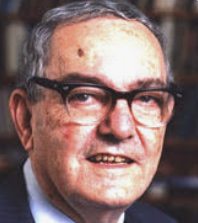
If we accept values as given and consistent, if we postulate an objective description of the world as it really is, and if we assume that the decision maker's computational powers are unlimited, then two important consequences follow. First, we do not need to distinguish between the real world and the decision maker's perception of it: he or she perceives the world as it really is. Second, we can predict the choices that will be made by a rational decision maker entirely from our knowledge of the real world and without a knowledge of the decision maker's perceptions or modes of calculation. (We do, of course, have to know his or her utility function.)
2 months 3 weeks ago
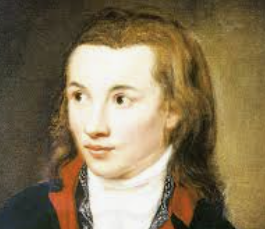
Life is a disease of the spirit; a working incited by Passion. Rest is peculiar to the spirit.
2 months 3 weeks ago
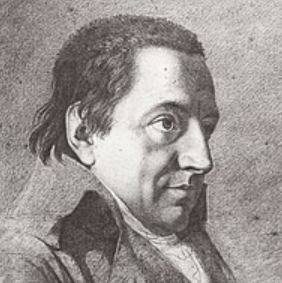
That I should by necessity be either wise and good, or foolish or vicious, without having in one case or the other merit or fault - this it was that filled me with aversion and horror.The determination of my actions by a cause out of myself, whose manifestations were again determined by other causes - this it was from which I so violently revolted.The freedom which was not mine, but that of a foreign power, and, in that, only a conditional, half freedom - this it was with which I could not rest satisfied. I myself - that which in this system only appears as the manifestation of a higher existence, I will be independent, - will be something, not by another or through another, but of myself.
▼
Source
source
Jane Sinnett, trans 1846 p. 21
3 months 3 weeks ago
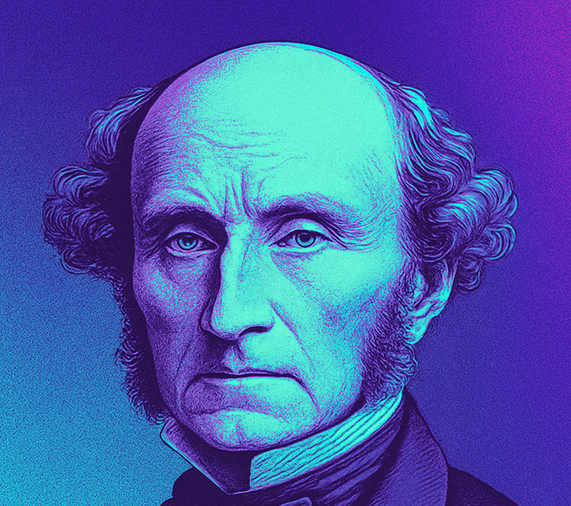
In the same year in which I began Latin, I made my first commencement in the Greek poet with the Iliad. After I had made some progress in this, my father put Pope's translation into my hands. It was the first English verse I had cared to read, and it became one of the books in which for many years I most delighted: I think I must have read it from twenty to thirty times through. I should not have thought it worth while to mention a taste apparently so natural to boyhood, if I had not, as I think, observed that the keen enjoyment of this brilliant specimen of narrative and versification is not so universal with boys, as I should have expected both à priori and from my individual experience.
▼
Source
source
(p. 10)

2 months 2 weeks ago
Your suffering like your fate is without motive. To suffer, truly to suffer, is to accept the invasion of ills without the excuse of causality, as a favor of demented nature, as a negative miracle...
2 months 3 weeks ago
Whoever hasn't yet arrived at the clear realization that there might be a greatness existing entirely outside his own sphere and for which he might have absolutely no feeling; whoever hasn't at least felt obscure intimations concerning the approximate location of this greatness in the geography of the human spirit: that person either has no genius in his own sphere, or else he hasn't been educated to the level of the classic.
▼
Source
source
Lucinde and the Fragments, P. Firchow, trans. (1991), "Critical Fragments," § 36
2 weeks ago
Our grand business undoubtedly is, not to see what lies dimly at a distance, but to do what lies clearly at hand.
2 months 1 week ago
Intelligence is quickness to apprehend as distinct from ability, which is capacity to act wisely on the thing apprehended.
▼
Source
source
p. 135; Ch. 17, December 15, 1939.
3 months 3 weeks ago
The union of the mathematician with the poet, fervor with measure, passion with correctness, this surely is the ideal.
▼
Source
source
Ch. 11 - Clifford's Lectures and Essays, 1879
2 months 2 weeks ago
Here and there it happened in my practice that a patient grew beyond himself because of unknown potentialities, and this became an experience of prime importance to me. I had learned in the meanwhile that the greatest and most important problems of life are all in a certain sense insoluble. They must be so because they express the necessary polarity inherent in every self-regulating system. They can never be solved, but only outgrown.
▼
Source
source
The Secret of the Golden Flower, ibid.

3 months 3 weeks ago
As soon as we have contrived to give our pupil an idea of the word "Useful," we have got an additional means of controlling him, for this word makes a great impression on him, provided that its meaning for him is a meaning relative to his own age, and provided he clearly sees its relation to his own well-being. This word makes no impression on your scholars because you have taken no pains to give it a meaning they can understand, and because other people always undertake to supply their needs so that they never require to think for themselves, and do not know what utility is. "What is the use of that?"
1 month 1 week ago
Wherever literature consoles sorrow, or assuages pain,-wherever it brings gladness to eyes which fail with wakefulness and tears, and ache for the dark house and the long sleep,-there is exhibited, in its noblest form, the immortal influence of Athens.
▼
Source
source
p. 179
2 months 3 weeks ago
There was a time when religion was kept secret from popular belief within the mystery cults like a holy fire, sharing a common sanctuary with philosophy. The legends of antiquity name the earliest philosophers as the originators of these mystery cults, from which the most enlightened among the later philosophers, notably Plato, liked to educe their divine teachings. At that time philosophers still had the courage and the right to discuss the singly great themes, the only ones worthy of philosophizing and rising above common knowledge.
▼
Source
source
P. 7
2 months 4 weeks ago
Bad company is as instructive as licentiousness. One makes up for the loss of one's innocence with the loss of one's prejudices.
3 months 3 weeks ago
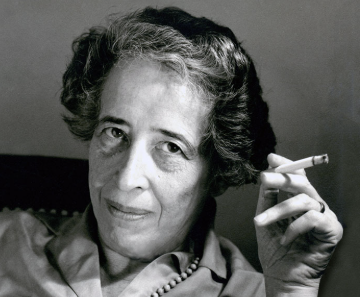
The cultural treasures of the past, believed to be dead, are being made to speak, in the course of which it turns out that they propose things altogether different than what had been thought.
▼
Source
source
"Martin Heidegger at Eighty," in Heidegger and Modern Philosophy: Critical Essays (1978) by Michael Murray, p. 294
3 months 3 weeks ago
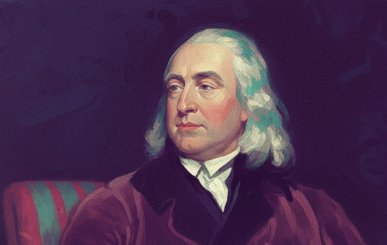
Create all the happiness you are able to create: remove all the misery you are able to remove. Every day will allow you to add something to the pleasure of others, or to diminish something of their pains. And for every grain of enjoyment you sow in the bosom of another, you shall find a harvest in your own bosom; while every sorrow which you pluck out from the thoughts and feelings of a fellow creature shall be replaced by beautiful peace and joy in the sanctuary of your soul.
▼
Source
source
Advice to a young girl, 22 June 1830
4 months 1 day ago
She [virtue] requires a rough and stormy passage; she will have either outward difficulties to wrestle with, ... or internal difficulties.
▼
Source
source
Book II, Ch. 11. Of Cruelty
2 months 1 week ago
In all philosophic theory there is an ultimate which is actual in virtue of its accidents. It is only then capable of characterization through its accidental embodiments, and apart from these accidents is devoid of actuality. In the philosophy of organism this ultimate is termed creativity; and [[God] is its primordial, non-temporal accident. In monistic philosophies, Spinoza's or absolute idealism, this ultimate is God, who is also equivalently termed The Absolute. In such monistic schemes, the ultimate is illegitimately allowed a final, eminent reality, beyond that ascribed to any of its accidents. In this general position the philosophy of organism seems to approximate more to some strains of Indian, or Chinese, thought, than to western Asiatic, or European, thought. One side makes process ultimate; the other side makes fact ultimate.
▼
Source
source
Pt. I, ch. 1, sec. 2.

1 month ago
As Malaparte saw it, Naples was a pagan city with an ancient sense of time. Christianity taught those who were converted to it to think of history as the unfolding of a single plot - a moral drama of sin and redemption. In the ancient world there was no such plot - only a multitude of stories that were forever being repeated. Inhabiting that ancient world, the Neapolitans did not expect any fundamental alteration in human affairs. Not having accepted the Christian story of redemption, they had not been seduced by the myth of progress. Never having believed civilization to be permanent, they were not surprised when it foundered.
▼
Source
source
An Old Chaos: Frozen Horses and Deserts of Brick (p. 22)
1 month 2 weeks ago
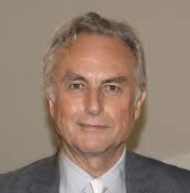
Orb webs in real life do their business largely in two dimensions. If the mesh is too coarse, flies pass straight through. If the mesh is too fine, rival spiders will achieve nearly the same result at less cost in silk, and will therefore leave behind more progeny to carry on their economically more prudent genes. Natural selection finds the efficient compromise.
▼
Source
source
Chapter 2, "Silken Fetters" (p. 58)
3 months 3 weeks ago
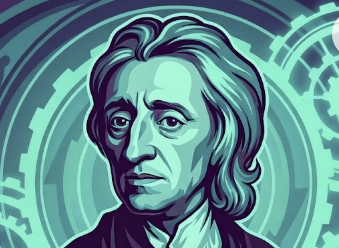
Truly, if the preservation of all mankind, as much as in him lies, were every one's persuasion, as indeed it is every one's duty, and the true principle to regulate our religion, politicks and morality by, the world would be much quieter, and better natur'd than it is.
▼
Source
source
Sec. 116
1 month 1 week ago
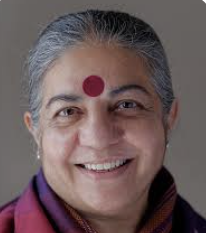
Owning our seeds through seed freedom, our own food through food freedom, our own minds and intelligence through intellectual freedom, our own economies through freedom to produce and consume ecologically and locally, is the 'barbarianism' that the 1% would like to extinguish.
2 months 1 week ago
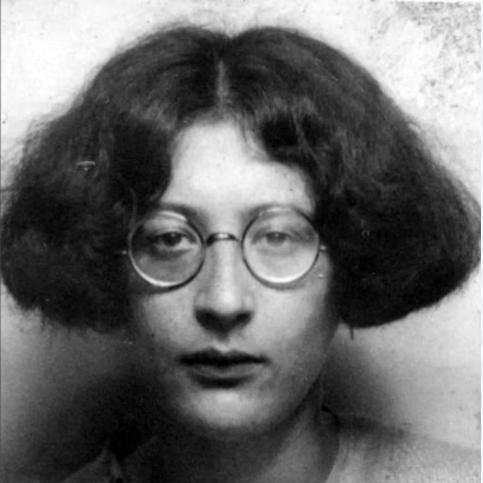
The combination of these two facts - the longing in the depth of the heart for absolute good, and the power, though only latent, of directing attention and love to a reality beyond the world and of receiving good from it - constitutes a link which attaches every man without exception to that other reality. Whoever recognizes that reality recognizes also that link. Because of it, he holds every human being without any exception as something sacred to which he is bound to show respect. This is the only possible motive for universal respect towards all human beings. Whatever formulation of belief or disbelief a man may choose to make, if his heart inclines him to feel this respect, then he in fact also recognizes a reality other than this world's reality. Whoever in fact does not feel this respect is alien to that other reality also.
1 month 3 weeks ago
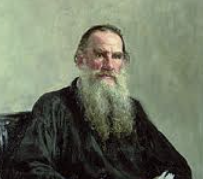
I have lived through much, and now I think I have found what is needed for happiness. A quiet secluded life in the country, with the possibility of being useful to people to whom it is easy to do good, and who are not accustomed to have it done to them; then work which one hopes may be of some use; then rest, nature, books, music, love for one's neighbor -- such is my idea of happiness. And then, on the top of all that, you for a mate, and children perhaps -- what more can the heart of man desire?
▼
Source
source
Part 1, Chapter V
2 months 3 weeks ago
Nature is an Æolian Harp, a musical instrument; whose tones again are keys to higher strings in us.
3 months 3 weeks ago
[My father] impressed upon me from the first, that the manner in which the world came into existence was a subject on which nothing was known: that the question, "Who made me?" cannot be answered, because we have no experience or authentic information from which to answer it; and that any answer only throws the difficulty a step further back, since the question immediately presents itself, "Who made God?"
▼
Source
source
(pp. 42-43)
CivilSimian.com created by AxiomaticPanic, CivilSimian, Kalokagathia