


1 month 3 weeks ago
We must leave on one side the beliefs which fill up voids and sweeten what is bitter. The belief in immortality. The belief in the utility of sin: etiam peccata. The belief in the providential ordering of events - in short the "consolations" which are ordinarily sought in religion.
▼
Source
source
p. 258
2 months 3 weeks ago
Tis not sufficient to combine well-chosen words in a well-ordered line.
▼
Source
source
Book I, satire iv, line 54 (translated by John Conington)
7 months 1 week ago
The source of totalitarianism is a dogmatic attachment to the official word: the lack of laughter, of ironic detachment. An excessive commitment to Good may in itself become the greatest Evil: real Evil is any kind of fanatical dogmatism, especially exerted in the name of supreme Good... Consider only Mozart's Don Giovanni at the end of the opera, when he is confronted with the following choice: if he confesses his sins, he can still achieve salvation; if he persists, he will be damned forever. From this viewpoint of the pleasure principle, the proper thing to do would be to renounce his past, but he does not, he persists in his Evil, although he knows that by persisting he will be damned forever. Paradoxically, with his final choice of Evil, he acquires the status of an ethical hero - that is, of someone who is guided by fundamental principles beyond the pleasure principle and not just by the search for pleasure or material gain.
1 month 2 weeks ago
I have lived and slept in the same bed with English countesses and Prussian farm women... no woman has excited passions among women more than I have.
▼
Source
source
As quoted in Parted Lips : Lesbian Love Quotes Through the Ages (2002) by Simone Rich

1 month 1 week ago
Honest work is much better than a mansion.
▼
Source
source
p. 82

3 months 1 week ago
Experience teaches only the teachable...
▼
Source
source
Tragedy and the Whole Truth

3 months 1 week ago
There are some simple maxims [...] which I think might be commanded to writers of expository prose. First: never use a long word if a short word will do. Second: if you want to make a statement with a great many qualifications, put some of the qualifications in separate sentences. Third: do not let the beginning of your sentence lead the reader to an expectation which is contradicted by the end.
▼
Source
source
"How I Write", The Writer, September 1954
1 month 1 week ago
Where questions of style and exposition are concerned I try to follow a simple maxim: if you can't say it clearly you don't understand it yourself.
▼
Source
source
P. x.

1 month 2 weeks ago
Where the frontier of science once was is now the centre.
▼
Source
source
As quoted in A Dictionary of Scientific Quotations (1991) edited by Alan Lindsay Mackay, p. 153

1 month 2 weeks ago
The jingoes and war speculators are filling the air with the sentimental slogan of hypocritical nationalism, "America for Americans," "America first, last, and all the time."
4 months 5 days ago
As you hope to prove your own great value to the state, and having proved it, to attain at once to absolute power, so do I indulge a hope that I shall be the supreme power over you, if I am able to prove my own great value to you. Socrates speaking to Alcibiades

4 months 1 week ago
Not one of these nobly equipped young men has escaped the restless, exhausting, confusing, debilitating crisis of education. ... He feels that he cannot guide himself, cannot help himself, and then he dives hopelessly into the world of everyday life and daily routine, he is immersed in the most trivial activity possible, and his limbs grow weak and weary.
2 months 3 weeks ago
Aristodemus, a friend of Antigonus, supposed to be a cook's son, advised him to moderate his gifts and expenses. "Thy words," said he, "Aristodemus, smell of the apron."
▼
Source
source
44 Antigonus I

3 months 6 days ago
Christianity does not involve the belief that all things were made for man. It does involve the belief that God loves man and for his sake became man and died.
▼
Source
source
Ch. 7: "A Chapter of Red Herrings"
1 month ago
The conservative response to modernity is to embrace it, but to embrace it critically, in full consciousness that human achievements are rare and precarious, that we have no God-given right to destroy our inheritance, but must always patiently submit to the voice of order, and set an example of orderly living.
▼
Source
source
"Eliot and Conservatism" (p. 208)

3 months 1 week ago
Our merchants and master-manufacturers complain much of the bad effects of high wages in raising the price, and thereby lessening the sale of their goods both at home and abroad. They say nothing concerning the bad effects of high profits. They are silent with regard to the pernicious effects of their own gains. They complain only of those of other people.
▼
Source
source
Chapter IX, p. 117.


7 months 3 weeks ago
We cannot stand by while the social contract is broken by those who chose conflict over equality. Those that want equal treatment for themselves have to treat others equally. They cannot lead with exclusion, then turn around and demand equal treatment. It is a double standard. If they are going to exclude first, then justice demands that we, the group that stands with universality, follow our duty to react and exclude those that exclude.
1 month 1 week ago
The Anarchists are right in everything; in the negation of the existing order, and in the assertion that, without authority, there could not be worse violence than that of authority under existing conditions. They are mistaken only in thinking that Anarchy can be instituted by a revolution. "To establish Anarchy." "Anarchy will be instituted." But it will be instituted only by there being more and more people who do not require protection from governmental power, and by there being more and more people who will be ashamed of applying this power.
▼
Source
source
"On Anarchy", in Pamphlets : Translated from the Russian (1900) as translated by Aylmer Maude, p. 22
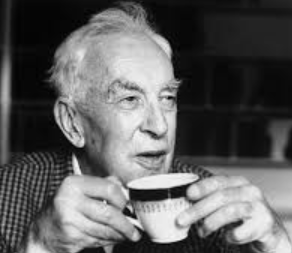
2 weeks 6 days ago
These immense cities lie basking on the beaches of the continent like whales that have taken to the land again. What do these great, sleek, well-fed creatures live on so sumptuously?
▼
Source
source
12. The Elusive Continent (on the six state capitals of Australia)
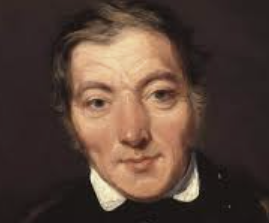
1 month 1 day ago
Man is the creature of circumstances.
▼
Source
source
"The Philanthropist"
3 months 6 days ago
"And I say also this. I do not think the forest would be so bright, nor the water so warm, nor love so sweet, if there were no danger in the lakes."
▼
Source
source
Hyoi, p. 76

2 days ago
The limits of this strategy were evident as the century drew to a close.
▼
Source
source
The Marxist left had to confront the fact that actual Communist societies in the Soviet Union and China had turned into grotesque and oppressive dictatorships. p. 112
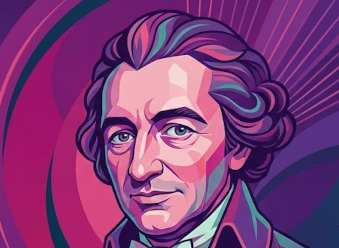
3 months 1 week ago
If we take a survey of ages and of countries, we shall find the women, almost - without exception - at all times and in all places, adored and oppressed. Man, who has never neglected an opportunity of exerting his power, in paying homage to their beauty, has always availed himself of their weakness He has been at once their tyrant and their slave.
3 months 1 week ago
The external embodiment of an act is composed of many parts, and may be regarded as capable of being divided into an infinite number of particulars. An act may be looked on as in the first instance coming into contact with only one of these particulars. But the truth of the particular is the universal. A definite act is not confined in its content to one isolated point of the varied external world, but is universal, including these varied relations within itself. The purpose, which is the product of thought and embraces not the particular only but also the universal side, is intention.
▼
Source
source
Georg Wilhelm Friedrich Hegel, Philosophy of Right translated by SW Dyde Queen's University Canada 1896 p. 114-115
2 months ago
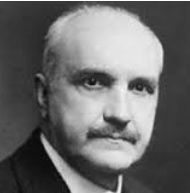
There is nothing impossible in the existence of the supernatural: its existence seems to me decidedly probable.
▼
Source
source
The Genteel Tradition at Bay
3 months 3 weeks ago
Remember that it is not he who gives abuse or blows who affronts, but the view we take of these things as insulting. When, therefore, any one provokes you, be assured that it is your own opinion which provokes you.
▼
Source
source
(20).
1 day ago
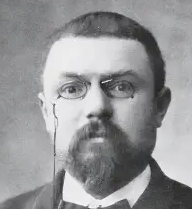
We should like to represent... the... universe, and... feel... we understood it. We... never can attain this representation: our weakness is too great. But... we desire... to conceive an infinite intelligence... which should see all, and... classify all in its time, as we classify, in our time, the little we see. ...This supreme intelligence would be only a demigod; infinite in one sense... limited in another, since it would have... imperfect recollection of the past... otherwise all recollections would be equally present... and for it there would be no time.
2 months ago
Art like life should be free, since both are experimental.
▼
Source
source
Ch. IX.: Justification of Art

1 month 3 weeks ago
Perhaps there is nobody who would sacrifice his life for the sake of maintaining that the three angles of a triangle are together equal to two right angles, for such a truth does not demand the sacrifice of our life; but, on the other hand, there are many who have lost their lives for the sake of maintaining their religious faith. Indeed, it is truer to say that martyrs make faith than that faith makes martyrs. For faith is not the mere adherence of the intellect to an abstract principle; it is not the recognition of a theoretical truth, the process in which the will merely sets in motion our faculty of comprehension; faith is an act of the will - it is a movement of the soul towards a practical truth, towards a person, towards something that makes us not merely comprehend life, but that makes us live.

3 months 1 week ago
The yogi, absorbed in contemplation, contributes in his degree to creation: he breathes a divine perfume, he hears wonderful things. Divine forms traverse him without tearing him, and, united to the nature which is proper to him, he goes, he acts as animating original matter. To some extent, and at rare intervals even I am a yogi .
▼
Source
source
Quoted in R. Malhotra and V. Viswanathan, Snakes in the Ganga: Breaking India 2.0., 2022
1 month 5 days ago
Pain will force even the truthful to speak falsely.
▼
Source
source
Maxim 232

3 months 2 days ago
The authority of science ... promotes and encourages the activity of observing, comparing, measuring and ordering the physical characteristics of human bodies.... Cartesian epistemology and classical ideals produced forms of rationality, scientificity and objectivity that, though efficacious in the quest for truth and knowledge, prohibited the intelligibility and legitimacy of black equality.... In fact, to "think" such an idea was to be deemed irrational, barbaric or mad.
▼
Source
source
Prophesy Deliverance!

3 months 3 weeks ago
A thing therefore never returns to nothing.
▼
Source
source
Book I, line 248 (tr. Munro)

2 months 3 days ago
The poor maidservant who used to say that she only believed in God when she had a toothache puts all theologians to shame.
1 month 3 weeks ago
It is impossible to feel equal respect for things that are in fact unequal unless the respect is given to something that is identical in all of them. Men are unequal in all their relations with the things of this world, without exception. The only thing that is identical in all men is the presence of a link with the reality outside the world. All human beings are absolutely identical in so far as they can be thought of as consisting of a centre, which is an unquenchable desire for good, surrounded by an accretion of psychical and bodily matter.
1 month 4 weeks ago
Individuality, conceived as a temporal development involves uncertainty, indeterminacy, or contingency. Individuality is the source of whatever is unpredictable in the world.

3 months 3 days ago
I must plunge into the water of doubt again and again.
▼
Source
source
Ch. 7 : Remarks on Frazer's Golden Bough, p. 119
2 weeks 2 days ago
It is hard to imagine an experience more horrific than being eaten alive. Most of us would prefer not to imagine what it must feel like. Note that the photographer here had to persuade the park ranger to violate the park rules and put the baby elephant out of his misery.By analogy, suppose it were lawful to visit Third World countries for photoshoots but illegal to "interfere" and help a stricken human baby. Is there a fundamental difference between "ethical" intervention to help humans and "sentimental" pleas to "interfere" and help non-humans? Should we encourage the preservation of life-forms such as the hyena in their current guise? Or do the value judgements underlying the "science" of conservation biology need to be re-examined?
▼
Source
source
"Hyenas Eat Baby Elephant Alive: The Case for Intervention"
3 months 3 days ago
This remark provides the key to the problem, how much truth there is in solipsism. For what the solipsist means is quite correct; only it cannot be said, but makes itself manifest. The world is my world: this is manifest in the fact that the limits of language (of that language which alone I understand) mean the limits of my world.
▼
Source
source
-5.62

3 months 6 days ago
Our aim as scientists is objective truth; more truth, more interesting truth, more intelligible truth. We cannot reasonably aim at certainty. Once we realize that human knowledge is fallible, we realize also that we can never be completely certain that we have not made a mistake.

3 months 1 week ago
There are truths which are not for all men, nor for all times.
▼
Source
source
Letter to François-Joachim de Pierre, cardinal de Bernis, 23 April 1764

2 months 2 weeks ago
Truth is the cry of all, but the game of the few.
▼
Source
source
Paragraph 368
1 day ago
It always seems to me extreme rashness on the part of some when they want to make human abilities the measure of what nature can do. On the contrary, there is not a single effect in nature, even the least that exists, such that the most ingenious theorists can arrive at a complete understanding of it. This vain presumption of understanding everything can have no other basis than never understanding anything. For anyone who had experienced just once the perfect understanding of one single thing, and had truly tasted how knowledge is accomplished, would recognize that of the infinity of other truths he understands nothing.
▼
Source
source
Day One

3 months 1 week ago
Act as if what you do makes a difference. It does.
▼
Source
source
Correspondence with Helen Keller, 1908, in The Correspondence of William James: April 1908-August 1910, Vol. 12
3 months 6 days ago
Look for yourself, and you will find in the long run only hatred, loneliness, despair, rage, ruin, and decay. But look for Christ and you will find Him, and with Him everything else thrown in.
▼
Source
source
Book IV, Chapter 10, "The New Men"

2 months 1 week ago
It's the great mystery of human life that old grief passes gradually into quiet tender joy.

4 months 5 days ago
What a human being believes, however, no matter with what ardor, is not necessarily objective truth.
2 months 3 days ago
We are so lonely in life that we must ask ourselves if the loneliness of dying is not a symbol of our human existence.
2 months 3 days ago
May some future student go over this ground again, and have the leisure to give his results to the world.
CivilSimian.com created by AxiomaticPanic, CivilSimian, Kalokagathia