

2 months 2 weeks ago
It is not enough to accept a concept of order and live by it; that is cowardice, and such cowardice cannot result from freedom. Chaos must be faced. Real order must be preceded by a descent into chaos.
▼
Source
source
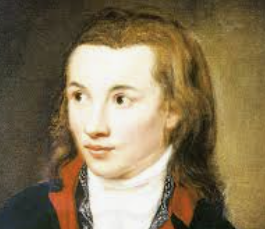
Chapter Three, The Romantic Outsider

4 months 6 days ago
Why has the Revolution of France been stained with crimes, which the Revolution of the United States of America was not? Men are physically the same in all countries; it is education that makes them different. Accustom a people to believe that priests or any other class of men can forgive sins, and you will have sins in abundance.
▼
Source
source
Worship and Church Bells, 1797

4 months 5 days ago
My life is like a stroll upon the beach, As near the ocean's edge as I can go.
▼
Source
source
"The Fisher's Boy", in Edmund Clarence Stedman (ed.) An American Anthology, 1787-1900, Boston and New York: Houghton, Mifflin and Co., 1900

2 weeks 5 days ago
Fire tries gold, misfortune tries brave men.
▼
Source
source
De Providentia (On Providence), 5.9, translated by Aubrey Stewart Alternate translation: Fire is the test of gold; adversity, of strong men. (translator unknown).

4 months 5 days ago
With Leibnitz the extent to which thoughts advance is the extent of the universe; where comprehension ceases, the universe ceases, and God begins: so that later it was even maintained that to be comprehended was derogatory to God, because He was thus degraded into finitude. In that procedure a beginning is made from the determinate, this and that are stated to be necessary; but since in the next place the unity of these moments is not comprehended, it is transferred to God. God is therefore, as it were, the waste channel into which all contradictions flow: Leibnitz's Théodicée is just a popular summing up such as this.
▼
Source
source
Third division, Chapter I. - The Metaphysics of the Understanding Alternate translation: "God is, as it were, the sewer into which all contradictions flow."

4 months 4 days ago
The young men were born with knives in their brain, a tendency to introversion, self-dissection, anatomizing of motives.
▼
Source
source
p. 530, col. 2

3 months 4 weeks ago
If the only alternative to fascism we produce is a corporate-driven, milquetoast, neoliberal Democratic Party, fascism will come to America. Let us be very clear. It's like a Weimar America.
▼
Source
source
Speaking to Chris Hedges on The Real News Network, Cornel West's presidential candidacy is 'for the least of these'. June 16, 2023.
2 weeks 5 days ago
"You will have less money." Yes, and less trouble. "Less influence." Yes, and less envy.

4 weeks 1 day ago
Liberalism... has a left of center meaning in the United States. It has a slightly right of center meaning in much of continental Europe.

2 months 3 weeks ago
Religion is better described than defined and better felt than described. But if there is any one definition that latterly has obtained acceptance, it is that of Schleiermacher, to the effect that religion consists in the simple feeling of a relationship of dependence upon something above us and a desire to establish relations with this mysterious power.
2 months 2 weeks ago
Whenever a human being, through the commission of a crime, has become exiled from good, he needs to be reintegrated with it through suffering. The suffering should be inflicted with the aim of bringing the soul to recognize freely some day that its infliction was just. This reintegration with the good is what punishment is. Every man who is innocent, or who has finally expiated guilt, needs to be recognized as honourable to the same extent as anyone else.

4 days ago
What could be more absurd, to begin with, than our attitude of high moral outrage against other nations for manufacturing the selfsame weapons that we manufacture? The difference, as our leaders say, is that we will use these weapons virtuously, whereas our enemies will use them maliciously - a proposition that too readily conforms to a proposition of much less dignity: we will use them in our interest, whereas our enemies will use them in theirs.

4 months 4 days ago
How significant is the enormous heightening, under mescalin, of the perception of color! ... Man's highly developed color sense is a biological luxury-inestimably precious to him as an intellectual and spiritual being, but unnecessary to his survival as an animal. ... Mescalin raises all colors to a higher power and makes the percipient aware of innumerable fine shades of difference, to which, at ordinary times, he is completely blind. It would seem that, for Mind at Large, the so-called secondary characters of things are primary.
▼
Source
source
describing his experiment with mescaline, pp. 26-27
4 days ago
We are firmly convinced, and we act on that conviction, that with nations, as with individuals, our interests, soundly calculated, will ever be found inseparable from our moral duties; and history bears witness to the fact that a just nation is taken on its word, when recourse is had to armaments and wars to bridle others.
2 months 3 weeks ago
The capabilities (intellectual and material) of contemporary society are immeasurably greater than ever before-which means that the scope of society's domination over the individual is immeasurably greater than ever before. Our society distinguishes itself by conquering the centrifugal social forces with Technology rather than Terror, on the dual basis of an overwhelming efficiency and an increasing standard of living.
▼
Source
source
p. xliii

3 months 2 weeks ago
Govern your tongue before all other things, following the gods.
▼
Source
source
Symbol 7
2 months 3 weeks ago
All of this that is happening to me, and happening to others about me, is it reality or is it fiction? May not all of it perhaps be a dream of God, or of whomever it may be, which will vanish as soon as He wakes? And therefore when we pray to Him, and cause canticles and hymns to rise to Him, is it not that we may lull Him to sleep, rocking the cradle of His dreams? Is not the whole liturgy, of all religions, only a way perhaps of soothing God in His dreams, so that He shall not wake and cease to dream us?
▼
Source
source
Niebla [Mist]
2 months 2 weeks ago
Bourgeois society is ruled by equivalence. It makes the dissimilar comparable by reducing it to abstract quantities. To the enlightenment, that which does not reduce to numbers, and ultimately to the one, becomes illusion.
▼
Source
source
John Cumming trans., p. 7

3 months 4 days ago
All evil results from the non-adaptation of constitution to conditions. This is true of everything that lives. Does a shrub dwindle in poor soil, or become sickly when deprived of light, or die outright if removed to a cold climate? it is because the harmony between its organization and its circumstances has been destroyed.
▼
Source
source
Part I, Ch. 2 : The Evanescence of Evil, § 1
3 months 3 weeks ago
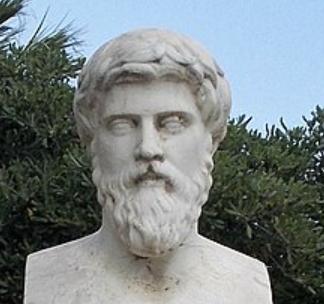
After he routed Pharnaces Ponticus at the first assault, he wrote thus to his friends: "I came, I saw, I conquered."
▼
Source
source
Cæsar
1 week 5 days ago
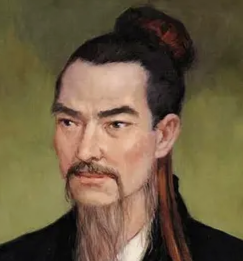
If one does not preserve the learned in a state he will be injuring the state; if one is not zealous (to recommend) the virtuous upon seeing one, he will be neglecting the ruler. Enthusiasm is to be shown only to the virtuous, and plans for the country are only to be shared with the learned. Few are those, who, neglecting the virtuous and slighting the learned, could still maintain the existence of their countries. Book 1; Befriending the Learned Variant translation: To enter upon rulership of a country but not preserve its scholars will result in the downfall of the country. To see the worthy but not hasten to them will make the country's ruler less able to perform his duties. To the unworthy is due no attention. The ignorant should remain without inclusion in the state's affairs. To impede the virtuous and neglect the scholarly and still maintain the survival of the state has yet to be, indeed.
4 weeks 1 day ago
The more progress that has been made toward eradicating social injustices, the more intolerable the remaining injustices seem, and thus the moral imperative to mobilizing to correct them.
4 months 1 week ago
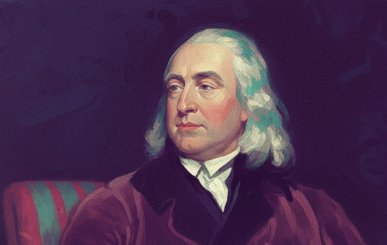
Figure to yourself the mixture of surprise and delight which has this instant been poured into my mind by the sound of my name, as uttered by you, in the speech just read to me out of the Morning Herald... By one and the same man, not only Parliamentary Reform, but Law Reform advocated. Advocated? and by what man? By one who, in the vulgar sense of profit and loss, has nothing to gain by it... Yes, only from Ireland could such self-sacrifice come; nowhere else: least of all in England, cold, selfish, priest-ridden, lawyer-ridden, lord-ridden, squire-ridden, soldier-ridden England, could any approach to it be found.
▼
Source
source
Letter to Daniel O'Connell (15 July 1828) , quoted in The Works of Jeremy Bentham, Vol. X (1843), pp. 594-595
4 months 6 days ago
If you punish him for what he sees you practise yourself, he... will be apt to interpret it the peevishness and arbitrary imperiousness of a father, who, without any ground for it, would deny his son the liberty and pleasure he takes himself.
▼
Source
source
Sec. 71
4 months 3 weeks ago
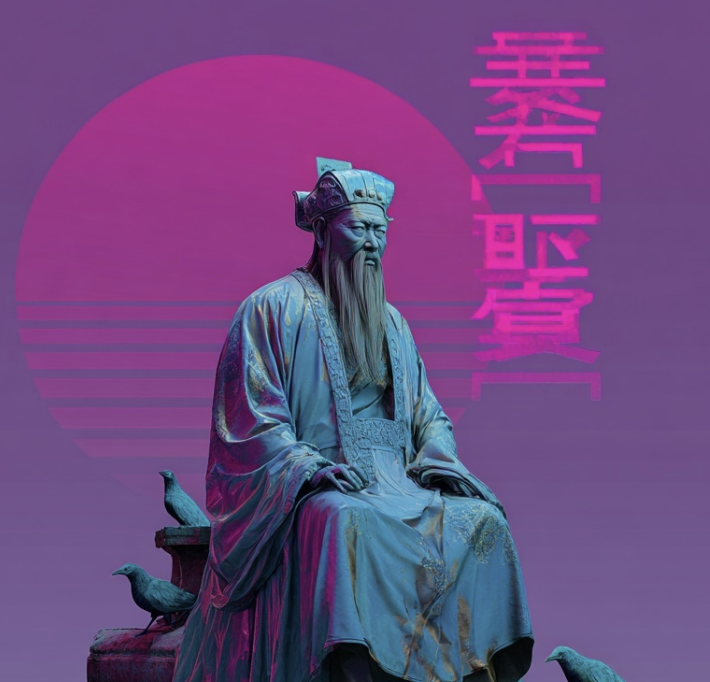
To throw oneself into strange teachings is quite dangerous.
4 months 6 days ago
The state of nature has a law of nature to govern it, which obliges every one: and reason, which is that law, teaches all mankind, who will but consult it, that being all equal and independent, no one ought to harm another in his life, health, liberty, or possessions.
▼
Source
source
Second Treatise of Government, Ch. II, sec. 6
2 months 3 weeks ago
The very desire for guarantees that our values are eternal and secure in some objective heaven is perhaps only a craving for the certainties of childhood or the absolute values of our primitive past.
2 weeks ago
We must not always attach too much importance to violent attacks on the bourgeoisie; they may be motivated by the desire to reform and to perfect capitalism.
▼
Source
source
p. 125

2 months 2 weeks ago
Full of gods means full of meaning, full of narration. The world becomes readable, like a picture.

3 months ago
We define only out of despair, we must have a formula... to give a facade to the void.
2 weeks 1 day ago
From my youth onwards, I have felt sure that all thought which thinks itself out to an issue ends in mysticism. In the stillness of the African jungle I have been able to work out this thought and give it expression.

2 months 2 weeks ago
A young delicate tree, that is being clipped and cut by the gardener in order to give it an artificial form, will never reach the majestic height and the beauty as when allowed to grow in nature and freedom.
4 months 3 weeks ago
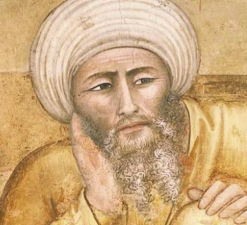
The Asharites have expressed a very peculiar opinion, both with regard to reason and religion; about this problem they have explained it in a way in which religion has not, but have adopted quite an opposite method.
3 months 3 weeks ago
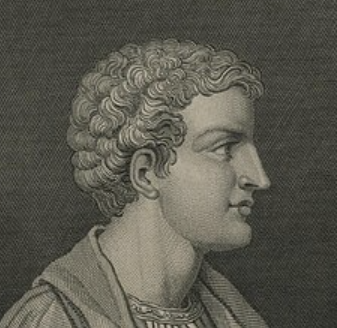
We are but numbers, born to consume resources.
▼
Source
source
Book I, epistle ii, line 27
2 months 3 weeks ago
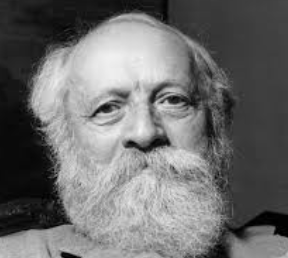
When we rise out of the night into the new life and there begin to receive the signs, what can we know of that which - of him who gives them to us? Only what we experience from time to time from the signs themselves. If we name the speaker of this speech God, then it is always the God of a moment, a moment God.
▼
Source
source
p. 15

2 days ago
Unhappily, history proves that war is, in a certain sense, the habitual state of mankind, which is to say that human blood must flow without interruption somewhere or other on the globe, and that for every nation, peace is only a respite.
▼
Source
source
Chapter III, p. 23
4 months 3 weeks ago
All people respect and love their own parents and children, as well as the parents and children of others.

3 months 3 weeks ago
The man who is fortunate in his choice of son-in-law gains a son; the man unfortunate in his choice loses his daughter also.
▼
Source
source
Freeman (1948), p. 169
4 months 1 week ago
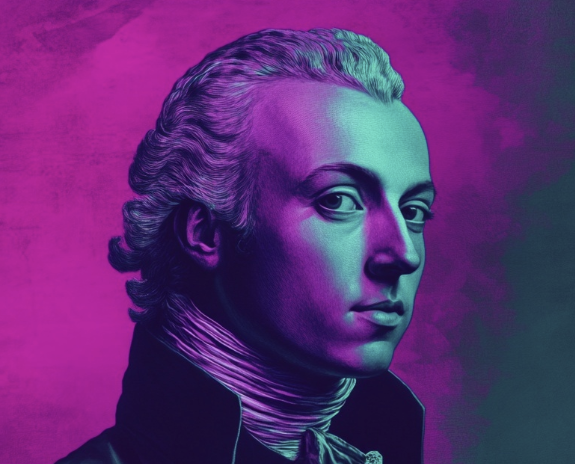
The question of the principle of the form of the intelligible world turns, therefore, upon making apparent in what manner it is possible for several substances to be in mutual commerce, and for this reason to pertain to the same whole, which is called world. We do not here consider the world, let it be understood, as to matter, that is, as to the nature of the substances of which it consists, whether they be material or immaterial, but as to form, that is to say, how among several things taken separately a connection, and among them all, totality can have place.
3 months ago
The theory of transparency was set up in reaction to the theory of mental images, of an inner tableu which the perception of an object would leave in us. In imagination our gaze always goes outward, but imagination modifies and neutralizes the gaze: the real world appears in it as it were between parenthesis or quote marks.
▼
Source
source
The Levinas reader by Levinas, Emmanuel p. 134

3 weeks 4 days ago
"Detect quacks"? Yes do, for Heaven's sake; but know withal the men that are to be trusted! Till we know that, what is all our knowledge; how shall we even so much as "detect"? For the vulpine sharpness, which considers itself to be knowledge, and "detects" in that fashion, is far mistaken. Dupes indeed are many: but, of all dupes, there is none so fatally situated as he who lives in undue terror of being duped.
4 days ago
Our Constitution, by its separation of powers and its system of checks and balances, acts as a restraint upon efficiency by denying exclusive power to any branch of government. The logic of governmental efficiency, unchecked, runs straight on, not only to dictatorship, but also to torture, assassination, and other abominations.
4 months ago
Enjoyment of the work consists in participation in the creative state of the artist.
▼
Source
source
p. 117
3 months 1 day ago
Where love rules, there is no will to power; and where power predominates, there love is lacking. The one is the shadow of the other.
▼
Source
source
P. 97

2 months 1 day ago
4 ways: Agnosticism, Relativism, Amorality, Morality.
1) I don't know. 2) Everybody is different. 3) Do whatever you can. 4) Do what you should.
3 months 2 days ago
Fate and temperament are the names of a concept.
▼
Source
source
As quoted in Demian (1972) by Hermann Hesse, trans. W.J. Strachan
CivilSimian.com created by AxiomaticPanic, CivilSimian, Kalokagathia