



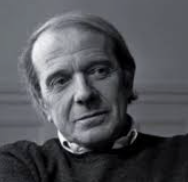
2 months 2 weeks ago
Evaluations, in essence, are... ways of being, modes of existence of those who judge and evaluate.
▼
Source
source
p. 1
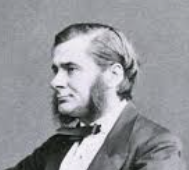
1 month 3 weeks ago
Is Man so different from any of these Apes that he must form an order by himself? Or does he differ less from them than they differ from one another, and hence must take his place in the same order with them?
▼
Source
source
Ch.2, p. 86
4 months 2 weeks ago
It is always necessary that the substance or essence of a person be good before there can be any good works and that good works follow and proceed from a person who is already good. Christ says in Matthew 7:18: "A good tree cannot bear bad fruit, nor can a bad tree bear good fruit." ... The fruit does not make the tree good or bad but the tree itself is what determines the nature of the fruit. In the same way, a person first must be good or bad before doing a good or bad work.
▼
Source
source
pp. 74-75
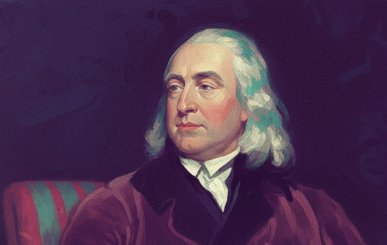
4 months 1 week ago
Pleasure is in itself a good; nay, even setting aside immunity from pain, the only good: pain is in itself an evil; and, indeed, without exception, the only evil; or else the words good and evil have no meaning. And this is alike true of every sort of pain, and of every sort of pleasure.
▼
Source
source
Ch. 10: Of Motives
5 months 1 week ago
A person might fairly doubt also what in the world they mean by the absolute - this that or the other, since, as they would themselves allow, the account of the humanity is one and the same in the absolute man, and in any individual man: for so far as the individual and the absolute man are both man, they will not differ at all: and if so, then the essential good and any particular good will not differ, in so far as both are good. Nor will it do to say that the eternity of the absolute good makes it to be more good; for a white thing which has lasted white ever so long, is no whiter than that which only lasts for a day.

4 months 1 week ago
The retinue of a grandee in China or Indostan accordingly is, by all accounts, much more numerous and splendid than that of the richest subjects of Europe.
▼
Source
source
Chapter XI, Part III, Third Period, p. 240.
3 months 2 days ago
The moral consciousness can sustain the mocking gaze of the political man only if the certitude of peace dominates the evidence of war. Such a certitude is not obtained by a simple play of antitheses. The peace of empires issued from war rests on war. It does not restore to the alienated beings their lost identity. For that a primordial and original relation with being is needed.
▼
Source
source
Totality and Infinity

2 months 4 days ago
People in new environments always produce the new preceptual modality without any difficulty or awareness of change. It is later that the psychic and social realignments baffle societies.
▼
Source
source
ARTnews annual, Volume 31, Art Foundation, 1966, p. 56
4 months 1 week ago
The inscrutable wisdom through which we exist is not less worthy of veneration in respect to what it denies us than in respect to what it has granted.
4 months 1 week ago
... happiness is not an ideal of reason, but of imagination, resting on merely empirical grounds…
▼
Source
source
4:418-19, p.29
2 months 4 days ago
Radio comes to us ostensibly with person to person directness that is private and intimate, while in more urgent fact, it is really a subliminal echo chamber of magic power to touch remote and forgotten chords.
▼
Source
source
(p. 302).
3 months 1 week ago
In order to shake a hypothesis, it is sometimes not necessary to do anything more than push it as far as it will go.
▼
Source
source
No. 50
4 months 1 week ago
There cannot be a greater rudeness, than to interrupt another in the current of his discourse... To which, if there be added, as is usual, a correcting of any mistake, or a contradiction of what has been said, it is a mark of yet greater pride and self-conceitedness, when we thus intrude our selves for teachers, and take upon us either to set another right in his story, or shew the mistakes of his judgement.
▼
Source
source
Sec. 145

4 months 6 days ago
So much of our time is spent in preparation, so much in routine and so much in retrospect, that the amount of each person's genius is confined to a very few hours.
▼
Source
source
Quoted in Simon Brown (ed.) The New England Farmer, vol. 9 (January 1857) p. 18

4 months 1 week ago
That the sun will not rise to-morrow is no less intelligible a proposition, and implies no contradiction, than the affirmation, that it will rise.
▼
Source
source
§ 4.8

4 months 1 week ago
Religion may be purified. This great work was begun two hundred years ago: but men can only bear light to come in upon them by degrees.
▼
Source
source
The critical review, or annals of literature, Volume XXVI, by A Society of Gentlemen (1768) p. 450
2 months 3 weeks ago
Wyman's overpopulated universe is in many ways unlovely. It offends the aesthetic sense of us who have a taste for desert landscapes.
▼
Source
source
"On What There Is", p. 4. a humorous comment on the idea "unactualized possible".

2 months 6 days ago
Unfortunately not only were the rulers, who were considered supernatural beings, benefited by having the peoples in subjection, but as a result of the belief in, and during the rule of, these pseudodivine beings, ever larger and larger circles of people grouped and established themselves around them, and under an appearance of governing took advantage of the people. And when the old deception of a supernatural and God-appointed authority had dwindled away these men were only concerned to devise a new one which like its predecessor should make it possible to hold the people in bondage to a limited number of rulers.
▼
Source
source
III

4 months 5 days ago
I believe that the advance of science depends upon the free competition of thought, and thus upon freedom, and that it must come to an end if freedom is destroyed (though it may well continue for some time in some fields, especially in technology).
▼
Source
source
Ch. 10 "Corroboration, or How a Theory Stands up to Tests", section 85: The Path of Science, p. 279, note 2.
3 months 1 week ago
The purpose of an encyclopedia is to collect knowledge disseminated around the globe; to set forth its general system to the men with whom we live, and transmit it to those who will come after us, so that the work of preceding centuries will not become useless to the centuries to come; and so that our offspring, becoming better instructed, will at the same time become more virtuous and happy, and that we should not die without having rendered a service to the human race in the future years to come.
▼
Source
source
Encyclopédie

3 months 2 weeks ago
Rest satisfied with doing well, and leave others to talk of you as they please.
▼
Source
source
As quoted in The World's Laconics: Or, The Best Thoughts of the Best Authors (1853) by Everard Berkeley Variant: Rest satisfied with doing well, and leave others to talk of you as they will.

4 months 3 weeks ago
He who is not satisfied with a little, is satisfied with nothing.
4 months 1 week ago
The composer reveals the innermost nature of the world, and expresses the profoundest wisdom in a language that his reasoning faculty does not understand, just as a magnetic somnambulist gives information about things of which she has no conception when she is awake. Therefore in the composer, more than in any other artist, the man is entirely separate and distinct from the artist.
▼
Source
source
Vol. I, Ch. III, The World As Representation

2 months 1 week ago
In the performance of an illocutionary act in the literal utterance of a sentence, the speaker intends to produce a certain effect by means of getting the hearer to recognize his intention to produce that effect; and furthermore, if he is using the words literally, he intends this recognition to be achieved in virtue of the fact that the rules for using the expressions he utters associate the expression with the production of that effect.
▼
Source
source
P. 45.

3 months 2 days ago
This very second has vanished forever, lost in the anonymous mass of the irrevocable. It will never return. I suffer from this and I do not. Everything is unique - and insignificant.
6 days ago
Compulsion in religion is distinguished peculiarly from compulsion in every other thing. I may grow rich by art I am compelled to follow, I may recover health by medicines I am compelled to take against my own judgment, but I cannot be saved by a worship I disbelieve & abhor.
▼
Source
source
Notes on Religion (October 1776), published in The Works of Thomas Jefferson in Twelve Volumes, Federal Edition, Paul Leicester Ford, ed., New York: G. P. Putnam's Sons, 1904, Vol. 2, p. 266

2 months 2 days ago
An atheist is just somebody who feels about Yahweh the way any decent Christian feels about Thor or Baal or the golden calf. As has been said before, we are all atheists about most of the gods that humanity has ever believed in. Some of us just go one god further.
▼
Source
source
Richard Dawkins on militant atheism,

4 months 5 days ago
I respect orders but I respect myself too and I do not obey foolish rules made especially to humiliate me.
▼
Source
source
Hugo to Slick and Georges, Act 3, sc. 2
3 months 2 days ago
If I were to go blind, what would bother me the most would be no longer to be able to stare idiotically at the passing clouds.

3 months 1 week ago
Nor is there any embarrassment in the fact that we're ridiculous, isn't it true? For it's actually so, we are ridiculous, light-minded, with bad habits, we're bored, we don't know how to look, how to understand, we're all like that, all, you, and I, and they! Now, you're not offended when I tell you to your face that you're ridiculous? And if so, aren't you material? You know, in my opinion it's sometimes even good to be ridiculous, if not better: we can the sooner forgive each other, the sooner humble ourselves; we can't understand everything at once, we can't start right out with perfection! To achieve perfection, one must first begin by not understanding many things! And if we understand too quickly, we may not understand well. This I tell you, you, who have already been able to understand. .. and not understand ... so much. I'm not afraid for you now.
▼
Source
source
Part 4, Chapter ?

3 months 1 week ago
In the United States, the majority undertakes to supply a multitude of ready-made opinions for the use of individuals, who are thus relieved from the necessity of forming opinions of their own.
▼
Source
source
Book One, Chapter II.

2 months 3 weeks ago
The art of progress is to preserve order amid change, and to preserve change amid order.
4 months 1 week ago
To desire you to read my book over and mark all the corrections you would wish me to make...would oblige me greatly: I know how much I shall be benefitted and I shall at the same time preserve the pretious right of private judgement for the sake of which our forefathers kicked out the Pope and the Pretender. I believe you to be much more infalliable than the Pope, but as I am a Protestant my conscience makes me scruple to submit to any unscriptural authority.
▼
Source
source
Letter to William Strahan (4 April 1760), quoted in Adam Smith, The Correspondence of Adam Smith, eds. E. C. Mossner and I. S. Ross (1987), pp. 67-68
4 days ago
Man is an enigma whose knot has not ceased to occupy observers. The contradictions that he contains astonish reason and impose silence on it. So what is this inconceivable being who carries within him powers that clash and who is obliged to hate himself in order to esteem himself?

4 months 2 weeks ago
Every other knowledge is harmful to him who does not have knowledge of goodness.
▼
Source
source
Ch. 25
4 months 1 week ago
It is asserted that beasts have no rights; the illusion is harboured that our conduct, so far as they are concerned, has no moral significance, or, as it is put in the language of these codes, that "there are no duties to be fulfilled towards animals." Such a view is one of revolting coarseness, a barbarism of the West, whose source is Judaism. In philosophy, however, it rests on the assumption, despite all evidence to the contrary, of the radical difference between man and beast,-a doctrine which, as is well known, was proclaimed with more trenchant emphasis by Descartes than by any one else: it was indeed the necessary consequence of his mistakes.
▼
Source
source
Part III, Ch. VIII, 7, p. 218
2 months 4 weeks ago
I cannot escape the objection that there is no state of mind, however simple, that does not change every moment.
▼
Source
source
An Introduction to Metaphysics (1903), translated by T. E. Hulme. New York: G. P. Putnam's Sons, 1912, p. 44
3 days ago
To live your brief life rightly, isn't that enough?
▼
Source
source
(Hays translation) X, 31
3 months 3 weeks ago
We are responsible not only for what we do but also for what we could have prevented.
▼
Source
source
Introduction (p. xv)

2 months 3 weeks ago
There is nothing truly real, save that which feels, suffers, pities, loves and desires, save consciousness. And we need God in order to save consciousness; not in order to think existence, but in order to live it; not in order to know the why and how of it, but in order to feel the wherefore of it.
2 months 3 weeks ago
For the mockers are those who die comically, and God laughs at their comic ending, while the nobler part, the part of tragedy, is theirs who endured the mockery.
1 week ago
Love responsibility. Say: "It is my duty, and mine alone, to save the earth. If it is not saved, then I alone am to blame." Love each man according to his contribution in the struggle. Do not seek friends; seek comrades-in-arms.
2 months 3 weeks ago
To believe in God is to long for His existence and, further, it is to act as if he existed; it is to live by this longing and to make it the inner spring of our action. This longing or hunger for divinity begets hope, hope begets faith, and faith and hope beget charity. Of this divine longing is born our sense of beauty, of finality, of goodness.

4 months 3 weeks ago
For creation is not a change, but that dependence of the created existence on the principle from which it is instituted, and thus is of the genus of relation; whence nothing prohibits it being in the created as in the subject. Creation is thus said to be a kind of change, according to the way of understanding, insofar as our intellect accepts one and the same thing as not existing before and afterwards existing.
▼
Source
source
II, 18, 2 (see also Summa Theologica I, q. 45, art. 3 ad 2)
2 months 3 weeks ago
Advancing bourgeois society liquidates memory, time, recollection as irrational leftovers of the past.
▼
Source
source
"Was bedeutet Aufarbeitung der Vergangenheit"

6 days ago
We are disposed, somewhat by culture and somewhat by nature, to solve our problems by violence, and even to enjoy doing so. And yet by now all of us must at least have suspected that our right to live, to be free, and to be at peace is not guaranteed by any act of violence. It can be guaranteed only by our willingness that all other persons should live, be free, and be at peace - and by our willingness to use or give our own lives to make that possible.

4 months 5 days ago
A sensible human once said, "If people knew how much ill-feeling unselfishness occasions, it would not be so often recommended from the pulpit"; and again, "She's the sort of woman who lives for others-you can always tell the others by their hunted expression."
▼
Source
source
Letter XXVI

4 months 1 day ago
The perfect disciplinary apparatus would make it possible for a single haze to see everything constantly. A central point would be both the source of light illuminating everything, and a locus of convergence for everything that must be known: a perfect eye that nothing would escape and a centre towards which all gazes would be turned.
▼
Source
source
Part Three, The Means of Correct Training
CivilSimian.com created by AxiomaticPanic, CivilSimian, Kalokagathia