


3 months 2 weeks ago
A great prison structure was planned, whose different levels would correspond exactly to the levels of the centralized administration. The scaffold, where the body of the tortured criminal had been exposed to the ritually manifested force of the sovereign, the punitive theatre in which the representation of punishment was permanently available to the social body, was replaced by a great enclosed, complex and hierarchized structure that was integrated into the very body of the state apparatus.
▼
Source
source
Chapter Three, The Gentle Way in Punishment

3 months 3 weeks ago
As for 'taking sides' - the choice, it seems to me, is no longer between two users of violence, two systems of dictatorship. Violence and dictatorship cannot produce peace and liberty; they can only produce the results of violence and dictatorship, results with which history has made us only too sickeningly familiar. The choice now is between militarism and pacifism. To me, the necessity of pacifism seems absolutely clear.
▼
Source
source
Authors Take Sides on the Spanish War (1937) edited by Nancy Cunard and published by the Left Review

4 months 2 weeks ago
Radiation, unlike smoking, drinking, and overeating, gives no pleasure, so the possible victims object.

3 months 2 weeks ago
A new word is like a fresh seed sown on the ground of the discussion.

2 months 2 weeks ago
From the cradle to the grave, each individual pays for the sin of not being God. That's why life is an uninterrupted religious crisis, superficial for believers, shattering for doubters.
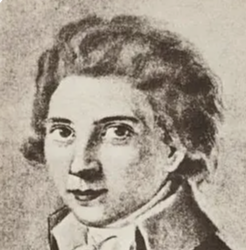
2 months 3 weeks ago
Expect nothing more from philosophy than a voice, language and grammar of the instinct for Godliness that lies at its origin, and, essentially, is philosophy itself.
▼
Source
source
"On Philosophy: To Dorothea," in Theory as Practice (1997), p. 421
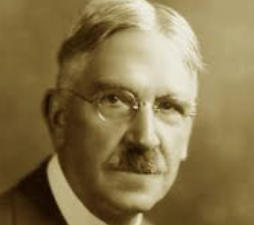
2 months 2 weeks ago
The other conclusion is that art is the complement of science. Science as I have said is concerned wholly with relations, not with individuals. Art, on the other hand, is not only the disclosure of the individuality of the artist but also a manifestation of individuality as creative of the future, in an unprecedented response to conditions as they were in the past. Some artists in their vision of what might be, but is not, have been conscious rebels. But conscious protest and revolt is not the form which the labor of the artist in creation of the future must necessarily take. Discontent with things as they are is normally the expression of the vision of what may be and is not, art in being the manifestation of individuality is this prophetic vision.
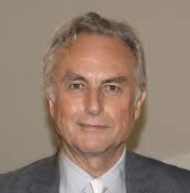
1 month 2 weeks ago
Survival machines that can simulate the future are one jump ahead of survival machines that who can only learn of the basis of trial and error. The trouble with overt trial is that it takes time and energy. The trouble with overt error is that it is often fatal. ...The evolution of the capacity to simulate seems to have culminated in subjective consciousness. Why this should have happened is, to me, the most profound mystery facing modern biology.
▼
Source
source
Ch. 4. The Gene machine
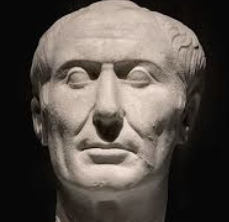
1 month 2 weeks ago
When Fortune is on our side, popular favor bears her company.
▼
Source
source
Maxim 275
1 month 2 weeks ago
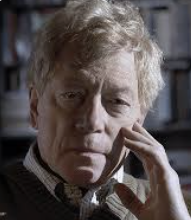
The conservative response to modernity is to embrace it, but to embrace it critically, in full consciousness that human achievements are rare and precarious, that we have no God-given right to destroy our inheritance, but must always patiently submit to the voice of order, and set an example of orderly living.
▼
Source
source
"Eliot and Conservatism" (p. 208)
Just now
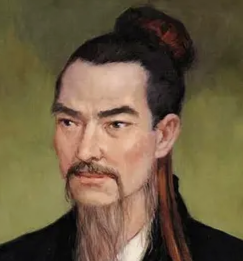
All states in the world, large or small, are cities of Heaven, and all people, young or old, honourable or humble, are its subjects; for they all graze oxen and sheep, feed dogs and pigs, and prepare clean wine and cakes to sacrifice to Heaven. Does this not mean that Heaven claims all and accepts offerings from all? Since Heaven does claim all and accepts offerings from all, what then can make us say that it does not desire men to love and benefit one another? Hence those who love and benefit others Heaven will bless. Those who hate and harm others Heaven will curse, for it is said that he who murders the innocent will be visited by misfortune. How else can we explain the fact that men, murdering each other, will be cursed by Heaven? Thus we are certain that Heaven desires to have men love and benefit one another and abominates to have them hate and harm one another.
▼
Source
source
Book 1; On the necessity of standards
1 month 2 weeks ago
We desire nothing so much as what we ought not to have.
▼
Source
source
Maxim 559 [Mimi et aliorum sententiae 677]

1 week 6 days ago
It is a most important social act; nay, at bottom, the one important social act. Given the men a People choose, the People itself, in its exact worth and worthlessness, is given. A heroic people chooses heroes, and is happy; a valet or flunkey people chooses sham-heroes, what are called quacks, thinking them heroes, and is not happy.

1 month 3 weeks ago
What is the Jew?...What kind of unique creature is this whom all the rulers of all the nations of the world have disgraced and crushed and expelled and destroyed; persecuted, burned and drowned, and who, despite their anger and their fury, continues to live and to flourish. What is this Jew whom they have never succeeded in enticing with all the enticements in the world, whose oppressors and persecutors only suggested that he deny (and disown) his religion and cast aside the faithfulness of his ancestors?! The Jew - is the symbol of eternity. ... He is the one who for so long had guarded the prophetic message and transmitted it to all mankind. A people such as this can never disappear. The Jew is eternal. He is the embodiment of eternity.
▼
Source
source
Attributed in "The Final Resolution", in Jewish World Periodical (1908), p. 189
2 months 2 weeks ago
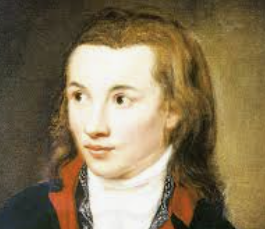
Poets and priests were one in the beginning, and they only separated in later times. But the real poet is always a priest, just as the real priest always remains a poet.
▼
Source
source
Fragment No. 71
1 month 1 week ago
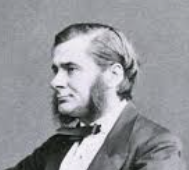
I really have no claim to rank myself among fatalistic, materialistic, or atheistic philosophers. Not among fatalists, for I take the conception of necessity to have a logical, and not a physical foundation; not among materialists, for I am utterly incapable of conceiving the existence of matter if there is no mind in which to picture that existence; not among atheists, for the problem of the ultimate cause of existence is one which seems to me to be hopelessly out of reach of my poor powers. Of all the senseless babble I have ever had occasion to read, the demonstrations of these philosophers who undertake to tell us all about the nature of God would be the worst, if they were not surpassed by the still greater absurdities of the philosophers who try to prove that there is no God.

3 months 2 weeks ago
All affected can accept the consequences and the side effects that [the norm's] general observance can be anticipated to have for the satisfaction of everyone's interests, and the consequences are preferred to those of known alternative possibilities for regulation.
▼
Source
source
p. 65
3 months 3 weeks ago
Both of us victims of the same twentieth-century plague. Not the Black Death, this time; the Grey Life.
2 months 2 weeks ago
If this superstitious fear of Spirits were taken away, and with it, Prognostiques from Dreams, false Prophecies, and many other things depending thereon, by which, crafty ambitious persons abuse the simple people, men would be much more fitted then they are for civill Obedience.
▼
Source
source
The First Part, Chapter 2, p. 8

2 months 2 weeks ago
His disciples said to Him, "When will the Kingdom come?" Jesus said, "It will not come by waiting for it. It will not be a matter of saying 'Here it is' or 'There it is.' Rather, the Kingdom of the Father is spread out upon the earth, and men do not see it."
1 month 2 weeks ago
Tocqueville predicted that in democratic countries the public would demand larger and larger doses of excitement and increasingly stronger stimulants from its writers. He probably did not expect that public to dramatize itself so extensively, to make the world scene everybody's theatre, or, in the developed countries, to take to alcohol and drugs in order to get relief from the horrors of ceaseless intensity, the torment of thrills and distractions. A great many writers have done little more than meet the mounting demand for thrills. I think that this demand has, in the language of marketing, peaked.
▼
Source
source
The Distracted Public

2 months 1 week ago
We do not obtain the most precious gifts by going in search of them but by waiting for them. Man cannot discover them by his own powers, and if he sets out to seek for them he will find in their place counterfeits of which he will be unable to discern falsity.

2 weeks 4 days ago
The groups are not unified under any single authority but rather relate to each other in a network structure. Social forums, affinity groups, and other forms of democratic decision-making are the basis of the movements, and they manage to act together based on what they have in common. ... These globalization protest movements are obviously limited in many regards. First of all, although their vision and desire is global in scope, they have thus far only involved significant numbers in North America and Europe. Second, so long, as they remain merely protests movements, traveling from one summit meeting to the next, they will be incapable of becoming a foundational struggle and of articulating an alternative to social relations. These limitations may only be temporary obstacles, and the movements may discover ways to overcome them.
▼
Source
source
86-87
3 months 3 weeks ago
Encourage therefore his inquisitiveness all you can, by satisfying his demands, and informing his judgement, as far as it is capable. When his reasons are any way tolerable, let him find the credit and commendation of it, without being laugh'd at for his mistake be gently put into the right; and if he shew a forwardness to be reasoning about things that come in his way, take care, as much as you can, that no body check this inclination in him, or mislead it by captious or fallacious ways of talking with him. For when all is done, this is the highest and most important faculty of our minds, deserves the greatest care and attention in cultivating it: the right improvement, and exercise of our reason being the highest perfection that a man can attain to in his life.
▼
Source
source
Sec. 122
3 days ago
The more we struggle for life (as pleasure), the more we are actually killing what we love.
▼
Source
source
p. 32
2 months 2 weeks ago
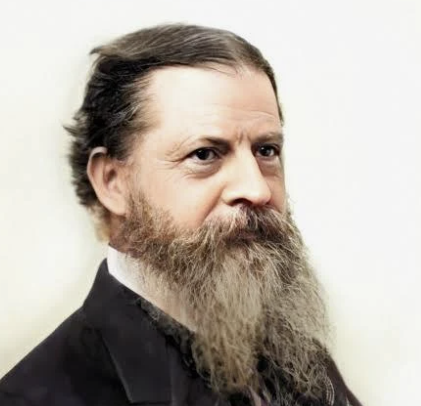
Let us not pretend to doubt in philosophy what we do not doubt in our hearts.
▼
Source
source
Vol. V, par. 265
2 weeks ago
The only method of learning to bear with dignity the vicissitudes of fortune is to recall the catastrophes of others.
▼
Source
source
Polybius. The Histories of Polybius, trans. Evelyn S. Shuckburgh. London, New York: Macmillan and Co., 1889. Book I, Chapter 1

3 months 3 weeks ago
The philosophy of nature must not be unduly terrestrial; for it, the earth is merely one of the smaller planets of one of the smaller stars of the Milky Way. It would be ridiculous to warp the philosophy of nature in order to bring out results that are pleasing to the tiny parasites of this insignificant planet. Vitalism as a philosophy, and evolutionism, show, in this respect, a lack of sense of proportion and logical relevance. They regard the facts of life, which are personally interesting to us, as having a cosmic significance, not a significance confined to the earth's surface. Optimism and pessimism, as cosmic philosophies, show the same naive humanism; the great world, so far as we know it from the philosophy of nature, is neither good nor bad, and is not concerned to make us happy or unhappy. All such philosophies spring from self-importance and are best corrected by a little astronomy.

2 months 2 days ago
You believe that I run after the strange because I do not know the beautiful; no, it is because you do not know the beautiful that I seek the strange.
▼
Source
source
F160

3 months 3 weeks ago
Friends are not primarily absorbed in each other. It is when we are doing things together that friendship springs up - painting, sailing ships, praying, philosophizing, fighting shoulder to shoulder. Friends look in the same direction. Lovers look at each other - that is, in opposite directions. To transfer bodily all that belongs to one relationship into the other is blundering.
3 months 3 weeks ago
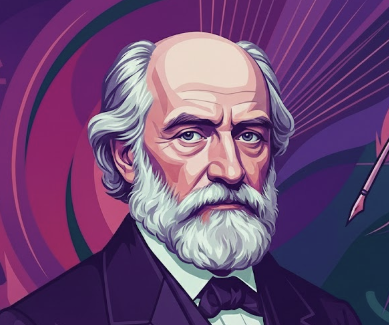
Childish and altogether ludicrous is what you yourself are and all philosophers; and if a grown-up man like me spends fifteen minutes with fools of this kind, it is merely a way of passing the time. I've now got more important things to do. Goodbye!
▼
Source
source
Thrasymachus, in On the Indestructibility of our Essential Being by Death, in Essays and Aphorisms (1970) as translated by R. J. Hollingdale, p. 76
3 months 3 weeks ago
Let me give two cautions. 1) The one is, that you keep them to the practice of what you would have grow into a habit with them, by kind words, and gentle admonitions, rather as minding them of what they forget, than by harsh rebukes and chiding, as if they were wilfully guilty. 2) Another thing you are to take care of, is, not to endeavour to settle too many habits at once, lest by variety you confound them, and so perfect none. When constant custom has made any one thing easy and natural to 'em, and they practice it without reflection, you may then go on to another.
▼
Source
source
Sec. 66

2 weeks 3 days ago
He whom God has touched will always be a being apart: he is, whatever he may do, a stranger among men; he is marked by a sign.
▼
Source
source
Oeuvres Complètes, vol. 3. L'Avenir de la Science (1890).

4 months 1 day ago
Again, we should notice the force, effect, and consequences of inventions, which are nowhere more conspicuous than in those three which were unknown to the ancients; namely, printing, gunpowder, and the compass. For these three have changed the appearance and state of the whole world; first in literature, then in warfare, and lastly in navigation: and innumerable changes have been thence derived, so that no empire, sect, or star, appears to have exercised a greater power and influence on human affairs than these mechanical discoveries.
▼
Source
source
Aphorism 129

3 months 3 weeks ago
To some extent, mythology is only the most ancient history and biography. So far from being false or fabulous in the common sense, it contains only enduring and essential truth, the I and you, the here and there, the now and then, being omitted. Either time or rare wisdom writes it. Before printing was discovered, a century was equal to a thousand years. The poet is he who can write some pure mythology to-day without the aid of posterity.

3 months 4 days ago
A bad feeling is a commotion of the mind repugnant to reason, and against nature.
▼
Source
source
As quoted in Tusculanae Quaestiones by Cicero, iv. 6.
2 weeks 1 day ago
Communism was not the crazy fantasy of a few fanatics, nor the result of human stupidity and baseness; it was a real, very real part of the history of the twentieth century, and we cannot understand this history of ours without understanding communism. We cannot get rid of this specter by saying it was just "human stupidity," or "human corruptibility." The specter is stronger than the spells we cast on it. It might come back to life.
▼
Source
source
Introduction to My Correct Views on Everything
1 month 2 weeks ago
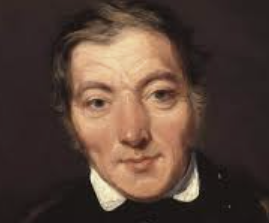
It is the interest of the individual and of all society, that he should be made, at the earliest period, to understand his own construction, the proper use of its parts, and how to keep them at all times in a state of health; and especially that he should be taught to observe the varied effects of different kinds of food, and different quantities, upon his own constitution. He should be taught the general and individual laws of health, thus early, that he may know how to prevent the approach of disease. And the knowledge of the particular diet best suited to his constitution, is one of the most essential laws of health.
▼
Source
source
3rd Part

3 months 3 weeks ago
Men will always be mad, and those who think they can cure them are the maddest of all.
▼
Source
source
Letter to Louise Dorothea of Meiningen, duchess of Saxe-Gotha Madame, 30 January 1762

2 months 3 weeks ago
The foremost, or indeed the sole condition which is required in order to succeed in centralizing the supreme power in a democratic community, is to love equality, or to get men to believe you love it. Thus the science of despotism, which was once so complex, is simplified, and reduced as it were to a single principle.
▼
Source
source
Book Four, Chapter IV.
2 months 2 weeks ago
Man consists in Truth. If he exposes Truth, he exposes himself. If he betrays Truth, he betrays himself. We speak not here of lies, but of acting against Conviction.

3 months 3 weeks ago
Necessity may be defined in two ways, conformably to the two definitions of cause, of which it makes an essential part. It consists either in the constant conjunction of like objects, or in the inference of the understating from one object to another.
▼
Source
source
§ 8.27
3 months 3 weeks ago
I find that the whiter my hair becomes the more ready people are to believe what I say.
▼
Source
source
Bertrand Russell Speaks His Mind (1960), p. 80

3 months 3 weeks ago
Nature offers nothing that can be called this man's rather than another's ; but, under nature, everything belongs to all - that is, they have authority to claim it for themselves. But, under dominion, where it is by common law determined what belongs to this man, and what to that, he is called just who has a constant will to render to every man his own, but he, unjust who strives, on the contrary, to make his own that which belongs to another.
▼
Source
source
Ch. 2, Of Natural Right
1 month 3 weeks ago
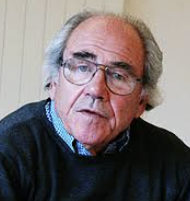
Seduction is the world's elementary dynamic... All this has changed significantly for us, at least in appearance. For what has happened to good and evil? Seduction hurls them against one another, and unites them beyond meaning, in a paroxysm [sudden outbreak of emotion] of intensity and charm.
▼
Source
source
(p. 59)

4 months 1 day ago
Origen, of course, is also a great advocate of the allegorical approach. Yet I think you will have to admit that our modem theologians either despise this method of interpretation or are completely ignorant of it. As a matter of fact they surpass the pagans of antiquity in the subtlety of their distinctions.
▼
Source
source
p. 63
4 months 2 weeks ago
Inspect every piece of pseudoscience and you will find a security blanket, a thumb to suck, a skirt to hold. What does the scientist have to offer in exchange? Uncertainty! Insecurity!
1 month 1 week ago
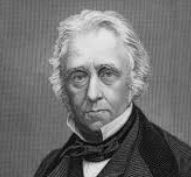
In all ages a chief cause of the intestine disorders of states has been that the natural distribution of power and the legal distribution of power have not corresponded with each other.
▼
Source
source
Speech in the House of Commons (28 February 1832), quoted in Speeches of the Right Honourable T. B. Macaulay, M.P. (1854), p. 91
2 months 1 week ago
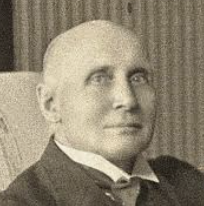
The order of nature cannot be justified by the mere observation of nature. For there is nothing in the present fact which inherently refers either to the past or to the future.... It illustrates the anti-rationalism of the scientific public that, when Hume did appear, it was only the religious implications of his philosophy which attracted attention. This was because the clergy were in principle rationalists, whereas the men of science were content with a simple faith in the order of nature.
▼
Source
source
Ch. 3: "The Century of Genius", p. 73
2 weeks ago
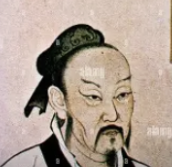
The superior man has three things in which he delights, and to be ruler over the kingdom is not one of them. That his father and mother are both alive, and that the condition of his brothers affords no cause for anxiety;-this is one delight. That, when looking up, he has no occasion for shame before Heaven, and, below, he has no occasion to blush before men;-this is a second delight. That he can get from the whole kingdom the most talented individuals, and teach and nourish them;-this is the third delight.
▼
Source
source
7A:20, as translated by James Legge in The Chinese Classics, Vol. II (1861), p. 335
CivilSimian.com created by AxiomaticPanic, CivilSimian, Kalokagathia