


2 months 3 days ago
Astronomy is perhaps the science whose discoveries owe least to chance, in which human understanding appears in its whole magnitude, and through which man can best learn how small he is.
▼
Source
source
C 23

2 months 2 weeks ago
Criticism is a misconception: we must read not to understand others but to understand ourselves.
2 months 2 weeks ago
Injustice in this world is not something comparative; the wrong is deep, clear, and absolute in each private fate.
▼
Source
source
Ch. IV: The Aristocratic Ideal

3 months 5 days ago
You will know that wretched men are the cause of their own suffering, who neither see nor hear the good that is near them, and few are the ones who know how to secure release from their troubles. Such is the fate that harms their minds; like pebbles they are tossed about from one thing to another with cares unceasing. For the dread companion Strife harms them unawares, whom one must not walk behind, but withdraw from and flee.
▼
Source
source
As quoted in Divine Harmony: The Life and Teachings of Pythagoras by John Strohmeier and Peter Westbrook

1 week 1 day ago
Armies have endured all manner of want, have lived on roots, and have resisted hunger by means of food too revolting to mention. All this they have suffered to gain a kingdom, and-what is more marvellous-to gain a kingdom that will be another's. Will any man hesitate to endure poverty, in order that he may free his mind from madness?

4 months 1 day ago
I approached the task of destroying images by first tearing them out of the heart through God's Word and making them worthless and despised. This indeed took place before Dr. Karlstadt ever dreamed of destroying images. For when they are no longer in the heart, they can do no harm when seen with the eyes. But Dr. Karlstadt, who pays no attention to matters of the heart, has reversed the order by removing them from sight and leaving them in the heart. For he does not preach faith, nor can he preach it; unfortunately, only now do I see that. Which of these two forms of destroying images is best, I will let each man judge for himself.
▼
Source
source
pp. 84-85

2 months 1 week ago
A society like the Church, which claims to be Divine is perhaps more dangerous on account of the ersatz good which it contains then on account of the evil which sullies it. Something of the social labelled divine: an intoxicating mixture which carries with it every sort of license.
▼
Source
source
Devil disguised. p. 122

2 weeks ago
"A fair day's wages for a fair day's work": it is as just a demand as governed men ever made of governing. It is the everlasting right of man.
▼
Source
source
Bk. I, ch. 3.

1 day ago
The words of malicious slander should not be allowed to enter the ear. A defensive voice should not be allowed to come out of the mouth. The want to gravely injure people should not be allowed to exist in the heart. If this is accomplished, though there be people who cynically expose others, they would be without people who would align with them.
▼
Source
source
Book 1; Self-culfivation

3 months 3 weeks ago
I have been merely oppressed by the weariness and tedium and vanity of things lately: nothing stirs me, nothing seems worth doing or worth having done: the only thing that I strongly feel worth while would be to murder as many people as possible so as to diminish the amount of consciousness in the world. These times have to be lived through: there is nothing to be done with them.
▼
Source
source
Letter to Gilbert Murray, March 21, 1903

2 months 1 week ago
Use harms and even destroys beauty. The noblest function of an object is to be contemplated.
▼
Source
source
Niebla [Mist]


3 months 3 weeks ago
None of the things they learn, should ever be made a burthen to them, or impos's on them as a task. Whatever is so proposed, presently becomes irksome; the mind takes an aversion to it, though before it were a thing of delight or indifferency. Let a child but be ordered to whip his top at a certain time every day, whether he has or has not a mind to it; let this be but requir'd of him as a duty, wherein he must spend so many hours morning and afternoon, and see whether he will not soon be weary of any play at this rate. Is it not so with grown men?
▼
Source
source
Sec. 73

3 months 3 weeks ago
To be shaken out of the ruts of ordinary perception, to be shown for a few timeless hours the outer and inner world, not as they appear to an animal obsessed with survival or to a human being obsessed with words and notions, but as they are apprehended, directly and unconditionally, by Mind at Large - this is an experience of inestimable value to everyone and especially to the intellectual.
1 week 1 day ago
You are doing an excellent thing, one which will be wholesome for you, if, as you write me, you are persisting in your effort to attain sound understanding; it is foolish to pray for this when you can acquire it from yourself. We do not need to uplift our hands towards heaven, or to beg the keeper of a temple to let us approach his idol's ear, as if in this way our prayers were more likely to be heard. A god is near you, with you, and in you. This is what I mean, Lucilius: there sits a holy spirit within us, one who marks our good and bad deeds, and is our a guardian.

3 months 3 weeks ago
If slavery, barbarism and desolation are to be called peace, men can have no worse misfortune. No doubt there are usually more and sharper quarrels between parents and children, than between masters and slaves ; yet it advances not the art of household management to change a father's right into a right of property, and count children but as slaves. Slavery, then, and not peace, is furthered by handing the whole authority to one man.
▼
Source
source
Ch. 6, On Monarchy

3 months 3 weeks ago
By 'arguing...' I mean... criticizing... inviting... criticism; and trying to learn from it.
3 months 2 weeks ago
If I had to lay bets, my bet would be that everything is going to go to hell, but, you know, what else have we got except hope?
▼
Source
source
"Richard Rorty Interviewed by Gideon Lewis-Kraus." The Believer, June 2003.
2 days ago
Man is constituted as a speculative being; he contemplates the world, and the objects around him, not with a passive indifferent eye, but as a system disposed with order and design.

2 months 1 week ago
Error is the price we pay for progress.

3 months 1 week ago
Dionysius the Elder, being asked whether he was at leisure, he replied, "God forbid that it should ever befall me!"
▼
Source
source
32 Dionysius
4 months 6 days ago
The best books are those, which those who read them believe they themselves could have written.
2 months 1 week ago
There remains the final reflection, how shallow, puny, and imperfect are efforts to sound the depths in the nature of things. In philosophical discussion, the merest hint of dogmatic certainty as to finality of statement is an exhibition of folly.
▼
Source
source
Preface, p. 16 (Corrected Edition)
2 months 2 weeks ago
Religion is to mysticism what popularization is to science. What the mystic finds waiting for him, then, is a humanity which has been prepared to listen to his message by other mystics invisible and present in the religion which is actually taught. Indeed his mysticism itself is imbued with this religion, for such was its starting point. His theology will generally conform to that of the theologians. His intelligence and his imagination will use the teachings of the theologians to express in words what he experiences, and in material images what he sees spiritually. And this he can do easily, since theology has tapped that very current whose source is the mystical. Thus his mysticism is served by religion, against the day when religion becomes enriched by his mysticism. This explains the primary mission which he feels to be entrusted to him, that of an intensifier of religious faith.
▼
Source
source
Chapter III : Dynamic Religion
2 months 1 week ago
The thesis of the identity of concept and thing is in general the vital nerve of idealist thought, and indeed traditional thought in general. ... Negative dialectics as critique means above all criticism of precisely this claim to identity.
▼
Source
source
p. 20
3 months 3 weeks ago
Science, ever since the time of the Arabs, has had two functions: (1) to enable us to know things, and (2) to enable us to do things.

3 months 2 weeks ago
So in the end when one is doing philosophy one gets to the point where one would like just to emit an inarticulate sound.
▼
Source
source
§ 261

3 months 2 weeks ago
There is hardly a philosophy which has not invoked something like the will or desire to know, the love of truth, etcetera. But, in truth, very few philosophers-apart, perhaps, from Spinoza and Schopenhauer-have accorded it more than a marginal status; as if there was no need for philosophy to say first of all what the name that it bears actually refers to. As if placing at the head of its discourse the desire to know, which it repeats in its name, was enough to justify its own existence and show-at a stroke-that it is necessary and natural: All men desire to know. Who, then, is not a philosopher, and how could philosophy not be the most necessary thing in the world?
▼
Source
source
pp. 4-5
2 months 2 weeks ago
Self-knowledge - the bitterest knowledge of all and also the kind we cultivate least: what is the use of catching ourselves out, morning to night, in the act of illusion, pitilessly tracing each act back to its root, and losing case after case before our own tribunal?
3 months 5 days ago
It is only necessary to make war with five things; with the maladies of the body, the ignorances of the mind, with the passions of the body, with the seditions of the city and the discords of families.
▼
Source
source
As quoted in The Biblical Museum: A Collection of Notes Explanatory, Homiletic, and Illustrative on the Holy Scriptures, Especially Designed for the Use of Ministers, Bible-students, and Sunday-school Teachers (1873) by James Comper Gray, Vol. V

1 month 3 weeks ago
A real mother, who knows the will of God by experience, will prepare her children also to fulfil it. Such a mother will suffer if she sees her child overfed, effeminate, and dressed-up, for she knows that these things will make it difficult for it to fulfil the will of God which she recognizes.
1 week 1 day ago
My idea of heaven is, eating pâté de foie gras to the sound of trumpets.
▼
Source
source
View ascribed by Smith to his friend Henry Luttrell; reported in Hesketh Pearson, The Smith of Smiths (London: Hamish Hamilton, 1934), p. 236

2 months 4 weeks ago
Were the happiness of the next world as closely apprehended as the felicities of this, it were a martyrdom to live.
▼
Source
source
Chapter IV
3 months 3 weeks ago
Somebody ought to make a historical study of the relations between theology and corporal punishment in childhood. I have a theory that, wherever little boys and girls are systematically flagellated, the victims grow up to think of God as - 'Wholly Other'... A people's theology reflects the state of its children's bottoms. Look at the Hebrews - enthusiastic child-beaters. And so were all good Christians in the Age of Faith. Hence Jehovah, hence Original Sin and the infinitely offended Father of Roman and Protestant orthodoxy. Whereas among Buddhists and Hindus education has always been nonviolent. No laceration of little buttocks - therefore Tat tvam asi, thou art That, mind from Mind is not divided.... Major premise: God is Wholly Other. Minor premise: man is totally depraved. Conclusion: Do to your children's bottoms what was done to yours, what your Heavenly Father has been doing to the collective bottom of humanity ever since the Fall: whip, whip, whip!

3 months ago
A constellation of the most pedantic, obstinate ignorance and presumption, mixed with a kind of rustic incivility, which would try the patience of Job.
▼
Source
source
Declaration about the scholars of England, particularly those of Oxford
1 day ago
One can learn such a lot and enjoy such a lot in seventy years, and three generations is a long, long time to see human follies and acquire human wisdom. Anyone who is wise and has lived long enough to witness the changes of fashion and morals and politics through the rise and fall of three generations should be perfectly satisfied to rise from his seat and go away saying, "It was a good show," when the curtain falls.
▼
Source
source
p. 23-24

2 months 2 weeks ago
Here we must make one of those inductive applications of the law of continuity which have produced such great results in all of the positive sciences. We must extend the law of insistency into the future. Plainly, the insistency of a future idea with reference to the present is a quantity affected by the minus sign; for it is the present that affects the future, if there be any effect, not the future that affects the present.
1 month 2 days ago
I think television has betrayed the meaning of democratic speech, adding visual chaos to the confusion of voices. What role does silence have in all this noise?
▼
Source
source
"Television"
2 months 2 weeks ago
Religion comforts us for the defeat of our will to power. It adds new worlds to ours, and thus brings us hope of new conquests and new victories. We are converted to religion out of fear of suffocating within the narrow confines of this world.

2 months 2 weeks ago
If any man will come after me, let him deny himself, and take up his cross, and follow me. For whosoever will save his life shall lose it: and whosoever will lose his life for my sake shall find it. For what is a man profited, if he shall gain the whole world, and lose his own soul? or what shall a man give in exchange for his soul? For the Son of man shall come in the glory of his Father with his angels; and then he shall reward every man according to his works. Verily I say unto you, There be some standing here, which shall not taste of death, till they see the Son of man coming in his kingdom.
▼
Source
source
16:24-28 (KJV)
3 months 2 weeks ago
Discourses are tactical elements or blocks operating in the field of force relations; there can exist different and even contradictory discourses within the same strategy; they can, on the contrary, circulate without changing their form from one strategy to another, opposing strategy.
▼
Source
source
Vol I, pp. 101-102
2 months 1 week ago
In its solitariness the spirit asks, What, in the way of value, is the attainment of life? And it can find no such value till it has merged its individual claim with that of the objective universe.
▼
Source
source
Religion is world-loyalty. Religion in the Making (February 1926), Lecture II: "Religion and Dogma".

2 months 4 weeks ago
Nothing seems at first sight less important than the outward form of human actions, yet there is nothing upon which men set more store: they grow used to everything except to living in a society which has not their own manners.
▼
Source
source
Book Three, Chapter XIV.
4 months 1 day ago
Cunning and deceit will every time serve a man better than force to rise from a base condition to great fortune.
▼
Source
source
Book 2, Ch. 13
2 months 1 week ago
There are pretenses which are very sincere, and marriage is their school.
▼
Source
source
Tres novelas ejemplares y un prólogo [Three Exemplary Novels and a Prologue] (1920); Two Mothers
3 months 3 weeks ago
There are many kinds of gods. Therefore there are many kinds of men.
▼
Source
source
"One and Many," p. 3

4 months 2 weeks ago
Art is the activity that exalts and denies simultaneously. "No artist tolerates reality," says Nietzsche.
3 months 1 week ago
Soul, indeed, is a certain medium between an impartible essence, and an essence which is divisible about bodies. But intellect is an impartible essence alone. And qualities and material forms are divisible about bodies. Not everything which acts on another, effects that which it does effect by approximation and contact; but those natures which effect any thing by approximation and contact, use approximation accidentally.
2 weeks 2 days ago
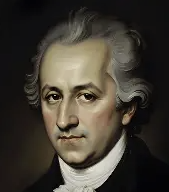
Patriotism ruins history.
▼
Source
source
Conversation with Friedrich Wilhem Riemer

3 months 3 weeks ago
But why,' (some ask), 'why, if you have a serious comment to make on the real life of men, must you do it by talking about a phantasmagoric never-never land of your own?' Because, I take it, one of the main things the author wants to say is that the real life of men is of that mythical and heroic quality. One can see the principle at work in his characterization. Much that in a realistic work would be done by 'character delineation' is here done simply by making the character an elf, a dwarf, or a hobbit. The imagined beings have their insides on the outside; they are visible souls. And Man as a whole, Man pitted against the universe, have we seen him at all till we see that he is like a hero in a fairy tale?
▼
Source
source
p. 89
CivilSimian.com created by AxiomaticPanic, CivilSimian, Kalokagathia