


3 months 1 week ago
Too little liberty brings stagnation, and too much brings chaos.
▼
Source
source
Authority and the Individual (1949), p. 37
1 month 3 weeks ago
In the products of the culture industry human beings get into trouble only so that they can be rescued unharmed, usually by representatives of a benevolent collective; and then, in illusory harmony, they are reconciled with the general interest whose demands they had initially experienced as irreconcilable with their own.
▼
Source
source
Section 14
1 month 1 week ago
Where conscious subjectivity is concerned, there is no distinction between the observation and the thing observed.
▼
Source
source
The Rediscovery of the Mind, p. 97, MIT Press (1992) ISBN 0-262-69154-X.
1 month 3 weeks ago
Deniers do not get their views just from simple mistakes about language and truth. Rather, they believe that there is something to worry about in important areas of our thought and in traditional interpretations of those areas; they sense that it has something to do with truth; and (no doubt driven by the familiar desire to say something at once hugely general, deeply important, and reassuringly simple) they extend their worry to the notion of truth itself.
▼
Source
source
p. 6

3 months 1 week ago
But the chief design of this paper is not to disprove it, which many have sufficiently done; but to entreat Americans to consider.

4 months 4 days ago
The direction of the world overwhelms me at this time. In the long run, all the continents (yellow, black and brown) will spill over onto Old Europe. They are hundreds and hundreds of millions. They are hungry and they are not afraid to die. We no longer know how to die or how to kill. We could preach, but Europe believes in nothing. So, we must wait for the year 1000 or a miracle. For my part, I find it harder and harder to live before a wall.
1 month 2 weeks ago
Until the seventeenth century there was no concept of evidence with which to pose the problem of induction!
▼
Source
source
Chapter 4, Evidence, p. 31.

1 month 2 weeks ago
The principle of brotherhood expounded by the agitator of Nazareth preserved the germ of life, of truth and justice, so long as it was the beacon light of the few. The moment the majority seized upon it, that great principle became a shibboleth and harbinger of blood and fire, spreading suffering and disaster. The attack on the omnipotence of Rome was like a sunrise amid the darkness of the night, only so long as it was made by the colossal figures of a Huss, a Calvin, or a Luther. Yet when the mass joined in the procession against the Catholic monster, it was no less cruel, no less bloodthirsty than its enemy. Woe to the heretics, to the minority, who would not bow to its dicta. After infinite zeal, endurance, and sacrifice, the human mind is at last free from the religious phantom; the minority has gone on in pursuit of new conquests, and the majority is lagging behind, handicapped by truth grown false with age.
1 day ago
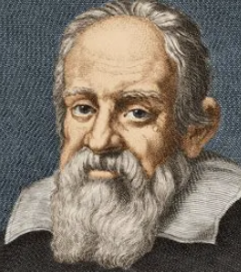
My dear Kepler, what would you say of the learned here, who, replete with the pertinacity of the asp, have steadfastly refused to cast a glance through the telescope? What shall we make of this? Shall we laugh, or shall we cry?
▼
Source
source
Letter to Johannes Kepler (1610), as quoted in The Crime of Galileo (1955) by Giorgio De Santillana
3 months 3 weeks ago
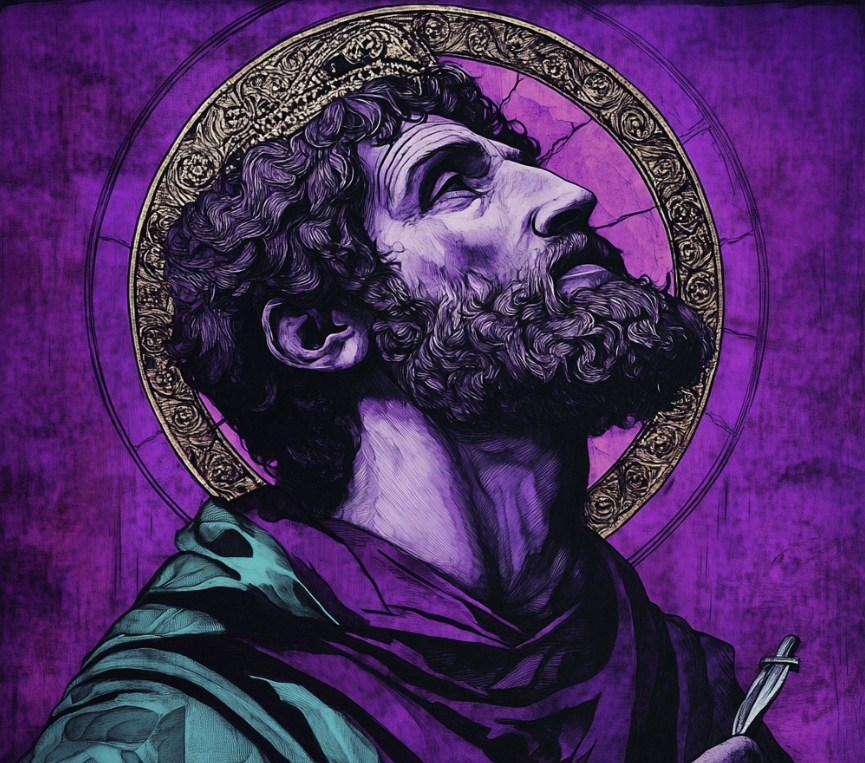
By faithfulness we are collected and wound up into unity within ourselves, whereas we had been scattered abroad in multiplicity.
▼
Source
source
As quoted in Footprints in Time : Fulfilling God's Destiny for Your Life (2007) by Jeff O'Leary, p. 223
1 month 5 days ago
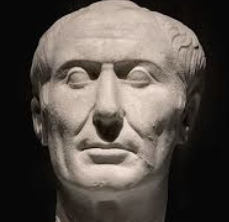
Better to be ignorant of a matter than half know it.
▼
Source
source
Maxim 865
2 months 3 weeks ago
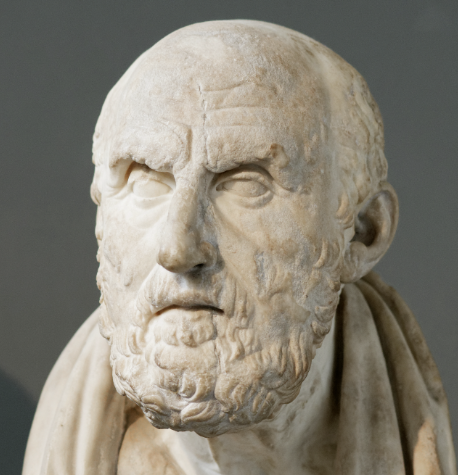
The universe itself is God and the universal outpouring of its soul.
▼
Source
source
As quoted in De Natura Deorum by Cicero, i. 15.

2 months 1 week ago
Every cause produces more than one effect.
▼
Source
source
On Progress: Its Law and Cause

2 months 4 days ago
Whereas logic and objectivity are usually the predominant features of a man's outer attitude, or are at least regarded as ideals, in the case of a woman it is feeling. But in the soul it is the other way round: inwardly it is the man who feels, and the woman who reflects. Hence a man's greater liability to total despair, while a woman can always find comfort and hope; accordingly a man is more likely to put an end to himself than a woman. However much a victim of social circumstances a woman may be, as a prostitute for instance, a man is no less a victim of impulses from the unconscious, taking the form of alcoholism and other vices.
▼
Source
source
Psychological Types (1921). CW 6. P.805
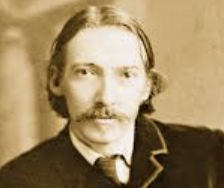
1 month 3 days ago
Quiet minds cannot be perplexed or frightened but go on in fortune or misfortune at their own private pace, like a clock during a thunderstorm.
▼
Source
source
'La Fère of Cursed Memory', 15th vignette of An Inland Voyage (1878), in Collected Memoirs, Travel Sketches and Island Literature of Robert Louis Stevenson, Stevenson, e-artnow

3 months 2 weeks ago
Christ ought to be preached with this goal in mind - that we might be moved to faith in him so that he is not just a distant historical figure but actually Christ for you and me.
▼
Source
source
p. 69
3 months 2 weeks ago
The art of dining well is no slight art, the pleasure not a slight pleasure.
1 month 4 weeks ago
When we are told, in the same tone, that these people will be rewarded in "heaven" for their distress, and that "heaven" is the exact reverse of the earthly order ("the first shall be last"), we distinctly feel how the ressentiment-laden man transfers to God the vengeance he himself cannot wreak on the great. In this way, he can satisfy his revenge at least in imagination, with the aid of an other-worldly mechanism of rewards and punishments.
▼
Source
source
L. Coser, trans. (1961), p. 97

4 months 5 days ago
A fire eater must eat fire even if he has to kindle it himself.

1 month 3 weeks ago
The necessity for power is obvious, because life cannot be lived without order; but the allocation of power is arbitrary because all men are alike, or very nearly. Yet power must not seem to be arbitrarily allocated, because it will not then be recognized as power. Therefore prestige, which is illusion, is of the very essence of power.
▼
Source
source
p. 235
2 months 3 weeks ago
The covetous man is ever in want.
▼
Source
source
Book I, epistle ii, line 56
2 months 1 week ago
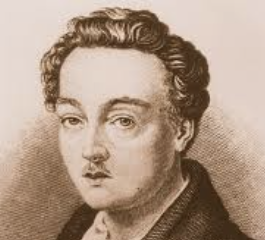
Freedom and whores are the most cosmopolitan items under the sun. .
▼
Source
source
Act IV
3 months 2 days ago
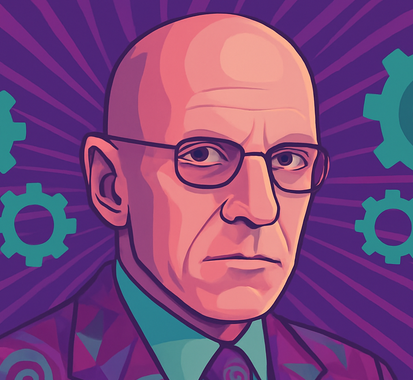
In Plato... or Xenophon... we never see Socrates requiring... examination of conscience or... confession of sins. [A]n account of your life, your bios, is... not to give... the historical events... but... to demonstrate whether you are able to show... a relation between the rational discourse, the logos, you... use, and the way... you live. Socrates is inquiring into the way that logos gives form to a person's style of life... whether there is a harmonic relation between the two... the degree of accord between a person's life and its principle of intelligibility or logos... [and] the true nature of the relation between the logos and bios.
3 months 2 weeks ago
Faith is a living, bold trust in God's grace, so certain of God's favor that it would risk death a thousand times trusting in it. Such confidence and knowledge of God's grace makes you happy, joyful and bold in your relationship to God and all creatures. The Holy Spirit makes this happen through faith. Because of it, you freely, willingly and joyfully do good to everyone, serve everyone, suffer all kinds of things, love and praise the God who has shown you such grace.
▼
Source
source
An Introduction to St. Paul's Letter to the Romans fromDr. Martin Luthers Vermischte Deutsche Schriften. Johann K. Irmischer, ed. Vol. 63(Erlangen: Heyder and Zimmer, 1854), pp. 124-125. (EA 63:124-125)
2 months 3 days ago
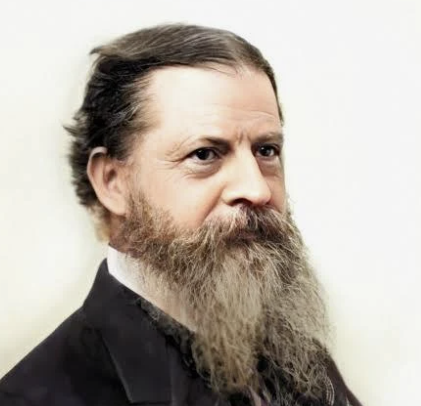
But the extraordinary insight which some persons are able to gain of others from indications so slight that it is difficult to ascertain what they are, is certainly rendered more comprehensible by the view here taken.
1 month 4 weeks ago
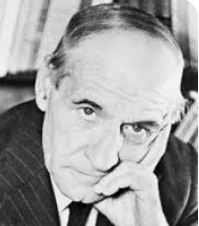
Is it not altogether absurd that, under actual circumstances, the average man does not feel spontaneously, and without being preached at, an ardent enthusiasm for those sciences and the related ones of biology?... Every day furnishes a new invention which this average man utilises. Every day produces a new anesthetic or vaccine from which this average man benefits. ... How is it, nevertheless, that there is no sign of the masses imposing on themselves any sacrifice of money or attention in order to endow science more worthily? Far from this being the case, the post-war period has converted the man of science into a new social pariah.
▼
Source
source
Chap.IX: The Primitive and the Technical
2 weeks 6 days ago
Of the twenty-two civilizations that appear in history, nineteen of them collapsed when they reached the moral state the United States is in now. The average age of the world's great civilizations has been 200 years. All nations have progressed through this sequence:From bondage to spiritual faithFrom spiritual faith to great courageFrom courage to libertyFrom liberty to abundanceFrom abundance to selfishnessFrom selfishness to complacencyFrom complacency to apathyFrom apathy to dependencyFrom dependency back again into bondage.
▼
Source
source
In Joe D. Batten and Gail Batten, The Confidence Chasm (New York: American Management Association, 1972) p. 118
2 months 4 weeks ago
[One thing] underpins, makes consistent, and gives meaning to all our other activities on behalf of animals. This one thing is that we take responsibility for our own lives, and make them as free of cruelty as we can. The first step is that we cease to eat animals. Many people who are opposed to cruelty to animals draw the line at becoming a vegetarian. It was of such people that Oliver Goldsmith, the eighteenth-century humanitarian essayist, wrote: "They pity, and they eat the objects of their compassion."
▼
Source
source
Ch. 4: Becoming a Vegetarian

2 months 2 weeks ago
Do not even think of doing what ought not to be done.
▼
Source
source
Pythagorean Ethical Sentences From Stobæus

3 months 6 days ago
Only the skilled can judge the skilfulness, but that is not the same as judging the value of the result.
▼
Source
source
A Preface to Paradise Lost (1942), Chapter 2: "Is Criticism Possible?"
1 month 3 days ago
It is generally characteristic of arms races, including human ones, that although all would be better off if none of them escalated, so long as one of them escalates none can afford not to.
▼
Source
source
Chapter 7 "Constructive Evolution" (p. 184)
4 months 1 week ago
Rhetoric is the counterpart of Dialectic. Both alike are concerned with such things as come, more or less, within the general ken of all men and belong to no definite science. Accordingly, all men make use, more or less, of both; for to a certain extent all men attempt to discuss statements and to maintain them, to defend themselves and to attack others.

2 months ago
If your brother sins against you, go and show him his fault, just between the two of you. If he listens to you, you have won your brother over.
▼
Source
source
(Matthew 18:15) (NIV)
2 months 3 days ago
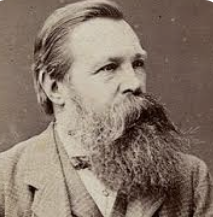
The general co-operation of all members of society for the purpose of planned exploitation of the forces of production, the expansion of production to the point where it will satisfy the needs of all, the abolition of a situation in which the needs of some are satisfied at the expense of the needs of others, the complete liquidation of classes and their conflicts, the rounded development of the capacities of all members of society through the elimination of the present division of labor, through industrial education, through engaging in varying activities, through the participation by all in the enjoyments produced by all, through the combination of city and country - these are the main consequences of the abolition of private property.
1 month 2 weeks ago
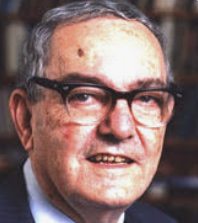
In Administrative Behavior, bounded rationality is largely characterized as a residual category - rationality is bounded when it falls short of omniscience. And the failures of omniscience are largely failures of knowing all the alternatives, uncertainty about relevant exogenous events, and inability to calculate consequences. There was needed a more positive and formal characterization of the mechanisms of choice under conditions of bounded rationality... Two concepts are central to the characterization: search and satisficing.
▼
Source
source
p. 502; As cited in Barros (2010, p. 464-5).
1 month 3 days ago
So long as we love we serve; so long as we are loved by others, I would almost say that we are indispensable; and no man is useless while he has a friend.
▼
Source
source
"Lay Morals" Ch. 4, in Lay Morals and Other Essays (1911).

1 month 3 weeks ago
Use harms and even destroys beauty. The noblest function of an object is to be contemplated.
▼
Source
source
Niebla [Mist]


3 months 6 days ago
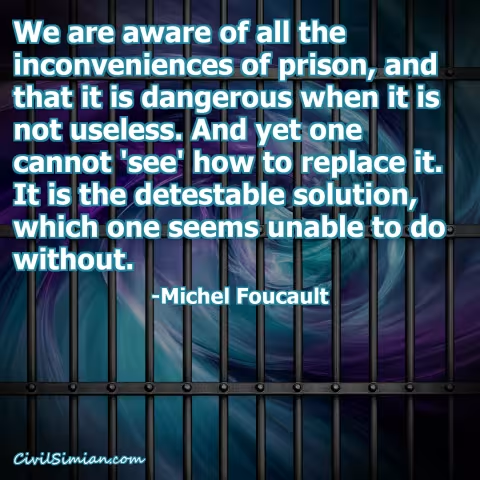
It is not the same thing. You are perhaps not lying, but you are not telling the truth.
▼
Source
source
Act 1
3 months 1 week ago
I have always thought respectable people scoundrels, and I look anxiously at my face every morning for signs of my becoming a scoundrel.
▼
Source
source
Quoted in Alan Wood Bertrand Russell: The Passionate Skeptic: A Biography, Vol. 2 (1958), p. 233
3 months 3 weeks ago
So the Church too, like Mary, enjoys perpetual virginity and uncorrupted fecundity.
▼
Source
source
195:2

3 months 3 days ago
Philosophical problems can be compared to locks on safes, which can be opened by dialing a certain word or number, so that no force can open the door until just this word has been hit upon, and once it is hit upon any child can open it.
▼
Source
source
Ch. 9 : Philosophy, p. 175
3 months 3 days ago
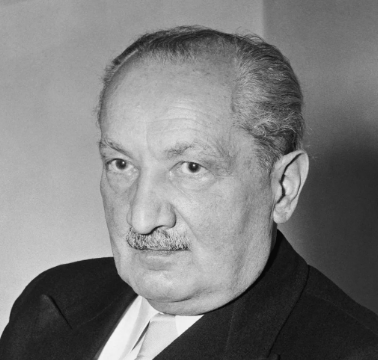
The Geschick of being: a child that plays... Why does it play, the great child of the world-play Heraclitus brought into view in the aiôn? It plays, because it plays. The "because" withers away in the play. The play is without "why." It plays since it plays. It simply remains a play: the most elevated and the most profound. But this "simply" is everything, the one, the only... The question remains whether and how we, hearing the movements of this play, play along and accommodate ourselves to the play.
▼
Source
source
The Principle of Reason (1955-1956) as translated by Reginald Lilly
1 day ago
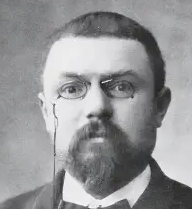
The Scientist must set in order. Science is built up with facts, as a house is with stones. But a collection of facts is no more a science than a heap of stones is a house.
▼
Source
source
Ch. IX: Hypotheses in Physics, Tr. George Bruce Halsted

1 month 2 weeks ago
If this is philosophy it is at any rate a philosophy that is not in its right mind.
▼
Source
source
L 23

3 months 1 week ago
God said, I am tired of kings, I suffer them no more; Up to my ear the morning brings The outrage of the poor.
▼
Source
source
Boston Hymn, st. 2
2 months 1 week ago
Revolution is like the daughters of Pelias: it cuts humanity to pieces in order to rejuvenate it.
▼
Source
source
Act II.

2 months 3 days ago
At different degrees, everything is pathology, except for indifference.

1 month 2 weeks ago
What is beginning to emerge, then, is a theory about psychic sensitivity. It runs as follows. When I relax deeply, it is as if someone opened up the partition between the two compartments of my brain, turning them into a single large room. I experience a sense of mental freedom as if I can suddenly breathe more deeply, and a feeling of contact with things. Everyone has had the experience of being in a state of hurry or excitement, and failing to notice that they have bruised or scratched themselves -- until the excitement evaporates and the pain makes itself known. Hurry and tension raise our sensitivity threshold, and at the same time, erect a glass wall between us and reality. In the "unicameral" state, this wall vanishes, and everything seems more real.
▼
Source
source
p. 51
CivilSimian.com created by AxiomaticPanic, CivilSimian, Kalokagathia