


2 months 3 weeks ago
The march of the human mind is slow.

2 months 3 weeks ago
Man needed one moral constitution to fit him for his original state; he needs another to fit him for his present state; and he has been, is, and will long continue to be, in process of adaptation. And the belief in human perfectibility merely amounts to the belief that, in virtue of this process, man will eventually become completely suited to his mode of life. Progress, therefore, is not an accident, but a necessity. Instead of civilization being artificial, it is part of nature; all of a piece with the development of the embryo or the unfolding of a flower. The modifications mankind have undergone, and are still undergoing, result from a law underlying the whole organic creation; and provided the human race continues, and the constitution of things remains the same, those modifications must end in completeness.
▼
Source
source
Pt. I, Ch. 2 : The Evanescence of Evil, concluding paragraph

3 months 3 weeks ago
To his dog, every man is Napoleon; hence the constant popularity of dogs.
▼
Source
source
Reader's Digest, 1934

2 months 2 weeks ago
And be sure of this: I am with you always, even to the end of the age.
▼
Source
source
Jesus in Matthew 28:20
2 months 1 day ago
Organizations are systems of coordinated action among individuals and groups whose preferences, information, interests, or knowledge differ. Organization theories describe the delicate conversion of conflict into cooperation, the mobilization of resources, and the coordination of effort that facilitate the joint survival of an organization and its members.
▼
Source
source
Simon (1993. p. 2); Cited in Mario Catalani, Giuseppe F. Clerico (1996) Decision making structures. p. 1.
2 months 2 weeks ago
Logical analysis applied to mental phenomenon shows that there is but one law of mind, namely that ideas tend to spread continuously and to affect certain others which stand to them in a peculiar relation of affectibility. In this spreading they lose intensity, and especially the power of affecting others, but gain generality and become welded with other ideas.

3 months 3 weeks ago
"Let us work without reasoning," said Martin; "it is the only way to make life endurable."

2 months 4 days ago
By mortifying vanity we do ourselves no good. It is the want of interest in our life which produces it; by filling up that want of interest in our life we can alone remedy it. And, did we even see this, how can we make the difference? How obtain the interest which society declares she does not want, and we cannot want?

2 months 1 week ago
The recognition of human wretchedness is difficult for whoever is rich and powerful because he is almost invincibly led to believe that he is something. It is equally difficult for the man in miserable circumstances because he is almost invincibly led to believe that the rich and powerful man is something.
▼
Source
source
p. 216
2 months 3 weeks ago
I would rather be a devil in alliance with truth, than an angel in alliance with falsehood.

4 months ago
The first law that ever God gave to man was a law of pure obedience; it was a commandment naked and simple, wherein man had nothing to inquire after, nor to dispute; forasmuch as to obey is the proper office of a rational soul, acknowledging a heavenly superior and benefactor.
▼
Source
source
Ch. 12, tr. Cotton, 1685
2 months 2 weeks ago
If we endeavor to form our conceptions upon history and life, we remark three classes of men. The first consists of those for whom the chief thing is the qualities of feelings. These men create art. The second consists of the practical men, who carry on the business of the world. They respect nothing but power, and respect power only so far as it [is] exercized. The third class consists of men to whom nothing seems great but reason. If force interests them, it is not in its exertion, but in that it has a reason and a law. For men of the first class, nature is a picture; for men of the second class, it is an opportunity; for men of the third class, it is a cosmos, so admirable, that to penetrate to its ways seems to them the only thing that makes life worth living.
▼
Source
source
Vol. I, par. 43

3 months 3 weeks ago
The Indian teaching, through its clouds of legends, has yet a simple and grand religion, like a queenly countenance seen through a rich veil. It teaches to speak truth, love others, and to dispose trifles. The East is grand - and makes Europe appear the land of trifles .... all is soul and the soul is Vishnu ... cheerful and noble is the genius of this cosmogony. Hari is always gentle and serene - he translates to heaven the hunter who has accidentally shot him in his human form, he pursues his sport with boors and milkmaids at the cow pens; all his games are benevolent and he enters into flesh to relieve the burdens of the world.
▼
Source
source
Quoted in S. Londhe, A Tribute to Hinduism, New Delhi: Pragun Publication, 2008

1 week ago
A large part of mankind is angry not with the sins, but with the sinners.
▼
Source
source
De Ira (On Anger): Book 2, cap. 28, line 8
4 months 1 week ago
Whatever moral rules you have deliberately proposed to yourself abide by them as they were laws, and as if you would be guilty of impiety by violating any of them. Don't regard what anyone says of you, for this, after all, is no concern of yours. How long, then, will you put off thinking yourself worthy of the highest improvements and follow the distinctions of reason? You have received the philosophical theorems, with which you ought to be familiar, and you have been familiar with them. What other master, then, do you wait for, to throw upon that the delay of reforming yourself?... Let whatever appears to be the best be to you an inviolable law.
▼
Source
source
(50).
3 months 1 week ago
If it is in our power to prevent something bad from happening, without thereby sacrificing anything of comparable moral importance, we ought, morally, to do it.

3 months 3 weeks ago
In place of the bourgeois society, with its classes and class antagonisms, shall we have an association, in which the free development of each is the condition for the free development of all.
▼
Source
source
Section 2, paragraph 72 (last paragraph).

4 months 3 weeks ago
The next thing you can learn from the woman who was a sinner, something she herself understood, is that with regard to finding forgiveness she is able to do nothing at all.
1 month 1 day ago
The existence of the mind-independent environment beyond one's world-simulation is a theoretical inference, not an empirical observation.
▼
Source
source
Postscript to review of Michael Lockwood's Mind, Brain and the Quantum, BLTC Research, Dec. 2016
4 months ago
The people resemble a wild beast, which, naturally fierce and accustomed to live in the woods, has been brought up, as it were, in a prison and in servitude, and having by accident got its liberty, not being accustomed to search for its food, and not knowing where to conceal itself, easily becomes the prey of the first who seeks to incarcerate it again.
▼
Source
source
Book 1, Ch. 16



2 months 2 weeks ago
Imaginary pains are by far the most real we suffer, since we feel a constant need for them and invent them because there is no way of doing without them.
2 months 2 weeks ago
Tell me how you want to die, and I'll tell you who you are.
1 month 2 weeks ago
It is the worst of all quaint and of all cheap ways of life that they bring us at last to the pinch of some humiliation.
▼
Source
source
Episodes in the Story of a Mine.
4 months 1 week ago
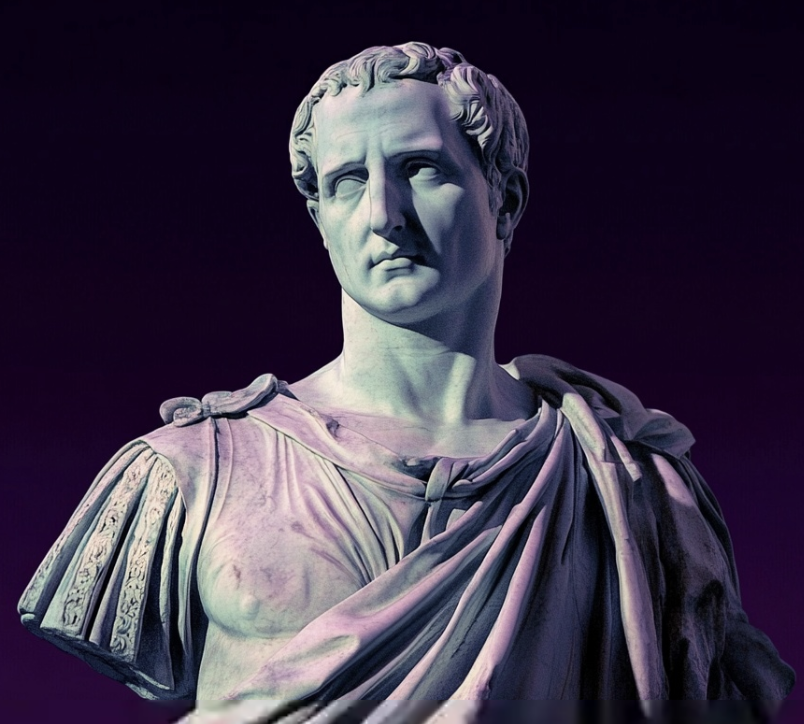
Do not blame Caesar, blame the people of Rome who have so enthusiastically acclaimed and adored him and rejoiced in their loss of freedom and danced in his path and gave him triumphal processions. Blame the people who hail him when he speaks in the Forum of the 'new, wonderful good society' which shall now be Rome, interpreted to mean 'more money, more ease, more security, more living fatly at the expense of the industrious.
▼
Source
source
This is also from the 1965 essay by Justice Millard Caldwell. It is not clear if this is based in any specific dialogue.
3 months 3 weeks ago
This life affords no solid satisfaction, but in the consciousness of having done well, and the hopes of another life.
▼
Source
source
Letter to Anthony Collins (23 August 1704), in The Works of John Locke, Vol. X (London, 1823), p. 298; quoted by William Julius Mickle in Voltain in the Shades (London, 1770), p. 7
4 months ago
If you only notice human proceedings, you may observe that all who attain great power and riches, make use of either force or fraud; and what they have acquired either by deceit or violence, in order to conceal the disgraceful methods of attainment, they endeavor to sanctify with the false title of honest gains. Those who either from imprudence or want of sagacity avoid doing so, are always overwhelmed with servitude and poverty; for faithful servants are always servants, and honest men are always poor; nor do any ever escape from servitude but the bold and faithless, or from poverty, but the rapacious and fraudulent. God and nature have thrown all human fortunes into the midst of mankind; and they are thus attainable rather by rapine than by industry, by wicked actions rather than by good. Hence it is that men feed upon each other, and those who cannot defend themselves must be worried.
▼
Source
source
Book III, Chapter 13

4 weeks 1 day ago
Humans kill one another - and in some cases themselves - for many reasons, but none is more human than the attempt to make sense of their lives. More than the loss of life, they fear loss of meaning.
▼
Source
source
In the Puppet Theatre: Roof Gardens, Feathers and Human Sacrifice (p. 87)

2 months 3 weeks ago
The best definition of man is: a being that goes on two legs and is ungrateful.
▼
Source
source
Part 1, Chapter 8 (tr. David Magarshack, 1950) The best definition of man is: a biped, ungrateful.

3 months 3 weeks ago
I believe that the abolition of private ownership of land and capital is a necessary step toward any world in which the nations are to live at peace with one another.
▼
Source
source
Ch. VI: International relations, p. 99

3 months 3 weeks ago
As for me, I am mean: that means that I need the suffering of others to exist. A flame. A flame in their hearts. When I am all alone, I am extinguished.
▼
Source
source
Inès, describing her path to Hell, Act 1, sc. 5
3 months 3 weeks ago
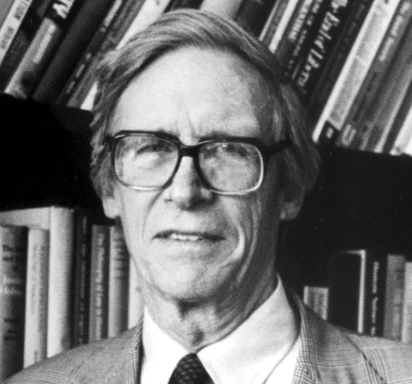
At best the principles that economists have supposed the choices of rational individuals to satisfy can be presented as guidelines for us to consider when we make our decisions.
▼
Source
source
Chapter IX, Section 84, p. 558
2 months 2 weeks ago
Often it is only after immense intellectual effort, which may have continued over centuries, that humanity at last succeeds in achieving knowledge of a concept in its pure form, by stripping off the irrelevant accretions which veil it from the eye of the mind.
▼
Source
source
Translation J. L. Austin (Oxford, 1950) as quoted by Stephen Toulmin, Human Understanding: The Collective Use and Evolution of Concepts (1972) Vol. 1, p. 56.

1 week ago
The object of preaching is, constantly to remind mankind of what mankind are constantly forgetting; not to supply the defects of human intelligence, but to fortify the feebleness of human resolutions.
▼
Source
source
"The Judge That Smites Contrary to the Law: A Sermon Preached...March 28, 1824", in The Works of the Rev. Sydney Smith (1860) p. 428
2 months 2 weeks ago
Verily, verily, I say unto you, Except ye eat the flesh of the Son of man, and drink his blood, ye have no life in you. Whoso eateth my flesh, and drinketh my blood, hath eternal life; and I will raise him up at the last day. For my flesh is meat indeed, and my blood is drink indeed. He that eateth my flesh, and drinketh my blood, dwelleth in me, and I in him.
▼
Source
source
6:53-56
4 months 1 week ago
It is the act of an ill-instructed man to blame others for his own bad condition; it is the act of one who has begun to be instructed, to lay the blame on himself; and of one whose instruction is completed, neither to blame another, nor himself.
▼
Source
source
(5) [tr. George Long (1888)].

2 months 5 days ago
Money, as a matter of principle, makes everything the same.
2 months 2 weeks ago
Not everyone who says to Me, 'Lord, Lord,' shall enter the kingdom of heaven, but he who does the will of My Father in heaven. Many will say to Me in that day, 'Lord, Lord, have we not prophesied in Your name, cast out demons in Your name, and done many wonders in Your name?' And then I will declare to them, 'I never knew you; depart from Me, you who practice lawlessness!'
▼
Source
source
Matthew 7:21-23 (NKJV) (Also Luke 6:24; 13:26, 27)

2 months 2 weeks ago
It is the sphere farthest removed from the concreteness of society which may show most clearly the extent of the conquest of thought by society.
▼
Source
source
p. 104
3 months 3 weeks ago
A reproach can only hurt if it hits the mark. Whoever knows that he does not deserve a reproach can treat it with contempt.
1 day ago
Of all things nothing exists that is not by its substance the offspring of ocean. But why will you have me tell this to the vulgar? Although better to have been shrouded in silence, it nevertheless has been spoken; at all events I declare it, although all men will not readily receive the same.
2 months 1 week ago
The Hebrews took for their idol, not something made of metal or wood, but a race, a nation, something just as earthly. Their religion is essentially inseparable from such idolatry, because of the notion of the "chosen people".
▼
Source
source
Section 2

2 months 5 days ago
Compared with the wholesale violence of capital and government, political acts of violence are but a drop in the ocean. That so few resist is the strongest proof how terrible must be the conflict between their souls and unbearable social iniquities.

1 month 2 weeks ago
Electricity does not centralize, but decentralizes.
▼
Source
source
(p. 36)


3 months 3 weeks ago
In modern eyes, precious though wars may be they must not be waged solely for the sake of the ideal harvest. Only when forced upon one, is a war now thought permissible. It was not thus in ancient times. The earlier men were hunting men, and to hunt a neighboring tribe, kill the males, loot the village and possess the females, was the most profitable, as well as the most exciting, way of living. Thus were the more martial tribes selected, and in chiefs and peoples a pure pugnacity and love of glory came to mingle with the more fundamental appetite for plunder. Modern war is so expensive that we feel trade to be a better avenue to plunder; but modern man inherits all the innate pugnacity and all the love of glory of his ancestors. Showing war's irrationality and horror is of no effect on him. The horrors make the fascination. War is the strong life; it is life in extremis; war taxes are the only ones men never hesitate to pay, as the budgets of all nations show us.
2 months 1 week ago
In the products of the culture industry human beings get into trouble only so that they can be rescued unharmed, usually by representatives of a benevolent collective; and then, in illusory harmony, they are reconciled with the general interest whose demands they had initially experienced as irreconcilable with their own.
▼
Source
source
Section 14
2 months 2 weeks ago
Lassalle. It would be a pity about the fellow because of his great ability, but these goings-on are really too bad. He was always a man one had to keep a devilish sharp eye on and as a real Jew from the Slav border was always to exploit anyone for his own private ends on party pretexts. And then his urge to push his way into polite society, de parvenir, if only for appearance's sake, to disguise the greasy Breslau Jew with all kinds of pomade and paint was always repulsive.
▼
Source
source
Letter to Karl Marx (7 March 1856), quoted in The Collected Works of Karl Marx and Friedrich Engels: Volume 40. Letters 1856-59 (2010), p. 27

2 months 4 weeks ago
That there is no such thing as what philosophers call material substance, I am seriously persuaded: but if I were made to see any thing absurd or skeptical in this, I should then have the same reason to renounce this, that I imagine I have now to reject the contrary opinion.
▼
Source
source
Philonous to Hylas
1 month 3 weeks ago
The simulacrum is never what hides the truth-it is truth that hides the fact that there is none. The simulacrum is true.
▼
Source
source
- Ecclesiastes "The Precession of Simulacra," p. 1
CivilSimian.com created by AxiomaticPanic, CivilSimian, Kalokagathia