


4 months 6 days ago
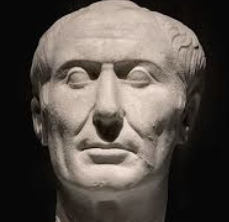
If everything must have a cause, then God must have a cause. If there can be anything without a cause, it may just as well be the world as God, so that there cannot be any validity in that argument. It is exactly of the same nature as the Hindu's view, that the world rested upon an elephant and the elephant rested upon a tortoise; and when they said, "How about the tortoise?" the Indian said, "Suppose we change the subject." The argument is really no better than that.
▼
Source
source
"The First-cause Argument"
2 months 3 days ago
Powerful indeed is the empire of habit.
▼
Source
source
Maxim 305
2 months 4 weeks ago
An autonomous electorate, free because it is free from indoctrination and manipulation, would indeed be on a "level of articulate opinion and ideology" which is not likely to be found. Therefore, the concept has to be rejected as "unrealistic"-has to be if one accepts the factually prevailing level of opinion and ideology as prescribing the valid criteria for sociological analysis. And-if indoctrination and manipulation have reached the stage where the prevailing level of opinion has become a level of falsehood, where the actual state of affairs is no longer recognized as that which it is, then an analysis which is methodologically committed to reject transitive concepts commits itself to a false consciousness. Its very empiricism is ideological.
▼
Source
source
p. 117
2 months 4 weeks ago
The spontaneous reproduction of superimposed needs by the individual does not establish autonomy; it only testifies to the efficacy of the control.
▼
Source
source
p. 8

5 months 1 week ago
The man who does not wish to belong to the mass needs only to cease taking himself easily; let him follow his conscience, which calls to him: Be your self! All you are now doing, thinking, desiring, is not you yourself.

3 weeks 5 days ago
The seeing eye! It is this that discloses the inner harmony of things; what Nature meant, what musical idea Nature has wrapped up in these often rough embodiments. Something she did mean. To the seeing eye that something were discernible. Are they base, miserable things? You can laugh over them, you can weep over them; you can in some way or other genially relate yourself to them; - you can, at lowest, hold your peace about them, turn away your own and others' face from them, till the hour come for practically exterminating and extinguishing them!

4 months 4 days ago
There are two equal and opposite errors into which our race can fall about the devils. One is to disbelieve in their existence. The other is to believe, and to feel an excessive and unhealthy interest in them. They themselves are equally pleased by both errors and hail a materialist or a magician with the same delight.
▼
Source
source
Preface
1 month 2 weeks ago
After Hegel, philosophy confronts the possibility of its own death, and in some sense has to do so if it is to remain the most fundamental kind of thinking.
▼
Source
source
Chapter 4, Philosophy As Writing: The Case Of Hegel, p. 88

3 days ago
This also is a beautiful circumstance, that they referred every thing to Pythagoras, and called it by his name, and that they did not ascribe to themselves the glory of their own inventions, except very rarely.
1 month 3 weeks ago
Logical consequences are the scarecrows of fools and the beacons of wise men.

4 months 1 week ago
There ought to be some regulation with respect to the spirit of denunciation that now prevails. If every individual is to indulge his private malignancy or his private ambition, to denounce at random and without any kind of proof, all confidence will be undermined and all authority be destroyed. Calumny is a species of treachery that ought to be punished as well as any other kind of treachery. It is a private vice productive of public evils; because it is possible to irritate men into disaffection by continual calumny who never intended to be disaffected. It is therefore equally as necessary to guard against the evils of unfounded or malignant suspicion as against the evils of blind confidence. It is equally as necessary to protect the characters of public officers from calumny as it is to punish them for treachery or misconduct.
▼
Source
source
Letter to George Jacques Danton
4 months 2 weeks ago
For this too is a very pleasant strand woven into the Cynic's pattern of life; he must needs be flogged like an ass, and while he is being flogged he must love the men who flog him, as though he were the father or brother of them all.
▼
Source
source
Book III, ch. 22, 54

5 months 3 days ago
Miniaturization doesn't actually make sense unless you miniaturize the very atoms of which matter is composed. Otherwise a tiny brain in a man the size of an insect, composed of normal atoms, is composed of too few atoms for the miniaturized man to be any more intelligent than the ant. Also, miniaturizing atoms is impossible according to the rules of quantum mechanics.
3 months 1 day ago
By creating the world market, big industry has already brought all the peoples of the Earth, and especially the civilized peoples, into such close relation with one another that none is independent of what happens to the others. Further, it has co-ordinated the social development of the civilized countries to such an extent that, in all of them, bourgeoisie and proletariat have become the decisive classes, and the struggle between them the great struggle of the day. It follows that the communist revolution will not merely be a national phenomenon but must take place simultaneously in all civilized countries.

4 months 5 days ago
The Upanishads and the Vedas haunt me. In them I have found eternal compensation, unfathomable power, unbroken peace.
▼
Source
source
Quoted in S. Londhe, A Tribute to Hinduism, 2008
2 months 2 weeks ago
Shakespeare wrote better poetry for not knowing too much; Milton, I think, knew too much finally for the good of his poetry.
▼
Source
source
Ch. 43, November 11, 1947.

3 months 1 week ago
There is no man alone, because every man is a Microcosm, and carries the whole world about him.
▼
Source
source
Section 10

2 months 2 weeks ago
Perhaps it is not true to speak of God as a judge at all, or of his judgements. There does not seem to be really any evidence that His worlds are places of trial but rather schools, place of training, or that He is a judge but rather a Teacher, a Trainer, not in the imperfect sense in which men are teachers, but in the sense of His contriving and adapting His whole universe for one purpose of training every intelligent being to be perfect. ... I think God would not be the Almighty, the All-Wise, the All-Good, if he were the judge, in the sense that the evangelical and Roman Catholic Christians impute judgement to him. ... Our business is, I think, to understand, not to judge. What He does, as far as we know, to rule by law down to the most infinitesimally small portion of His universe, not to judge.
▼
Source
source
As quoted in Florence Nightingale's Theology: Collected Works of Florence Nightingale (2002) by Lynn McDonald, pps. 177-179
3 months 3 days ago
Every state, like every theology, assumes man to be fundamentally bad and wicked.
▼
Source
source
As quoted in Michael Bakunin (1937), E.H. Carr, p. 453

4 months 3 weeks ago
Earnest in practicing the ordinary virtues, and careful in speaking about them, if, in his practice, he has anything defective, the superior man dares not but exert himself; and if, in his words, he has any excess, he dares not allow himself such license. Thus his words have respect to his actions, and his actions have respect to his words; is it not just an entire sincerity which marks the superior man?

3 months 3 weeks ago
Do not repeat slander; you should not hear it, for it is the result of hot temper.
▼
Source
source
Maxim no. 23.

5 days ago
Delay is preferable to error.
▼
Source
source
Letter to George Washington

2 months 5 days ago
In order to correctly define art, it is necessary, first of all, to cease to consider it as a means to pleasure and consider it as one of the conditions of human life. ...Reflecting on it in this way, we cannot fail to observe that art is one of the means of affective communication between people.

5 days ago
Today, local economies are being destroyed by the "pluralistic," displaced, global economy, which has no respect for what works in a locality. The global economy is built on the principle that one place can be exploited, even destroyed, for the sake of another place.
▼
Source
source
Interview in New Perspectives Quarterly (1992), quoted in his Profile at The Poetry Foundation
2 days ago
The universal nature has no external space; but the wondrous part of her art is that though she has circumscribed herself, everything which is within her which appears to decay and to grow old and to be useless she changes into herself, and again makes other new things from these very same, so that she requires neither substance from without nor wants a place into which she may cast that which decays. She is content then with her own space, and her own matter, and her own art.
▼
Source
source
VIII, 50
5 days ago
It is literally true that the toleration of banks of paper discount costs the United States one-half their war taxes; or, in other words, doubles the expenses of every war. Now think but for a moment, what a change of condition that would be, which should save half our war expenses, require but half the taxes, and enthral us in debt but half the time.
▼
Source
source
ME 13:364
3 months 1 day ago
The origin of things, considered not as leading to anything, but in itself, contains the idea of First, the end of things that of Second, the process mediating between them that of Third. A philosophy which emphasises the idea of the One, is generally a dualistic philosophy in which the conception of Second receives exaggerated attention: for this One (though of course involving the idea of First) is always the other of a manifold which is not one. The idea of the Many, because variety is arbitrariness and arbitrariness is repudiation of any Secondness, has for its principal component the conception of First. In psychology Feeling is First, Sense of reaction Second, General conception Third, or mediation. In biology, the idea of arbitrary sporting is First, heredity is Second, the process whereby the accidental characters become fixed is Third. Chance is First, Law is Second, the tendency to take habits is Third. Mind is First, Matter is Second, Evolution is Third.

3 months 1 day ago
There are questions which, once approached, either isolate you or kill you outright.

5 months 2 days ago
"I conclude that all is well," says Oedipus, and that remark is sacred. It echoes in the wild and limited universe of man. It teaches that all is not, has not been, exhausted. It drives out of this world a god who had come into it with dissatisfaction and a preference for futile suffering. It makes of fate a human matter, which must be settled among men.

2 months 2 weeks ago
My thoughts have been shaped by the conviction that feminism must become a mass based political movement if it is to have a revolutionary, transformative impact on society.
▼
Source
source
p. xiii.
3 months 1 day ago
In theory, it matters little to me whether I live as whether I die; in practice, I am lacerated by every anxiety which opens an abyss between life and death.
5 months 1 week ago
Mathematics would certainly have not come into existence if one had known from the beginning that there was in nature no exactly straight line, no actual circle, no absolute magnitude.
2 days ago
If thou canst see sharp, look and judge wisely, says the philosopher.
▼
Source
source
VIII, 38

1 month ago
Culture is a much better predictor of populist sentiment than economics. ...The average Trump voter in 2016 had a higher per capita income than the average Hillary Clinton voter, and if you look at the people in the January 6th riot, the vast majority... were comfortable middle class people with good jobs... There is a core... white working class base to Trumpism, but... a lot of the people that are aligned with that movement are there for cultural reasons. They really don't like the kind of identity politics that's being... put forward by the progressive left... A lot of Hispanic voters, for example, don't like socialism, and they don't like the fact that the Democrats are using the word socialism as if it's a perfectly normal set of economic choices.
▼
Source
source
51:36:00

3 months 6 days ago
The future use and the whole effect, if not the very existence, of the process of an impeachment of high crimes and misdemeanors before the peers of this kingdom upon the charge of the Commons will very much be decided by your judgment in this cause... For we must not deceive ourselves: whatever does not stand with credit cannot stand long. And if the Constitution should be deprived, I do not mean in form, but virtually, of this resource, it is virtually deprived of everything else that is valuable in it. For this process is the cement which binds the whole together; this is the individuating principle that makes England what England is.
▼
Source
source
Speech in opening the impeachment of Warren Hastings (15 February 1788), quoted in The Works of the Right Honourable Edmund Burke, Volume the Ninth (1899), p. 332

4 months 1 week ago
People of the same trade seldom meet together, even for merriment and diversion, but the conversation ends in a conspiracy against the public, or in some contrivance to raise prices. It is impossible indeed to prevent such meetings, by any law which either could be executed, or would be consistent with liberty or justice. But though the law cannot hinder people of the same trade from sometimes assembling together, it ought to do nothing to facilitate such assemblies; much less to render them necessary.
▼
Source
source
Chapter X, Part II, p. 152.
4 months 1 week ago
No doubt you know that Galileo had been convicted not long ago by the Inquisition, and that his opinion on the movement of the Earth had been condemned as heresy. Now I will tell you that all things I explain in my treatise, among which is also that same opinion about the movement of the Earth, all depend on one another, and are based upon certain evident truths. Nevertheless, I will not for the world stand up against the authority of the Church. ...I have the desire to live in peace and to continue on the road on which I have started.
▼
Source
source
Letter to Marin Mersenne (end of Feb., 1634) as quoted by Amir Aczel, Pendulum: Leon Foucault and the Triumph of Science
3 months 1 day ago
The aim of research is the discovery of the equations which subsist between the elements of phenomena.
▼
Source
source
p. 205; On aim of research.

4 months 1 week ago
One ought to fast, watch, and labor to the extent that such activities are needed to harness the body's desires and longings; however, those who presume that they are justified by works pay no attention to the need for self-discipline but see the works themselves as the way to righteousness. They believe that if they do a great number of impressive works all will be well and righteousness will be the result. Sometimes this is pursued with such zeal that they become mentally unstable and their bodies are sapped of all strength. Such disastrous consequences demonstrate that the belief that we are justified and saved by works without faith is extremely foolish.
▼
Source
source
p. 73

4 months 1 week ago
Virtue is harder to be got than knowledge of the world; and, if lost in a young man, is seldom recovered.
▼
Source
source
Sec. 70

4 months 5 days ago
I am against bigness and greatness in all their forms, and with the invisible molecular moral forces that work from individual to individual, stealing in through the crannies of the world like so many soft rootlets, or like the capillary oozing of water, and yet rending the hardest monuments of man's pride, if you give them time. The bigger the unit you deal with, the hollower, the more brutal, the more mendacious is the life displayed. So I am against all big organizations as such, national ones first and foremost; against all big successes and big results; and in favor of the eternal forces of truth which always work in the individual and immediately unsuccessful way, under-dogs always, till history comes, after they are long dead, and puts them on top. - You need take no notice of these ebullitions of spleen, which are probably quite unintelligible to anyone but myself.
▼
Source
source
Letter to Mrs. Henry Whitman (7 June 1899), in The Letters of William James, ed. Henry James, vol. 2, p. 90, 1926
5 months 3 days ago
Ideas are cheap. It's only what you do with them that counts.
4 months 2 weeks ago
Materials are indifferent, but the use which we make of them is not a matter of indifference.
▼
Source
source
Book II, ch. 5, 1
2 months 1 day ago
In anything fit to be called by the name of reading, the process itself should be absorbing and voluptuous; we should gloat over a book, be rapt clean out of ourselves, and rise from the perusal, our mind filled with the busiest, kaleidoscopic dance of images, incapable of sleep or of continuous thought. The words, if the book be eloquent, should run thenceforward in our ears like the noise of breakers, and the story, if it be a story, repeat itself in a thousand coloured pictures to the eye.
▼
Source
source
A Gossip on Romance, printed in Longman's Magazine (November 1882).

4 months 6 days ago
Private property has made us so stupid and one-sided that an object is only ours when we have it - when it exists for us as capital, or when it is directly possessed, eaten, drunk, worn, inhabited, etc., - in short, when it is used by us. Although private property itself again conceives all these direct realizations of possession as means of life, and the life which they serve as means is the life of private property - labour and conversion into capital. In place of all these physical and mental senses there has therefore come the sheer estrangement of all these senses - the sense of having. The human being had to be reduced to this absolute poverty in order that he might yield his inner wealth to the outer world.
▼
Source
source
p. 87, The Marx-Engels Reader
3 months 6 days ago
There is a sort of enthusiasm in all projectors, absolutely necessary for their affairs, which makes them proof against the most fatiguing delays, the most mortifying disappointments, the most shocking insults; and what is severer than all, the presumptuous judgments of the ignorant upon their designs.
▼
Source
source
Volume I, p. 7
2 months 3 weeks ago
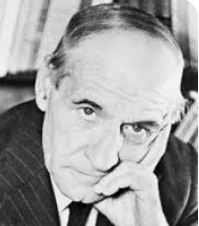
Similarly a work of art vanishes from sight for a beholder who seeks in it nothing but the moving fate of John and Mary or Tristan and Isolde and adjusts his vision to this. Tristan's sorrows are sorrows and can evoke compassion only in so far as they are taken as real. But an object of art is artistic only in so far as it is not real. In order to enjoy Titian's portrait of Charles the Fifth on horseback we must forget that this is Charles the Fifth in person and see instead a portrait - that is, an image, a fiction. The portrayed person and his portrait are two entirely different things; we are interested in either one or the other. In the first case we "live" with Charles the Fifth, in the second we look at an object of art.
▼
Source
source
"The Dehumanization of Art"

2 months 3 weeks ago
I am dreaming ...? Let me dream, if this dream is my life. Do not awaken me from it. I believe in the immortal origin of this yearning for immortality, which is the very substance of my soul. But do I really believe in it ...? And wherefore do you want to be immortal? you ask me, wherefore? Frankly, I do not understand the question, for it is to ask the reason of the reason, the end of the end, the principle of the principle.
CivilSimian.com created by AxiomaticPanic, CivilSimian, Kalokagathia