


1 day ago
Wherever an altar is found, there civilization exists.
▼
Source
source
Original text:Partout où vous verrez un autel, là se trouve la civilisation. "Second Dialogue," p. 44

4 months 3 days ago
The moral flabbiness born of the exclusive worship of the bitch-goddess SUCCESS. That - with the squalid cash interpretation put on the word success - is our national disease.
▼
Source
source
To H. G. Wells, 9/11/1906

4 months 2 days ago
People who live in society have learned how to see themselves in mirrors as they appear to their friends. I have no friends. Is that why my flesh is so naked?
▼
Source
source
Diary entry of Friday (2 February)
3 months ago
Suppose a surface to be part red and part blue; so that every point on it is either red or blue, and of course, no part can be both red and blue. What then, is the color of the surface in the immediate neighborhood of the point. ...it follows that the boundary is half red and half blue. In like manner, we find it necessary to hold that consciousness essentially occupies time... Thus, the present is half past and half time to come. ...Take another case: the velocity of a particle at any instant of time is its mean velocity during an infinitesimal instant in which that time is consumed. Just so, my immediate feeling is my feeling through an infinitesimal duration containing the present instant.

4 months 4 days ago
Last words are for fools who haven't said enough.
▼
Source
source
Various attributions,
2 days ago
Whoever asserts a value, must bring its influence to bear. Whoever maintains that it has value regardless of the influence brought to bear by any individual human being who endorses it, is simply cheating.

3 months 3 days ago
The fact disclosed by a survey of the past that majorities have usually been wrong, must not blind us to the complementary fact that majorities have usually not been entirely wrong.
▼
Source
source
Pt. I, The Unknowable; Ch. I, Religion and Science
4 months 4 days ago
Everyone who knows anything of history also knows that great social revolutions are impossible without the feminine ferment. Social progress may be measured precisely by the social position of the fair sex (plain ones included).
▼
Source
source
Letter to Ludwig Kugelmann, dated 12 December 1868.
2 months 3 weeks ago
In the Gospels, for instance, we sometimes find the kingdom of heaven illustrated by principles drawn from observation of this world rather than from an ideal conception of justice; ... They remind us that the God we are seeking is present and active, that he is the living God; they are doubtless necessary if we are to keep religion from passing into a mere idealism and God into the vanishing point of our thought and endeavour.
▼
Source
source
Interpretations of Poetry and Religion (1900), p. 54
2 months 2 weeks ago
In both positivism and Heidegger-at least in his later work-speculation is the target of attack. In both cases the thought that autonomously raises itself above the facts through interpreting them and that cannot be reclaimed by them without leaving a surplus is condemned for being empty and vain concept-mongering.
▼
Source
source
p. 9
3 months 3 weeks ago
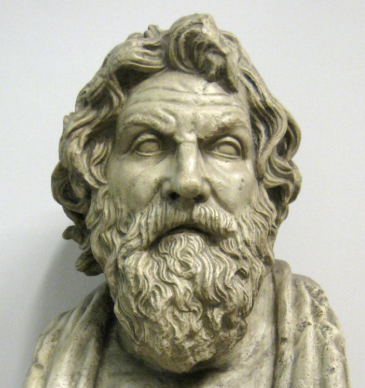
I have enough to eat till my hunger is stayed, to drink till my thirst is sated; to clothe myself withal; and out of doors not Callias there, with all his riches, is more safe than I from shivering; and when I find myself indoors, what warmer shirting do I need than my bare walls? what ampler greatcoat than the tiles above my head?
▼
Source
source
iv. 34

3 months 4 weeks ago
For a large class of cases - though not for all - in which we employ the word meaning it can be explained thus: the meaning of a word is its use in the language.
▼
Source
source
§ 43, this has often been quoted as simply: The meaning of a word is its use in the language.
2 months 3 weeks ago
Is this not an advantage? Is it not a sign of immense progress that the masses should have "ideas," that is to say, should be cultured? By no means. The "ideas" of the average man are not genuine ideas, nor is their possession culture. An idea is a putting truth in checkmate. Whoever wishes to have ideas must first prepare himself to desire truth and to accept the rules of the game imposed by it. It is no use speaking of ideas when there is no acceptance of a higher authority to regulate them, a series of standards to which it is possible to appeal in a discussion. These standards are the principles on which culture rests.
▼
Source
source
Chap. VIII: The Masses Intervene In Everything, And Why Their Intervention Is Solely By Violence

4 months 2 days ago
The need of reason is not inspired by the quest for truth but by the quest for meaning. And truth and meaning are not the same. The basic fallacy, taking precedence over all specific metaphysical fallacies, is to interpret meaning on the model of truth.
▼
Source
source
p. 15
4 months 3 days ago
The most violent revolutions in an individual's beliefs leave most of his old order standing. Time and space, cause and effect, nature and history, and one's own biography remain untouched. New truth is always a go-between, a smoother-over of transitions. It marries old opinion to new fact so as ever to show a minimum of jolt, a maximum of continuity.
▼
Source
source
"What Pragmatism Means," Pragmatism, pp. 60-61 (1931); lectures delivered at the Lowell Institute, Boston, Massachusetts
1 month 1 week ago
We are passengers, comprehended and displaced by metaphor.
▼
Source
source
Chapter 8, Performative Reflexivity, p. 137

2 months 3 days ago
People usually think that progress consists in the increase of knowledge, in the improvement of life, but that isn't so. Progress consists only in the greater clarification of answers to the basic questions of life. The truth is always accessible to a man. It can't be otherwise, because a man's soul is a divine spark, the truth itself. It's only a matter of removing from this divine spark (the truth) everything that obscures it. Progress consists, not in the increase of truth, but in freeing it from its wrappings. The truth is obtained like gold, not by letting it grow bigger, but by washing off from it everything that isn't gold.
▼
Source
source
Tolstoy's Diaries (1985) edited and translated by R. F. Christian. London: Athlone Press, Vol 2, p. 512

4 months 4 days ago
Drunkenness is temporary suicide.

2 months 6 days ago
Nonviolence has now to be understood less as a moral position adopted by individuals in relation to a field of possible action than as a social and political practice undertaken in concert, culminating in a form of resistance to systemic forms of destruction coupled with a commitment to world building that honors global interdependency of the kind that embodies ideals of economic, social, and political freedom and equality.
▼
Source
source
p. 20
2 months 3 weeks ago
To imagine that Caesar aspired to do something in the way Alexander did it - and this is what almost all historians have believed - is definitely to give up trying to understand him. Caesar is very nearly the opposite of Alexander. ...[I]t is not merely a universal kingdom that Caesar has in view. His purpose is a deeper one. He wants a Roman empire which does not live on Rome, but on the periphery, on the provinces, and this implies the complete supersession of the City-State. It implies a State in which the most diverse peoples collaborate, in regard to which all feel solidarity.
▼
Source
source
Chapter XIV: Who Rules The World?

3 months 3 weeks ago
Brave men were living before Agamemnon.
▼
Source
source
Book IV, ode ix, line 25

4 months 1 week ago
I could not be true and constant to the argument I handle, if I were not willing to go beyond others; but yet not more willing than to have others go beyond me again: which may the better appear by this, that I have propounded my opinions naked and unarmed, not seeking to preoccupate the liberty of men's judgments by confutations.
▼
Source
source
Book II

4 months 1 week ago
Origen, of course, is also a great advocate of the allegorical approach. Yet I think you will have to admit that our modem theologians either despise this method of interpretation or are completely ignorant of it. As a matter of fact they surpass the pagans of antiquity in the subtlety of their distinctions.
▼
Source
source
p. 63
2 weeks 5 days ago
If historical experience could teach us anything, it would be that private property is inextricably linked with civilization.
▼
Source
source
Chapter XV. The Market, § 4 The Scope and Method of Catallactics
3 months 3 weeks ago
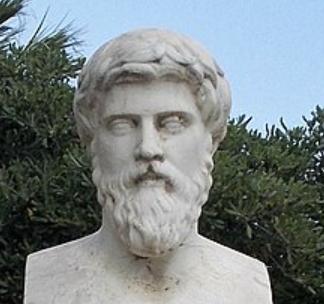
Once when Phocion had delivered an opinion which pleased the people,... he turned to his friend and said, "Have I not unawares spoken some mischievous thing or other?"
▼
Source
source
55 Phocion
3 months 1 day ago
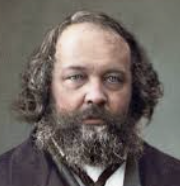
The people should never be deceived, under any pretext or for any purpose. It would not only be criminal but detrimental to the revolutionary cause, for deception of any kind, by its very nature, is shortsighted, petty, narrow, always sewn with rotten threads, so that it inevitably tears and is exposed.
▼
Source
source
"Appendix A"

3 months 4 days ago
Economy is a distributive virtue, and consists not in saving but selection. Parsimony requires no providence, no sagacity, no powers of combination, no comparison, no judgment.

4 months 1 week ago
Here then we may learn the fallacy of the remark... that any particular state is weak, though fertile, populous, and well cultivated, merely because it wants money. It appears that the want of money can never injure any state within itself: For men and commodities are the real strength of any community. It is the simple manner of living which here hurts the public, by confining the gold and silver to few hands, and preventing its universal diffusion and circulation. On the contrary, industry and refinements of all kinds incorporate it with the whole state, however small its quantity may be: They digest it into every vein, so to speak; and make it enter into every transaction and contract.
▼
Source
source
Of Money (1752) as quoted in David Hume: Writings on Economics (1955, 1970) ed., Eugene Rotwein, p. 45.

3 months 3 weeks ago
The pleasure is only for a little moment, and it [passes] like a dream, and a man at the end thereof finds death through knowing it.
▼
Source
source
Maxim no. 18. Translated by Sir E. A. Wallis Budge, Teaching Of Amenem Apt Son Of Kanekht (London: Martin Hopkinson and Company Ltd, 1924) p. 58
1 week 5 days ago
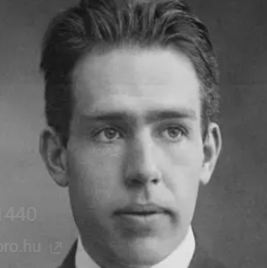
The great extension of our experience in recent years has brought light to the insufficiency of our simple mechanical conceptions and, as a consequence, has shaken the foundation on which the customary interpretation of observation was based.
▼
Source
source
Niels Bohr, "Atomic Physics and the Description of Nature"

4 months 4 days ago
When will the world learn that a million men are of no importance compared with one man?
▼
Source
source
Letter to Ralph Waldo Emerson, 8 June 1843
4 months 4 days ago
A habit of basing convictions upon evidence, and of giving to them only that degree of certainty which the evidence warrants, would, if it became general, cure most of the ills from which the world is suffering. But at present, in most countries, education aims at preventing the growth of such a habit, and men who refuse to profess belief in some system of unfounded dogmas are not considered suitable as teachers of the young.
▼
Source
source
preface xxiii-xxiv
4 months 4 days ago
Perhaps the best hope for the future of mankind is that ways will be found of increasing the scope and intensity of sympathy.
2 months 3 weeks ago
When all these things are lacking there is no culture; there is in the strictest sense of the word, barbarism. And let us not deceive ourselves, this is what is beginning to appear in Europe under the progressive rebellion of the masses. The traveller who arrives in a barbarous country knows that in that territory there are no ruling principles to which it is possible to appeal. Properly speaking, there are no barbarian standards. Barbarism is the absence of standards to which appeal can be made.
▼
Source
source
Chap. VIII: The Masses Intervene In Everything, And Why Their Intervention Is Solely By Violence
4 months 1 week ago
Reading maketh a full man; conference a ready man; and writing an exact man.
▼
Source
source
Of Studies

4 months 3 days ago
It is because we are predominantly purposeful beings that we are perpetually correcting our immediate sensations. But men are free not to be utilitarianly purposeful. They can sometime be artists, for example. In which case they may like to accept the immediate sensation uncorrected, because it happens to be beautiful.
▼
Source
source
"One and Many," p. 11



2 months 3 weeks ago
The lord of that servant will come in a day when he looketh not for him, and at an hour when he is not aware, and will cut him in sunder, and will appoint him his portion with the unbelievers.
▼
Source
source
Luke 12:46 (KJV)
3 months 3 weeks ago
Valour, however unfortunate, commands great respect even from enemies: but the Romans despise cowardice, even though it be prosperous.
▼
Source
source
Aemilius Paulus 26 (Tr. Stewart and Long)
4 months 2 weeks ago
A doubtful balance is made between truth and pleasure, and... the knowledge of one and the feeling of the other stir up a combat the success of which is very uncertain, since, in order to judge of it, it would be necessary to know all that passes in the innermost spirit of the man, of which man himself is scarcely ever conscious.

2 months 2 weeks ago
You cannot conduct war with equals; you cannot have militarism with free born men; you must have slaves, automatons, machines, obedient disciplined creatures, who will move, act, shoot and kill at the command of their superiors. That is preparedness, and nothing else.

1 month 2 weeks ago
The value of the goal lies in the goal itself; and therefore the goal cannot be attained unless it is pursued for its own sake.
▼
Source
source
Vol. 12
2 months 3 weeks ago
I came to set fire to the earth, and I wish it were already on fire!
▼
Source
source
12:49 (CEV)
2 weeks ago
Resignation as to knowledge of the world is for me not an irretrievable plunge into a scepticism which leaves us to drift about in life like a derelict vessel. I see in it that effort of honesty which we must venture to make in order to arrive at the serviceable world-view which hovers within sight. Every world-view which fails to start from resignation in regard to knowledge is artificial and a mere fabrication, for it rests upon an inadmissible interpretation of the universe.

5 months 4 days ago
Now men seem, not unreasonably, to form their notions of the supreme good and of happiness from the lives of men.
3 months 3 weeks ago
Force without wisdom falls of its own weight.

5 months 4 days ago
Man is a synthesis of psyche and body, but he is also a synthesis of the temporal and the eternal. In the former, the two factors are psyche and body, and spirit is the third, yet in such a way that one can speak of a synthesis only when the spirit is posited. The latter synthesis has only two factors, the temporal and the eternal. Where is the third factor? And if there is no third factor, there really is no synthesis, for a synthesis that is a contradiction cannot be completed as a synthesis without a third factor, because the fact that the synthesis is a contradiction asserts that it is not. What, then, is the temporal?

2 months 2 weeks ago
Perhaps it is not true to speak of God as a judge at all, or of his judgements. There does not seem to be really any evidence that His worlds are places of trial but rather schools, place of training, or that He is a judge but rather a Teacher, a Trainer, not in the imperfect sense in which men are teachers, but in the sense of His contriving and adapting His whole universe for one purpose of training every intelligent being to be perfect. ... I think God would not be the Almighty, the All-Wise, the All-Good, if he were the judge, in the sense that the evangelical and Roman Catholic Christians impute judgement to him. ... Our business is, I think, to understand, not to judge. What He does, as far as we know, to rule by law down to the most infinitesimally small portion of His universe, not to judge.
▼
Source
source
As quoted in Florence Nightingale's Theology: Collected Works of Florence Nightingale (2002) by Lynn McDonald, pps. 177-179
CivilSimian.com created by AxiomaticPanic, CivilSimian, Kalokagathia