


5 months 2 days ago
Accepting the absurdity of everything around us is one step, a necessary experience: it should not become a dead end. It arouses a revolt that can become fruitful.
3 weeks ago
Whatever people do in the market economy, is the execution of their own plans. In this sense every human action means planning. What those calling themselves planners advocate is not the substitution of planned action for letting things go. It is the substitution of the planner's own plan for the plans of his fellow-men. The planner is a potential dictator who wants to deprive all other people of the power to plan and act according to their own plans. He aims at one thing only: the exclusive absolute pre-eminence of his own plan.

5 months 3 days ago
When one plays for top prizes one must be prepared to pay top stakes.
1 month 3 weeks ago
Even in the important matter of cranial capacity, Men differ more widely from one another than they do from the Apes; while the lowest Apes differ as much, in proportion, from the highest, as the latter does from Man.
▼
Source
source
Ch.2, p. 95

2 months 3 weeks ago
Rome is the Great Beast of atheism and materialism, adoring nothing but itself. Israel is the Great Beast of religion. Neither one nor the other is likable. The Great Beast is always repulsive.
▼
Source
source
p. 123

2 months 1 week ago
But it is not to be conceived that mere mechanical causes could give birth to so many regular motions: since the Comets range over all parts of the heavens, in very eccentric orbits. For by that kind of motion they pass easily through the orbs of the Planets, and with great rapidity; and in their aphelions, where they move the slowest, and are detain'd the longest, they recede to the greatest distances from each other, and thence suffer the least disturbance from their mutual attractions.

5 days ago
Cultivators of the earth are the most valuable citizens. They are the most vigorous, the most independent, the most virtuous, and they are tied to their country and wedded to its liberty and interests by the most lasting bands. As long therefore as they can find employment in this line, I would not convert them into mariners, artisans, or any thing else. But our citizens will find employment in this line till their numbers, and of course their productions, become too great for the demand both internal and foreign.
▼
Source
source
Letter to John Jay (23 August 1785); published in The Papers of Thomas Jefferson (1953), edited by Julian P. Boyd, vol. 8, p. 426


5 days ago
It may be, then, that form serves us best when it works as an obstruction to baffle us and deflect our intended course. It may be that when we no longer know what to do we have come to our real work and that when we no longer know which way to go we have begun our real journey. The mind that is not baffled is not employed. The impeded stream is the one that sings.

2 months 5 days ago
When a person inflates his own importance, he does not see his own sins; and his sins get bigger right along with him.
▼
Source
source
p. 108
2 months 2 weeks ago
All mathematical laws which we find in Nature are always suspect to me, in spite of their beauty. They give me no pleasure. They are merely auxiliaries. At close range it is all not true.
▼
Source
source
As quoted in Lichtenberg : A Doctrine of Scattered Occasions (1959) by Joseph Peter Stern, p. 84

3 months 1 week ago
Obstinacy in a bad cause, is but constancy in a good.
▼
Source
source
Section 25

3 months 2 weeks ago
Choose always the way that seems the best, however rough it may be; custom will soon render it easy and agreeable.
▼
Source
source
As quoted in A Dictionary of Thoughts: Being a Cyclopedia of Laconic Quotations from the Best Authors of the World, both Ancient and Modern (1908) by Tyron Edwards, p. 101

4 months 2 weeks ago
Morality is the beauty of Philosophy.
▼
Source
source
Trattato Terzo, Ch. 15.

2 weeks 6 days ago
All vices sink into our whole being, if we do not crush them before they gain a footing; and in like manner these sad, pitiable, and discordant feelings end by feeding upon their own bitterness, until the unhappy mind takes a sort of morbid delight in grief... In like manner, wounds heal easily when the blood is fresh upon them: they can then be cleared out and brought to the surface, and admit of being probed by the finger: when disease has turned them into malignant ulcers, their cure is more difficult.

5 months 6 days ago
I have worked for this restlessness oriented toward inward deepening. But without authority. Instead of conceitedly making myself out to be a witness for the truth and causing others rashly to want to be the same, I am an unauthorized poet who influences by means of the ideas.

3 months 3 weeks ago
All who delight in the pleasures of the belly, exceeding all measure in eating and drinking and love, find that the pleasures are brief and last but a short while-only so long as they are eating and drinking-but the pains that come after are many and endure. The longing for the same things keeps ever returning, and whenever the objects of one's desire are realized forthwith the pleasure vanishes, and one has no further use for them. The pleasure is brief, and once more the need for the same things returns.

4 months 4 days ago
I have known only one person in my life who claimed to have seen a ghost. It was a woman; and the interesting thing is that she disbelieved in the immortality of the soul before seeing the ghost and still disbelieves after having seen it. She thinks it was a hallucination. In other words, seeing is not believing. This is the first thing to get clear in talking about miracles.
▼
Source
source
"Miracles" (1942), p. 25

4 months 1 day ago
The logical picture of the facts is the thought.
▼
Source
source
(3) Original German: Das logische Bild der Tatsachen ist der Gedanke.

3 months 6 days ago
He was not merely a chip of the old Block, but the old Block itself.
▼
Source
source
On Pitt's First Speech (26 February 1781), from Wraxall's Memoirs, First Series, vol. i. p. 342
2 months 5 days ago
Further acquaintance with the labors of the Quakers and their works - with Fox, Penn, and especially the work of Dymond (published in 1827) - showed me not only that the impossibility of reconciling Christianity with force and war had been recognized long, long ago, but that this irreconcilability had been long ago proved so clearly and so indubitably that one could only wonder how this impossible reconciliation of Christian teaching with the use of force, which has been, and is still, preached in the churches, could have been maintained in spite of it.
▼
Source
source
Chapter I, The Doctrine of Non-resistance to Evil by Force has been Professed by a Minority of Men from the Very Foundation of Christianity

4 months 6 days ago
Homeliness is almost as great a merit in a book as in a house, if the reader would abide there. It is next to beauty, and a very high art.
▼
Source
source
Pearls of Thought (1881) p. 32
1 month 3 weeks ago
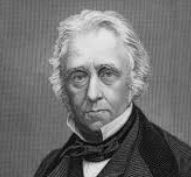
Let us remember that the government and the society act and react on each other. Sometimes the government is in advance of the society, and hurries the society forward. So urged, the society gains on the government, comes up with the government, outstrips the government, and begins to insist that the government shall make more speed. If the government is wise, it will yield to that just and natural demand. The great cause of revolutions is this, that, while nations move onward, constitutions stand still. The peculiar happiness of England is that here, through many generations, the constitution has moved onward with the nation.
▼
Source
source
Speech in the House of Commons on the Reform Bill (5 July 1831), quoted in Speeches of the Right Honourable T. B. Macaulay, M.P. (1854), p. 25
5 months 6 days ago
The truth is always in the minority, and the minority is always stronger than the majority, because as a rule the minority is made up of those who actually have an opinion, while the strength of the majority is illusory, formed of that crowd which has no opinion - and which therefore the next moment (when it becomes clear that the minority is the stronger) adopts the latter's opinion, which now is in the majority, i.e. becomes rubbish by having the whole retinue and numerousness on its side, while the truth is again in a new minority.
3 months 3 weeks ago
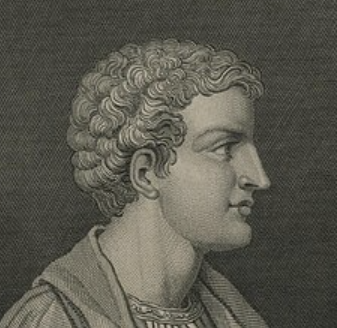
It is difficult to speak of the universal specifically.
▼
Source
source
Line 128
3 months 2 days ago
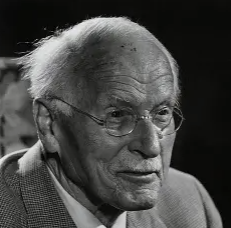
The more remote and unreal the personal mother is, the more deeply will the son's yearning for her clutch at his soul, awakening that primordial and eternal image of the mother for whose sake everything that embraces, protects, nourishes, and helps assumes maternal form, from the Alma Mater of the university to the personification of cities, countries, sciences and ideals.
▼
Source
source
"Paracelsus as a Spiritual Phenomenon" (1942) In CW 13: Alchemical Studies P.47

3 months 1 day ago
Thought is as much a lie as love or faith.

4 months 5 days ago
Thou animated torrid-zone.
▼
Source
source
To the Humble Bee, st. 1
2 months 2 weeks ago
It is a question whether, when we break a murderer on the wheel, we do not fall into the error a child makes when it hits the chair it has bumped into.
▼
Source
source
J 146
4 weeks 1 day ago
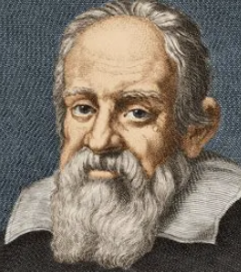
Names and attributes must be accommodated to the essence of things, and not the essence to the names, since things come first and names afterwards.
▼
Source
source
As quoted in Discoveries and Opinions of Galileo (1957) by Stillman Drake, p. 92

4 months 1 week ago
Wherever there is great property, there is great inequality.
▼
Source
source
Chapter I, Part II, p. 770.

2 days ago
The nature of the universe is the nature of things that are. Now, things that are have kinship with things that are from the beginning. Further, this nature is styled Truth; and it is the first cause of all that is true.
▼
Source
source
IX, 1
3 months 3 weeks ago
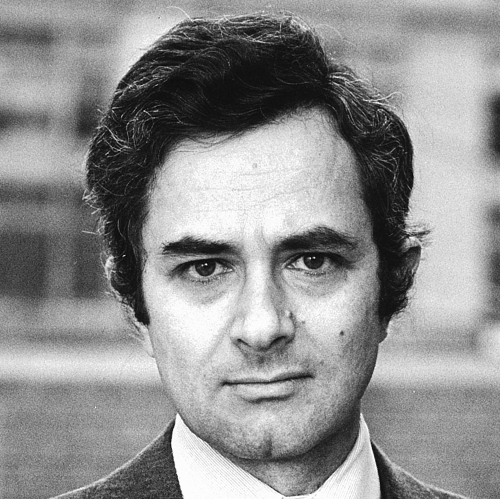
The problem is one of opposition between subjective and objective points of view. There is a tendency to seek an objective account of everything before admitting its reality. But often what appears to a more subjective point of view cannot be accounted for in this way. So either the objective conception of the world is incomplete, or the subjective involves illusions that should be rejected.
▼
Source
source
"Subjective and Objective" (1979), p. 196.

4 months 1 week ago
What does it mean to have a god? or, what is God? Answer: A god means that from which we are to expect all good and to which we are to take refuge in all distress, so that to have a God is nothing else than to trust and believe Him from the [whole] heart; as I have often said that the confidence and faith of the heart alone make both God and an idol. If your faith and trust be right, then is your god also true; and, on the other hand, if your trust be false and wrong, then you have not the true God; for these two belong together faith and God. That now, I say, upon which you set your heart and put your trust is properly your god.
▼
Source
source
Large Catechism 1.1-3, F. Bente and W.H.T. Dau, tr. Triglot Concordia: The Symbolical Books of the Ev. Lutheran Church(St. Louis: Concordia Publishing House, 1921), 565.
3 weeks ago
The criterion of truth is that it works even if nobody is prepared to acknowledge it.
▼
Source
source
Chapter 5: On Some Popular Errors Concerning the Scope and Method of Economics, § 9 : The Belief in the Omnipotence of Thought

4 months 1 week ago
I doubt not but one great reason why many children abandon themselves wholly to silly sports, and trifle away all their time insipidly, is, because they have found their curiosity baulk'd, and their inquiries neglected. But had they been treated with more kindness and respect, and their questions answered, as they should, to their satisfaction; I doubt not but that they would have taken more pleasure in learning, and improving their knowledge, wherein there would still be newness and variety, which is what they are delighted with, than in returning over and over to the same play and play-things.
▼
Source
source
Sec. 118

5 months 1 week ago
As a genius of construction man raises himself far above the bee in the following way: whereas the bee builds with wax that he gathers from nature, man builds with the far more delicate conceptual material which he first has to manufacture from himself.
3 months 2 days ago
"Education to personality" has become a pedagogical ideal that turns its back upon the standardized-the collective and normal-human being. It thus fittingly recognizes the historical fact that the great, liberating deeds of world history have come from leading personalities and never from the inert mass that is secondary at all times and needs a demagogue if it is to move at all. The paean of the Italian nation is addressed to the personality of the Duce, and dirges of other nations lament the absence of great leaders.
▼
Source
source
Lecture, The Inner Voice, Kulturbund, Vienna (1932); quoted in The Integration of Personality, Farrar & Rinehart, NY

3 weeks 5 days ago
They have their belief, these poor Thibet people, that Providence sends down always an Incarnation of Himself into every generation. At bottom some belief in a kind of Pope! At bottom still better, belief that there is a Greatest Man; that he is discoverable; that, once discovered, we ought to treat him with an obedience which knows no bounds! This is the truth of Grand Lamaism; the "discoverability" is the only error here.

2 months 2 weeks ago
Phenomenology is not a philosophy; it is a philosophical method, a tool. It is like an adjustable spanner that can be used for dismantling a refrigerator or a car, or used for hammering in nails, or even for knocking somebody out.
▼
Source
source
p. 92
6 days ago
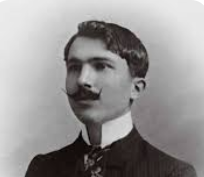
You are not a miserable and momentary body; behind your fleeting mask of clay, a thousand-year-old face lies in ambush. Your passions and your thoughts are older than your heart or brain.

2 months 4 weeks ago
With men this is impossible; but with God all things are possible.
▼
Source
source
19:26 (KJV)
2 months 2 weeks ago
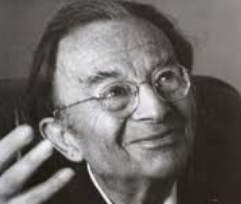
The revolutionary and critical thinker is in a certain way always outside of his society while of course he is at the same time also in it. That he is in it is obvious, but why is he outside it? First, because he is not brainwashed by the ruling ideology, that is to say, he has an extraordinary kind of independence of thought and feeling; hence he can have a greater objectivity than the average person has. There are many emotional factors too. And certainly I do not mean to enter here into the complex problem of the revolutionary thinker. But it seems to me essential that in a certain sense he transcends his society. You may say he transcends it because of the new historical developments and possibilities he is aware of, while the majority still think in traditional terms.
2 days ago
To live each day as though one's last, never flustered, never apathetic, never attitudinizing - here is perfection of character.
▼
Source
source
VII, 69

2 months 2 weeks ago
When we subordinate rest to work, we ignore the divine.
4 months 5 days ago
Undoubtedly we have no questions to ask which are unanswerable. We must trust the perfection of the creation so far, as to believe that whatever curiosity the order of things has awakened in our minds, the order of things can satisfy. Every man's condition is a solution in hieroglyphic to those inquiries he would put. He acts it as life, before he apprehends it as truth.
▼
Source
source
Introduction

4 months 3 weeks ago
Yes, you see the Trinity if you see charity.
▼
Source
source
De Trinitate VIII 8,12.
5 months 3 days ago
Start with a planet like the earth, with a complement of simple compounds bound to exist upon it, add the energy of a nearby sun, and you are bound to end with nucleic acids. You can't avoid it.
2 months 3 days ago
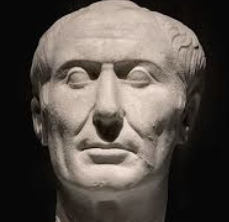
By doing nothing men learn to do ill.
▼
Source
source
Maxim 318 Compare Ecclesiasticus 33:27 (KJV): "idleness teacheth much evil".
5 days ago
There are, it seems, two Muses: the Muse of Inspiration, who gives us inarticulate visions and desires, and the Muse of Realization, who returns again and again to say, "It is yet more difficult than you thought." This is the muse of form. The first muse is the one mainly listened to in a cheap-energy civilization, in which "economic health" depends on the assumption that everything desirable lies within easy reach of anyone. To hear the second muse one must move outside the cheap-energy enclosure. It is the willingness to hear the second muse that keeps us cheerful in our work. To hear only the first is to live in the bitterness of disappointment.
CivilSimian.com created by AxiomaticPanic, CivilSimian, Kalokagathia