


4 months 3 days ago
Ever since the war began, I have felt that I could no longer go on being a pacifist, but I have hesitated to say so, because of the responsibility involved. If I were young enough to fight myself, I should do so, but it is more difficult to urge others. Now, however, I feel that I ought to announce that I have changed my mind.
▼
Source
source
Letter to Kingsley Martin (June 1940), quoted in Kingsley Martin, Editor: A Second Volume of Autobiography, 1931-45 (1968), p. 207

4 months 2 days ago
What the rest of us see only under the influence of mescalin, the artist is congenitally equipped to see all the time. His perception is not limited to what is biologically or socially useful.
▼
Source
source
Page 168

2 months 2 weeks ago
That is why St. John of the Cross calls faith a night. With those who have received a Christian education, the lower parts of the soul become attached to these mysteries when they have no right at all to do so. That is why such people need a purification of which St. John of the Cross describes the stages. Atheism and incredulity constitute an equivalent of such a purification.
▼
Source
source
Faiths of Meditation; Contemplation of the divine" as translated in The Simone Weil Reader (1957) edited by George A. Panichas, p. 418
4 months 4 days ago
Whoever has used what means he is capable of, for the informing of himself, with a readiness to believe and obey what shall be taught and prescribed by Jesus, his Lord and King, is a true and faithful subject of Christ's kingdom; and cannot be thought to fail in any thing necessary to salvation.
▼
Source
source
§ 233



4 months 2 days ago
First, you know, a new theory is attacked as absurd; then it is admitted to be true, but obvious and insignificant; finally it is seen to be so important that its adversaries claim that they themselves discovered it.
▼
Source
source
Lecture VI, Pragmatism's Conception of Truth

2 months 2 days ago
The good is the everlasting, the pinnacle of our life. ... life is striving towards the good, toward God. The good is the most basic idea ... an idea not definable by reason ... yet is the postulate from which all else follows. But the beautiful ... is just that which is pleasing. The idea of beauty is not an alignment to the good, but is its opposite, because for most part, the good aids in our victory over our predilections, while beauty is the motive of our predilections. The more we succumb to beauty, the further we are displaced from the good. ...the usual response is that there exists a moral and spiritual beauty ... we mean simply the good. Spiritual beauty or the good, generally not only does not coincide with the typical meaning of beauty, it is its opposite.
4 months 2 days ago
Truth happens to an idea. It becomes true, is made true by events. Its verity is in fact an event, a process: the process namely of its verifying itself, its veri-fication. Its validity is the process of its valid-ation.
▼
Source
source
Lecture VI, Pragmatism's Conception of Truth
2 months 2 weeks ago
True science teaches, above all, to doubt and be ignorant.

3 weeks 2 days ago
Blessed is he who has found his work; let him ask no other blessedness.
▼
Source
source
Bk. III, ch. 11.
2 days ago
I have no fear that the result of our experiment will be that men may be trusted to govern themselves without a master. Could the contrary of this be proved, I should conclude either that there is no god, or that he is a malevolent being.
▼
Source
source
Letter to David Hartley

5 months 3 days ago
Alas, time comes and time goes, it subtracts little by little; then it deprives a person of a good, the loss of which he indeed feels, and his pain is great. Alas, and he does not discover that long ago it has already taken away from him the most important thing of all-the capacity to make a resolution-and it has made him so familiar with this condition that there is no consternation over it, the last thing that could help gain new power for renewed resolution!
2 months 2 weeks ago
Love is not consolation, it is light.
▼
Source
source
As quoted in Simone Weil (1954) by Eric Walter Frederick Tomlin, p. 47
3 weeks 1 day ago
It might have been supposed that the building of 30,000 miles of railways would have brought a measure of prosperity to India. But these railways were built not for India but for England; not for the benefit of the Hindu, but for the purposes of the British army and British trade... The railroads are entirely in European hands, and the Government refuse to appoint even one Hindu to the Railway Board. The railways lose money year after year, and are helped by the Government out of the revenues of the people. All the loses are borne by the people, all the gains are gathered by the trader.
3 months 3 weeks ago
To flee vice is the beginning of virtue, and to have got rid of folly is the beginning of wisdom.
▼
Source
source
Book I, epistle i, line 41

3 months 3 days ago
The power of perpetuating our property in our families is one of the most valuable and interesting circumstances belonging to it, and that which tends most to the perpetuation of society itself. It makes our weakness subservient to our virtue; it grafts benevolence even upon avarice. The possession of family wealth and of the distinction which attends hereditary possessions (as most concerned in it,) are the natural securities for this transmission.
2 months 2 days ago
What! all of us, Christians, not only profess to love one another, but do actually live one common life; we whose social existence beats with one common pulse-we aid one another, learn from one another, draw ever closer to one another to our mutual happiness, and find in this closeness the whole meaning of life!-and to-morrow some crazy ruler will say some stupidity, and another will answer in the same spirit, and then I must go expose myself to being murdered, and murder men-who have done me no harm-and more than that, whom I love. And this is not a remote contingency, but the very thing we are all preparing for, which is not only probable, but an inevitable certainty.
▼
Source
source
Chapter V, Contradiction Between our Life and our Christian Conscience
4 months 3 weeks ago
The more man meditates upon good thoughts, the better will be his world and the world at large.
4 months 3 days ago
The essence of the Liberal outlook lies not in what opinions are held, but in how they are held: instead of being held dogmatically, they are held tentatively, and with a consciousness that new evidence may at any moment lead to their abandonment.
2 months 4 weeks ago
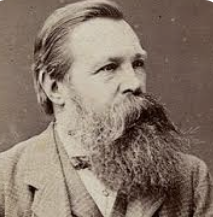
How do you think the transition from the present situation to community of Property is to be effected? The first, fundamental condition for the introduction of community of property is the political liberation of the proletariat through a democratic constitution.
▼
Source
source
Draft of a Communist Confession of Faith
1 week 6 days ago
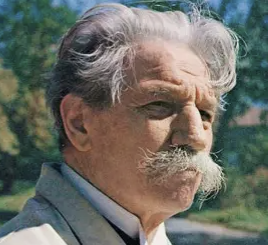
There are two great fundamental problems common to all thought: (i) the problem of world- and life-affirmation and world- and life-negation, and (2) the problem of ethics and the relations between ethics and these two forms of man's spiritual attitude to Being.
▼
Source
source
Preface, p. vii

4 months 2 days ago
It is sublime as night and a breathless ocean. It contains every religious sentiment, all the grand ethics, which visit in turn each noble poetic mind .... It is of no use to put away the book if I trust myself in the woods or in a boat upon the pond. Nature makes a Brahmin of me presently: eternal compensation, unfathomable power, unbroken silence .... This is her creed. Peace, she saith to me, and purity and absolute abandonment - these panaceas expiate all sin and bring you to the beatitude of the Eight Gods.
▼
Source
source
Quoted in Nani Ardeshir Palkhivala, India's Priceless Heritage, 1st ed. (Bombay: Bharatiya Vidya Bhavan, 1980) pp. 9-24
4 months 2 days ago
It is easy to see that the existing generation are conspiring with a beneficence, which, in its working for coming generations, sacrifices the passing one, which infatuates the most selfish men to act against their private interest for the public welfare. We build railroads, we know not for what or for whom; but one thing is certain, that we who build will receive the very smallest share of benefit. Benefit will accrue; they are essential to the country, but that will be felt not until we are no longer countrymen. We do the like in all matters: - 'Man's heart the Almighty to the Future setBy secret and inviolable springs.'

2 months 4 weeks ago
My faculty for disappointment surpasses understanding. It is what lets me comprehend Buddha, but also what keeps me from following him.
5 months 3 days ago
It is not necessary to ask whether soul and body are one, just as it is not necessary to ask whether the wax and its shape are one, nor generally whether the matter of each thing and that of which it is the matter are one. For even if one and being are spoken of in several ways, what is properly so spoken of is the actuality.

4 months 5 days ago
Space is employed as the type even of the concept of time itself, representing it by a line, and its limits - moments - by points. Time, on the other had, approaches more to a universal and rational concept, comprising under its relations all things whatsoever, to wit, space itself, and besides, those accidents which are not comprehended in the relations of space, such as the thoughts of the soul. Again, time, besides this, though it certainly does not dictate the laws of reason, yet constitutes the principal conditions tinder favor of which the mind compares its notions according to the laws of reason. Thus, I cannot judge what is impossible except by predicating a and not-a of the same subject at the same time.
2 months 2 weeks ago
There is no tyranny in the world more hateful than that of ideas. Ideas bring ideophobia, and the consequence is that people begin to persecute their neighbors in the name of ideas. I loathe and detest all labels, and the only label that I could now tolerate would be that of ideoclast or idea breaker.
▼
Source
source
Recalled by Walter Starkie from a conversation he had with Unamuno, as related in the Epilogue of Unamuno.
1 week 4 days ago
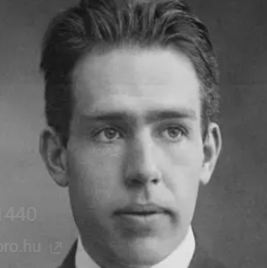
Physics is to be regarded not so much as the study of something a priori given, but rather as the development of methods of ordering and surveying human experience. In this respect our task must be to account for such experience in a manner independent of individual subjective judgement and therefore objective in the sense that it can be unambiguously communicated in ordinary human language.
▼
Source
source
The Unity of Human Knowledge
4 months 3 days ago
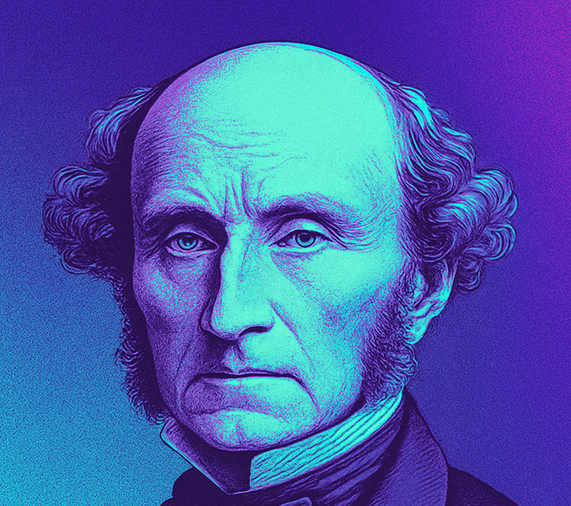
May it not be the fact that mankind, who after all are made up of single human beings, obtain a greater sum of happiness when each pursues his own, under the rules and conditions required by the good of the rest, than when each makes the good of the rest his only object, and allows himself no personal pleasures not indispensable to the preservation of his faculties? The regimen of a blockaded town should be cheerfully submitted to when high purposes require it, but is it the ideal perfection of human existence?
▼
Source
source
Auguste Comte and Positivism, p. 142
4 months 3 days ago
I now saw, that a science is either deductive or experimental, according as, in the province it deals with, the effects of causes when conjoined, are or are not the sums of the effects which the same causes produce when separate. It followed that politics must be a deductive science. It thus appeared, that both Macaulay and my father were wrong; the one in assimilating the method of philosophising in politics to the purely experimental method of chemistry; while the other, though right in adopting a deductive method, had made a wrong selection of one, having taken as the type of deduction, not the appropriate process, that of the deductive branches of natural philosophy, but the inappropriate one of pure geometry, which, not being a science of causation at all, does not require or admit of any summing-up of effects.
▼
Source
source
(pp. 160-161)
4 months 5 days ago
...they cudgel their brains with absurd questions, such as, for instance, why God did not make the world many centuries earlier. They persuade themselves that it is easy to conceive, to be sure, how God may discern what is present, that is, what is actual in the time in which he is, but how He may foresee what is future, that is, what is actual in the time in which He is not yet, they deem an intellectual difficulty; as if the existence of the Necessary Being descended through all the moments of an imaginary time, and, having already exhausted a part of His duration, saw before Him the eternity He was yet to live simultaneously with the present events of the world. All these difficulties upon proper insight into the notion of time vanish like smoke.
2 months 2 weeks ago
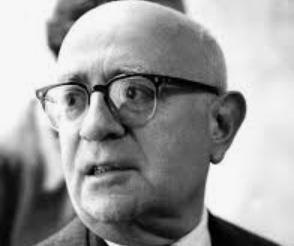
Whoever is versed in the jargon does not have to say what he thinks, does not even have to think it properly. The jargon takes over this task.
▼
Source
source
p. 9

3 months 1 week ago
The hatred that men bear to privilege increases in proportion as privileges become fewer and less considerable, so that democratic passions would seem to burn most fiercely just when they have least fuel. I have already given the reason for this phenomenon. [all conditions are unequal, no inequality is so great as to offend the eye, whereas the slightest dissimilarity is odious in the midst of general uniformity; the more complete this uniformity is, the more insupportable the sight of such a difference becomes.] Hence it is natural that the love of equality should constantly increase together with equality itself, and that it should grow by what it feeds on.
▼
Source
source
Chapter III.
2 months 4 weeks ago
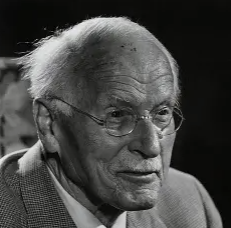
We do not know whether Hitler is going to found a new Islam. (He is already on the way; he is like Mohammed. The emotion in Germany is Islamic; warlike and Islamic. They are all drunk with a wild god.)
▼
Source
source
The Symbolic Life - in The Collected Works: The Symbolic Life. Miscellaneous Writings (1977), p. 281
4 months 5 days ago
I freely admit that the remembrance of David Hume was the very thing that many years ago first interrupted my dogmatic slumber and gave a completely different direction to my researches in the field of speculative philosophy.
2 days ago
Sometimes it is said that man can not be trusted with the government of himself. Can he, then, be trusted with the government of others? Or have we found angels in the forms of kings to govern him? Let history answer this question.
2 months 4 weeks ago
Every civilized human being, whatever his conscious development, is still an archaic man at the deeper levels of his psyche. Just as the human body connects us with the mammals and displays numerous relics of earlier evolutionary stages going back to even the reptilian age, so the human psyche is likewise a product of evolution which, when followed up to its origins, show countless archaic traits.
▼
Source
source
p. 126
2 months 1 week ago
The philosophy of physics is continuous with physics itself. Just as certain issues in the Foundations of Mathematics have been discussed by both mathematicians and by philosophers of mathematics, so certain issues in the philosophy of physics have been discussed by both physicists and by philosophers of physics. And just as there are issues of a more epistemological kind that tend to concern philosophers of mathematics more than they do working mathematicians, so there are issues that concern philosophers of physics more than they do working physicists.
▼
Source
source
Philosophy of physics
1 week 5 days ago
Were I to pray for a taste which should stand me in stead under every variety of circumstances, and be a source of happiness and cheerfulness to me during life, and a shield against its ills, however things might go amiss and the world frown upon me, it would be a taste for reading... Give a man this taste, and the means of gratifying it, and you can hardly fail of making him a happy man; unless, indeed, you put into his hands a most perverse selection of books. You place him in contact with the best society in every period of history,-with the wisest, the wittiest, the tenderest, the bravest, and the purest characters who have adorned humanity. You make him a denizen of all nations, a contemporary of all ages. The world has been created for him.
▼
Source
source
Address on the opening of the Eton Library (1833) as quoted in A History of Inventions, Discoveries and Origins (1846) by John Beckmann, Tr. William Johnston, Vol. 1, frontispiece.

4 months 5 days ago
Remorse sleeps during a prosperous period but wakes up in adversity.
▼
Source
source
Variant translations: Remorse sleeps during prosperity but awakes bitter consciousness during adversity. Remorse goes to sleep during a prosperous period and wakes up in adversity.
2 months 2 weeks ago
The order of nature cannot be justified by the mere observation of nature. For there is nothing in the present fact which inherently refers either to the past or to the future.... It illustrates the anti-rationalism of the scientific public that, when Hume did appear, it was only the religious implications of his philosophy which attracted attention. This was because the clergy were in principle rationalists, whereas the men of science were content with a simple faith in the order of nature.
▼
Source
source
Ch. 3: "The Century of Genius", p. 73
1 week 4 days ago
A vague uncritical idealism always lends itself to ridicule and too much of it might be a danger to mankind, leading it round in a futile wild-goose chase for imaginary ideals.
▼
Source
source
Ch. I : The Awakening, p. 4

3 months 3 weeks ago
Good breeding in cattle depends on physical health, but in men on a well-formed character.
▼
Source
source
Freeman (1948), p. 151

4 months 3 days ago
Far from New England's blustering shore,New England's worm her hulk shall bore,And sink her in the Indian seas,Twine, wine, and hides, and China teas.
▼
Source
source
"Though All the Fates Should Prove Unkind", st. 2
2 days ago
I like well your idea of issuing treasury notes bearing interest, because I am persuaded they would soon be withdrawn from circulation and locked up in vaults & private hoards. It would put it in the power of every man to lend his 100. or 1000 d. tho' not able to go forward on the great scale, and be the most advantageous way of obtaining a loan. The other idea of creating a National bank, I do not concur in, because it seems now decided that Congress has not that power, (altho' I sincerely wish they had it exclusively) and because I think there is already a vast redundancy, rather than a scarcity of paper medium.
▼
Source
source
Letter to Thomas Law (6 November 1813) FE 9:433 : The Writings of Thomas Jefferson (10 Vols., 1892-99) edited by Paul Leicester Ford
CivilSimian.com created by AxiomaticPanic, CivilSimian, Kalokagathia