


2 months 4 weeks ago
He who abhors and shuns the light of the Sun, He who refuses to behold with respect the living creation of God, He who leads the good to wickedness, He who makes the meadows waterless and the pastures desolate, He who lets fly his weapon against the innocent, An enemy of my faith, a destroyer of Thy principles is he, O Lord!
▼
Source
source
Ahunuvaiti Gatha; Yasna 32, 10.

2 weeks 3 days ago
Skills are called hidden treasure as they save like a mother in a foreign country.
3 months 1 week ago
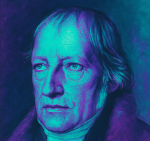
A command can express no more than an ought or a shall, because it is a universal, but it does not express an 'is'; and this at once makes plain its deficiency. Against such commands Jesus sets virtue, i.e., a loving disposition, which makes the content of the command superfluous and destroys its form as a command, because that form implies an opposition between a commander and something resisting the command.
1 month 1 week ago
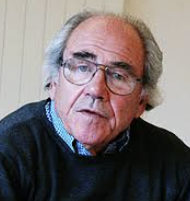
If the thought enunciates an object as a truth, it is only as a challenge to this object's own self-fulfillment.
1 month 1 week ago
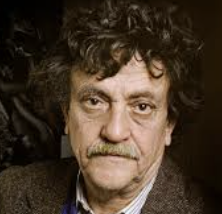
I have wanted to give Iraq a lesson in democracy - because we're experienced with it, you know. And, in democracy, after a hundred years, you have to let your slaves go. And, after a hundred and fifty years, you have to let your women vote. And, at the beginning of democracy, is that quite a bit of genocide and ethnic cleansing is quite okay. And that's what's going on now.
▼
Source
source
Interviewed by Jon Stewart on The Daily Show

2 months 3 days ago
Suicide is a sudden accomplishment, a lightning-like deliverance: it is nirvana by violence.

3 months 1 week ago
One mode of emotional excitability is exceedingly important in the composition of the energetic character, from its peculiarly destructive power over inhibitions. I mean what in its lower form is mere irascibility, susceptibility to wrath, the fighting temper; and what in subtler ways manifests itself as impatience, grimness, earnestness, severity of character. Earnestness means willingness to live with energy, though energy bring pain. The pain may be pain to other people or pain to one's self - it makes little difference; for when the strenuous mood is on one, the aim is to break something, no matter whose or what. Nothing annihilates an inhibition as irresistibly as anger does it; for, as Moltke says of war, destruction pure and simple is its essence.

3 months 1 week ago
To those who inquire as to the purpose of mathematics, the usual answer will be that it facilitates the making of machines, the travelling from place to place, and the victory over foreign nations, whether in war or commerce. ... The reasoning faculty itself is generally conceived, by those who urge its cultivation, as merely a means for the avoidance of pitfalls and a help in the discovery of rules for the guidance of practical life.

3 months 1 week ago
Democracy can hardly be expected to flourish in societies where political and economic power is being progressively concentrated and centralized. But the progress of technology has led and is still leading to just such a concentration and centralization of power.
▼
Source
source
Chapter 3 (p. 19)
2 months ago
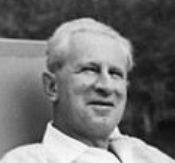
Many, and I think the determining, constitutive facts remain outside the reach of the operational concept. And by virtue of this limitation-this methodological injunction against transitive concepts which might show the facts in their true light and call them by their true name-the descriptive analysis of the facts blocks the apprehension of facts and becomes an element of the ideology that sustains the facts. Proclaiming the existing social reality as its own norm, this sociology fortifies in the individuals the "faithless faith" in the reality whose victims they are.
▼
Source
source
p. 119

4 months 1 week ago
A friend is one soul abiding in two bodies. p. 188; also reported in various sources as:Friendship is a single soul dwelling in two bodies. A true friend is one soul in two bodies. Love is composed of a single soul inhabiting two bodies. What is a friend? A single soul dwelling in two bodies.
3 months 1 week ago
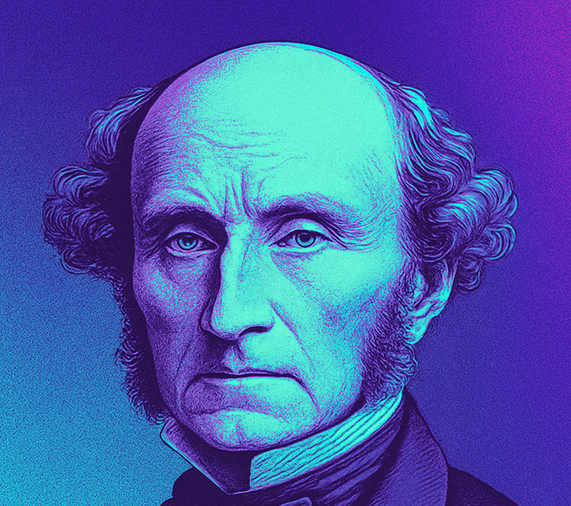
I conceive that the description so often given of a Benthamite, as a mere reasoning machine, though extremely inapplicable to most of those who have been designated by that title, was during two or three years of my life not altogether untrue of me. ...There is nothing very extraordinary in this fact: no youth of the age I then was, can be expected to be more than one thing, and this was the thing I happened to be. Ambition and desire of distinction, I had in abundance; and zeal for what I thought the good of mankind was my strongest sentiment, mixing with and colouring all others. But my zeal was as yet little else, at that period of my life, than zeal for speculative opinions. It had not its root in genuine benevolence, or sympathy with mankind; though these qualities held their due place in my ethical standard. Nor was it connected with any high enthusiasm for ideal nobleness.
▼
Source
source
(pp. 109-110)

3 months 6 days ago
Gratitude looks to the past and love to the present; fear, avarice, lust, and ambition look ahead.
▼
Source
source
Letter XVI

2 months 1 week ago
Difficulty is a severe instructor, set over us by the supreme ordinance of a parental Guardian and Legislator, who knows us better than we know ourselves, as he loves us better too. Pater ipse colendi haud facilem esse viam voluit. He that wrestles with us strengthens our nerves, and sharpens our skill. Our antagonist is our helper.
▼
Source
source
Volume iii, p. 453

1 day ago
Copernicus never discusses matters of religion or faith, nor does he use argument that depend in any way upon the authority of sacred writings which he might have interpreted erroneously. ... He did not ignore the Bible, but he knew very well that if his doctrine were proved, then it could not contradict the Scriptures when they were rightly understood.

3 months 1 week ago
England, it is true, in causing a social revolution in Hindostan, was actuated only by the vilest interests, and was stupid in her manner of enforcing them. But that is not the question. The question is, can mankind fulfil its destiny without a fundamental revolution in the social state of Asia? If not, whatever may have been the crimes of England she was the unconscious tool of history in bringing about that revolution.
▼
Source
source
"The British Rule in India," New York Daily Tribune, 10 June 1853.

3 months 2 days ago
The man described for us, whom we are invited to free, is already in himself the effect of a subjection much more profound than himself. A 'soul' inhabits him and brings him to existence...the soul is the effect and instrument of political anatomy; the soul is the prison of the body.

3 months 1 week ago
I will not talk about people a thousand miles off, but come as near home as I can. As the time is short, I will leave out all the flattery, and retain all the criticism. Let us consider the way in which we spend our lives.
▼
Source
source
p. 484

3 months 3 weeks ago
Of Every One-Hundred Men, Ten shouldn't even be there, Eighty are nothing but targets, Nine are real fighters... We are lucky to have them... They make the battle. Ah but the One, One of them is a Warrior... and He will bring the others back.
2 months 3 days ago
That history just unfolds, independently of a specified direction, of a goal, no one is willing to admit.
2 months 3 days ago
At this very moment, I am suffering - as we say in French, j'ai mal. This event, crucial for me, is nonexistent, even inconceivable for anyone else, for everyone else. Except for God, if that word can have a meaning.

1 month 5 days ago
As Narcissus fell in love with an outering (projection, extension) of himself, man seems invariably to fall in love with the newest gadget or gimmick that is merely an extension of his own body.

3 months 3 weeks ago
Those animals which are incapable of making binding agreements with one another not to inflict nor suffer harm are without either justice or injustice; and likewise for those peoples who either could not or would not form binding agreements not to inflict nor suffer harm.

3 months 2 weeks ago
It is not without good reason said, that he who has not a good memory should never take upon him the trade of lying.
▼
Source
source
Ch. 9. Of Liars, tr. Cotton, rev. W. Hazlitt, 1842

3 months 2 weeks ago
The monuments of wit survive the monuments of power.
▼
Source
source
Essex's Device

3 months 2 weeks ago
Dear rulers ... I maintain that the civil authorities are under obligation to compel the people to send their children to school. ... If the government can compel such citizens as are fit for military service to bear spear and rifle, to mount ramparts, and perform other martial duties in time of war, how much more has it a right to compel the people to send their children to school, because in this case we are warring with the devil, whose object it is secretly to exhaust our cities and principalities of their strong men.
▼
Source
source
letter to the German rulers (1524), as quoted in The History of Compulsory Education in New England, John William Perrin, 1896
1 month 4 weeks ago
Calvin's theocentric irrationalism eventually revealed itself as the cunning to technocratic reason which had to shape its human material. Misery and the poor laws did not suffice to drive men into the workshops of the early capitalistic era. The new spirit helped to supplement external pressures with a concern for wife and child to which the moral autonomy of the introverted subject in reality was tantamount.
▼
Source
source
p. 34.
3 months 1 week ago
The bluebird carries the sky on his back.
▼
Source
source
April 3, 1852
2 months 5 days ago
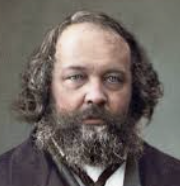
In order to touch the heart and gain the confidence, the assent, the adhesion, and the co-operation of the illiterate legions of the proletariat - and the vast majority of proletarians unfortunately still belong in this category - it is necessary to begin to speak to those workers not of the general sufferings of the international proletariat as a whole but of their particular, daily, altogether private misfortunes. It is necessary to speak to them of their own trade and the conditions of their work in the specific locality where they live; of the harsh conditions and long hours of their daily work, of the small pay, the meanness of their employer, the high cost of living, and how impossible it is for them properly to support and bring up a family.
▼
Source
source
Founding of the Workers' International

3 months 1 week ago
We speak not strictly and philosophically when we talk of the combat of passion and of reason. Reason is, and ought only to be the slave of the passions, and can never pretend to any other office than to serve and obey them.
▼
Source
source
Part 3, Section 3
3 months 6 days ago
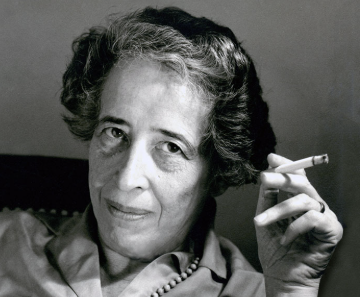
The most radical revolutionary will become a conservative the day after the revolution.
▼
Source
source
The New Yorker

3 months 1 week ago
If the single man plant himself indomitably on his instincts, and there abide, the huge world will come round to him. 6. Nature, Addresses and Lectures.
▼
Source
source
The American Scholar

3 months 3 weeks ago
The world is divided into men who have wit and no religion and men who have religion and no wit.
2 months 4 weeks ago
With a drunken man do not walk on the road.

2 months 1 week ago
History, it is easily perceived, is a picture-gallery containing a host of copies and very few originals.
▼
Source
source
p. 88
3 months 2 days ago
There is object proof that homosexuality is more interesting than heterosexuality. It's that one knows a considerable number of heterosexuals who would wish to become homosexuals, whereas one knows very few homosexuals who would really like to become heterosexuals.
▼
Source
source
As quoted in Who's Who in Contemporary Gay & Lesbian History: From World War II to the Present Day (2001) by Robert Aldrich and Gary Wotherspoon ISBN 041522974X
2 months 1 week ago
Vice itself lost half its evil by losing all its grossness.
▼
Source
source
Volume iii, p. 332
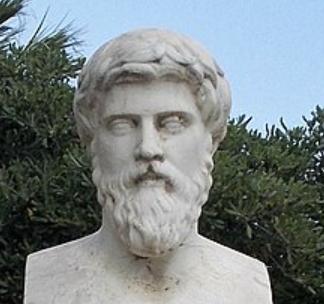
2 months 3 weeks ago
Thrasyllus the Cynic begged a drachm of Antigonus. "That," said he, "is too little for a king to give." "Why, then," said the other, "give me a talent." "And that," said he, "is too much for a Cynic (or, for a dog) to receive."
▼
Source
source
45 Antigonus I
3 months 1 week ago
All religions promise a reward for excellences of the will or heart, but none for excellences of the head or understanding.
▼
Source
source
E. Payne, trans., vol. 2, p. 230

3 months 1 week ago
As to riots and tumults, let those answer for them, who, by willful misrepresentations, endeavor to excite and promote them; or who seek to stun the sense of the nation, and to lose the great cause of public good in the outrages of a misinformed mob. We take our ground on principles that require no such riotous aid. We have nothing to apprehend from the poor; for we are pleading their cause. And we fear not proud oppression, for we have truth on our side.
▼
Source
source
Address and Declaration at a Select Meeting of the Friends of Universal Peace and Liberty (August 20, 1791) p. 6
2 months 3 days ago
Nothing surpasses the pleasures of idleness: even if the end of the world were to come, I would not leave my bed at an ungodly hour.
2 months 3 days ago
To repeat to yourself a thousand times a day: 'Nothing on Earth has any worth,' to keep finding yourself at the same point, to circle stupidly as a top, eternally...
3 months 1 week ago
We suffer not only from the development of capitalist production, but also from the incompleteness of that development. Alongside the modern evils, we are oppressed by a whole series of inherited evils, arising from the passive survival of archaic and outmoded modes of production, with their accompanying train of anachronistic social and political relations. We suffer not only from the living, but from the dead.
▼
Source
source
Preface to the First Edition, Capital Volume 1, Peinguin Classics edition 1976.
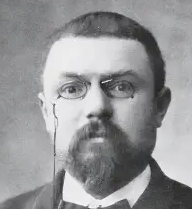
1 day ago
The Scientist must set in order. Science is built up with facts, as a house is with stones. But a collection of facts is no more a science than a heap of stones is a house.
▼
Source
source
Ch. IX: Hypotheses in Physics, Tr. George Bruce Halsted
2 months 5 days ago
I did not hate the author of my misfortunes - truth and justice acquit me of that; I rather pitied the hard destiny to which he seemed condemned. But I thought with unspeakable loathing of those errors, in consequence of which every man is fated to be, more or less, the tyrant or the slave. I was astonished at the folly of my species, that they did not rise up as one man, and shake off chains so ignominious, and misery so insupportable. So far as related to myself, I resolved - and this resolution has never been entirety forgotten by me - to hold myself disengaged from this odious scene, and never fill the part either of the oppressor or the sufferer.
1 day ago
Is the position tenable, that certain phenomena, possible in Euclidean space, would be impossible in non-Euclidean space, so that experience, in establishing these phenomena, would directly contradict the non-Euclidean hypothesis? For my part I think no such question can be put. To my mind it is precisely equivalent to the following, whose absurdity is patent to all eyes: are there lengths expressible in meters and centimeters, but which can not be measured in fathoms, feet, and inches, so that experience, in ascertaining the existence of these lengths, would directly contradict the hypothesis that there are fathoms divided into six feet?
▼
Source
source
Ch. V: Experiment and Geometry (1905) Tr. George Bruce Halstead
1 month 4 weeks ago
No one is guiltless...But no one is beyond the pale of human existence, provided he pays for his guilt.

3 months 1 week ago
Religion may be purified. This great work was begun two hundred years ago: but men can only bear light to come in upon them by degrees.
▼
Source
source
The critical review, or annals of literature, Volume XXVI, by A Society of Gentlemen (1768) p. 450

4 days ago
In order to properly understand the big picture, everyone should fear becoming mentally clouded and obsessed with one small section of truth.
▼
Source
source
Quoted in: Joan Klostermann-Ketels (2011) HumaniTrees, p. 96

4 months 1 week ago
Confession should be only in secret before God, who knows everything anyway, and thus it could remain hidden in one's innermost being. But at a dinner and a woman! A dinner-it is not some hidden, remote place, nor is the lighting dim, nor is the mood like that among graves, nor are the listeners silent or invisibly present.
CivilSimian.com created by AxiomaticPanic, CivilSimian, Kalokagathia