

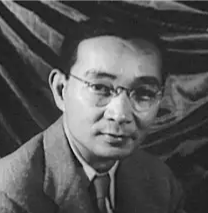
1 week 5 days ago
Those who are wise won't be busy, and those who are too busy can't be wise.
▼
Source
source
p. 150

4 months 1 week ago
In the country of the blind the one-eyed man is king.
▼
Source
source
Adagia (first published 1500, with numerous expanded editions through 1536), III, IV, 96
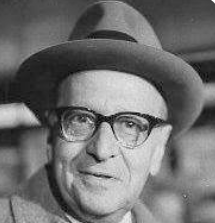
2 months 3 weeks ago
The characteristic activity of science is not construction, but induction. The more often something has occurred in the past, the more certain that it will in all the future. Knowledge relates solely to what is and to its recurrence. New forms of being, especially those arising from the historical activity of man, lie beyond empiricist theory. Thoughts which are not simply carried over from the prevailing pattern of consciousness, but arise from the aims and resolves of the individual, in short, all historical tendencies that reach beyond what is present and recurrent, do not belong to the domain of science.
▼
Source
source
p. 144.

4 months 6 days ago
I always made one prayer to God, a very short one. Here it is: "O Lord, make our enemies quite ridiculous!" God granted it.
▼
Source
source
16 May 1767, Letter to Étienne Noël Damilaville

1 month 1 week ago
Rather than trying to escape violence, human beings more often become habituated to it. History abounds with long conflicts - the Thirty Years' War in early seventeenth-century Europe, the Time of Troubles in Russia, twentieth-century guerrilla conflicts - in which continuous slaughter has been accepted as normal. Famously adaptable, the human animal quickly learns to live with violence and soon comes to find satisfaction in it.
▼
Source
source
In the Puppet Theatre: Roof Gardens, Feathers and Human Sacrifice (p. 80)

4 months 3 days ago
A sensible human once said, "If people knew how much ill-feeling unselfishness occasions, it would not be so often recommended from the pulpit"; and again, "She's the sort of woman who lives for others-you can always tell the others by their hunted expression."
▼
Source
source
Letter XXVI
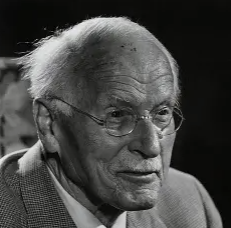
3 months 1 day ago
No psychic value can disappear without being replaced by another of equivalent intensity.
▼
Source
source
p. 209
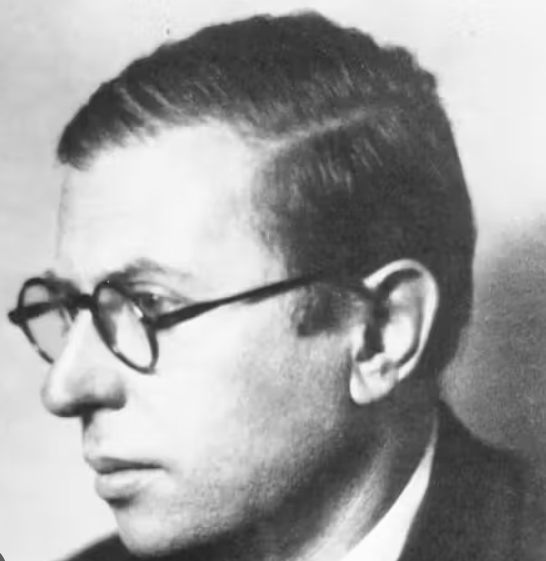
4 months 3 days ago
I, for my part, do not conceive an act as having causes, and I consider myself satisfied when I have found in it not its 'factors' but the general themes which it organizes: for our decisions gather into new syntheses and on new occasions the leitmotif that governs our life
▼
Source
source
p. 461
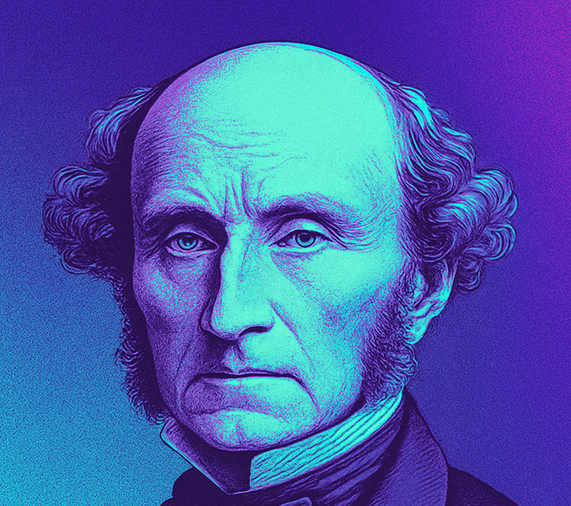
4 months 5 days ago
France has done more for even English history than England has.
▼
Source
source
John Stuart Mill. Michelet.On the writing of English history. Complete Works Vol 20. Page 221.
4 months 6 days ago
No difference of rank, position, or birth, is so great as the gulf that separates the countless millions who use their head only in the service of their belly, in other words, look upon it as an instrument of the will, and those very few and rare persons who have the courage to say: No! my head is too good for that; it shall be active only in its own service; it shall try to comprehend the wondrous and varied spectacle of this world and then reproduce it in some form, whether as art or as literature, that may answer to my character as an individual.
▼
Source
source
On Genius, Parerga and Paralipomena, Chapter III
5 days ago
I will not accept boundaries; appearances cannot contain me; I choke! To bleed in this agony, and to live it profoundly, is the second duty. The mind is patient and adjusts itself, it likes to play; but the heart grows savage and will not condescend to play; it stifles and rushes to tear apart the nets of necessity.
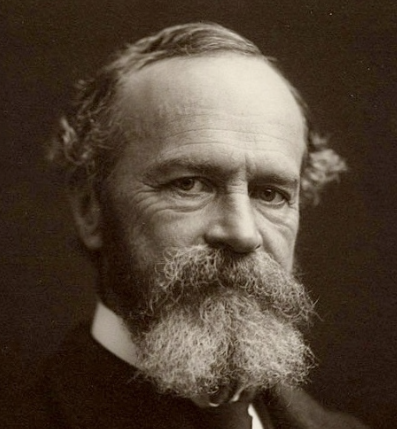
4 months 4 days ago
The stronghold of the determinist argument is the antipathy to the idea of chance...This notion of alternative possibility, this admission that any one of several things may come to pass is, after all, only a roundabout name for chance.
▼
Source
source
The Dilemma of Determinism (1884) p.153
3 months 3 weeks ago
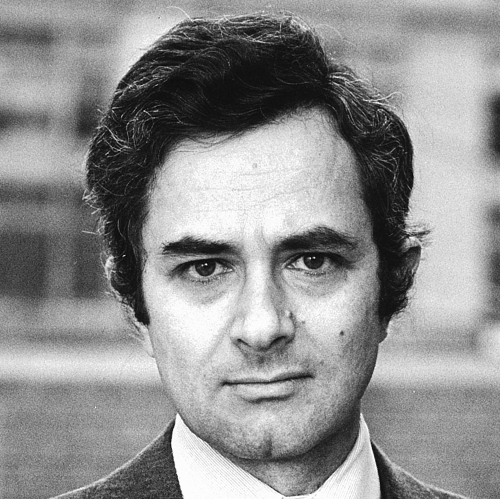
I believe that there is a necessary connection in both directions between the physical and the mental, but that it cannot be discovered a priori. Opinion is strongly divided on the credibility of some kind of functionalist reductionism, and I won't go through my reasons for being on the antireductionist side of that debate. Despite significant attempts by a number of philosophers to describe the functional manifestations of conscious mental states, I continue to believe that no purely functionalist characterization of a system entails - simply in virtue of our mental concepts - that the system is conscious.
▼
Source
source
"Conceiving the Impossible and the Mind-Body Problem," Royal Institute of Philosophy annual lecture, given in London on February 18, 1998, published in Philosophy vol. 73 no. 285, July 1998, pp 337-352, Cambridge University Press, p. 337.

3 weeks 4 days ago
In looking at this wreck of Governments in all European countries, there is one consideration that suggests itself, sadly elucidative of our modern epoch. These Governments, we may be well assured, have gone to anarchy for this one reason inclusive of every other whatsoever, That they were not wise enough; that the spiritual talent embarked in them, the virtue, heroism, intellect, or by whatever other synonyms we designate it, was not adequate,-probably had long been inadequate, and so in its dim helplessness had suffered, or perhaps invited falsity to introduce itself; had suffered injustices, and solecisms, and contradictions of the Divine Fact, to accumulate in more than tolerable measure; whereupon said Governments were overset, and declared before all creatures to be too false.

2 months 3 weeks ago
Adam came from great power and great wealth, but he was not worthy of you. For had he been worthy, [he would] not [have tasted] death.
4 months 6 days ago
For what is modesty but hypocritical humility, by means of which, in a world swelling with vile envy, a man seeks to beg pardon for his excellences and merits from those who have none? For whoever attributes no merit to himself because he really has none is not modest, but merely honest.
▼
Source
source
Vol. I, Ch. III, The World As Representation: Second Aspect
2 months 3 weeks ago
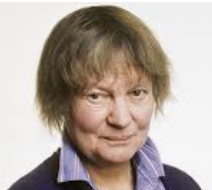
Bereavement is a darkness impenetrable to the imagination of the unbereaved.
▼
Source
source
The Sacred and Profane Love Machine (1974) p. 37.

2 months 2 days ago
Language does for intelligence what the wheel does for the feet and the body. It enables them to move from thing to thing with greater ease and speed and ever less involvement.
▼
Source
source
(p. 113)
1 week 5 days ago
As for Hitler, he nourished a fundamental aversion to the monarchy and, as we have noted, his polemic against the Habsburgs, for instance, was of an unparalleled vulgarity. For Hitler, the Volk alone was the principle of legitimacy. He was established as its direct representative and guide, without intermediaries, and it was to follow him unconditionally. No higher princple existed or was tolerated by him. Therefore it is perfectly correct to speak of a consolidated populist dictatorship employing the tools of a single party and the myth of the Volk. Not only the ancient German traditions, but also the very concept of Reich and, as we shall see, the concept of race were brought by Hitler to the level of the masses, which implied their degradation and distorition. Still, in this context they became tools of great power.
▼
Source
source
p. 35
2 months 2 weeks ago
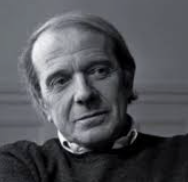
We're tired of trees. We should stop believing in trees, roots, and radicles. They've made us suffer too much. All of arborescent culture is founded on them, from biology to linguistics. Nothing is beautiful or loving or political aside from underground stems and aerial root, adventitious growths and rhizomes.
▼
Source
source
from A Thousand Plateaus: capitalism and schizophrenia, p. 15
1 month 2 weeks ago
God give me strength to face a fact though it slay me.
▼
Source
source
As quoted in Nature Vol. 149 (Jan-Jun) 1942 p. 291, and A Philosophy for Our Time (1954) by Bernard Mannes Baruch, p. 13

4 days ago
From the union of power and money, from the union of power and secrecy, from the union of government and science, from the union of government and art, from the union of science and money, from the union of ambition and ignorance, from the union of genius and war, from the union of outer space and inner vacuity, the Mad Farmer walks quietly away.
▼
Source
source
The Mad Farmer, Flying the Flag of Rough Branch, Secedes from the Union in Entries
3 months ago
If every pure character in the Old Testament announces the Messiah, if every unworthy person is his torturer and every woman his Mother, does not the Book of Books lose all life with this obsessive theme? On the doctrine of prefiguration.
▼
Source
source
Persons or Figures
3 months 2 days ago
It may be confidently asserted that no man chooses evil because it is evil; he only mistakes it for happiness, the good he seeks. And the desire of rectifying these mistakes, is the noble ambition of an enlightened understanding, the impulse of feelings that Philosophy invigorates.
▼
Source
source
A Vindication of the Rights of Men

2 months 4 days ago
I know-as we all do-very little of the practice and the spoken and written doctrine of former times on the subject of non-resistance to evil. I knew what had been said on the subject by the fathers of the Church-Origen, Tertullian, and others-I knew too of the existence of some so-called sects of Mennonites, Herrnhuters, and Quakers, who do not allow a Christian the use of weapons, and do not enter military service; but I knew little of what had been done by these so-called sects toward expounding the question.
▼
Source
source
Preface

4 months 1 week ago
All of the days go toward death and the last one arrives there.
▼
Source
source
Ch. 20. Of the Force of Imagination

5 months 1 day ago
If there is a sin against life, it consists perhaps not so much in despairing of life as in hoping for another life and in eluding the implacable grandeur of this life.

5 months 5 days ago
Consciousness presupposes itself, and asking about its origin is an idle and just as sophistical a question as that old one, "What came first, the fruit-tree or the stone? Wasn't there a stone out of which came the first fruit-tree? Wasn't there a fruit-tree from which came the first stone?
4 months 1 week ago
Liberty therefore not being more fit than other words in some of the instances in which it has been used, and not so fit in others, the less the use that is made of it the better. I would no more use the word liberty in my conversation when I could get another that would answer the purpose, than I would brandy in my diet, if my physician did not order me: both cloud the understanding and inflame the passions.
▼
Source
source
Jeremy Bentham, quoted in P. J. Kelly, Utilitarianism and Distributive Justice: Jeremy Bentham and the Civil Law, Oxford, 1990, p. 96

4 days ago
When the representative body have lost the confidence of their constituents, when they have notoriously made sale of their most valuable rights, when they have assumed to themselves powers which the people never put into their hands, then indeed their continuing in office becomes dangerous to the state, and calls for an exercise of the power of dissolution.
4 months 1 week ago
Every man bears the whole stamp of the human condition.
▼
Source
source
Ch. 2
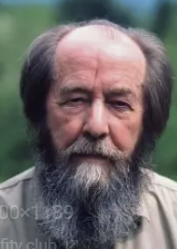
2 weeks 1 day ago
Blow the dust off the clock. Your watches are behind the times. Throw open the heavy curtains which are so dear to you - you do not even suspect that the day has already dawned outside.
▼
Source
source
Letter to the Secretariat of the Soviet Writers' Union (12 November 1969) as translated in Solzhenitsyn: A Documentary Record (1970) edited by Leopold Labedz, "Expulsion"
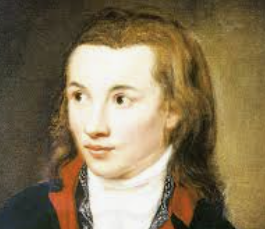
3 months 2 days ago
Nothing is more indispensable to true religiosity than a mediator that links us with divinity.
▼
Source
source
Fragment No. 74

8 months 1 week ago
I believe in clear-cut positions. I think that the most arrogant position is this apparent, multidisciplinary modesty of "what I am saying now is not unconditional, it is just a hypothesis," and so on. It really is a most arrogant position. I think that the only way to be honest and expose yourself to criticism is to state clearly and dogmatically where you are. You must take the risk and have a position.
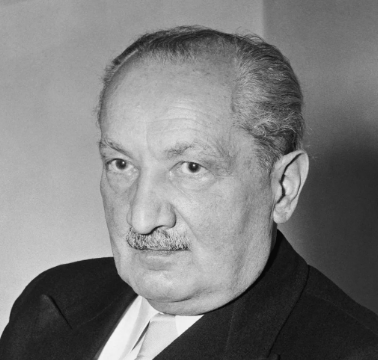
4 months ago
We ourselves are the entities to be analyzed.
▼
Source
source
Macquarrie & Robinson translation
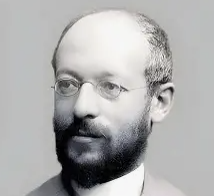
2 weeks ago
Man is something that is to be overcome.Logically considered, this, too, presents a contradiction: he who overcomes himself is admittedly the victor, but he is also the defeated. The ego succumbs to itself, when it wins; it achieves victory, when it suffers defeat. Yet the contradiction only arises when the two aspects of this unity are hardened into opposed, mutually exclusive conceptions. It is precisely the fully unified process of the moral life which overcomes and surpasses every lower state by achieving a higher one, and again transcends this latter state through one still higher. That man overcomes himself means that he reaches out beyond the bounds that the moment sets for him. There must be something at hand to be overcome, but it is only there in order to be overcome. Thus even as an ethical agent, man is the limited being that has no limit.
▼
Source
source
p. 5-6 part of the first essay "Life as Transcendence"
4 months 3 days ago
We are born helpless. As soon as we are fully conscious we discover loneliness. We need others physically, emotionally, intellectually; we need them if we are to know anything, even ourselves. Introduction

4 months 5 days ago
It is, of course, clear that a country with a large foreign population must endeavour, through its schools, to assimilate the children of immigrants. It is, however, unfortunate that a large part of this process should be effected by means of a somewhat blatant nationalism.
▼
Source
source
Ch. 10: Modern Homogeneity
2 months 2 days ago
To spare the guilty is to injure the innocent.
▼
Source
source
Maxim 113

4 months 5 days ago
I would say to the readers of the Scriptures, if they wish for a good book, read the Bhagavad-Gita...translated by Charles Wilkins. It deserves to be read with reverence even by yankees...Besides the Bhagvat-Geeta, our Shakespeare seems sometimes youthfully green...Ex oriente lux may still be the motto of scholars, for the Western world has not yet derived from the East all the light it is destined to derive thence.
▼
Source
source
Quoted in Sushama Londhe, A Tribute to Hinduism (New Delhi: Pragun Publication, 2008) p. 26
5 months 1 day ago
Metaphysical rebellion is a claim, motivated by the concept of a complete unity, against the suffering of life and death and a protest against the human condition both for its incompleteness, thanks to death, and its wastefulness, thanks to evil.

3 months ago
Society is not a disease, it is a disaster. What a stupid miracle that one can live in it.
4 months 3 days ago
Clichés, stock phrases, adherence to conventional, standardized codes of expression and conduct have the socially recognized function of protecting us against reality.
▼
Source
source
p. 4



2 months 2 weeks ago
But Zarathustra made it clear in which direction the answer lay; it is towards the artist-psychologist, the intuitional thinker. There are very few such men in the world's literature; the great artists are not thinkers, the great thinkers are seldom artists.
▼
Source
source
p. 158

1 month ago
It is no coincidence that the ABM Treaty was signed midway between the delinking of the U.S. dollar from the gold standard in 1971 and the first oil crisis in 1973. These were the years not only of monetary and economic crises but also of both the beginning of the destruction of the welfare state and the shift of the hegemony of economic production from the factory to more social and immaterial sectors. One might think of these various transformations as different faces of one common phenomenon, one grand social transformation.
▼
Source
source
39

3 months 1 week ago
As the past has ceased to throw its light upon the future, the mind of man wanders in obscurity. Variant translation: When the past no longer illuminates the future, the spirit walks in darkness.
▼
Source
source
Book Four, Chapter VIII
3 months 3 weeks ago
As we speak cruel time is fleeing. Seize the day, believing as little as possible in the morrow.
▼
Source
source
Book I, ode xi, line 7

3 months 5 days ago
I am well aware, that men love to hear of their power, but have an extreme disrelish to be told of their duty.
▼
Source
source
p. 441
4 days ago
From the nature of things, every society must at all times possess within itself the sovereign powers of legislation. The feelings of human nature revolt against the supposition of a state so situated as that it may not in any emergency provide against dangers which perhaps threaten immediate ruin. While those bodies are in existence to whom the people have delegated the powers of legislation, they alone possess and may exercise those powers; but when they are dissolved by the lopping off one or more of their branches, the power reverts to the people, who may exercise it to unlimited extent, either assembling together in person, sending deputies, or in any other way they may think proper.
CivilSimian.com created by AxiomaticPanic, CivilSimian, Kalokagathia