

2 months 2 weeks ago
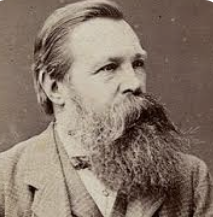
The manufacturing worker almost always lives in the countryside and in a more or less patriarchal relation to his landlord or employer; the proletarian lives, for the most part, in the city and his relation to his employer is purely a cash relation. The manufacturing worker is torn out of his patriarchal relation by big industry, loses whatever property he still has, and in this way becomes a proletarian.

3 months 3 weeks ago
Men who are unhappy, like men who sleep badly, are always proud of the fact.

4 months 4 days ago
By protracting life, we do not deduct one jot from the duration of death.
▼
Source
source
Book III, lines 1087-1088 (tr. Rouse)

2 months 2 weeks ago
To get up in the morning, wash and then wait for some unforeseen variety of dread or depression. I would give the whole universe and all of Shakespeare for a grain of ataraxy.
1 day ago
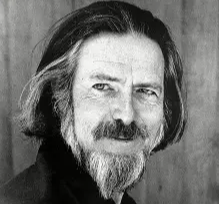
If we look deeply into such ways of life as Buddhism and Taoism, Vedanta and Yoga, we do not find either philosophy or religion as these are understood in the West. We find something more nearly resembling psychotherapy. ... The main resemblance between these Eastern ways of life and Western psychotherapy is in the concern of both with bringing about changes of consciousness, changes in our ways of feeling our own existence and our relation to human society and the natural world. The psychotherapist has, for the most part, been interested in changing the consciousness of peculiarly disturbed individuals. The disciplines of Buddhism and Taoism are, however, concerned with changing the consciousness of normal, socially adjusted people.
▼
Source
source
pp. 3-4

2 months 3 weeks ago
A Dialogue between two Infants in the womb concerning the state of this world, might handsomely illustrate our ignorance of the next, whereof methinks we yet discourse in Plato's Den, and are but Embryon Philosophers.
▼
Source
source
Chapter IV

2 months 3 days ago
I have been taught that the land should belong to those who till the soil. With all of his deep-seated sympathies with the Arabs, our comrade cannot possibly deny that the Jews in Palestine have tilled the soil. Tens of thousands of them, young and deeply devout idealists, have flocked to Palestine, there to till the soil under the most trying pioneer conditions. They have reclaimed wastelands and have turned them into fertile fields and blooming gardens. Now I do not say that therefore Jews are entitled to more rights than the Arabs, but for an ardent socialist to say that the Jews have no business in Palestine seems to me rather a strange kind of socialism.

4 months 2 weeks ago
As for the life of money-making, it is one of constraint, and wealth is manifestly not the good of which we are in search, for it is only useful as a means to something else, and for this reason there is less to be said for it than for the ends mentioned before, which are, at any rate, desired for their own sakes.

3 months 2 weeks ago
Supply and demand constantly determine the prices of commodities; never balance, or only coincidentally; but the cost of production, for its part, determines the oscillations of supply and demand.
▼
Source
source
Notebook I, The Chapter on Money, p. 58.

3 months 2 weeks ago
In doing Good, I lose myself in Being, I abandon my particularity, I become a universal subject.
▼
Source
source
p. 77

2 weeks ago
I am certainly interested in a tribunal in which, for having used my reason, I was deemed little less than a heretic. Who knows but men will reduce me from the profession of a philosopher to that of historian of the Inquisition! But they behave to me in order that I may become the ignoramus and the fool of Italy...
▼
Source
source
p. 244

2 months 2 weeks ago
Independence I have long considered as the grand blessing of life, the basis of every virtue; and independence I will ever secure by contracting my wants, though I were to live on a barren heath.
▼
Source
source
Dedication
3 months 3 weeks ago
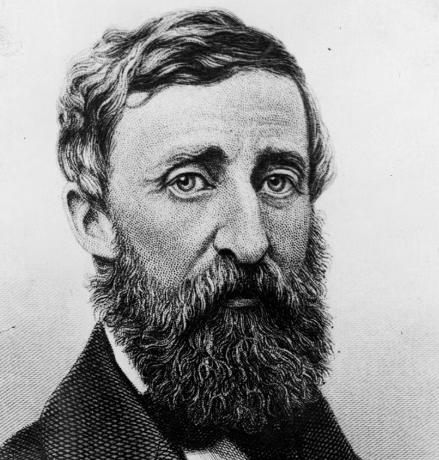
Who could believe in prophecies of Daniel or of Miller that the world would end this summer, while one milkweed with faith matured its seeds?
3 months 3 weeks ago
When I was 4 years old ... I dreamt that I'd been eaten by a wolf, and to my great surprise I was in the wolf's stomach and not in heaven.
▼
Source
source
BBC interview on "Face to Face" (1959); The Listener, Vol. 61 (1959), p. 503

3 months 2 weeks ago
The hearing ear is always found close to the speaking tongue.
▼
Source
source
Race
1 month 3 weeks ago
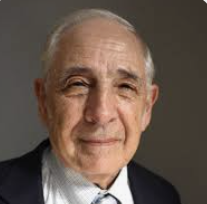
All of our conscious states, without exception, are caused by lower level neurobiological processes in the brain, and they are realized in the brain as higher level, or system features. It's about as mysterious as the liquidity of water, right? The liquidity is not an extra juice squirted out by the H2O molecules, it's a condition that the system is in; and just as the jar full of water can go from a liquid to solid, depending on the behavior of the molecules, so your brain can go from a state of being conscious to a state of being unconscious, depending on the behavior of the molecules. The famous mind body problem is that simple.

3 months 3 weeks ago
From the comparison of theism and idolatry, we may form some other observations, which will also confirm the vulgar observation that the corruption of the best things gives rise to the worst.
▼
Source
source
Part X - With regard to courage or abasement

2 months 1 week ago
And thus the soul pities God and feels itself pitied by him; loves Him and feels loved by Him, sheltering its misery in the bosom of the eternal and infinite misery, which, in eternalizing itself and infinitizing itself, is the supreme happiness itself.
3 months 3 weeks ago
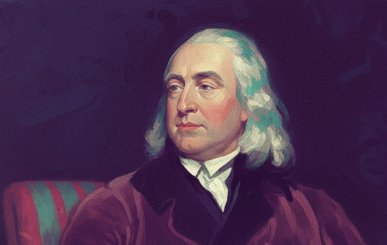
Rights are, then, the fruits of the law, and of the law alone. There are no rights without law-no rights contrary to the law-no rights anterior to the law. Before the existence of laws there may be reasons for wishing that there were laws-and doubtless such reasons cannot be wanting, and those of the strongest kind;-but a reason for wishing that we possessed a right, does not constitute a right. To confound the existence of a reason for wishing that we possessed a right, with the existence of the right itself, is to confound the existence of a want with the means of relieving it. It is the same as if one should say, everybody is subject to hunger, therefore everybody has something to eat.
▼
Source
source
Pannomial Fragments (c. 1831), quoted in The Works of Jeremy Bentham, Vol. III (1838), p. 221
1 month 2 weeks ago
There is one particular property of living things, however, that I want to single out as explicable only by Darwinian selection. This property is the one that has been the recurring topic of this book: adaptive complexity.
▼
Source
source
Chapter 11 "Doomed Rivals" (p. 288)

3 months 1 day ago
There is no word or action but has its echo in Eternity. Thought is an Idea in transit, which when once released, never can be lured back, nor the spoken word recalled. Nor ever can the overt act be erased All that thou thinkest, sayest, or doest bears perpetual record of itself, enduring for Eternity.
▼
Source
source
As quoted in Pythagoron: The Religious, Moral, and Ethical Teachings of Pythagoras (1947) by Hobart Huson, p. 99

3 months 2 weeks ago
I am showing my pupils details of an immense landscape which they cannot possibly know their way around.
▼
Source
source
p. 56e
3 months 2 weeks ago
And we feel that the hero has lived all the details of this night like annunciations, promises, or even that he lived only those that were promises, blind and deaf to all that did not herald adventure. We forget that the future was not yet there; the man was walking in the night without forethought, a night which offered him a choice of dull rich prizes, and he did not make his choice.
▼
Source
source
Diary entry of Saturday noon (10 February?)

1 week 4 days ago
A man of Intellect, of real and not sham Intellect, is by the nature of him likewise inevitably a man of nobleness, a man of courage, rectitude, pious strength; who, even because he is and has been loyal to the Laws of this Universe, is initiated into discernment of the same; to this hour a Missioned of Heaven; whom if men follow, it will be well with them; whom if men do not follow, it will not be well. Human Intellect, if you consider it well, is the exact summary of Human Worth; and the essence of all worth-ships and worships is reverence for that same.

1 month 2 weeks ago
Further acquaintance with the labors of the Quakers and their works - with Fox, Penn, and especially the work of Dymond (published in 1827) - showed me not only that the impossibility of reconciling Christianity with force and war had been recognized long, long ago, but that this irreconcilability had been long ago proved so clearly and so indubitably that one could only wonder how this impossible reconciliation of Christian teaching with the use of force, which has been, and is still, preached in the churches, could have been maintained in spite of it.
▼
Source
source
Chapter I, The Doctrine of Non-resistance to Evil by Force has been Professed by a Minority of Men from the Very Foundation of Christianity

2 weeks 1 day ago
But there has also been the rise of populist movements within existing liberal democracies, and particularly within the United States and Britain, which were... the leaders of the neoliberal revolution... in the 1980s...
▼
Source
source
20:01
3 months 3 weeks ago
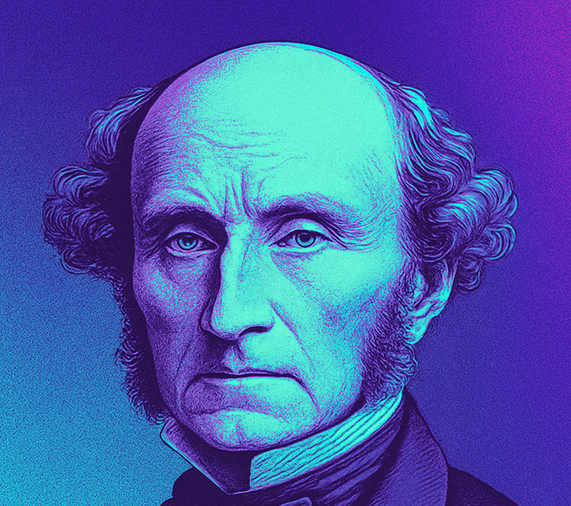
Alike in the highest regions of speculation and in the smaller practical concerns of daily life, her mind was the same perfect instrument, piercing to the very heart and marrow of the matter; always seizing the essential idea or principle. The same exactness and rapidity of operation, pervading as it did her sensitive as well as her mental faculties, would, with her gifts of feeling and imagination, have fitted her to be a consummate artist, as her fiery and tender soul and her vigorous eloquence would certainly have made her a great orator, and her profound knowledge of human nature and discernment and sagacity in practical life, would, in the times when such a carrière was open to women, have made her eminent among the rulers of mankind. Her intellectual gifts did but minister to a moral character at once the noblest and the best balanced which I have ever met with in life.
▼
Source
source
(pp. 186-187)
1 day ago
For us in Russia, communism is a dead dog, while, for many people in the West, it is still a living lion.
▼
Source
source
BBC Radio broadcast, Russian service, as quoted in The Listener
2 months 1 week ago
Literary imagination is an aesthetic object offered by a writer to a lover of books.
▼
Source
source
A Retrospective Glance at the Lifework of a Master of Books
3 months 3 weeks ago
There is no need to worry about mere size. We do not necessarily respect a fat man more than a thin man. Sir Isaac Newton was very much smaller than a hippopotamus, but we do not on that account value him less.
▼
Source
source
"The Expanding Mental Universe", Saturday Evening Post, 7/1/1959

2 months 4 days ago
It is a profoundly erroneous truism, repeated by all copy-books and by eminent people when they are making speeches, that we should cultivate the habit of thinking of what we are doing. The precise opposite is the case. Civilization advances by extending the number of important operations which we can perform without thinking about them. Operations of thought are like cavalry charges in a battle - they are strictly limited in number, they require fresh horses, and must only be made at decisive moments.
▼
Source
source
ch. 5.
3 months 3 weeks ago
Probably in time physiologists will be able to make nerves connecting the bodies of different people; this will have the advantage that we shall be able to feel another man's tooth aching.
▼
Source
source
Human Knowledge: Its Scope and Limits (1948), p. 493

2 months 2 weeks ago
Strong as it looks at the outset, State-agency perpetually disappoints every one. Puny as are its first stages, private efforts daily achieve results that astound the world.
▼
Source
source
Vol. 3, Ch. VII, Over-Legislation
1 week 4 days ago
No nation ever had so bad a neighbour as Germany has had in France for the last 400 years; bad in all manner of ways; insolent, rapacious, insatiable, unappeasable, continually aggressive. ... Germany, after 400 years of ill-usage, and generally ill-fortune, from that neighbour, has had at last the great happiness to see its enemy fairly down in this manner; and Germany, I do clearly believe, would be a foolish nation not to think of raising up some secure boundary-fence between herself and such a neighbour now that she has the chance.
▼
Source
source
Letter to The Times on the Franco-Prussian War and Germany's annexation of Alsace-Lorraine (18 November 1870), p. 8

3 months 3 weeks ago
Since the great foundation of fear is pain, the way to harden and fortify children against fear and danger is to accustom them to suffer pain. This 'tis possible will be thought, by kind parents, a very unnatural thing towards their children; and by most, unreasonable...
▼
Source
source
Sec. 115

3 months 1 week ago
Good breeding in cattle depends on physical health, but in men on a well-formed character.
▼
Source
source
Freeman (1948), p. 151

2 months 2 days ago
I never lose an opportunity of urging a practical beginning, however small, for it is wonderful how often in such matters the mustard-seed germinates and roots itself.
▼
Source
source
Letter to a friend, quoted in The Life of Florence Nightingale Vol. II (1914) by Edward Tyas Cook, p. 406
3 months 2 weeks ago
Every explanation is after all an hypothesis.
▼
Source
source
Ch. 7 : Remarks on Frazer's Golden Bough, p. 123
2 months 2 weeks ago
Man is a Sun; his Senses are the Planets.
1 month 1 week ago
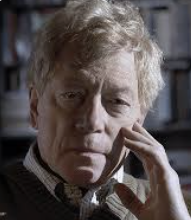
All of us need an identity which unites us with our neighbours, our countrymen, those people who are subject to the same rules and the same laws as us, those people with whom we might one day have to fight side by side to protect our inheritance, those people with whom we will suffer when attacked, those people whose destinies are in some way tied up with our own.
▼
Source
source
Rivers of Blood BBC2 documentary
4 months 2 weeks ago
A tragedy, then, is the imitation of an action that is serious and also, as having magnitude, complete in itself; in language ... not in a narrative form; with incidents arousing pity and fear, wherewith to accomplish its catharsis of such emotions.
3 months 2 weeks ago
Whoso walketh in solitude, And inhabiteth the wood, Choosing light, wave, rock, and bird, Before the money-loving herd, Into that forester shall pass From these companions power and grace.
▼
Source
source
Wood-notes, no. II, st. 4

5 days ago
He that owns himself has lost nothing. But how few men are blessed with ownership of self!
3 months 3 weeks ago
Every man, wherever he goes, is encompassed by a cloud of comforting convictions, which move with him like flies on a summer day.
▼
Source
source
Ch. 2: Dreams and Facts
3 months 4 days ago
Things essentially incorporeal, because they are more excellent than all body and place, are every where, not with interval, but impartibly. Things essentially incorporeal are not locally present with bodies but are present with them when they please; by verging towards them so far as they are naturally adapted so to verge. They are not, however, present with them locally, but through habitude, proximity, and alliance. Things essentially incorporeal, are not present with bodies, by hypostasis and essence; for they are not mingled with bodies. But they impart a certain power which is proximate to bodies, through verging towards them. For tendency constitutes a certain secondary power proximate to bodies.
5 days ago
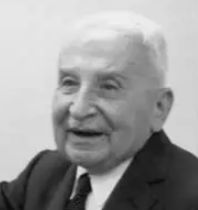
People do not cooperate under the division of labor because they love or should love one another. They cooperate because this best serves their own interests. Neither love nor charity nor any other sympathetic sentiments but rightly understood selfishness is what originally impelled man to adjust himself to the requirements of society, to respect the rights and freedoms of his fellow men and to substitute peaceful collaboration for enmity and conflict.
2 months 2 weeks ago
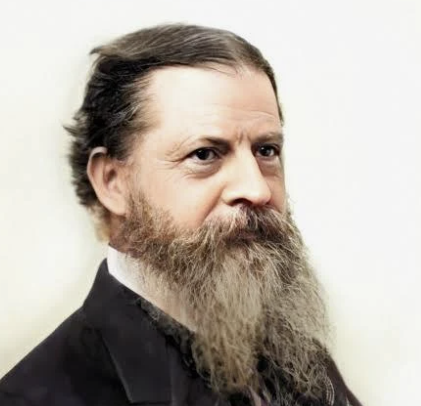
The entire universe is perfused with signs, if it is not composed exclusively of signs.
▼
Source
source
Quoted in Essays in Zoosemiotics (1990) by Thomas A. Sebeok
2 months 2 days ago
I believe that one can and must hope for a sane society that furthers man's capacity to love his fellow men, to work and create, to develop his reason and his objectivity of a sense of himself that is based on the experience of his productive energy. I believe that one can and must hope for the collective regaining of a mental health that is characterized by the capacity to love and to create...
CivilSimian.com created by AxiomaticPanic, CivilSimian, Kalokagathia