

1 month 6 days ago
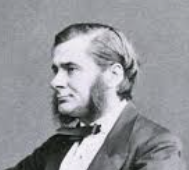
History warns us, however, that it is the customary fate of new truths to begin as heresies and to end as superstitions; and, as matters now stand, it is hardly rash to anticipate that, in another twenty years, the new generation, educated under the influences of the present day, will be in danger of accepting the main doctrines of the 'Origin of Species' with as little reflection, and it may be with as little justification, as so many of our contemporaries, twenty years ago, rejected them. Against any such a consummation let us all devoutly pray; for the scientific spirit is of more value than its products, and irrationally held truths may be more harmful than reasoned errors.
▼
Source
source
The Coming of Age of The Origin of Species (1880); Collected Essays, vol. 2

3 months 3 weeks ago
The second matter in which Mill's principles condemn existing legislation is homosexuality. If two adults voluntarily enter into such a relation, this is a matter which concerns them only, and in which, therefore, the community ought not to intervene. If it were still believed, as it once was, that the toleration of such behavior would expose the community to the fate of Sodom and Gomorrah, the community would have every right to intervene. But it does not acquire a right to intervene merely on the ground that such conduct is thought wicked. The criminal law may rightly be invoked to prevent violence or fraud inflicted upon unwilling victims, but it ought not to be invoked when whatever damage there may be is suffered only by the agents-always assuming that the agents are adults.
▼
Source
source
p. 139

3 months 2 weeks ago
What I hold fast to is not one proposition but a nest of propositions.
1 month 2 weeks ago
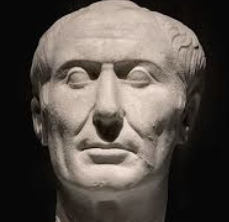
A noble spirit finds a cure for injustice in forgetting it.
▼
Source
source
Maxim 441

5 days ago
But no wall can be erected against Fortune which she cannot take by storm; let us strengthen our inner defences. If the inner part be safe, man can be attacked, but never captured.
2 months 1 week ago
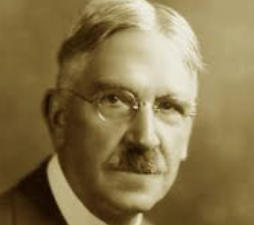
When we come to inanimate elements, the prevailing view has been that time and sequential change are entirely foreign to their nature. According to this view they do not have careers; they simply change their relations is space. We have only to think of the classic conception of atoms. The Newtonian atom, for example, moved and was moved, thus changing its position in space, but it was unchangeable in its own being. ... In itself it was like a God, the same yesterday, today, and forever.
3 months 2 weeks ago
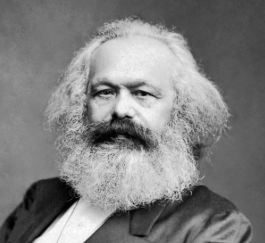
There is a physical relation between physical things. But it is different with commodities.
▼
Source
source
Vol. I, Ch. 1, Section 4, pg. 83.

3 months 2 weeks ago
Everyone feels benevolent if nothing happens to be annoying him at the moment.

3 months 3 weeks ago
My education, which was wholly his work, had been conducted without any regard to the possibility of its ending in this result; and I saw no use in giving him the pain of thinking that his plans had failed, when the failure was probably irremediable, and, at all events, beyond the power of his remedies. Of other friends, I had at that time none to whom I had any hope of making my condition intelligible. It was however abundantly intelligible to myself; and the more I dwelt upon it, the more hopeless it appeared.
▼
Source
source
(p. 135)
4 months 3 weeks ago
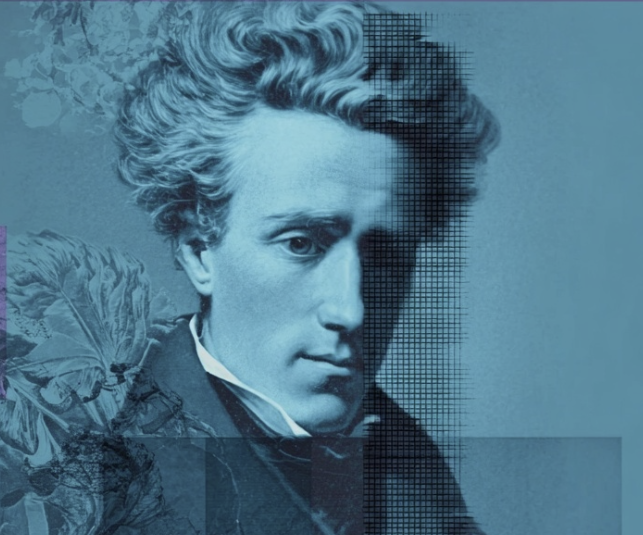
Old age realizes the dreams of youth: look at Dean Swift; in his youth he built an asylum for the insane, in his old age he was himself an inmate.
3 months 2 weeks ago
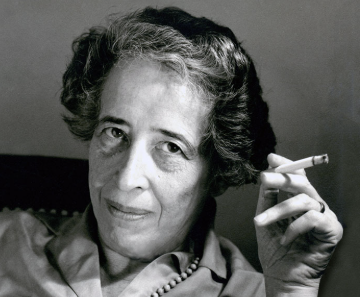
To expect truth to come from thinking signifies that we mistake the need to think with the urge to know.
▼
Source
source
p. 61
2 months 2 days ago
Just as modern mass production requires the standardization of commodities, so the social process requires standardization of man, and this standardization is called equality.
▼
Source
source
Ch. 2

2 months 3 weeks ago
I understand Being in all and over all, as there is nothing without participation in Being, and there is no being without Essence. Thus nothing can be free of the Divine Presence.
▼
Source
source
As quoted in "Giordano Bruno" - Theosophy Vol. 26, No. 8
2 months 6 days ago
The uniting of Orthodoxy with state absolutism came about on the soil of a non-belief in the Divineness of the earth, in the earthly future of mankind; Orthodoxy gave away the earth into the hands of the state because of its own non-belief in man and mankind, because of its nihilistic attitude towards the world. Orthodoxy does not believe in the religious ordering of human life upon the earth, and it compensates for its own hopeless pessimism by a call for the forceful ordering of it by state authority.
▼
Source
source
Nihilism On A Religious Soil
4 months 3 weeks ago
Death cannot explain itself. The earnestness consists precisely in this, that the observer must explain it to himself.
2 months ago
As the few adepts in such things well know, universal morality is to be found in little everyday penny-events just as much as in great ones. There is so much goodness and ingenuity in a raindrop that an apothecary wouldn't let it go for less than half-a-crown.
▼
Source
source
B 33
1 week 3 days ago
Excellence is an art won by training and habituation: we do not act rightly because we have virtue or excellence, but we rather have these because we have acted rightly; 'these virtues are formed in man by his doing the actions'; we are what we repeatedly do. Excellence, then, is not an act but a habit: 'the good of man is a working of the soul in the way of excellence in a complete life... for as it is not one swallow or one fine day that makes a spring, so it is not one day or a short time that makes a man blessed and happy'.
▼
Source
source
p. 87; the quoted phrases within the quotation are from the Nicomachean Ethics, Book II, 4; Book I, 7

2 months 1 week ago
Consciousness, the craving for more, more, always more, hunger of eternity and thirst of infinity, appetite for God - these are never satisfied. Each consciousness seeks to be itself and all other consciousnesses without ceasing to be itself; it seeks to be God. And matter, unconsciousness, tends to be less and less, tends to be nothing, its thirst being a thirst for repose. Spirit says: I wish to be! and matter answers: I wish not to be!

3 months 3 weeks ago
We feel and know that we are eternal.
▼
Source
source
Part V, Prop. XXIII, Scholium

4 months 2 weeks ago
Whatever we may do, excess will always keep its place in the heart of man, in the place where solitude is found. We all carry within us our places of exile, our crimes and our ravages. But our task is not to unleash them on the world; it is to fight them in ourselves and in others.

3 months 2 weeks ago
You know how much I admire Che Guevara. In fact, I believe that the man was not only an intellectual but also the most complete human being of our age: as a fighter and as a man, as a theoretician who was able to further the cause of revolution by drawing his theories from his personal experience in battle.
▼
Source
source
As quoted in Marianne Alexandre (ed.), !Viva Che!: Contributions in Tribute to Ernesto 'Che' Guevara, 1968
2 weeks 6 days ago
What makes The Present Age and The Difference Between a Genius and an Apostle important is not so much that the former essay anticipates Heidegger and the latter, Barth: it would be more accurate to say that Heidegger's originality is widely overestimated, and that many things he says at great length in his highly obscure German were said earlier by various writers who had made the same points much more elegantly, and that some of these writers, including Kierkegaard, were known to Heidegger. Why should Kierkegaard's significance depend on someone else's, quite especially when many points that others copied from him may be wrong?
▼
Source
source
Walter Kaufmann, Preface to The Present Age, by Soren Kierkegaard, Dru translation 1962 p. 15-16
2 months 1 week ago
To understand this for sense it is not required that a man should be a geometrician or a logician, but that he should be mad. On the proposition that the volume generated by revolving the region under 1/x from 1 to infinity has finite volume.
▼
Source
source
Quoted in Mathematical Maxims and Minims by N. Rose

3 months 4 weeks ago
There is nothing so easy, so sweet, and so favourable, as the divine law: it calls and invites us to her, guilty and abominable as we are; extends her arms and receives us into her bosom, foul and polluted as we at present are, and are for the future to be. But then, in return, we are to look upon her with a respectful eye; we are to receive this pardon with all gratitude and submission, and for that instant at least, wherein we address ourselves to her, to have the soul sensible of the ills we have committed, and at enmity with those passions that seduced us to offend her.
▼
Source
source
Ch. 56, tr. Cotton, rev. W. Carew Hazlitt, 1877



2 months 2 weeks ago
This is how I recognize an authentic poet: by frequenting him, living a long time in the intimacy of his work, something changes in myself, not so much my inclinations or my tastes as my very blood, as if a subtle disease had been injected to alter its course, its density and nature. To live around a true poet is to feel your blood run thin, to dream a paradise of anemia, and to hear, in your veins, the rustle of tears.
3 months 2 weeks ago
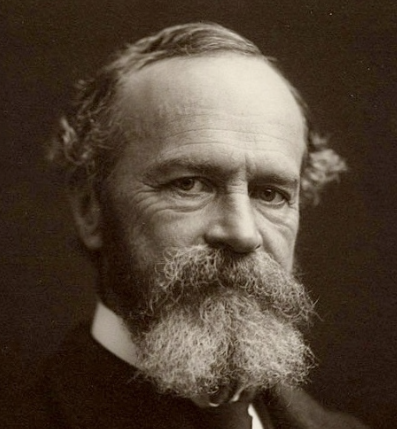
In the deepest heart of all of us there is a corner in which the ultimate mystery of things works sadly.
▼
Source
source
"Is Life Worth Living?"
2 months 2 weeks ago
The liberty of man consists solely in this: that he obeys natural laws because he has himself recognized them as such, and not because they have been externally imposed upon him by any extrinsic will whatever, divine or human, collective or individual.
2 months 2 weeks ago
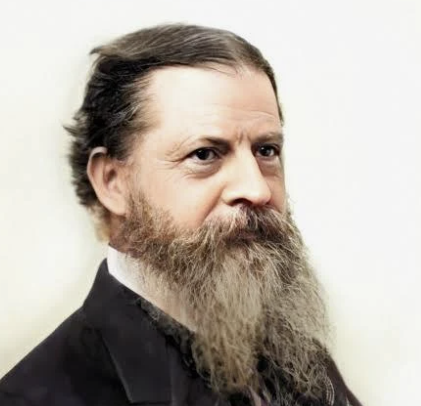
Our whole past experience is continually in our consciousness, though most of it sunk to a great depth of dimness. I think of consciousness as a bottomless lake, whose waters seem transparent, yet into which we can clearly see but a little way.
▼
Source
source
Vol. VII, par. 547
1 month 1 week ago
A single breaker may recede; but the tide is evidently coming in.
▼
Source
source
pp. 266-267
2 months 2 weeks ago
Where are my sensations? They have melted into... me, and what is this me, this self, but the sum of these evaporated sensations?
2 months 1 week ago
And killing time is perhaps the essence of comedy, just as the essence of tragedy is killing eternity.

2 months 4 days ago
By relieving the brain of all unnecessary work, a good notation sets it free to concentrate on more advanced problems, and in effect increases the mental power of the race..
▼
Source
source
ch. 5

3 months 2 weeks ago
The nature of power is such that even those who have not sought it, but have had it forced upon them, tend to acquire a taste for more.
▼
Source
source
Chapter 1 (p. 12)

1 month 2 weeks ago
Electric technology is directly related to our central nervous systems, so it is ridiculous to talk of "what the public wants" played over its own nerves.
▼
Source
source
(p. 68)
1 month 6 days ago
For myself I say deliberately, it is better to have a millstone tied round the neck and be thrown into the sea than to share the enterprises of those to whom the world has turned, and will turn, because they minister to its weaknesses and cover up the awful realities which it shudders to look at.
▼
Source
source
Aphorism #367, in Aphorisms and Reflections (1907) edited by Henrietta A. Huxley, his widow

2 months 2 weeks ago
The ultimate result of shielding men from the effects of folly, is to fill the world with fools.
▼
Source
source
Vol. 3, Ch. IX, State-Tamperings with Money and Banks
3 months 2 weeks ago
Frazer is much more savage than most of his savages, for they are not as far removed from the understanding of spiritual matter as a twentieth-century Englishman. His explanations of primitive practices are much cruder than the meaning of these practices themselves.
▼
Source
source
Ch. 7 : Remarks on Frazer's Golden Bough, p. 131
4 months 1 week ago
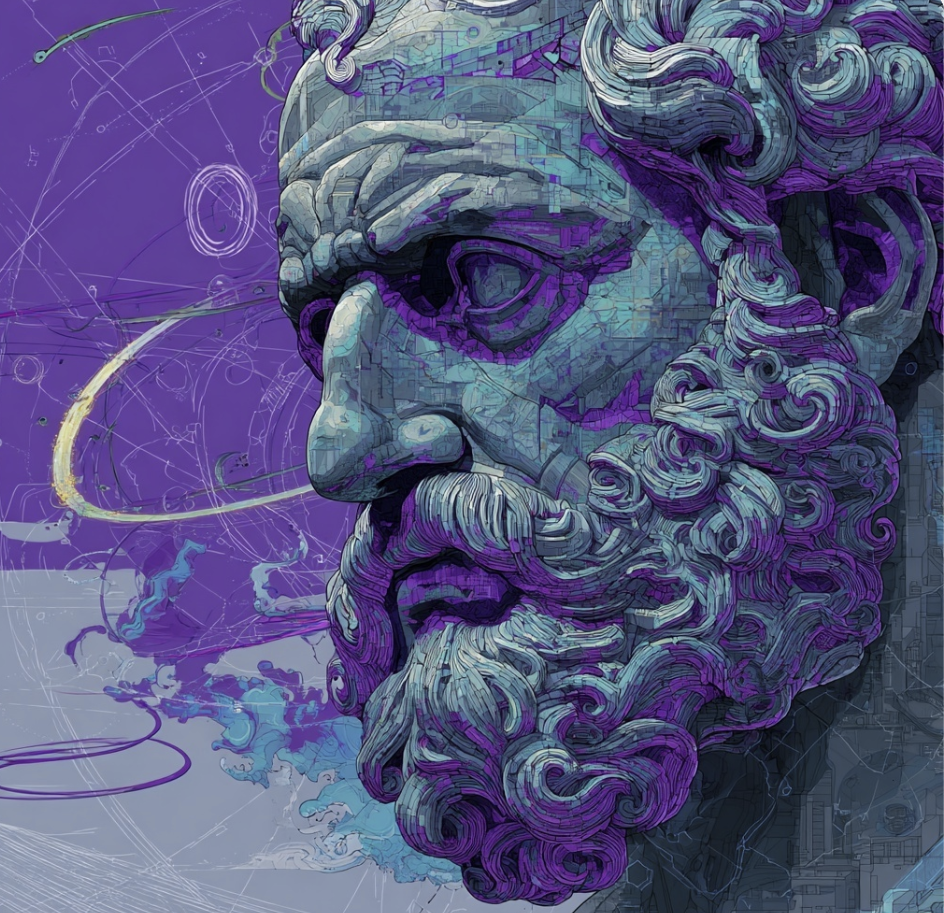
All human laws are nourished by one divine law.
1 month 2 weeks ago
Hypnotized by their rear-view mirrors, philosophers and scientists alike tried to focus the figure of man in the old ground of nineteenth-century industrial mechanism and congestion. They failed to bridge from the old figure to the new. It is man who has become both figure and ground via the electrotechnical extension of his awareness. With the extension of his nervous system as a total information environment, man bridges art and nature.
▼
Source
source
(p. 11)
2 months 1 week ago
The mind celebrates a little triumph whenever it can formulate a truth, however unwelcome to the flesh, or discover an actual force, however unfavourable to given interests.
▼
Source
source
Ch. IV.: Music
1 month 3 weeks ago
All these people talk so eloquently about getting back to good old-fashioned values. Well, as an old poop I can remember back to when we had those old-fashioned values, and I say let's get back to the good old-fashioned First Amendment of the good old-fashioned Constitution of the United States-and to hell with the censors! Give me knowledge or give me death!
▼
Source
source
As quoted in "An Interview with Kurt Vonnegut, Jr., Carey Horwitz, Library Journal, Apr. 15, 1973: 1131

3 months 3 weeks ago
Were a stranger to drop on a sudden into this world, I would show him, as a specimen of its ills, a hospital full of diseases, a prison crowded with malefactors and debtors, a field of battle strewed with carcasses, a fleet foundering in the ocean, a nation languishing under tyranny, famine, or pestilence. To turn the gay side of life to him, and give him a notion of its pleasures; whither should I conduct him? to a ball, to an opera, to court? He might justly think, that I was only showing him a diversity of distress and sorrow.
▼
Source
source
Demea to Philo, Part X
2 months 2 weeks ago
Pursued by our origins...we all are.
3 months 3 weeks ago
In judging policies we should consider the results that have been achieved through them rather than the means by which they have been executed.
▼
Source
source
From an undated letter to Piero Soderini (translated here by Dr. Arthur Livingston), in The Living Thoughts of Machiavelli, by Count Carlo Sforza, published by Cassell, London (1942), p. 85

3 months 2 weeks ago
Everything in the universe goes by indirection. There are no straight lines.
▼
Source
source
Works and Days

2 months 3 days ago
The history of the Romanovs is an Elizabethan tragedy that lasts for three centuries. Its keynote is cruelty, a barbaric, pointless kind of cruelty that has always been common in the East, but that came to Europe only recently, in the time of Hitler.
▼
Source
source
pp. 61-62
2 months 2 weeks ago
The mind advances only when it has the patience to go in circles, in other words, to deepen.

2 months 3 weeks ago
France had for some time been guilty of a continued series of hostile acts against this country, both external and internal: first, she directed her pursuits to universal empire, under the name of fraternity, in order to overturn the fabric of our laws and government.
▼
Source
source
Speech in the House of Commons (12 February 1793)
4 months 2 weeks ago
A tragedy, then, is the imitation of an action that is serious and also, as having magnitude, complete in itself; in language ... not in a narrative form; with incidents arousing pity and fear, wherewith to accomplish its catharsis of such emotions.
CivilSimian.com created by AxiomaticPanic, CivilSimian, Kalokagathia