


3 months 2 weeks ago
I met, not long ago, a young man who aspired to become a novelist. Knowing that I was in the profession, he asked me to tell him how he should set to work to realize his ambition. I did my best to explain. 'The first thing,' I said, 'is to buy quite a lot of paper, a bottle of ink, and a pen. After that you merely have to write.'
▼
Source
source
"Sermons in Cats"
2 months 3 weeks ago
The concessions of the weak are the concessions of fear.
1 day ago
A person who thinks all the time has nothing to think about except thoughts. So he loses touch with reality, and lives in a world of illusion.

3 months 3 weeks ago
During such calm sunshine of the mind, these spectres of false divinity never make their appearance.
▼
Source
source
Part XIV - Bad influence of popular religions on morality
2 months 1 week ago
The idea that an aim can be reasonable for its own sake-on the basis of virtues that insight reveals it to have in itself-without reference to some kind of subjective gain or advantage, is utterly alien to subjective reason, even where it rises above the consideration of immediate utilitarian values and devotes itself to reflection about the social order as a whole.
▼
Source
source
p. 4.

3 months 3 weeks ago
The good life is one inspired by love and guided by knowledge.
1 month 3 weeks ago
We're terrible animals. I think that the Earth's immune system is trying to get rid of us, as well it should.
▼
Source
source
On humans, interviewed by Jon Stewart, The Daily Show

2 months 3 weeks ago
A fool with a heart and no sense is just as unhappy as a fool with sense and no heart.
▼
Source
source
Part 1, Chapter 7
1 week 6 days ago
In limitations he first shows himself the master,And the law can only bring us freedom.
▼
Source
source
Was Wir Bringen
3 months 3 weeks ago
Judges of elegance and taste consider themselves as benefactors to the human race, whilst they are really only the interrupters of their pleasure ... There is no taste which deserves the epithet good, unless it be the taste for such employments which, to the pleasure actually produced by them, conjoin some contingent or future utility: there is no taste which deserves to be characterized as bad, unless it be a taste for some occupation which has mischievous tendency.
▼
Source
source
Théorie des peines et des récompenses (1811); translation by Richard Smith, The Rationale of Reward, J. & H. L. Hunt, London, 1825, Bk. 3, Ch. 1
3 months 1 week ago
Lamachus chid a captain for a fault; and when he had said he would do so no more, "Sir," said he, "in war there is no room for a second miscarriage." Said one to Iphicrates, "What are ye afraid of?" "Of all speeches," said he, "none is so dishonourable for a general as 'I should not have thought of it.'"
▼
Source
source
52 Iphicrates
3 months 3 weeks ago
I feel like that intellectual but plain-looking lady who was warmly complimented on her beauty. In accepting his Nobel Prize, in December 1950; Russell denied that he had contributed anything in particular to literature.
▼
Source
source
Quoted in LIFE, Editorials: "A great mind is still annoying and adorning our age", 26 May 1952

2 months 3 days ago
When I'm bored, my sense of values goes to sleep. But it's not dead, only asleep. A crisis can wake it up and make the world seem infinitely important and interesting. But what I need to learn is the trick of shaking them awake myself . . . And incidentally, another name for the sense of values is intelligence. A stupid person is a person whose values are narrow.
▼
Source
source
p. 57

3 months 4 weeks ago
Besides, you also have many Jews living in the country, who do much harm... You should know the Jews blaspheme and violate the name of our Savior day for day... for that reason you, Milords and men of authority, should not tolerate but expel them. They are our public enemies and incessantly blaspheme our Lord Jesus Christ, they call our Blessed Virgin Mary a harlot and her Holy Son a bastard and to us they give the epithet of changelings and abortions. Therefore deal with them harshly as they do nothing but excruciatingly blaspheme our Lord Jesus Christ, trying to rob us of our lives, our health, our honor and belongings.
▼
Source
source
Sermon at Eisleben, a few days before his death, February, 1546. See The Jews by Zuhdī Fātiḥ, 1972

1 week 4 days ago
Again, and again, we say, the great, the creative and enduring is ever a secret to itself; only the small, the barren and transient is otherwise.
▼
Source
source
Characteristics.
2 months 2 weeks ago
Once the first radical attack on private property has been launched, the proletariat will find itself forced to go ever further, to concentrate increasingly in the hands of the state all capital, all agriculture, all transport, all trade. All the foregoing measures are directed to this end; and they will become practicable and feasible, capable of producing their centralizing effects to precisely the degree that the proletariat, through its labor, multiplies the country's productive forces.
2 months 5 days ago
It belongs to the self-respect of intellect to pursue every tangle of thought to its final unravelment.
▼
Source
source
Ch. 12: "Religion and Science", p. 258

2 months 3 weeks ago
The people reign over the American political world as God rules over the universe. It is the cause and the end of all things; everything rises out of it and is absorbed back into it.
▼
Source
source
Chapter IV, Part I.

3 months 3 weeks ago
In every country it always is and must be the interest of the great body of the people to buy whatever they want of those who sell it cheapest. The proposition is so very manifest that it seems ridiculous to take any pains to prove it; nor could it ever have been called in question had not the interested sophistry of merchants and manufacturers confounded the common sense of mankind. Their interest is, in this respect, directly opposite to that of the great body of the people.
▼
Source
source
Chapter III, Part II, p. 531.

2 months 3 weeks ago
How shall the dead arise, is no question of my faith; to believe only possibilities, is not faith, but mere philosophy.
▼
Source
source
Section 48

2 months 2 weeks ago
The poor maidservant who used to say that she only believed in God when she had a toothache puts all theologians to shame.
2 months 2 days ago
Happiness is the indication that man has found the answer to the problem of human existence: the productive realization of his potentialities and thus, simultaneously, being one with the world and preserving the integrity of his self. In spending his energy productively he increases his powers, he "burns without being consumed."
▼
Source
source
p.189

4 months 2 weeks ago
Of all the schools of patience and lucidity, creation is the most effective. It is also the staggering evidence of man's sole dignity: the dogged revolt against his condition, perseverance in an effort considered sterile. It calls for a daily effort, self-mastery, a precise estimate of the limits of truth, measure, and strength. It constitutes an ascesis. All that "for nothing," in order to repeat and mark time. But perhaps the great work of art has less importance in itself than in the ordeal it demands of a man and the opportunity it provides him of overcoming his phantoms and approaching a little closer to his naked reality.

4 months 3 days ago
Mahomet established a religion by putting his enemies to death; Jesus Christ, by commanding his followers to lay down their own lives.
▼
Source
source
Thoughts on Religion and Philosophy (W. Collins, 1838), Ch. XVI, p. 202
3 months 3 weeks ago
In manufactures, a very small advantage will enable foreigners to undersell our own workmen, even in the home market. It will require a very great one to enable them to do so in the rude produce of the soil. If the free importation of foreign manufactures were permitted, several of the home manufactures would probably suffer, and some of them, perhaps, go to ruin altogether, and a considerable part of the stock and industry at present employed in them, would be forced to find out some other employment. But the freest importation of the rude produce of the soil could have no such effect upon the agriculture of the country.
▼
Source
source
Chapter II
1 month 3 weeks ago
Simulation is no longer that of a territory, a referential being or substance. It is a generation by models of a real without origin or reality: a hyperreal.
▼
Source
source
"The Precession of Simulacra," p. 1
2 months 4 days ago
Those who say that all historical accounts are ideological constructs (which is one version of the idea that there is really no historical truth) rely on some story which must itself claim historical truth. They show that supposedly "objective" historians have tendentiously told their stories from some particular perspective; they describe, for example, the biasses that have gone into constructing various histories of the United States. Such an account, as a particular piece of history, may very well be true, but truth is a virtue that is embarrassingly unhelpful to a critic who wants not just to unmask past historians of America but to tell us that at the end of the line there is no historical truth. It is remarkable how complacent some "deconstructive" histories are about the status of the history that they deploy themselves.
▼
Source
source
p. 2
3 months 4 weeks ago
Our stubbornness is right, because we want to preserve the liberty which we have in Christ. Only by preserving our liberty shall we be able to retain the truth of the Gospel inviolate.
▼
Source
source
Chapter 2
3 months 3 weeks ago
Man is essentially a dreamer, wakened sometimes for a moment by some peculiarly obtrusive element in the outer world, but lapsing again quickly into the happy somnolence of imagination. Freud has shown how largely our dreams at night are the pictured fulfilment of our wishes; he has, with an equal measure of truth, said the same of day-dreams; and he might have included the day-dreams which we call beliefs.
▼
Source
source
Ch. 2: Dreams and Facts
3 months 3 weeks ago
For want of the apparatus of propositional functions, many logicians have been driven to the conclusion that there are unreal objects. It is argued, e.g., by Meinong, that we can speak about "the golden mountain," "the round square," and so on; we can make true propositions of which these are the subjects; hence they must have some kind of logical being, since otherwise the propositions in which they occur would be meaningless. In such theories, it seems to me, there is a failure of that feeling for reality which ought to be preserved even in the most abstract studies. Logic, I should maintain, must no more admit a unicorn than zoology can; for logic is concerned with the real world just as truly as zoology, though with its more abstract and general features.
▼
Source
source
Ch. 16: Descriptions
2 months 3 weeks ago
The principal means of realizing it will be the formation of an alliance between philosophers and the working classes, for which both are alike prepared by the negative and positive progress of the last five centuries. The direct object of their combined action will be to set in motion the force of Public Opinion.
▼
Source
source
p. 153
2 months 1 week ago
The simple point which I am concerned to make is that where ultimate values are irreconcilable, clear-cut solutions cannot, in principle, be found. To decide rationally in such situations is to decide in the light of general ideals, the overall pattern of life pursued by a man or a group or a society.
2 months 1 week ago
Those, no doubt, are in some way fortunate who have brought themselves, or have been brought by others, to obey some ultimate principle before the bar of which all problems can be brought. Single-minded monists, ruthless fanatics, men possessed by an all-embracing coherent vision do not know the doubts and agonies of those who cannot wholly blind themselves to reality.

3 months 4 weeks ago
In the country of the blind the one-eyed man is king.
▼
Source
source
Adagia (first published 1500, with numerous expanded editions through 1536), III, IV, 96

3 months 2 weeks ago
I find the Englishman to be him of all men who stands firmest in his shoes. They have in themselves what they value in their horses, - mettle and bottom.
▼
Source
source
Manners
2 months 2 weeks ago
They say in the grave there is peace, and peace and the grave are one and the same.
▼
Source
source
Act I.

4 months 3 weeks ago
Man has an invincible inclination to allow himself to be deceived and is, as it were, enchanted with happiness when the rhapsodist tells him epic fables as if they were true, or when the actor in the theater acts more royally than any real king. So long as it is able to deceive without injuring, that master of deception, the intellect, is free; it is released from its former slavery and celebrates its Saturnalia. It is never more luxuriant, richer, prouder, more clever and more daring.
1 month 1 week ago
A life of action, if it is to be useful, must be a life of compromise. But speculation admits of no compromise. A public-man is often under the necessity of consenting to measures which he dislikes, lest he should endanger the success of measures which he thinks of vital importance.
▼
Source
source
War of the Succession in Spain', The Edinburgh Review (January 1833), quoted in T. B. Macaulay, Critical and Historical Essays Contributed to The Edinburgh Review, Vol. II (1843), p. 91

3 months 3 weeks ago
In every stock-jobbing swindle everyone knows that some time or other the crash must come, but every one hopes that it may fall on the head of his neighbour, after he himself has caught the shower of gold and placed it in safety.
▼
Source
source
Vol. I, Ch. 10, Section 5, pg. 296.

1 month 3 days ago
I do not believe that sheer suffering teaches. If suffering alone taught, all the world would be wise, since everyone suffers. To suffering must be added mourning, understanding, patience, love, openness and the willingness to remain vulnerable. All these and other factors combined, if the circumstances are right, can teach and can lead to rebirth.
▼
Source
source
Hour of Gold, Hour of Lead: Diaries and Letters of Anne Morrow Lindbergh, 1929-1932 (1973), p. 3

3 months 2 weeks ago
Persecution of powerless or power-losing groups may not be a very pleasant spectacle, but it does not spring from human meanness alone. What makes men obey or tolerate real power and, on the other hand, hate people who have wealth without power, is the rational instinct that power has a certain function and is of some general use. Even exploitation and oppression still make society work and establish some kind of order. Only wealth without power or aloofness without a policy are felt to be parasitical, useless, revolting, because such conditions cut all the threads which tie men together. Wealth which does not exploit lacks even the relationship which exists between exploiter and exploited; aloofness without policy does not imply even the minimum concern of the oppressor for the oppressed.
▼
Source
source
Part 1, Ch. 1, § 1
1 day ago
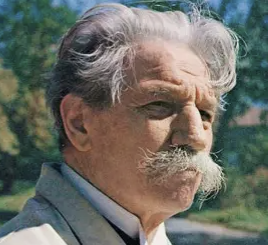
Just as the wave cannot exist for itself, but is ever a part of the heaving surface of the ocean, so must I never live my life for itself, but always in the experience which is going on around me. It is an uncomfortable doctrine which the true ethics whisper into my ear. You are happy, they say; therefore you are called upon to give much.
▼
Source
source
Chapter 26
2 months ago
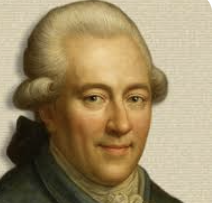
Where the frontier of science once was is now the centre.
▼
Source
source
As quoted in A Dictionary of Scientific Quotations (1991) edited by Alan Lindsay Mackay, p. 153

1 month 3 weeks ago
Although it is commonly supposed that war making is the specific activity of nations, the blind rage that motivates war destroys the very social bonds that make nations possible. Of course, it can fortify the nationalism of a nation, producing a provisional coherence bolstered by war and enmity, but it also erodes the social relations that make politics possible. The power of destruction unleashed by war breaks social ties and produces anger, revenge, and distrust ("embitterment") such that it becomes unclear whether reparation is possible, undermining not only those relations that may have been built in the past, but also the future possibility of peaceful coexistence.
▼
Source
source
p. 154
1 month 1 week ago
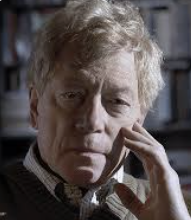
National loyalty involves a love of home and a preparedness to defend it; nationalism is a belligerent ideology, which uses national symbols in order to conscript the people to war.

2 months 3 days ago
The God idea is growing more impersonal and nebulous in proportion as the human mind is learning to understand natural phenomena and in the degree that science progressively correlates human and social events.
4 months 2 weeks ago
When the imagination sleeps, words are emptied of their meaning: a deaf population absent-mindedly registers the condemnation of a man. ... there is no other solution but to speak out and show the obscenity hidden under the verbal cloak.
1 day ago
Profound love demands a deep conception and out of this develops reverence for the mystery of life. It brings us close to all beings, to the poorest and smallest as well as all others.
3 months 2 weeks ago
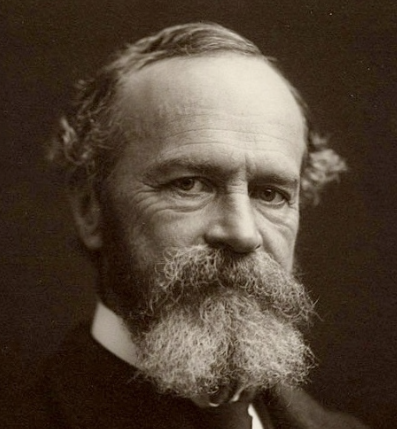
All the higher, more penetrating ideals are revolutionary. They present themselves far less in the guise of effects of past experience than in that of probable causes of future experience.
▼
Source
source
"The Moral Philosopher and the Moral Life" in address to the Yale Philosophical Club, published in the International Journal of Ethics, April 1891
1 month 1 week ago
Our media make crisis chatter out of news and fill our minds with anxious phantoms of the real thing - a summit in Helsinki, a treaty in Egypt, a constitutional crisis in India, a vote in the U.N., the financial collapse of New York. We can't avoid being politicized (a word as murky as the condition which it describes) because it is necessary after all to know what is going on. Worse yet, what is going on will not let us alone. Neither the facts nor the deformations, the insidious platitudes of the media (tormenting because the underlying realities are so large and so terrible), can be screened out. The study of literature itself is heavily "politicized."
▼
Source
source
To Jerusalem and Back: A Personal Account (1976) [Viking/Penguin, 1998, ISBN 0-141-18075-7], p. 21
CivilSimian.com created by AxiomaticPanic, CivilSimian, Kalokagathia