


3 months 4 weeks ago
As the chosen people bore in their features the sign manual of Jehovah, so the division of labour brands the manufacturing workman as the property of capital.
▼
Source
source
Vol. I, Ch. 14, Section 5, pg. 396.
2 months 3 weeks ago
It is only natural that I should constantly have revolved in my mind the question of the relationship of the symbolism of the unconscious to Christianity as well as to other religions. Not only do I leave the door open for the Christian message, but I consider it of central importance for Western man. It needs, however, to be seen in a new light, in accordance with the changes wrought by the contemporary spirit.

3 months 4 weeks ago
Philosophy is to be studied, not for the sake of any definite answers to its questions, since no definite answers can, as a rule, be known to be true, but rather for the sake of the questions themselves; because these questions enlarge our conception of what is possible, enrich our intellectual imagination and diminish the dogmatic assurance which closes the mind against speculation; but above all because, through the greatness of the universe which philosophy contemplates, the mind is also rendered great, and becomes capable of that union with the universe which constitutes its highest good.
1 month 3 weeks ago
If wine is to withdraw its most poetic countenance, the sun of the white dinner-cloth, a deity to be invoked by two or three, all fervent, hushing their talk, degusting tenderly, and storing reminiscences-for a bottle of good wine, like a good act, shines ever in the retrospect-if wine is to desert us, go thy ways, old Jack!
▼
Source
source
Pt. I, ch. III
4 months 4 weeks ago
May not we then confidently pronounce that man happy who realizes complete goodness in action, and is adequately furnished with external goods? Or should we add, that he must also be destined to go on living not for any casual period but throughout a complete lifetime in the same manner, and to die accordingly, because the future is hidden from us, and we conceive happiness as an end, something utterly and absolutely final and complete? If this is so, we shall pronounce those of the living who possess and are destined to go on possessing the good things we have specified to be supremely blessed, though on the human scale of bliss.

4 months 5 days ago
In true education, anything that comes to our hand is as good as a book: the prank of a page-boy, the blunder of a servant, a bit of table talk- they are all part of the curriculum.
▼
Source
source
The Autobiography of Michel de Montaigne, Chapter III, pg. 24 (Translated by Marvin Lowenthal
2 months 3 weeks ago
Were the ends of a person already explicit, there would be no room for development, for growth, for life; and consequently there would be no personality. The mere carrying out of predetermined purposes is mechanical. This remark has an application to the philosophy of religion. It is that genuine evolutionary philosophy, that is, one that makes the principle of growth a primordial element of the universe, is so far from being antagonistic to the idea of a personal creator, that it is really inseparable from that idea; while a necessitarian religion is in an altogether false position and is destined to become disintegrated. But a pseudo-evolutionism which enthrones mechanical law above the principle of growth is at once scientifically unsatisfactory, as giving no possible hint of how the universe has come about, and hostile to all hopes of personal relations to God.

2 months 4 weeks ago
Applaud us when we run, console us when we fall, cheer us when we recover.
▼
Source
source
Speech at Bristol Previous to the Election (6 September 1780), quoted in The Works of the Right Honourable Edmund Burke, Vol. II (1855), p. 129
6 days ago
I make known unto thee how He hath provided for the bodily health of us all, by having produced Æsculapius, the Preserver of the universe; and how he hath communicated to us virtue of every kind, by sending down Aphrodite in company with Athene for our guardian; having made it all but a law that no one should use copulation except for the end of generating his like. For this reason truly, according to his revolutions and seasons, do the various vegetable and animal races feel themselves stirred towards the generation of their kind. What need is there to magnify the glory of his rays, and of his light? A night without moon, and without stars, how terrible is it! Let anyone reflect on this, in order that he may estimate how great a blessing is the light we derive from the Sun!

2 months 1 week ago
In the mid nineteenth century, the typical murderer was a drunken illiterate; a hundred years later the typical murderer regards himself as a thinking man.
▼
Source
source
Introductory Essay, p. xiv
2 months 2 weeks ago
The difference between the artificial and the artful in the artistic lies on the surface in the former there is a split between what is overly done and what is intended. The appearance is one of cordiality; the intent is that of gaining favor. Whenever this split between what is done and its purpose exists, there is insincerity, a trick, a simulation of an act that intrinsically has another effect. When the natural and the cultivated blend into one, acts of social intercourse are works of art. The animating impulsion of genial friendship and the deed performed completely coincide without intrusion of ulterior motive. Awkwardness may prevent adequacy of expression.
2 months 1 week ago
We are really no longer ourselves a part of nature at the moment when we notice, when we recognize, that we are a part of nature.
▼
Source
source
Probleme der Moralphilosophie (Frankfurt: Suhrkamp, 1996), p. 154; as quoted in Andrew Bowie, Adorno and the Ends of Philosophy (Cambridge: Polity, 2013), p. 94

2 months 4 weeks ago
It is the love of the people; it is their attachment to their government, from the sense of the deep stake they have in such a glorious institution, which gives you both your army and your navy, and infuses into both that liberal obedience, without which your army would be a base rabble, and your navy nothing but rotten timber.

4 months 1 day ago
Beauty is no quality in things themselves: It exists merely in the mind which contemplates them; and each mind perceives a different beauty. One person may even perceive deformity, where another is sensible of beauty; and every individual ought to acquiesce in his own sentiment, without pretending to regulate those of others.
▼
Source
source
Part I, Essay 23: Of The Standard of Taste
3 months 4 weeks ago
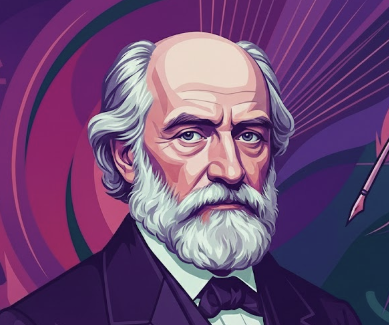
To be a philosopher, that is to say, a lover of wisdom (for wisdom is nothing but truth), it is not enough for a man to love truth, in so far as it is compatible with his own interest, with the will of his superiors, with the dogmas of the church, or with the prejudices and tastes of his contemporaries; so long as he rests content with this position, he is only a philautos, not a philosophos [a lover of self, not a lover of wisdom]. For this title of honor is well and wisely conceived precisely by its stating that one should love the truth earnestly and with one's whole heart, and thus unconditionally and unreservedly, above all else, and, if need be, in defiance of all else. Now the reason for this is the one previously stated that the intellect has become free, and in this state it does not even know or understand any other interest than that of truth.
▼
Source
source
E. Payne, trans. (1974) Vol. 1, pp. 21-22

2 months 4 weeks ago
If there is to be any philosophy at all, this contradiction must be resolved - and the solution of this problem, or answer to the question: how can we think both of Presentations as conforming to objects, and objects as conforming to presentations? is, not the first, but the highest task of transcendental philosophy.
2 months 2 weeks ago
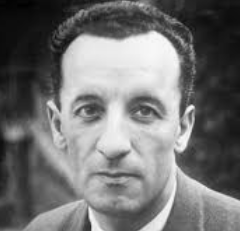
Montaigne puts not self-satisfied understanding but a consciousness astonished at itself at the core of human existence.
▼
Source
source
Signs, trans. R. McCleary (Evanston: 1964), p. 203

2 months 1 day ago
I have not been able to discover the cause of those properties of gravity from phenomena, and I frame no hypotheses; for whatever is not deduced from the phenomena is to be called a hypothesis, and hypotheses, whether metaphysical or physical, whether of occult qualities or mechanical, have no place in experimental philosophy.
▼
Source
source
Letter to Robert Hooke (15 February 1676) [5 February 1676 (O.S.)]
1 month 2 weeks ago
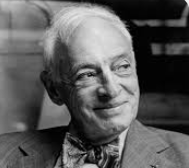
A great deal of intelligence can be invested in ignorance when the need for illusion is deep. To Jerusalem and Back: A Personal Account (1976), p. 127 Compare: It's a point so blindingly obvious that only an extraordinarily clever and sophisticated person could fail to grasp it.
▼
Source
source
John Bercow, 2016.

4 months 5 days ago
I am entirely of the opinion that the papacy is the Antichrist. But if anyone wants to add the Turk, then the Pope is the spirit of the Antichrist, and the Turk is the flesh of the Antichrist. They help each other in their murderous work. The latter slaughters bodily and by the sword, the former spiritually and by doctrine.
▼
Source
source
330
3 months 4 weeks ago
What a monstrous thing that a University should teach journalism! I thought that was only done at Oxford. This respect for the filthy multitude is ruining civilisation.
▼
Source
source
Letter to Lucy Martin Donnely, July 6, 1902

3 months 3 weeks ago
I don't think that there are any sinister persons deliberately trying to rob people of their freedom but I do think, first of all, that there are a number of impersonal forces which are pushing in the direction of less and less freedom. And I also thing there are a number of technological devices which anybody who wishes to use, can use, to accelerate this process of going away from freedom, of imposing control.
3 months 4 weeks ago
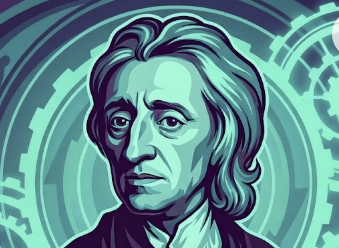
Since sounds have no natural connection with our ideas ... the doubtfulness and uncertainty of their signification ... has its cause more in the ideas they stand for than in any incapacity there is in one sound more than another to signify any idea.
▼
Source
source
Book III, Ch. 9, sec. 4

4 months 3 weeks ago
With the exception of professional rationalists, today people despair of true knowledge. If the only significant history of human thought were to be written, it would have to be history of its successive regrets and impotences.
2 months 2 weeks ago
De Lubac discusses an atheism which means to suppress this searching, he says, "even including the problem as to what is responsible for the birth of God in human consciousness."
▼
Source
source
p. 45
3 months 2 weeks ago
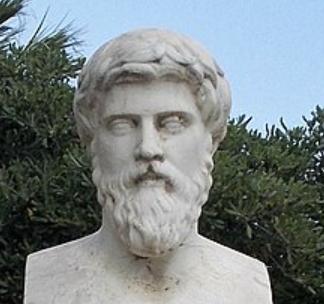
As Athenodorus was taking his leave of Cæsar, "Remember," said he, "Cæsar, whenever you are angry, to say or do nothing before you have repeated the four-and-twenty letters to yourself."
▼
Source
source
Cæsar Augustus

5 months ago
Perhaps no philosopher is more correct than the cynic. The happiness of the animal, that thorough cynic, is the living proof of cynicism.
1 week 1 day ago
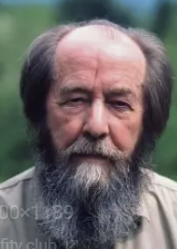
In recent times it has been fashionable to talk of the levelling of nations, of the disappearance of different races in the melting-pot of contemporary civilization. I do not agree with this opinion, but its discussion remains another question. Here it is merely fitting to say that the disappearance of nations would have impoverished us no less than if all men had become alike, with one personality and one face. Nations are the wealth of mankind, its collective personalities; the very least of them wears its own special colours and bears within itself a special facet of divine intention.
3 months 4 weeks ago
It is not altogether true that persuasion is one thing and force is another. Many forms of persuasion - even many of which everybody approves - are really a kind of force. Consider what we do to our children. We do not say to them: "Some people think the earth is round, and others think it is flat; when you grow up, you can, if you like, examine the evidence and form your own conclusion." Instead of this we say: "The earth is round." By the time our children are old enough to examine the evidence, our propaganda has closed their minds.
▼
Source
source
Ch. 17: The Ethics of Power
3 months 2 days ago
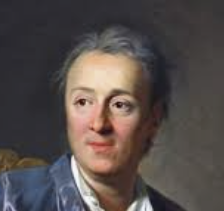
Distance is a great promoter of admiration!
▼
Source
source
As quoted in Thesaurus of Epigrams: A New Classified Collection of Witty Remarks, Bon Mots and Toasts (1942) by Edmund Fuller
4 months 1 week ago
You are a little soul carrying a corpse around, as Epictetus used to say.
▼
Source
source
Fragment 26 (Oldfather translation). This fragment originates from Marcus Aurelius, Meditations, IV. 41.
3 months 2 days ago
Every attempt to refer chemical questions to mathematical doctrines must be considered, now and always, profoundly irrational, as being contrary to the nature of the phenomena. . . . but if the employment of mathematical analysis should ever become so preponderant in chemistry (an aberration which is happily almost impossible) it would occasion vast and rapid retrogradation....

3 months 3 weeks ago
Sunshine cannot bleach the snow, Nor time unmake what poets know.
▼
Source
source
"The Test", as quoted in Emerson As A Poet (1883) by Joel Benton, p. 40
4 months 2 weeks ago
The greatest states have been overthrown by the young and sustained and restored by the old. ... Rashness is the product of the budding-time of youth, prudence of the harvest-time of age.
▼
Source
source
section 20
3 months 3 weeks ago
There are two classes of poets - the poets by education and practice, these we respect; and poets by nature, these we love.
▼
Source
source
Parnassus (1874) Preface
6 days ago
So long as you are a slave to the opinions of the many you have not yet approached freedom or tasted its nectar...But I do not mean by this that we ought to be shameless before all men and to do what we ought not; but all that we refrain from and all that we do, let us not do or refrain from merely because it seems to the multitude somehow honorable or base, but because it is forbidden by reason and the god within us.
▼
Source
source
Oration to the Uneducated Cynics
1 month 3 weeks ago
Youth is wholly experimental.
▼
Source
source
Letter to a Young Gentleman Scribner's Magazine (September 1888).
3 months 4 weeks ago
The product of labour is labour which has been congealed in an object, which has become material: it is the objectification of labour. Labour's realization is its objectification.
▼
Source
source
p. 71, The Marx-Engels Reader
2 months 3 weeks ago
The will is the living principle of the rational soul, is indeed itself reason, when purely and simply apprehended. That reason is itself active, means, that the pure will, as such, rules and is effectual. The infinite reason alone lies immediately and entirely in the purely spiritual order. The finite being lives necessarily at the same time in a sensuous order; that is to say, in one which presents to him other objects than those of pure reason; a material object, to be advanced by instruments and powers, standing indeed under the immediate command of the will, but whose efficacy is conditional also on its own natural laws.
▼
Source
source
Jane Sinnett, trans 1846 p.104
2 months 3 weeks ago
If our Bodily Life is a burning, our Spiritual Life is a being burnt, a Combustion (or, is precisely the inverse the case?); Death, therefore, perhaps a Change of Capacity.
1 month 1 week ago
Identical in the physical processes by which he originates-identical in the early stages of his formation-identical in the mode of his nutrition before and after birth, with the animals which lie immediately below him in the scale-Man, if his adult and perfect structure be compared with theirs, exhibits, as might be expected, a marvellous likeness of organization. He resembles them as they resemble one another-he differs from them as they differ from one another.-And, though these differences and resemblances cannot be weighed and measured, their value may be readily estimated; the scale or standard of judgment, touching that value, being afforded and expressed by the system of classification of animals now current among zoologists.
▼
Source
source
Ch.2, p. 83
1 month 3 weeks ago
The loss which is unknown is no loss at all.
▼
Source
source
Maxim 38


4 months 2 weeks ago
The highest perfection of human life consists in the mind of man being detached from care, for the sake of God.
▼
Source
source
III, 130, 3
4 months 1 week ago
The first and most necessary topic in philosophy is that of the use of moral theorems, such as, "We ought not to lie;" the second is that of demonstrations, such as, "What is the origin of our obligation not to lie;" the third gives strength and articulation to the other two, such as, "What is the origin of this is a demonstration." For what is demonstration? What is consequence? What contradiction? What truth? What falsehood? The third topic, then, is necessary on the account of the second, and the second on the account of the first. But the most necessary, and that whereon we ought to rest, is the first. But we act just on the contrary. For we spend all our time on the third topic, and employ all our diligence about that, and entirely neglect the first.
▼
Source
source
(51).

3 months 3 weeks ago
Everything is a subject on which there is not much to be said.
▼
Source
source
Studies in Words (1960), ch. 2

3 weeks 1 day ago
The right wing version really sees community represented either by... religion, or by nation, that these are units that... get dissolved under a liberal world order, through globalization, through the movement of people, goods, ideas and trade between nations, national identity becomes diluted and that sense of national community that held people together in democratic societies appears to be lost. ...Secularism ...is perceived as a loss by people that have religious faith. They believe that there is a form of militant secularism that is not allowing them to practice their religion, and for that reason a lot of religious conservatives in places like the United States, have turned against that liberal order.
▼
Source
source
16:18
CivilSimian.com created by AxiomaticPanic, CivilSimian, Kalokagathia