


3 days ago
Nothing becomes so offensive so quickly as grief. When fresh it finds someone to console it, but when it becomes chronic, it is ridiculed and rightly.
▼
Source
source
Line 13.

3 months 3 weeks ago
... no testimony is sufficient to establish a miracle, unless the testimony be of such a kind, that its falsehood would be more miraculous, than the fact, which it endeavors to establish.
▼
Source
source
Section 10 : Of Miracles Pt. 1

3 months ago
Rest satisfied with doing well, and leave others to talk of you as they please.
▼
Source
source
As quoted in The World's Laconics: Or, The Best Thoughts of the Best Authors (1853) by Everard Berkeley Variant: Rest satisfied with doing well, and leave others to talk of you as they will.
1 month 2 weeks ago
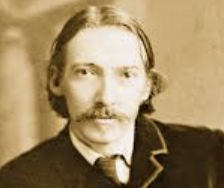
Time passes quickly with lovers.
▼
Source
source
The Pavilion on the Links, ch. V.

3 months 2 weeks ago
Morality is everywhere the same for all men, therefore it comes from God; sects differ, therefore they are the work of men.
▼
Source
source
"Atheist", 1764

3 months 2 weeks ago
Each to each a looking-glass, Reflects his figure that doth pass. Every wayfarer he meets What himself declared repeats, What himself confessed records, Sentences him in his words; The form is his own corporal form, And his thought the penal worm. Yet shine forever virgin minds, Loved by stars and the purest winds, Which, o'er passion throned sedate, Have not hazarded their state; Disconcert the searching spy, Rendering to a curious eye The durance of a granite ledge To those who gaze from the sea's edge. It is there for benefit; It is there for purging light; There for purifying storms; And its depths reflect all forms; It cannot parley with the mean,- Pure by impure is not seen. For there's no sequestered grot, Lone mountain tarn, or isle forgot, But Justice, journeying in the sphere, Daily stoops to harbour there.
▼
Source
source
Astræa

4 months 1 week ago
Fortitude, the virtue which enables us to endure pain, and to banish fear, is of great use in producing tranquility. Philosophy instructs us to pay homage to the gods, not through hope or fear, but from veneration of their superior nature. It moreover enables us to conquer the fear of death, by teaching us that it is no proper object of terror; since, whilst we are, death is not, and when death arrives, we are not: so that it neither concerns the living nor the dead.

3 weeks 4 days ago
What I liked was Thatcherism's Bolshevik aspect, which was to shake up the whole of Britain quite fundamentally, and if you read what I wrote in those years I think you might agree that in taking the view that I did then - that this was necessary and desirable - I never subscribed to the main delusion of the Thatcherites, which was that you could change everything and everything would remain the same. If what you wanted was a very anarchic, globalised, polyglot, mixed-up society in which most of the structures which had somehow been renewed from the Edwardian period to the Sixties were destroyed, then Thatcherism was what would do the job.
▼
Source
source
Quoted in Will Self, "John Gray: Forget everything you know," The Independent
3 months 3 weeks ago
The sentiments of men often differ with regard to beauty and deformity of all kinds, even while their general discourse is the same ... In all matters of opinion and science, the case is opposite: The difference among men is there oftener found to lie in generals than in particulars; and to be less in reality than in appearance.

3 months 2 weeks ago
The problems are dissolved in the actual sense of the word - like a lump of sugar in water.
▼
Source
source
Ch. 9 : Philosophy, p. 183

4 months 2 weeks ago
Job endured everything - until his friends came to comfort him, then he grew impatient.

2 months 2 weeks ago
Marriage is a union between two persons - one man and one woman. A woman who has given herself up to one, can not give herself up to a second, for her whole dignity requires that she should belong only to this one.
▼
Source
source
p. 406
3 months 2 weeks ago
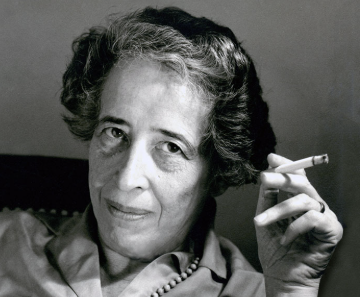
If the ability to tell right from wrong should turn out to have anything to do with the ability to think, then we must be able to "demand" its exercise from every sane person, no matter how erudite or ignorant, intelligent or stupid, he may happen to be. Kant-in this respect almost alone among the philosophers-was much bothered by the common opinion that philosophy is only for the few, precisely because of its moral implications.
▼
Source
source
p. 13

2 months 2 weeks ago
Crime in full glory consolidates authority by the sacred fear it inspires.

3 months 3 weeks ago
We must learn how to imitate Cicero from Cicero himself. Let us imitate him as he imitated others.
▼
Source
source
in The Erasmus Reader (1990), p. 130.

2 months 1 week ago
Ideas, aspirations, and objectives that, by their content, transcend the established universe of discourse and action are either repelled or reduced to terms of this universe.
▼
Source
source
p. 12

1 week 2 days ago
From of old, a thousand thoughts, in his pilgrimings and wanderings, had been in this man: What am I? What is this unfathomable Thing I live in, which men name Universe? What is Life; what is Death? What am I to believe? What am I to do? The grim rocks of Mount Hara, of Mount Sinai, the stern sandy solitudes answered not. The great Heaven rolling silent overhead, with its blue-glancing stars, answered not. There was no answer. The man's own soul, and what of God's inspiration dwelt there, had to answer!
3 months 2 weeks ago
The need of reason is not inspired by the quest for truth but by the quest for meaning. And truth and meaning are not the same. The basic fallacy, taking precedence over all specific metaphysical fallacies, is to interpret meaning on the model of truth.
▼
Source
source
p. 15
3 months 3 weeks ago
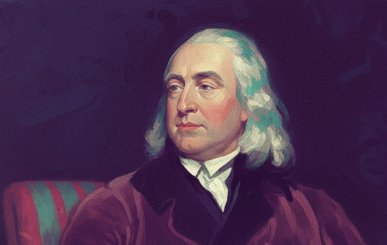
Judges of elegance and taste consider themselves as benefactors to the human race, whilst they are really only the interrupters of their pleasure ... There is no taste which deserves the epithet good, unless it be the taste for such employments which, to the pleasure actually produced by them, conjoin some contingent or future utility: there is no taste which deserves to be characterized as bad, unless it be a taste for some occupation which has mischievous tendency.
▼
Source
source
Théorie des peines et des récompenses (1811); translation by Richard Smith, The Rationale of Reward, J. & H. L. Hunt, London, 1825, Bk. 3, Ch. 1
2 months 2 weeks ago
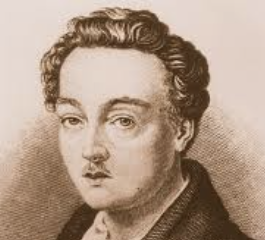
The revolutionary government is the despotism of liberty against tyranny.
▼
Source
source
Act I.

3 months 2 weeks ago
Our moral virtues benefit mainly other people; intellectual virtues, on the other hand, benefit primarily ourselves; therefore the former make us universally popular, the latter unpopular.
1 month 4 days ago
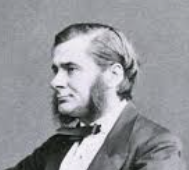
Identical in the physical processes by which he originates-identical in the early stages of his formation-identical in the mode of his nutrition before and after birth, with the animals which lie immediately below him in the scale-Man, if his adult and perfect structure be compared with theirs, exhibits, as might be expected, a marvellous likeness of organization. He resembles them as they resemble one another-he differs from them as they differ from one another.-And, though these differences and resemblances cannot be weighed and measured, their value may be readily estimated; the scale or standard of judgment, touching that value, being afforded and expressed by the system of classification of animals now current among zoologists.
▼
Source
source
Ch.2, p. 83

3 months 2 weeks ago
A house may be large or small; as long as the neighboring houses are likewise small, it satisfies all social requirement for a residence. But let there arise next to the little house a palace, and the little house shrinks to a hut. The little house now makes it clear that its inmate has no social position at all to maintain, or but a very insignificant one; and however high it may shoot up in the course of civilization, if the neighboring palace rises in equal or even in greater measure, the occupant of the relatively little house will always find himself more uncomfortable, more dissatisfied, more cramped within his four walls.
▼
Source
source
Wage Labour and Capital (December 1847), in Marx Engels Selected Works, Volume I, p. 163.
2 months 3 days ago
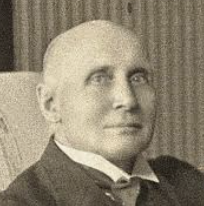
Fertilisation of the soul is the reason for the necessity of art.
▼
Source
source
Ch. 13: "Requisites for Social Progress", p. 283

3 months 2 weeks ago
I have often thought that the best way to define a man's character would be to seek out the particular mental or moral attitude in which, when it came upon him, he felt himself most deeply and intensely active and alive. At such moments there is a voice inside which speaks and says: "This is the real me!"
▼
Source
source
To his wife, Alice Gibbons James, 1878

3 months 2 weeks ago
I greatly doubt whether the men who become pirate chiefs are those who are filled with retrospective terror of their fathers, or whether Napoleon, at Austerlitz, really felt that he was getting even with Madame Mère. I know nothing of the mother of Attila, but I rather suspect that she spoilt the little darling, who subsequently found the world irritating because it sometimes resisted his whims.
▼
Source
source
Ch. 2: Leaders and Followers
2 months 2 weeks ago
Good health is the best weapon against religion. Healthy bodies and healthy minds have never been shaken by religious fears.
3 months 2 weeks ago
Advocates of capitalism are very apt to appeal to the sacred principles of liberty, which are embodied in one maxim: The fortunate must not be restrained in the exercise of tyranny over the unfortunate.
▼
Source
source
Ch. 13: Freedom in Society

3 months 3 weeks ago
There is needed, no doubt, a body of servants (ministerium) of the invisible church, but not officials (officiales), in other words, teachers but not dignitaries, because in the rational religion of every individual there does not yet exist a church as a universal union (omnitudo collectiva).
▼
Source
source
Book IV, Part 1, Section 1, "The Christian religion as a natural religion"

3 months 2 weeks ago
An army of principles will penetrate where an army of soldiers cannot; it will succeed where diplomatic management would fall: it is neither the Rhine, the Channel, nor the ocean that can arrest its progress: it will march on the horizon of the world, and it will conquer.
▼
Source
source
Means by Which the Fund Is to Be Created

3 months 3 weeks ago
Sir Henry Wotton used to say that critics are like brushers of noblemen's clothes.
▼
Source
source
No. 64

8 months 2 weeks ago
No subgroup, race, nationalism, religious group, gender based groups or other identity essence based groups will ever be more important than, and should never ethically take precedence over the existence based universal group, the human group. Universal identity takes precedence over subgroup identity, and when we are forced to subgroup in reaction to injustice, that is the only ethical subgroup.
3 months 6 days ago
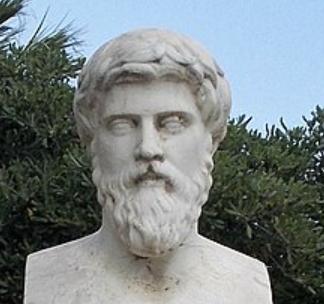
"I will show," said Agesilaus, "that it is not the places that grace men, but men the places."
▼
Source
source
Of Agesilaus the Great
3 months 3 weeks ago
I have in this treatise followed the mathematical method, if not with all strictness, at least imitatively, not in order, by a display of profundity, to procure a better reception for it, but because I believe such a system to be quite capable of it, and that perfection may in time be obtained by a cleverer hand, if stimulated by this sketch, mathematical investigators of nature should find it not unimportant to treat the metaphysical portion, which anyway cannot be got rid of, as a special fundamental department of general physics, and to bring it into unison with the mathematical doctrine of motion.
▼
Source
source
Preface, Tr. Bax, 1883

3 months 2 weeks ago
It is a serious thing to live in a society of possible gods and goddesses, to remember that the dullest most uninteresting person you talk to may one day be a creature which, if you saw it now, you would be strongly tempted to worship, or else a horror and a corruption such as you now meet, if at all, only in a nightmare. All day long we are, in some degree helping each other to one or the other of these destinations. It is in the light of these overwhelming possibilities, it is with the awe and the circumspection proper to them, that we should conduct all of our dealings with one another, all friendships, all loves, all play, all politics. There are no ordinary people. You have never talked to a mere mortal. Nations, cultures, arts, civilizations - these are mortal, and their life is to ours as the life of a gnat. But it is immortals whom we joke with, work with, marry, snub, and exploit - immortal horrors or everlasting splendors.
2 months 2 weeks ago
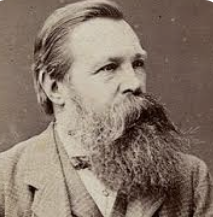
How do you think the transition from the present situation to community of Property is to be effected? The first, fundamental condition for the introduction of community of property is the political liberation of the proletariat through a democratic constitution.
▼
Source
source
Draft of a Communist Confession of Faith

2 months 1 week ago
Is it not altogether absurd that, under actual circumstances, the average man does not feel spontaneously, and without being preached at, an ardent enthusiasm for those sciences and the related ones of biology?... Every day furnishes a new invention which this average man utilises. Every day produces a new anesthetic or vaccine from which this average man benefits. ... How is it, nevertheless, that there is no sign of the masses imposing on themselves any sacrifice of money or attention in order to endow science more worthily? Far from this being the case, the post-war period has converted the man of science into a new social pariah.
▼
Source
source
Chap.IX: The Primitive and the Technical
2 months 2 weeks ago
You rejoice in having made a convert to Atheism. I think there is something unnatural in a zeal of proselytism in an Atheist. I do not believe in an intellectual God, a God made after the image of man. In the vulgar acceptation of the word, therefore, I think a man is right who does not believe in God, but I am also persuaded that a man is wrong who is without religion.
▼
Source
source
Letter to H. B. Rosser (7 March 1820), quoted in C. Kegan Paul, William Godwin: His Friends and Contemporaries, Vol. II (1876), p. 263

3 months 3 weeks ago
When the act of navigation was made, though England and Holland were not actually at war, the most violent animosity subsisted between the two nations. ... It is not impossible, therefore, that some of the regulations of this famous act may have proceeded from national animosity. They are as wise, however, as if they had all been dictated by the most deliberate wisdom. National animosity at that particular time aimed at the very same object which the most deliberate wisdom would have recommended, the diminution of the naval power of Holland, the only naval power which could endanger the security of England.
▼
Source
source
Chapter II
2 months 2 weeks ago
Political Freedom without economic equality is a pretense, a fraud, a lie; and the workers want no lying.
▼
Source
source
The Red Association

2 months 1 week ago
You read the face of the sky and of the earth, but you have not recognized the one who is before you, and you do not know how to read this moment.
2 months 1 week ago
Long after Plato's time the concept of the Ideas still represented the sphere of aloofness, independence, and in a certain sense even freedom, an objectivity that did not submit to 'our' interests.
▼
Source
source
p. 46.
1 month 4 weeks ago
Popular presentation today is all too often that which puts the mob in a position to talk about something without understanding it.
▼
Source
source
G 32

3 months 2 weeks ago
He yawned. He had finished the day and he had also finished with his youth. Various well-bred moralities had already discreetly offered him their services: disillusioned epicureanism, smiling tolerance, resignation, common sense stoicism - all the aids whereby a man may savour, minute by minute, like a connoisseur, the failure of a life.
▼
Source
source
L'âge de raison (The Age of Reason)
4 months 2 weeks ago
To the contemporary, Christ can only say: I will offer myself as a sacrifice for the sins of the world and for yours also. Is this easier to believe now than when he has done it, has offered himself? Or is the comfort greater because of his saying that he will do it than it is because of his having done it? There is no greater love than this, that someone lays down his life for another, but when is it easier to believe, and when is the comfort greater: when the loving one says he will do it, or when he has done it?
1 month 4 days ago
If Man be separated by no greater structural barrier from the brutes than they are from one another-then it seems to follow that if any process of physical causation can be discovered by which the genera and families of ordinary animals have been produced, that process of causation is amply sufficient to account for the origin of Man.
▼
Source
source
Ch.2, p. 125
2 months 2 weeks ago
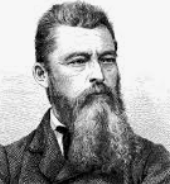
The recognition of the light of reality within the darkness of abstraction is a contradiction - both the affirmation and the negation of the real at one and the same time. The new philosophy, which thinks the concrete not in an abstract but a concrete way, which acknowledges the real in its reality - that is, in a way corresponding to the being of the real as true, which elevates it into the principle and object of philosophy - is consequently the truth of the Hegelian philosophy, indeed of modern philosophy as a whole.
▼
Source
source
Part III, Section 31

2 months 2 weeks ago
You have theories enough concerning the Rights of Men. It may not be amiss to add a small degree of attention to their Nature and disposition.
▼
Source
source
Letter to Charles-Jean-François Depont (November 1789), quoted in Alfred Cobban and Robert A. Smith (eds.), The Correspondence of Edmund Burke, Volume VI: July 1789-December 1791 (1967), p. 46

3 months 3 weeks ago
The greatest thing in the world is to know how to belong to oneself.
▼
Source
source
Ch. 39
CivilSimian.com created by AxiomaticPanic, CivilSimian, Kalokagathia