


3 months 4 weeks ago
Nothing is so much to be feared as fear. Atheism may comparatively be popular with God himself.
▼
Source
source
September 7, 1851
4 months ago
But the chief design of this paper is not to disprove it, which many have sufficiently done; but to entreat Americans to consider.
2 months 3 weeks ago
For Appetite with an opinion of attaining, is called HOPE.

4 months 1 week ago
In living bodies, how all the various limbs harmonize, and mutually combine, for common defence against injury! What can be more heterogeneous, and unlike, than the body and the soul? and yet with what strong bonds nature has united them, is evident from the pang of separation. As life itself is nothing else but the concordant union of body and soul, so is health the harmonious cooperation of all the parts and functions of the body.

3 months 4 weeks ago
Since the working-class lives from hand to mouth,it buys as long as it has the means to buy.
▼
Source
source
Vol. II, Ch. XX, p. 449.

3 months 4 weeks ago
There's a Bible on that shelf there. But I keep it next to Voltaire - poison and antidote.
▼
Source
source
In Kenneth Harris Talking To: Bertrand Russell, 1971
3 months 2 weeks ago
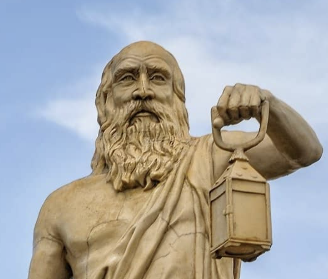
He was seized and dragged off to King Philip, and being asked who he was, replied, "A spy upon your insatiable greed."
▼
Source
source
Diogenes Laërtius, vi. 43. Cf. Plutarch, Moralia, 70CD.

3 months 3 weeks ago
I believe that the advance of science depends upon the free competition of thought, and thus upon freedom, and that it must come to an end if freedom is destroyed (though it may well continue for some time in some fields, especially in technology).
▼
Source
source
Ch. 10 "Corroboration, or How a Theory Stands up to Tests", section 85: The Path of Science, p. 279, note 2.

1 month 5 days ago
Darwinist thinkers such as Richard Dawkins and Daniel Dennett are militant opponents of Christianity. Yet their atheism and humanism are versions of Christian concepts. As a defender of Darwinism, Dawkins is committed to the view that humans are like other animal species in being 'gene machines' ruled by the laws of natural selection. He asserts nevertheless that humans, uniquely, can defy these natural laws: 'We, alone on earth, can rebel against the tyranny of the selfish replicators.' In affirming human uniqueness in this way, Dawkins relies on a Christian world-view.
▼
Source
source
Post-Apocalypse: After Secularism (pp. 265-6)
2 months 3 weeks ago
Should it be proved that woman is naturally weaker than man, from whence does it follow that it is natural for her to labour to become still weaker than nature intended her to be? Arguments of this cast are an insult to common sense, and savour of passion. The divine right of husbands, like the divine right of kings, may, it is to be hoped, in this enlightened age, be contested without danger, and though conviction may not silence many boisterous disputants, yet, when any prevailing prejudice is attacked, the wise will consider, and leave the narrow-minded to rail with thoughtless vehemence at innovation.
▼
Source
source
Ch. 3

4 months 3 weeks ago
At any street corner the feeling of absurdity can strike any man in the face.
2 months 2 weeks ago
Because rhythm is a universal scheme of existence, underlying all realization of order in change, it pervades all the arts, literary, musical, plastic and architectural, as well as the dance. Since man succeeds only as he adapts his behavior to the order of nature, his achievements and victories, as they ensue upon resistance and struggle, become the matrix of all esthetic subject-matter; in some sense they constitute the common pattern of art, the ultimate conditions of form. Their cumulative orders of succession become without express intent the means by which man commemorates and celebrates the most intense and full moments of his experience. Underneath the rhythm of every art and every work of art there lies, as a substratum in the depths of the subconsciousness, the basic pattern of the relations of the live creature to his environment.
▼
Source
source
p. 156

1 month 3 weeks ago
The interiorization of the technology of the phonetic alphabet translates man from the magical world of the ear to the neutral visual world.
▼
Source
source
(p. 21)

2 months 3 weeks ago
Out of the shadow of the abstract man, who thinks for the pleasure of thinking, emerges the organic man, who thinks because of a vital imbalance, and who is beyond science and art.
2 months 3 weeks ago
Nature too remains, so far as we have yet come, ever a frightful Machine of Death: everywhere monstrous revolution, inexplicable vortices of movement; a kingdom of Devouring, of the maddest tyranny; a baleful Immense: the few light-points disclose but a so much the more appalling Night, and terrors of all sorts must palsy every observer.
2 months 2 days ago
God created everything by number, weight and measure.
▼
Source
source
As quoted in Symmetry in Plants (1998) by Roger V. Jean and Denis Barabé, p. xxxvii
3 months 4 weeks ago
There are other letters for the child to learn than those which Cadmus invented.

2 months 1 week ago
Jung believed that he was proceeding scientifically, but most Freudians remain convinced that he was inventing his own underground realm, rather as Tolkien invented Middle Earth. There is at least an element of truth in this view.
▼
Source
source
p. 126
2 months 3 weeks ago
We live in the false as long as we have not suffered. But when we begin to suffer, we enter the truth only to regret the false.
2 months 3 weeks ago
For the Lawes of Nature (as Justice, Equity, Modesty, Mercy, and (in summe)doing to others, as wee would be done to,) of themselves, without the terrour of some Power, to cause them to be observed, are contrary to our naturall Passions, that carry us to Partiality, Pride, Revenge, and the like. And Covenants, without the Sword, are but Words, and of no strength to secure a man at all.
▼
Source
source
The Second Part, Chapter 17, p. 85
1 month 3 weeks ago
Schizophrenia may be a necessary consequence of literacy.
▼
Source
source
(p. 26)

2 months 2 weeks ago
In order to be able to go on living it is possible that the bankrupt peoples will have to enter on a new path of self-denial, by curbing their covetousness and putting a check on the indefinite expansion of their wants, and by having smaller families.
▼
Source
source
p. 94

3 months 3 weeks ago
The hatefulness of a hated person is "real"-in hatred you see men as they are; you are disillusioned; but the loveliness of a loved person is merely a subjective haze concealing a "real" core of sexual appetite or economic association. Wars and poverty are "really" horrible; peace and plenty are mere physical facts about which men happen to have certain sentiments.
▼
Source
source
Letter XXX
2 months 3 weeks ago
History shows that the thinkers who mounted on the top of the ladder of questions, who set their foot on the last rung, that of the absurd, have bequeathed to posterity only an example of sterility.

4 months 2 days ago
This miracle of analysis, this marvel of the world of ideas, an almost amphibian object between Being and Non-being that we call the imaginary number.
▼
Source
source
Quoted in Singularités : individus et relations dans le système de Leibniz (2003) by Christiane Frémont

1 month 4 weeks ago
The appreciation of the merits of art (of the emotions it conveys) depends upon an understanding of the meaning of life, what is seen as good and evil. Good and evil are defined by religions.
2 months 4 weeks ago
By means of the new education we want to mould the Germans into a corporate body, which shall be stimulated and animated in all its individual members by the same interest.
▼
Source
source
Introduction p. 15

3 months 3 weeks ago
But what then is this confrontation below the language of reason? Where might this interrogation lead, following not reason in its horizontal becoming, but seeking to retrace in time this constant verticality, which, the length of Western culture, confronts it with what it is not, measuring it with its own extravagance?
▼
Source
source
Preface to 1961 edition

2 months 4 weeks ago
The power of discretionary disqualification by one law of Parliament, and the necessity of paying every debt of the Civil List by another law of Parliament, if suffered to pass unnoticed, must establish such a fund of rewards and terrors as will make Parliament the best appendage and support of arbitrary power that ever was invented by the wit of man. This is felt. The quarrel is begun between the Representatives and the People. The Court Faction have at length committed them. In such a strait the wisest may well be perplexed, and the boldest staggered. The circumstances are in a great measure new. We have hardly any land-marks from the wisdom of our ancestors, to guide us. At best we can only follow the spirit of their proceeding in other cases.
▼
Source
source
Volume i, p. 516
1 week 2 days ago
Sex is no longer a serious taboo. Teenagers sometimes know more about it than adults.
▼
Source
source
Inside Information p. 4
2 months 4 weeks ago
Jacobinism is the revolt of the enterprising talents of a country against its property.
▼
Source
source
No. 1

3 months 3 weeks ago
The dreamer must contaminate the others by his dream, he must make them fall into it.
▼
Source
source
p. 399

3 weeks 2 days ago
To rule the imperial population, behold our vocation.
▼
Source
source
94
2 months 3 weeks ago
Perfectibility is one of the most unequivocal characteristics of the human species.
▼
Source
source
Vol. 1, bk. 1 : Of the Powers of Man Considered in his Social Capacity, ch. 2
2 months 2 weeks ago
Language is a skin: I rub my language against the other. It is as if I had words instead of fingers, or fingers at the tip of my words. My language trembles with desire.
▼
Source
source
Talking, in A Lover's Discourse

3 months 4 weeks ago
What point of morals, of manners, of economy, of philosophy, of religion, of taste, of the conduct of life, has he not settled? What mystery has he not signified his knowledge of? What office, or function, or district of man's work, has he not remembered? What king has he not taught state, as Talma taught Napoleon? What maiden has not found him finer than her delicacy? What lover has he not outloved? What sage has he not outseen? What gentleman has he not instructed in the rudeness of his behavior?
▼
Source
source
Shakespeare; or, The Poet
1 week 2 days ago
Camus said there is only really one serious philosophical question, which is whether or not to commit suicide. I think there are four or five serious philosophical questions: The first one is: Who started it? The second is: Are we going to make it? The third is: Where are we going to put it? The fourth is: Who's going to clean up? And the fifth: Is it serious?
▼
Source
source
Out Of Your Mind (2004), Audio lecture 1: The Nature of Consciousness: A Game That's Worth The Candle

4 months 1 week ago
Life is one long struggle in the dark.
▼
Source
source
Book II, line 54 (tr. Rouse)
3 months 4 weeks ago
A poem is one undivided unimpeded expression fallen ripe into literature, and it is undividedly and unimpededly received by those for whom it was matured.


3 months 3 days ago
For the first time in sixty years, the priests, the old aristocracy and the people met in a common sentiment-a feeling of revenge, it is true, and not of affection; but even that is a great thing in politics, where a community of hatred is almost always the foundation of friendships.
4 months ago
The law of faith, being a covenant of free grace, God alone can appoint what shall be necessarily believed by everyone whom He will justify. What is the faith which He will accept and account for righteousness, depends wholly on his good pleasure. For it is of grace, and not of right, that this faith is accepted. And therefore He alone can set the measures of it: and what he has so appointed and declared is alone necessary. No-body can add to these fundamental articles of faith; nor make any other necessary, but what God himself hath made, and declared to be so. And what these are which God requires of those who will enter into, and receive the benefits of the new covenant, has already been shown. An explicit belief of these is absolutely required of all those to whom the gospel of Jesus Christ is preached, and salvation through his name proposed.
▼
Source
source
§ 156
1 month 2 weeks ago
Mr. Darwin's hypothesis is not, so far as I am aware, inconsistent with any known biological fact; on the contrary, if admitted, the facts of Development, of Comparative Anatomy, of Geographical Distribution, and of Palaeontology, become connected together, and exhibit a meaning such as they never possessed before; and I, for one, am fully convinced that if not precisely true, that hypothesis is as near an approximation to the truth as, for example, the Copernican hypothesis was to the true theory of the planetary motions.
▼
Source
source
Ch.2, p. 127
1 month 3 weeks ago
Fiction is to the grown man what play is to the child; it is there that he changes the atmosphere and tenor of his life.
▼
Source
source
A Gossip on Romance, printed in Longman's Magazine (November 1882).
2 months 1 week ago
Poetry and imagination begin life. A child will fall on its knees on the gravel walk at the sight of a pink hawthorn in full flower, when it is by itself, to praise God for it.

2 months 1 week ago
Today's fashion magazines may carry an article about the dangers of anorexia while bombarding its readers with images of emaciated young bodies representing the height of beauty and desirability.
▼
Source
source
As quoted in Feminism is for Everybody: Passionate Politics (2014), p.34
3 weeks 4 days ago
Looking back we can see how indirectly we know the environment in which nevertheless we live. We can see that the news of it comes to us now fast, now slowly; but that whatever we believe to be a true picture, we treat as if it were the environment itself.
▼
Source
source
Ch. I: "The World Outside and the Pictures in Our Heads", p. 4
1 month 5 days ago
In ancient Europe, Stoics asserted that a slave could be freer than a master who suffers from self-division. In China, Daoists imagined a type of sage who responded to the flow of events without weighing alternatives. Disciples of monotheistic faiths have believed something similar: freedom, they say, is obeying God's will. What those who follow these traditions want most is not any kind of freedom of choice. Instead, what they long for is freedom from choice.
▼
Source
source
The Faith of Puppets: The Freedom of the Marionette (p. 6-7)
CivilSimian.com created by AxiomaticPanic, CivilSimian, Kalokagathia