

2 months 5 days ago
If this is philosophy it is at any rate a philosophy that is not in its right mind.
▼
Source
source
L 23
2 months 2 weeks ago
Injustice in this world is not something comparative; the wrong is deep, clear, and absolute in each private fate.
▼
Source
source
Ch. IV: The Aristocratic Ideal
3 months 3 weeks ago
Truth that is naked is the most beautiful, and the simpler its expression the deeper is the impression it makes; this is partly because it gets unobstructed hold of the hearer's mind without his being distracted by secondary thoughts, and partly because he feels that here he is not being corrupted or deceived by the arts of rhetoric, but that the whole effect is got from the thing itself.

3 months 3 weeks ago
Every man is a new method.
▼
Source
source
"The Natural History of Intellect", p. 28
2 months 3 weeks ago
I am using the word "perceive". I am using it here in such a way that to say of an object that it is perceived does not entail saying that it exists in any sense at all. And this is a perfectly correct and familiar usage of the word. If there is thought to be a difficulty here, it is perhaps because there is also a correct and familiar usage of the word "perceive", in which to say of an object that it is perceived does carry the implication that it exists.
▼
Source
source
The Foundations of Empirical Knowledge (1940).

3 months 3 weeks ago
When people begin to philosophize they seem to think it necessary to make themselves artificially stupid.
▼
Source
source
Theory of Knowledge, 1913

4 months 4 weeks ago
That which does not kill us makes us stronger.
3 months 3 weeks ago
Great men are they who see that spiritual is stronger than any material force, that thoughts rule the world. No hope so bright but is the beginning of its own fulfillment.
▼
Source
source
July 18, 1867, Progress of Culture Phi Beta Kappa Address
2 months 3 weeks ago
A good man with a good conscience doesn't walk so fast.
▼
Source
source
Scene X.



1 month 5 days ago
Taking the abolitionist project to the rest of the galaxy and beyond sounds crazy today; but it's the application of technology to a very homely moral precept writ large, not the outgrowth of a revolutionary new ethical theory. So long as sentient beings suffer extraordinary unpleasantness - whether on Earth or perhaps elsewhere - there is a presumptive case to eradicate such suffering wherever it is found.
▼
Source
source
4. Objections, No 32
1 week ago
Do you suppose that God takes himself seriously? I know a Zen master, Joshu Sasaki, who has let it be known that the best form of meditation is to stand up with your hands on your hips and roar with laughter for ten minutes every morning. I have heard of a sophisticated shaman-type fellow who used to cure ringworm on cows just by pointing at the scars and laughing. Truly religious people always make jokes about their religion; their faith is so strong that they can afford it. Much of the secret of life consists in knowing how to laugh, and also how to breathe.
▼
Source
source
p. 6

3 months 3 weeks ago
How vain it is to sit down to write when you have not stood up to live.
▼
Source
source
August 19, 1851

1 week 4 days ago
No easy way leads from the earth to heaven..
▼
Source
source
line 437; (Megara).

3 months 3 weeks ago
They [Christians] believe that the living, dynamic activity of love has been going on in God forever and has created everything else. And that, by the way, is perhaps the most important difference between Christianity and all other religions: that in Christianity God is not an impersonal thing nor a static thing-not even just one person-but a dynamic pulsating activity, a life, a kind of drama, almost, if you will not think me irreverent, a kind of dance ... (The) pattern of this three-personal life is ... the great fountain of energy and beauty spurting up at the very center of reality.
▼
Source
source
Book IV, Chapter 4, "Good Infection"
3 months 3 weeks ago
The people who are regarded as moral luminaries are those who forego ordinary pleasures themselves and find compensation in interfering with the pleasures of others.
▼
Source
source
Ch. 8: Eastern and Western Ideals of Happiness
3 months 3 weeks ago
The end of the human race will be that it will eventually die of civilization.
▼
Source
source
Civilization

4 months 4 days ago
And I must speak plainly. If I were a judge, I would have such a poisonous, syphilitic whore tortured by being broken on the wheel and having her veins lacerated, for it is not to be denied what damage such a filthy whore does to young blood, so that it is unspeakably damaged before it is even fully grown and destroyed in the blood.
▼
Source
source
pp. 552-554 (1566); cited in Susan C. Karant-Nunn & Merry E. Wiesner-Hanks [editors and translators], Luther on Women: a Sourcebook, Cambridge University Press, 2003, pp. 157-158)

2 months 1 week ago
In a book called Symbolism, Its Meaning and Effect, Whitehead points out that perception is usually a matter of symbols, just like language; I say I see a book when I actually see a red oblong. The Transactionists (who have been influenced by Whitehead rather than Husserl) take this one stage further, and point out that when I 'perceive' something, I am actually making a bet with myself that what I perceive is what I think it is. In order to act and live at all, I have to make these bets; I cannot afford to make absolutely certain that things are what I think they are. But this means that we should not take our perceptions at face value, any more than Nietzsche was willing to take philosophy at its face value; we must allow for prejudice and distortion.
▼
Source
source
p. 66

3 months 2 weeks ago
The man who is fortunate in his choice of son-in-law gains a son; the man unfortunate in his choice loses his daughter also.
▼
Source
source
Freeman (1948), p. 169
2 months 2 weeks ago
Gottlob Frege created modern logic including "for all," "there exists," and rules of proof. Leibniz and Boole had dealt only with what we now call "propositional logic" (that is, no "for all" or "there exists"). They also did not concern themselves with rules of proof, since their aim was to reach truth by pure calculation with symbols for the propositions. Frege took the opposite track: instead of trying to reduce logic to calculation, he tried to reduce mathematics to logic, including the concept of number.
▼
Source
source
Michael J. Beeson, "The Mechanization of Mathematics," in Alan Turing: Life and Legacy of a Great Thinker2004
1 week ago
It must be obvious... that there is a contradiction in wanting to be perfectly secure in a universe whose very nature is momentariness and fluidity.
3 months 3 weeks ago
The pursuit of philosophy is founded on the belief that knowledge is good, even if what is known is painful. A man imbued with the philosophic spirit, whether a professional philosopher or not, will wish his beliefs to be as true as he can make them, and will, in equal measure, love to know and hate to be in error. This principle has a wider scope than may be apparent at first sight.

3 months 2 weeks ago
The judges of normality are present everywhere. We are in the society of the teacher-judge, the doctor-judge, the educator-judge, the social worker-judge; it is on them that the universal reign of the normative is based; and each individual, wherever he may find himself, subjects to it his body, his gestures, his behavior, his aptitudes, his achievements.

3 months 3 weeks ago
In its flight from death, the craving for permanence clings to the very things sure to be lost in death.
▼
Source
source
p. 17

4 months ago
Every faculty in one man is the measure by which he judges of the like faculty in another. I judge of your sight by my sight, of your ear by my ear, of your reason by my reason, of your resentment by my resentment, of your love by my love. I neither have, nor can have, any other way of judging about them.
▼
Source
source
Section I, Chap. III.

2 months 1 week ago
It is impossible to feel equal respect for things that are in fact unequal unless the respect is given to something that is identical in all of them. Men are unequal in all their relations with the things of this world, without exception. The only thing that is identical in all men is the presence of a link with the reality outside the world. All human beings are absolutely identical in so far as they can be thought of as consisting of a centre, which is an unquenchable desire for good, surrounded by an accretion of psychical and bodily matter.

2 weeks 3 days ago
The eye of the intellect "sees in all objects what it brought with it the means of seeing."
▼
Source
source
Varnhagen von Ense's Memoirs.
1 month 3 weeks ago
Mutation may be random, but selection definitely is not.
▼
Source
source
Chapter 3, "The Message from the Mountain" (p. 82)
3 months 3 weeks ago
Change alone is eternal, perpetual, immortal.
▼
Source
source
Unverified attribution noted in Respectfully Quoted: A Dictionary of Quotations (1993), ed. Suzy Platt, Library of Congress, p. 39;

3 months ago
I have come across men of letters who have written history without taking part in public affairs, and politicians who have concerned themselves with producing events without thinking about them. I have observed that the first are always inclined to find general causes whereas the second, living in the midst of disconnected daily facts, are prone to imagine that everything is attributable to particular incidents, and that the wires they pull are the same as those that move the world. It is to be presumed that both are equally deceived.
▼
Source
source
Recollections of Alexis de Tocqueville, p. 80


4 months 3 weeks ago
It is impossible that evils should be done away with, for there must always be something opposed to the good; and they must inevitably hover about mortal nature and this earth. Therefore we ought to try to escape from earth to the dwelling of the gods as quickly as we can; and to escape is to become like God, so far as this is possible, God is in no wise and in no manner unrighteous, but utterly and perfectly righteous, and there is nothing so like him as that one of us who in turn becomes most nearly perfect in righteousness.

4 months 3 weeks ago
You know what charm is: a way of getting the answer 'yes' without having asked any clear question.

2 months 1 week ago
It is a conceded fact that woman is being reared as a sex commodity, and yet she is kept in absolute ignorance of the meaning and importance of sex.
3 months 3 weeks ago
Now, to-day, this moment, is our chance to choose the right side. God is holding back to give us that chance. It will not last for ever. We must take it or leave it.
▼
Source
source
Book II, Chapter 5, "The Practical Conclusion"
4 months 3 weeks ago
I was assailed by memories of a life that wasn't mine anymore, but one in which I'd found the simplest and most lasting joys.
4 months 1 week ago
Those of our pleasures which come most rarely give the greatest delight.
▼
Source
source
Fragment 33 (Oldfather translation)
1 month 1 week ago
Let us endeavour for a moment to disconnect our thinking selves from the mask of humanity; let us imagine ourselves scientific Saturnians, if you will, fairly acquainted with such animals as now inhabit the Earth, and employed in discussing the relations they bear to a new and singular 'erect and featherless biped,' which some enterprising traveller, overcoming the difficulties of space and gravitation, has brought from that distant planet for our inspection, well preserved, may be, in a cask of rum.
▼
Source
source
Ch.2, p. 85
2 months 1 week ago
It suffices to remember how many sorrows he is spared who no longer thinks too many thoughts, how much more "in accordance with reality" a person behaves when he affirms that the real is the right, how much more capacity to use the machinery falls to the person who integrates himself with it uncomplainingly.
▼
Source
source
p. 286
2 months 1 week ago
The jingoes and war speculators are filling the air with the sentimental slogan of hypocritical nationalism, "America for Americans," "America first, last, and all the time."

3 months 4 weeks ago
Men use thought only to justify their wrongdoings, and speech only to conceal their thoughts.
▼
Source
source
Dialogue 14, Le Chapon et la Poularde (1766); reported in Bartlett's Familiar Quotations, 10th ed., 1919
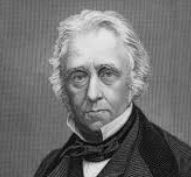
1 month 2 weeks ago
I hold agitation to be essential, not only to the obtaining of good and just measures, but to the existence of a free Government itself. If you choose to adopt the principle of Bishop Horsley, that the people have nothing to do with the laws but to obey them, then, indeed, you may deprecate agitation; but, while we live in a free country, and under a free Government, your deprecation is vain and untenable... I say that the slave-trade would never have been abolished without agitation. I say that slavery would never have been abolished without agitation... What is agitation when it is examined, but the mode in which the people in the great outer assembly debate?
▼
Source
source
Speech in the House of Commons, 29 January 1840
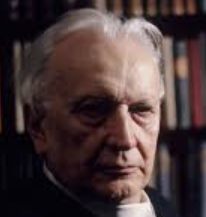
2 months 2 weeks ago
The teacher of love teaches struggle. The teacher of lifeless isolation from the world teaches peace.
3 months 3 weeks ago
Science does not know its debt to imagination.
▼
Source
source
Poetry and Imagination

2 months 3 weeks ago
Since the only things we remember are humiliations and defeats, what is the use of all the rest?
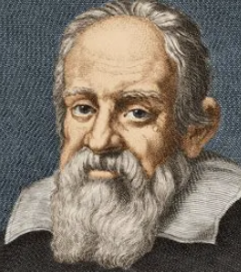
2 weeks 6 days ago
I esteem myself happy to have as great an ally as you in my search for truth. I will read your work ... all the more willingly because I have for many years been a partisan of the Copernican view because it reveals to me the causes of many natural phenomena that are entirely incomprehensible in the light of the generally accepted hypothesis. To refute the latter I have collected many proofs, but I do not publish them, because I am deterred by the fate of our teacher Copernicus who, although he had won immortal fame with a few, was ridiculed and condemned by countless people (for very great is the number of the stupid).
▼
Source
source
Letter to Johannes Kepler (1596), as quoted in The Story of Civilization : The Age of Reason Begins, 1558-1648 (1935) by Will Durant, p. 603
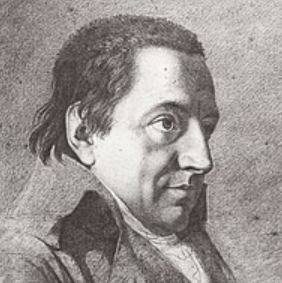
2 months 3 weeks ago
The representation of the self-sufficiency of the I can certainly co-exist with a representation of the self-sufficiency of the thing, though the self-sufficiency of the I itself cannot co-exist with that of the thing. Only one of these two can come first, only one can be the starting point; only one can be independent. The one that comes second, just because it comes second, necessarily becomes dependent upon the one that comes first, with which it is supposed to be connected. Which of these two should come first?
▼
Source
source
p. 17-18.
3 months 2 weeks ago
It is understandable then that tragic heroes, unlike the baroque characters who had preceded them, could never be mad, and that inversely madness could never take on the tragic value we have known since Nietzsche and Artaud. In the classical epoch, tragic characters and the mad face each other without any possible dialogue or common language, for the one can only pronounce the decisive language of being, where the truth of light and the depths of night meet in a flash, and the other repeats endlessly an indifferent murmur where the empty chatter of the day is cancelled out by the deceptive lies of the shadows.
▼
Source
source
Part Two: 2. The Transcendence of Delirium
CivilSimian.com created by AxiomaticPanic, CivilSimian, Kalokagathia