

3 months 2 weeks ago
All our scientific and philosophic ideals are altars to unknown gods.
▼
Source
source
Lecture at the Harvard Divinity School (13 March 1884); published in the The Unitarian Review and Religious Magazine as The Dilemma of Determinism
1 month 2 days ago
Each such answer to the great question, invariably asserted by the followers of its propounder, if not by himself, to be complete and final, remains in high authority and esteem, it may be for one century, or it may be for twenty: but, as invariably, Time proves each reply to have been a mere approximation to the truth-tolerable chiefly on account of the ignorance of those by whom it was accepted, and wholly intolerable when tested by the larger knowledge of their successors.
▼
Source
source
Ch.2, p. 72

3 months 2 weeks ago
Beings who are so uniquely constituted must necessarily express themselves in other ways than ordinary men. It is impossible that with souls so differently modified, they should not carry over into the expression of their feelings and ideas the stamp of those modifications.
▼
Source
source
First Dialogue; translated by Judith R. Bush, Christopher Kelly, Roger D. Masters

2 months 1 week ago
A minimum of unconsciousness is necessary if one wants to stay inside history. To act is one thing; to know one is acting is another. When lucidity invests the action, insinuates itself into it, action is undone, and with it, prejudice, whose function consists, precisely, in subordinating, in enslaving consciousness to action. The man who unmasks his fictions renounces his own resources and, in a sense, himself. Consequently, he will accept other fictions which will deny him, since they will not have cropped up from his own depths. No man concerned with his equilibrium may exceed a certain degree of lucidity and analysis.
4 months 6 days ago
Dogs, also, bark at what they do not know.
3 months 1 week ago
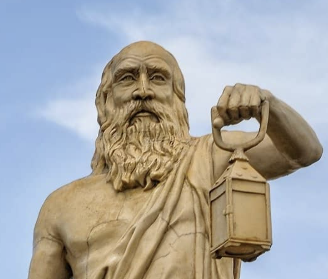
Asked where he came from, he said, "I am a citizen of the world."
▼
Source
source
Diogenes Laërtius, vi. 63

1 day ago
Just as we suffer from excess in all things, so we suffer from excess in literature; thus we learn our lessons, not for life, but for the lecture room.
▼
Source
source
Line 12 Alternate translation: Not for life, but for school do we learn. (translator unknown) Alternate translation: We are taught for the schoolroom, not for life. (translator unknown).

1 week 1 day ago
Men, I say, never did believe idle songs, never risked their soul's life on allegories: men in all times, especially in early earnest times, have had an instinct for detecting quacks, for detesting quacks.
3 months 1 week ago
Philosophers get attention only when they appear to be doing something sinister-corrupting the youth, undermining the foundations of civilization, sneering at all we hold dear. The rest of the time everybody assumes that they are hard at work somewhere down in the sub-basement, keeping those foundations in good repair. Nobody much cares what brand of intellectual duct tape is being used.
▼
Source
source
"Philosophical Convictions." The Nation, June 14, 2004.

3 months 2 weeks ago
The slaving Poor are incapable of any Principles: Gentlemen may be converted to true Principles, by Time and Experience. The middling Rank of Men have Curiosity and Knowledge enough to form Principles, but not enough to form true ones, or correct any Prejudices that they may have imbib'd: And 'tis among the middling Rank, that Tory Principles do at present prevail most in England.
▼
Source
source
Part I, Essay 9: Of The Parties of Great Britain; final lines of this essay in the 1741 and 1742 editions of Essays, Moral and Political, they were not included in later editions.
4 months 2 weeks ago
Job endured everything - until his friends came to comfort him, then he grew impatient.
3 months 3 weeks ago
Faith is a living, bold trust in God's grace, so certain of God's favor that it would risk death a thousand times trusting in it. Such confidence and knowledge of God's grace makes you happy, joyful and bold in your relationship to God and all creatures. The Holy Spirit makes this happen through faith. Because of it, you freely, willingly and joyfully do good to everyone, serve everyone, suffer all kinds of things, love and praise the God who has shown you such grace.
▼
Source
source
An Introduction to St. Paul's Letter to the Romans fromDr. Martin Luthers Vermischte Deutsche Schriften. Johann K. Irmischer, ed. Vol. 63(Erlangen: Heyder and Zimmer, 1854), pp. 124-125. (EA 63:124-125)
1 month 2 weeks ago
Gender is a kind of imitation for which there is no original; in fact, it is a kind of imitation that produces the very notion of the original as an effect and consequence of the imitation itself.
▼
Source
source
"Imitation and Gender Insubordination" in Inside/Out (1991) edited by Diana Fuss
2 months 1 week ago
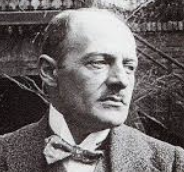
If the awareness of our limitations begins to limit or to dim our value consciousness as well-as happens, for instance, in old age with regard to the values of youth-then we have already started the movement of devaluation which will end with the defamation of the world and all its values. Only a timely act of resignation can deliver us from this tendency toward self-delusion.
▼
Source
source
L. Coser, trans. (1973), p. 59
3 months 4 days ago
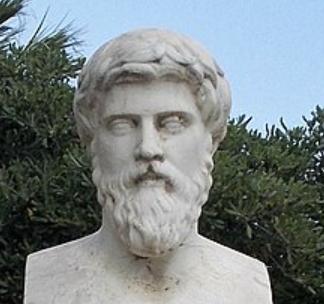
To Harmodius, descended from the ancient Harmodius, when he reviled Iphicrates [a shoemaker's son] for his mean birth, "My nobility," said he, "begins in me, but yours ends in you."
▼
Source
source
54 Iphicrates

1 month 2 weeks ago
Environment is process, not container.
▼
Source
source
(p. 30)
2 months 1 week ago
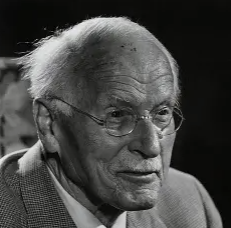
As far as we can discern, the sole purpose of human existence is to kindle a light in the darkness of mere being.
▼
Source
source
p. 326
2 months 1 week ago
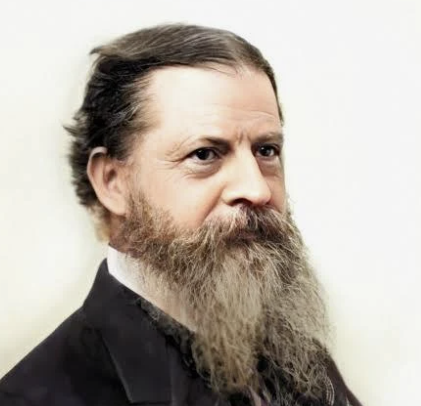
I call a sign which stands for something merely because it resembles it, an icon. Icons are so completely substituted for their objects as hardly to be distinguished from them. Such are the diagrams of geometry. A diagram, indeed, so far as it has a general signification, is not a pure icon; but in the middle part of our reasonings we forget that abstractness in great measure, and the diagram is for us the very thing. So in contemplating a painting, there is a moment when we lose the consciousness that it is not the thing, the distinction of the real and the copy disappears, and it is for the moment a pure dream, - not any particular existence, and yet not general. At that moment we are contemplating an icon.

3 months 2 weeks ago
If a man is offered a fact which goes against his instincts, he will scrutinize it closely, and unless the evidence is overwhelming, he will refuse to believe it. If, on the other hand, he is offered something which affords a reason for acting in accordance with his instincts, he will accept it even on the slenderest evidence. The origin of myths is explained in this way.
▼
Source
source
Ch. VI: International relations, p. 97
1 month 2 days ago
So far from the posterior lobe, the posterior cornu, and the hippocampus minor, being structures peculiar to and characteristic of man, as they have been over and over again asserted to be, even after the publication of the clearest demonstration of the reverse, it is precisely these structures which are the most marked cerebral characters common to man with the apes. They are among the most distinctly Simian peculiarities which the human organism exhibits.
▼
Source
source
Ch.2, p. 119
3 months 3 weeks ago
It may be observed, that provinces amid the vicissitudes to which they are subject, pass from order into confusion, and afterward recur to a state of order again; for the nature of mundane affairs not allowing them to continue in an even course, when they have arrived at their greatest perfection, they soon begin to decline. In the same manner, having been reduced by disorder, and sunk to their utmost state of depression, unable to descend lower, they, of necessity, reascend; and thus from good they gradually decline to evil, and from evil again return to good. The reason is, that valor produces peace; peace, repose; repose, disorder; disorder, ruin; so from disorder order springs; from order virtue, and from this, glory and good fortune.
▼
Source
source
Book V, Chapter 1
3 months 2 weeks ago
With regard to politics and the character of princes and great men, I think I am very moderate. My views of things are more conformable to Whig principles; my representation of persons to Tory prejudices. Nothing can so much prove that men commonly regard more persons than things, as to find that I am commonly numbered among the Tories.
▼
Source
source
E. C. Mossner, Life of David Hume (Clarendon Press, 2001), p. 311.
1 month 1 week ago
I don't believe you until you tell me, do you really believe, for example, if they say they are Catholic, "Do you really believe that when a priest blesses a wafer, it turns into the body of Christ? Are you seriously telling me you believe that? Are you seriously saying that wine turns into blood?" Mock them. Ridicule them. In public. Don't fall for the convention that we're all too polite to talk about religion. Religion is not off the table. Religion is not off limits. Religion makes specific claims about the universe which need to be substantiated and need to be challenged and, if necessary, need to be ridiculed with contempt.
▼
Source
source
Reason Rally, National Mall, Washington, DC, 2012-03-24 Richard Dawkins and his Foundation at the Reason Rally, YouTube, 7 April 2012
2 months 1 week ago
To claim you are more detached, more alien to everything than anyone, and to be merely a fanatic of indifference!
2 months 1 week ago
In most cases, to be reasonable means not to be obstinate, which in turn points to conformity with reality as it is. The principle of adjustment is taken for granted. When the idea of reason was conceived, it was intended to achieve more than the mere regulation of the relation between means and ends: it was regarded as the instrument for understanding the ends, for determining them.
▼
Source
source
p. 10.

2 months 3 weeks ago
I know of no country, indeed, where the love of money has taken stronger hold on the affections of men, and where the profounder contempt is expressed for the theory of the permanent equality of property.
▼
Source
source
Chapter III, Part I.

8 months 1 week ago
Survive in such a way that you avoid limiting others who are also trying to survive. We all live in limited systems. This is the core of ethics.
3 months 3 weeks ago
The Apostle Paul wants us to work with our hands in order to share with the needy (Ephesians 5:28). Notice that he could have said that we should work to support ourselves. But Paul says that we work to give to those in need. This is why caring for our body is also a Christian work. If the body is healthy and fit, we are able to work and save money that can be used to help those in need.
▼
Source
source
p. 80
3 months 1 week ago
Pay attention to your enemies, for they are the first to discover your mistakes.
▼
Source
source
§ 12
2 months 2 days ago
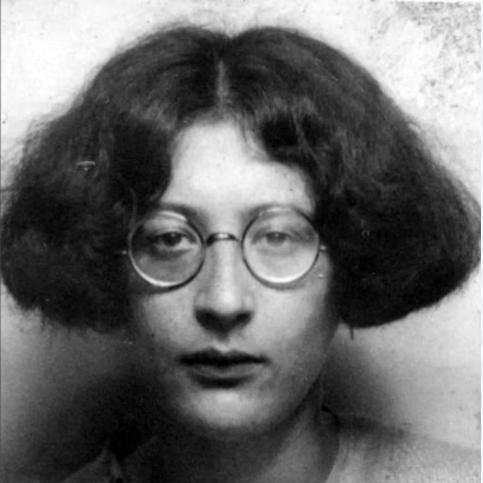
At the bottom of the heart of every human being, from earliest infancy until the tomb, there is something that goes on indomitably expecting, in the teeth of all experience of crimes committed, suffered, and witnessed, that good and not evil will be done to him. It is this above all that is sacred in every human being.The good is the only source of the sacred. There is nothing sacred except the good and what pertains to it.
▼
Source
source
p. 51

3 months 2 weeks ago
It was in the reign of Charles II that they obtained the noble distinction of being exempted from giving their testimony on oath in a court of justice, and being believed on their bare affirmation. On this occasion the chancellor, who was a man of wit, spoke to them as follows: "Friends, Jupiter one day ordered that all the beasts of burden should repair to be shod. The asses represented that their laws would not allow them to submit to that operation. 'Very well,' said Jupiter; 'then you shall not be shod; but the first false step you make, you may depend upon being severely drubbed.'"

4 months 2 weeks ago
Q. You do not consider your statement a disloyal one? A. No, sir. Scientific truth is beyond loyalty and disloyalty. Q. You are sure that your statement represents scientific truth? A. I am.
1 month 1 week ago
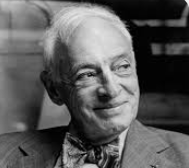
A good American makes propaganda for whatever existence has forced him to become.
▼
Source
source
"Cousins," from Him With His Foot in His Mouth and Other Stories (1984), p. 263

2 months 1 week ago
This is the pure form of servitude: to exist as an instrument.
▼
Source
source
p. 33
2 months 1 week ago
The tangible source of exploitation disappears behind the façade of objective rationality.
▼
Source
source
p. 32
3 months 4 days ago
"I will show," said Agesilaus, "that it is not the places that grace men, but men the places."
▼
Source
source
Of Agesilaus the Great

3 months 2 weeks ago
The best way to drive out the devil, if he will not yield to texts of Scripture, is to jeer and flout him, for he cannot bear scorn.
▼
Source
source
Martin Luther, quoted at the beginning of The Screwtape Letters
2 months 2 days ago
The soul was not made to dwell in a thing; and when forced to it, there is no part of that soul but suffers violence.
▼
Source
source
in The Simone Weil Reader, p. 155

2 months 3 weeks ago
I could never divide myself from any man upon the difference of an opinion, or be angry with his judgement for not agreeing with me in that, from which perhaps within a few days I should dissent myself.
▼
Source
source
Section 6
3 months 3 weeks ago
Out of special hatred for our faith, the devil has sent some whores here to destroy our poor young men . . . such a syphilitic whore can poison ten, twenty, thirty or more of the children of good people, and thus is to be considered a murderer, or worse, as a poisoner.
4 months 1 week ago
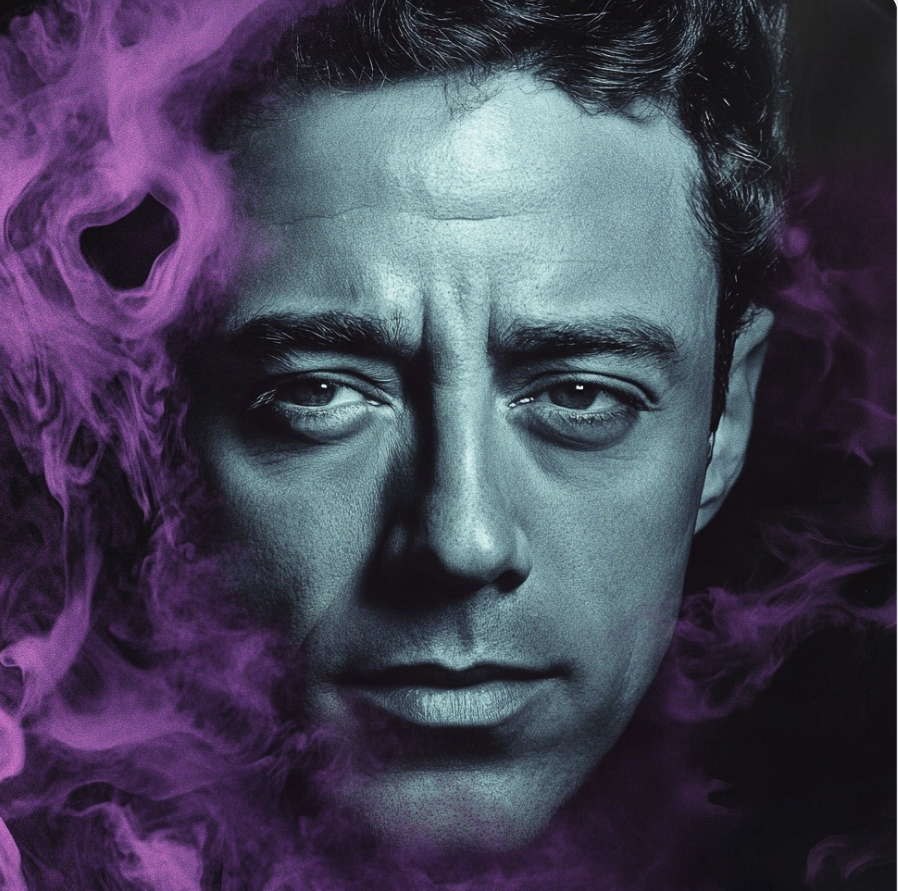
The aim of art, the aim of a life can only be to increase the sum of freedom and responsibility to be found in every man and in the world. It cannot, under any circumstances, be to reduce or suppress that freedom, even temporarily.

2 months 2 weeks ago
I cannot conceive how any man can have brought himself to that pitch of presumption, to consider his country as nothing but carte blanche, upon which he may scribble whatever he pleases.
▼
Source
source
Volume iii, p. 231
1 month 4 weeks ago
It is true that parents today are learning to enhance the physical qualities of their children. But their minds and characters they cannot mould. The antiquated system of education and our perverse social influences unfortunately do that. In view of the numerous misfit and marred children these institutions have created, I am quite content not to have contributed any of my own.

2 months 1 week ago
If thou wilt be perfect, go and sell that thou hast, and give to the poor, and thou shalt have treasure in heaven: and come and follow me.
▼
Source
source
19:21 (KJV)
2 months 3 weeks ago
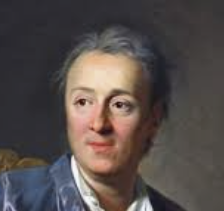
There are three principal means of acquiring knowledge available to us: observation of nature, reflection, and experimentation. Observation collects facts; reflection combines them; experimentation verifies the result of that combination. Our observation of nature must be diligent, our reflection profound, and our experiments exact. We rarely see these three means combined; and for this reason, creative geniuses are not common.
▼
Source
source
No. 15
3 months 4 weeks ago
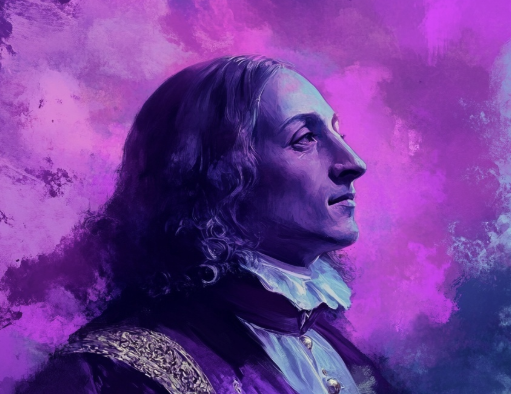
There are hardly any truths upon which we always remain agreed, and still fewer objects of pleasure which we do not change every hour, I do not know whether there is a means of giving fixed rules for adapting discourse to the inconstancy of our caprices.
1 day ago
The old Romans had a custom which survived even into my lifetime. They would add to the opening words of a letter: "If you are well, it is well; I also am well." Persons like ourselves would do well to say. "If you are studying philosophy, it is well." For this is just what "being well" means. Without philosophy the mind is sickly.
2 months 1 week ago
Felicity is a continual progress of the desire from one object to another, the attaining of the former being still but the way to the latter.The cause whereof is that the object of man's desire is not to enjoy once only, and for one instant of time, but to assure forever the way of his future desire. And therefore the voluntary actions and inclinations of all men tend not only to the procuring, but also to the assuring of a contented life, and differ only in the way, which ariseth partly from the diversity of passions in diverse men, and partly from the difference of the knowledge or opinion each one has of the causes which produce the effect desired.
▼
Source
source
The First Part, Chapter 11, p. 47
CivilSimian.com created by AxiomaticPanic, CivilSimian, Kalokagathia