


2 months 3 weeks ago
I considerd a general War against Jacobins and Jacobinism, as the only possible chance of saving Europe, (and England as included in Europe) from a truly frightful revolution. ... It is my Protest against the delusion, by which some have been taught to look upon this Jacobin contest at home as an ordinary party squabble about place or Patronage; and to regard this Jacobin War abroad as a common War about Trade, or Territorial Boundaries, or about a political Balance of power among Rival or jealous States.
▼
Source
source
Letter to the Duke of Portland (29 September 1793), quoted in P. J. Marshall and John A. Woods (eds.)

4 months 2 weeks ago
Nothing is in the intellect that was not first in the senses.
▼
Source
source
q. 2, art. 3, arg. 19 This is known as the Peripatetic axiom.
1 week 5 days ago
Because our time is struggling toward the word with which it may express its spirit, many names come to the fore and all make claim to being the right one. Without our assistance, time will not bring the right word to light; we must all work together on it. If, however, so much depends on us, we may reasonably ask what they have made of us and what they propose to make of us; we ask about the education through which they seek to make us creators of that word. Do they conscientiously cultivate our predisposition to become creators or do they treat us only as creatures whose nature simply permits training? Therefore we are concerned above all with what they make of us in the time of our plasticity; the school question is a life question.
▼
Source
source
p. 11
2 months 2 weeks ago
Those, no doubt, are in some way fortunate who have brought themselves, or have been brought by others, to obey some ultimate principle before the bar of which all problems can be brought. Single-minded monists, ruthless fanatics, men possessed by an all-embracing coherent vision do not know the doubts and agonies of those who cannot wholly blind themselves to reality.
1 month 4 weeks ago
The assertion fallacy ... is the fallacy of confusing the conditions for the performance of the speech act of assertion with the analysis of the meaning of particular words occurring in certain assertions.
▼
Source
source
P. 141.
2 weeks 6 days ago
He has begun by supposing that light has a constant velocity... the same in all directions. This... could never be verified directly by experiment... The postulate... resembling the principle of sufficient reason... furnishes us with a new rule for the investigation of simultaneity.

2 months 1 week ago
The evolutionary urge drives man to seek for intenser forms of fulfillment, since his basic urge is for more life, more consciousness, and this contentment has an air of stagnation that the healthy mind rejects. (This recognition lies at the centre of my own 'outsider theory': that there are human beings to whom comfort means nothing, but whose happiness consists in following an obscure inner-drive, an 'appetite for reality'.)
▼
Source
source
p. 32
2 months 4 days ago
A few years ago I had occasion to visit Peru, and I got to know a fine philosopher and a truly wonderful human being-Francisco Miro Casada. Miro Casada has been an idealist all his life, while being, at the same time, a man of great experience (a former member of several governments and a former Ambassador to France). I found him a man who represents the social democratic vision in its purest form. Talking to him, and to my other friends in Peru (who represented quite a spectrum of political opinion), I heard something that was summed up in a remark he, Miro Casada, made to me, "Whenever you have a Republican president, we get a wave of military dictatorships in Latin America".
▼
Source
source
How Not to Solve Ethical Problems

2 months 1 week ago
We must leave on one side the beliefs which fill up voids and sweeten what is bitter. The belief in immortality. The belief in the utility of sin: etiam peccata. The belief in the providential ordering of events - in short the "consolations" which are ordinarily sought in religion.
▼
Source
source
p. 258

8 months 2 weeks ago
Survive in such a way that you avoid limiting others who are also trying to survive. We all live in limited systems. This is the core of ethics.
2 months 3 weeks ago
We are at war with a system, which, by it's essence, is inimical to all other Governments, and which makes peace or war, as peace and war may best contribute to their subversion. It is with an armed doctrine that we are at war. It has, by it's essence, a faction of opinion, and of interest, and of enthusiasm, in every country. To us it is a Colossus which bestrides our channel. It has one foot on a foreign shore, the other upon the British soil. Thus advantaged, if it can at all exist, it must finally prevail.
▼
Source
source
p. 19

3 months 3 weeks ago
The language of excitement is at best but picturesque merely. You must be calm before you can utter oracles.
▼
Source
source
Pearls of Thought (1881) p. 80
3 months 3 weeks ago
Deconstruction never had meaning or interest, at least in my eyes, than as a radicalization, that is to say, also within the tradition of a certain Marxism, in a certain spirit of Marxism.
▼
Source
source
Specters of Marx. Routledge, 1994. p. 115
2 months 2 weeks ago
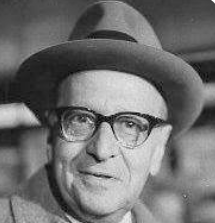
The more the concept of reason becomes emasculated, the more easily it lends itself to ideological manipulation and to propagation of even the most blatant lies. ... Subjective reason conforms to anything.
▼
Source
source
pp. 24-25.
3 months 3 weeks ago
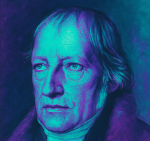
Aims, principles, &c., have a place in our thoughts, in our subjective design only; but not yet in the sphere of reality. That which exists for itself only, is a possibility, a potentiality; but has not yet emerged into Existence. A second element must be introduced in order to produce actuality - viz. actuation, realization; and whose motive power is the Will - the activity of man in the widest sense.
2 months 2 weeks ago
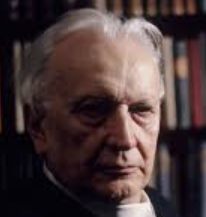
At the parting of ways in the life-order, where the question is between the new creation or decay, that man will be decisive for new creation who is able on his own initiative to seize the helm and steer a course of his own choosing - even if that course be opposed to the will of the masses. Should the emergence of such persons become impossible a lamentable shipwreck will be inevitable.
1 month 1 week ago
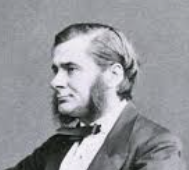
The method of scientific investigation is nothing but the expression of the necessary mode of working of the human mind.
▼
Source
source
Our Knowledge of the Causes of the Phenomena of Organic Nature
4 months 3 weeks ago
Wit is cultured insolence.

1 month 3 weeks ago
Reason has discovered the struggle for existence and the law that I must throttle all those who hinder the satisfaction of my desires. That is the deduction reason makes. But the law of loving others could not be discovered by reason, because it is unreasonable.
▼
Source
source
Pt. VIII, ch. 13
2 weeks 6 days ago
I would say here something that was heard from an ecclesiastic of the most eminent degree [probably Caesar Baronius]: "The intention of the Holy Ghost is to teach us how one goes to heaven, not how heaven goes.
▼
Source
source
Variant translation: I would say here something that was heard from an ecclesiastic of the most eminent degree: "That the intention of the Holy Spirit is to teach us how one goes to heaven, not how the heavens go."
3 months 2 weeks ago
When Eudæmonidas heard a philosopher arguing that only a wise man can be a good general, "This is a wonderful speech," said he; "but he that saith it never heard the sound of trumpets."
▼
Source
source
62 Eudæmonidas

1 month 2 weeks ago
Any ethics that needs religion is bad ethics, and any religion that tries to do so is bad religion. Of course, there are plenty of both around.

3 months 3 weeks ago
The union of the mathematician with the poet, fervor with measure, passion with correctness, this surely is the ideal.
▼
Source
source
Ch. 11 - Clifford's Lectures and Essays, 1879
1 month 3 weeks ago
When an individual passes from one period of life to another a time comes when he cannot go on in senseless activity and excitement as before, but has to understand that although he has out-grown what before used to direct him, this does not mean that he must live without any reasonable guidance, but rather that he must formulate for himself an understanding of life corresponding to his age, and having elucidated it must be guided by it. And in the same way a similar time must come in the growth and development of humanity.
▼
Source
source
VI
3 months 1 day ago
The philosopher has never killed any priests, whereas the priest has killed a great many philosophers.
3 months 2 weeks ago
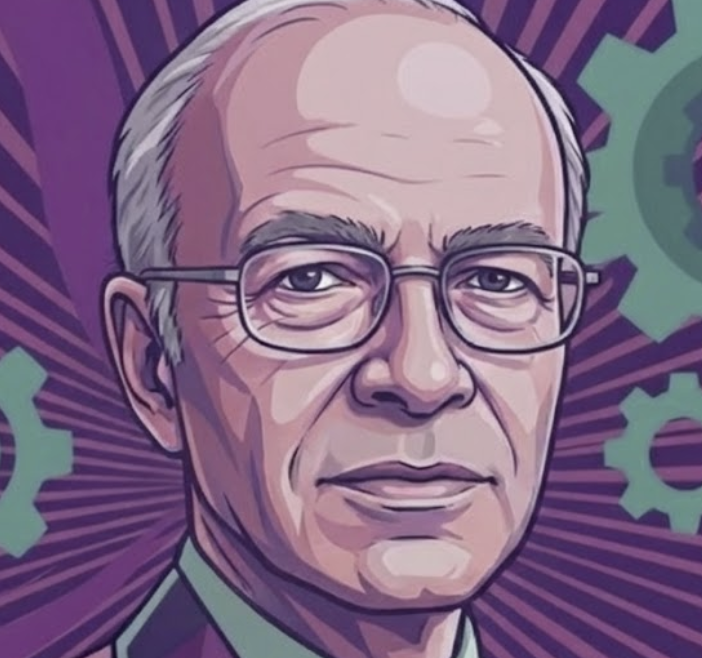
When my ability to reason shows me that the suffering of another being is very similar to my own suffering and matters just as much to that other being as my own suffering matters to me, then my reason is showing me something that is undeniably true. ... The perspective on ourselves that we get when we take the point of view of the universe also yields as much objectivity as we need if we are to find a cause that is worthwhile in a way that is independent of our own desires. The most obvious such cause is the reduction of pain and suffering, wherever it is to be found.
▼
Source
source
p. 238

1 month 3 days ago
Human knowledge increases, while human irrationality stays the same. Scientific inquiry may be an embodiment of reason, but what such inquiry demonstrates is that humans are not rational animals. The fact that humanists refuse to accept the demonstration only confirms its truth.
▼
Source
source
An Old Chaos: Humanism and Flying Saucers (p. 81)
3 months 1 day ago
There's a bit of testicle at the bottom of our most sublime feelings and our purest tenderness.
▼
Source
source
Letter to Étienne Noël Damilaville

4 months 3 weeks ago
To succeed, planning alone is insufficient. One must improvise as well.

4 months 5 days ago
Cosmus, Duke of Florence, was wont to say of perfidious friends, that "We read that we ought to forgive our enemies; but we do not read that we ought to forgive our friends."
▼
Source
source
No. 206
4 months 5 days ago
Above all, every relation must be considered as suspicious, which depends in any degree upon religion, as the prodigies of Livy: And no less so, everything that is to be found in the writers of natural magic or alchemy, or such authors, who seem, all of them, to have an unconquerable appetite for falsehood and fable.
▼
Source
source
Aphorism 29

3 months 3 weeks ago
I will not be modest. Humble, as much as you like, but not modest. Modesty is the virtue of the lukewarm.
▼
Source
source
Act 4, sc. 5
3 months 4 weeks ago
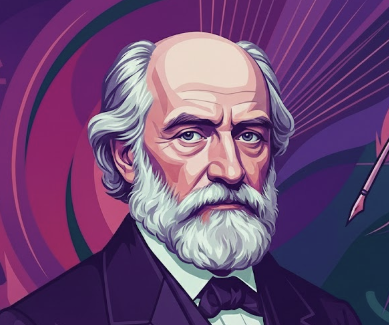
For what is modesty but hypocritical humility, by means of which, in a world swelling with vile envy, a man seeks to beg pardon for his excellences and merits from those who have none? For whoever attributes no merit to himself because he really has none is not modest, but merely honest.
▼
Source
source
Vol. I, Ch. III, The World As Representation: Second Aspect

3 months 3 weeks ago
The individual produces an object and, by consuming it, returns to himself, but returns as a productive and self reproducing individual. Consumption thus appears as a moment of production.
▼
Source
source
Introduction, p. 14.


3 months 3 weeks ago
There are some simple maxims [...] which I think might be commanded to writers of expository prose. First: never use a long word if a short word will do. Second: if you want to make a statement with a great many qualifications, put some of the qualifications in separate sentences. Third: do not let the beginning of your sentence lead the reader to an expectation which is contradicted by the end.
▼
Source
source
"How I Write", The Writer, September 1954
3 months 2 weeks ago
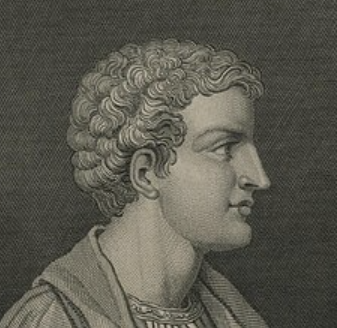
What odds does it make to the man who lives within Nature's bounds, whether he ploughs a hundred acres or a thousand?
▼
Source
source
Book I, satire i, line 48

4 months ago
I pass, at length, to the third and perfectly absolute dominion, which we call democracy.
▼
Source
source
Ch. 11, Of Democracy
1 week ago
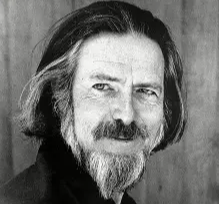
When you tell a girl how beautiful she is, she will say, "Now isn't that just like a man! All you men think about is bodies. OK, so I'm beautiful, but I got my body from my parents and it was just luck. I prefer to be admired for myself, not my chassis." Poor little chauffeur! All she is saying is that she has lost touch with her own astonishing wisdom and ingenuity, and wants to be admired for some trivial tricks that she can perform with her conscious attention. And we are all in the same situation, having dissociated ourselves from our bodies and from the whole network of forces in which bodies can come to birth and live.
▼
Source
source
p. 112
3 weeks 2 days ago
There can be no higher law in journalism than to tell the truth and shame the devil.
▼
Source
source
Journalism and the Higher Law, p. 13

3 months 3 days ago
The universal Intellect is the intimate, most real, peculiar and powerful part of the soul of the world. This is the single whole which filleth the whole, illumineth the universe and directeth nature to the production of natural things, as our intellect with the congruous production of natural kinds.
1 month 5 days ago
Money is everywhere but so is poetry. What we lack are the poets.
▼
Source
source
Poets
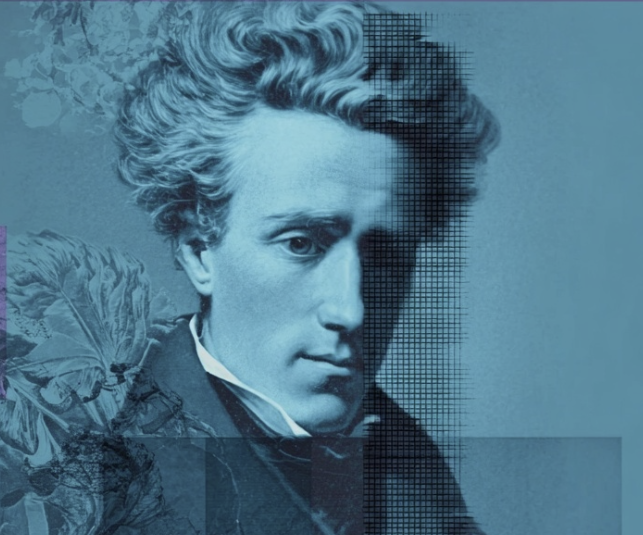
4 months 3 weeks ago
The similarity between Christ and Socrates consists essentially in their dissimilarity. Just as philosophy begins with doubt, so also a life that may be called human begins with irony.
2 weeks 5 days ago
One must be something in order to do something.
▼
Source
source
Conversations with Eckermann

1 month 3 weeks ago
The attitude that living things are placed here for our benefit still dominates our culture, even where its underpinnings have disappeared. We now need, for purposes of scientific understanding, to find a less human-centered view of the natural world.
▼
Source
source
Chapter 8, "Pollen Grains and Magic Bullets" (p. 258)
4 months 3 weeks ago
According to one mode... nature is thus denominated, viz. the first subject matter to every thing which contains in itself the principle of motion and mutation. But after another mode it is denominated form, which subsists according to definition: for as art is called that which subsists according to art, and that which is artificial; so likewise nature is both called that which is according to nature, and that which is natural. ...that which is composed from these is not nature, but consists from nature; as, for instance, man. And this is nature in a greater degree than matter: for every thing is then said to be, when it is form in energy... entelecheia, rather than when it is incapacity.
2 weeks 2 days ago
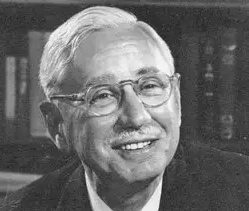
It is a mistake to think that the past is dead. Nothing that has ever happened is quite without influence at this moment. The present is merely the past rolled up and concentrated in this second of time. You, too, are your past; often your face is your autobiography; you are what you are because of what you have been; because of your heredity stretching back into forgotten generations; because of every element of environment that has affected you, every man or woman that has met you, every book that you have read, every experience that you have had; all these are accumulated in your memory, your body, your character, your soul. So with a city, a country, and a race; it is its past, and cannot be understood without it.
▼
Source
source
As quoted in "The Gentle Philosopher" (2006) by John Little at the Will Durant Foundation

3 months 3 weeks ago
Without some redistribution of wealth and power, downward mobility and debilitating poverty will continue to drive people into desperate channels. And without principled opposition to xenophobias from above and below, these desperate channels will produce a cold-hearted and mean-spirited America no longer worth fighting for or living in.
▼
Source
source
(p79)
CivilSimian.com created by AxiomaticPanic, CivilSimian, Kalokagathia