


1 week 2 days ago
Before I became old I tried to live well; now that I am old, I shall try to die well; but dying well means dying gladly.
▼
Source
source
Line 2.

3 months 3 weeks ago
If you would convince a man that he does wrong, do right. But do not care to convince him. Men will believe what they see.
▼
Source
source
Let them see. Pearls of Thought (1881) p. 222
4 months 2 weeks ago
Fine words and an insinuating appearance are seldom associated with true virtue.
▼
Source
source
Variant: Someone who is a clever speaker and maintains a 'too-smiley' face is seldom considered a humane person.
3 months 2 weeks ago
Some of Singer's critics call him a Nazi and compare his proposals to Hitler's schemes for eliminating the unwanted, the unfit and the disabled. But...Singer is no Hitler. He doesn't want state-sponsored killings. Rather, he wants the decision to kill to be made by you and me. Instead of government-conducted genocide, Singer favors free-market homicide.
▼
Source
source
Dinesh D'Souza, "Atheism and Child Murder," in Townhall (12 May 2008).

2 months 1 week ago
Maurras, with perfect logic, is an atheist. The Cardinal [Richelieu], in postulating something whose whole reality is confined to this world as an absolute value, committed the sin of idolatry. ... The real sin of idolatry is always committed on behalf of something similar to the State.
▼
Source
source
p. 199
5 days ago
In an autobiography one must surely be allowed to boast, just for fun. I have, at a range of twenty feet, shot the tobacco out of a cigarette and left the paper intact. At a range of thirty feet, I have split a target, edge towards me, with an air pistol. I am also the world's champion in a game called "You Are the Target," in which anyone better than I would be dead. The game is to shoot an arrow straight up and see how near to you it can be allowed to land. You have to watch its fall very carefully, but I have had it hit the ground exactly between my feet. Of course, there were no witnesses. Had there been, they would forcefully have discouraged the experiment. I was using a fifty-five pound bow.
▼
Source
source
p. 18

4 months 3 weeks ago
In every rebellion is to be found the metaphysical demand for unity, the impossibility of capturing it, and the construction of a substitute universe.
3 months 1 week ago
Themistocles being asked whether he would rather be Achilles or Homer, said, "Which would you rather be,-a conqueror in the Olympic games, or the crier that proclaims who are conquerors?"
▼
Source
source
48 Themistocles
2 months 4 days ago
He who says he hates every kind of flattery, and says it in earnest, certainly does not yet know every kind of flattery.
▼
Source
source
K 41

3 months 1 day ago
That neither our Thoughts, nor Passions, nor Ideas formed by the Imagination, exist without the Mind, is what every Body will allow. And it seems no less evident that the various Sensations or Ideas imprinted on the Sense... cannot exist otherwise than in a Mind perceiving them... For as to what is said of the absolute Existence of unthinking Things without any relation to their being perceived, that seems perfectly unintelligible. Their Esse is Percipi, nor is it possible they should have any Existence, out of the Minds or thinking Things which perceive them.
2 months 3 weeks ago
The same energy of character which renders a man a daring villain would have rendered him useful to society, had that society been well organized.
▼
Source
source
Letter 19
3 months 2 weeks ago
As it has long been and shall be, not ever, I think, will unfathomable time be emptied of either. This quote refers to Love and Strife, the fundamental opposing and ordering forces in Empedocles' model of the cosmos.
▼
Source
source
fr. 16
4 months 1 week ago
Anger is a weed; hate is the tree.
▼
Source
source
58 Alternate versions: Anger is a stem, hate is a trunk. Anger is the mote, hate is the beam.

2 months 1 week ago
To fall into a habit is to begin to cease to be.
2 months 4 weeks ago
Men are not allowed to think freely about chemistry and biology: why should they be allowed to think freely about political philosophy?
▼
Source
source
As quoted in A Dictionary of Scientific Quotations (1991) by Alan Lindsay Mackay
2 months 3 weeks ago
The evil of marriage, as is it practiced in the European countries, extends further than we have yet described. The method is for a thoughtless and romantic youth of each sex, to come together, to see each other, for a few times, and under circumstances full of delusion and then to vow eternal attachment. What is the consequence of this? In almost every instance they find themselves deceived. They are reduced to make the best of an irretrievable mistake. They are led to conceive it their wiser policy, to shut their eyes upon realities, happy, if by any perversion of intellect, they can persuade themselves that they were right in their first crude opinion of each other. Thus the institution of marriage is made a system of fraud; and men who carefully mislead their judgement in the daily affair of their life, must be expected to have a crippled judgement in every other concern.

2 weeks 5 days ago
It is hard to see how the discarding of liberal values is going to lead to anything in the long term other than increasing social conflict and ultimately a return to violence as a means of resolving differences.

3 months 3 weeks ago
When the intensity of emotional conviction subsides, a man who is in the habit of reasoning will search for logical grounds in favour of the belief which he finds in himself.
▼
Source
source
Ch. 1: Mysticism and Logic

4 months 1 week ago
Custom renders love attractive; for that which is struck by oft-repeated blows however lightly, yet after long course of time is overpowered and gives way. See you not too that drops of water falling on rocks after long course of time scoop a hole through these rocks?
▼
Source
source
Book IV, lines 1283-1287 (tr. Munro)
3 months 3 weeks ago
Judges of elegance and taste consider themselves as benefactors to the human race, whilst they are really only the interrupters of their pleasure ... There is no taste which deserves the epithet good, unless it be the taste for such employments which, to the pleasure actually produced by them, conjoin some contingent or future utility: there is no taste which deserves to be characterized as bad, unless it be a taste for some occupation which has mischievous tendency.
▼
Source
source
Théorie des peines et des récompenses (1811); translation by Richard Smith, The Rationale of Reward, J. & H. L. Hunt, London, 1825, Bk. 3, Ch. 1

2 months 2 weeks ago
This world was created from God's fear of solitude. In other words, us, the creatures, have no other meaning but to distract the Creator. Poor clowns of the absolute, we forget that we live dramas for the boredom of a spectator, whose claps have never reached the ears of a mortal.
2 months 2 weeks ago
What I know wreaks havoc upon what I want.

3 months 3 weeks ago
Communism differs from all previous movements in that it overturns the basis of all earlier relations of production and intercourse, and for the first time consciously treats all natural premises as the creatures of hitherto existing men, strips them of their natural character and subjugates them to the power of the united individuals. Its organisation is, therefore, essentially economic, the material production of the conditions of this unity; it turns existing conditions into conditions of unity. The reality, which communism is creating, is precisely the true basis for rendering it impossible that anything should exist independently of individuals, insofar as reality is only a product of the preceding intercourse of individuals themselves.
▼
Source
source
Vol. I, Part 4.
2 months 4 days ago
What I do not like about our definitions of genius is that there is in them nothing of the day of judgment, nothing of resounding through eternity and nothing of the footsteps of the Almighty.
▼
Source
source
E 92
2 months 4 weeks ago
There are three principal means of acquiring knowledge available to us: observation of nature, reflection, and experimentation. Observation collects facts; reflection combines them; experimentation verifies the result of that combination. Our observation of nature must be diligent, our reflection profound, and our experiments exact. We rarely see these three means combined; and for this reason, creative geniuses are not common.
▼
Source
source
No. 15
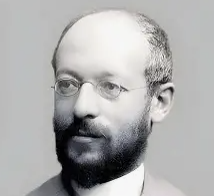
4 days ago
If wandering is the liberation from every given point in space, and thus the conceptional opposite to fixation at such a point, the sociological form of the "stranger" presents the unity, as it were, of these two characteristics.
▼
Source
source
p. 402; Opening line.
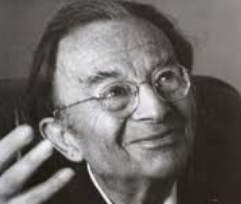
2 months 6 days ago
The two most far-reaching critical theories at the beginning of the latest phase of industrial society were those of Marx and Freud. Marx showed the moving powers and the conflicts in the social-historical process. Freud aimed at the critical uncovering of the inner conflicts. Both worked for the liberation of man, even though Marx's concept was more comprehensive and less time-bound than Freud's.
▼
Source
source
The Art of Being" Pt. 3
3 months 3 weeks ago
Very similar were the views expressed by Raymundus of Sabunde or Sabeyde, a Spaniard of the fifteenth century, and professor at Toulouse about the year 1437. In his theologia natural is, which he handled in a speculative spirit, he dealt with the Nature of things, and with the revelation of God in Nature and in the history of the God-man. He sought to prove to unbelievers the Being, the trinity, the incarnation, the life, and the revelation of God in Nature, and in the history of the God-man, basing his arguments on Reason. From the contemplation of Nature he rises to God; and in the same way he reaches morality from; observation of man's inner nature. This purer and simpler style must be set off against the other, if we are to do justice to the Scholastic theologians in their turn.
▼
Source
source
Georg Wilhelm Friedrich Hegel, Lectures on the Philosophy of History Vol 3 1837 translated by ES Haldane and Francis H. Simson) first translated 1896 P. 91-92
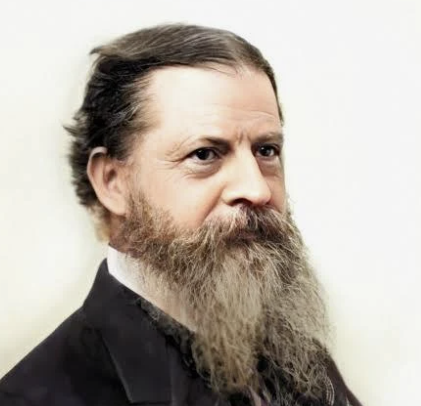
2 months 2 weeks ago
To suppose universal laws of nature capable of being apprehended by the mind and yet having no reason for their special forms, but standing inexplicable and irrational, is hardly a justifiable position. Uniformities are precisely the sort of facts that need to be accounted for. That a pitched coin should sometimes turn up heads and sometimes tails calls for no particular explanation; but if it shows heads every time, we wish to know how this result has been brought about. Law is par excellence the thing that wants a reason.

4 months 2 days ago
It (marriage) happens as with cages: the birds without despair to get in, and those within despair of getting out.
▼
Source
source
Ch. 5

4 months 1 week ago
Those who deny the first principle should be flogged or burned until they admit that it is not the same thing to be burned and not burned, or whipped and not whipped.

3 months 3 weeks ago
No doubt, when modesty was made a virtue, it was a very advantageous thing for the fools, for everybody is expected to speak of himself as if he were one.
▼
Source
source
Vol. 1, Ch. 3, Section 2: Pride
1 week 2 days ago
But he has no fear; unconquered he looks down from a lofty height upon his sufferings.
4 months 1 week ago
When you close your doors, and make darkness within, remember never to say that you are alone, for you are not alone; nay, God is within, and your genius is within. And what need have they of light to see what you are doing?
▼
Source
source
Book I, ch. 14, 13, 14.

4 months 3 weeks ago
What is asked of a man that he may be able to pray for his enemies? To pray for one's enemies is the hardest thing of all. That is why it exasperates us so much in our present day situation.
4 months 1 week ago
But the inner part is the better part; for to it, as both ruler and judge, all these messengers of the senses report the answers of heaven and earth and all the things therein, who said, "We are not God, but he made us." My inner man knew these things through the ministry of the outer man, and I, the inner man, knew all this, I, the soul, through the senses of my body. I asked the whole frame of earth about my God, and it answered, "I am not he, but he made me."
▼
Source
source
X, 6

4 months 3 weeks ago
How then to enforce peace? Not by reason, certainly, nor by education. If a man could not look at the fact of peace and the fact of war and choose the former in preference to the latter, what additional argument could persuade him? What could be more eloquent as a condemnation of war than war itself? What tremendous feat of dialectic could carry with it a tenth the power of a single gutted ship with its ghastly cargo?
1 month 3 weeks ago
Speech is a mirror of the soul; as a man speaks, so is he.
▼
Source
source
Maxim 1073
4 months 3 weeks ago
At my age one's got to be sincere. Lying's too much effort.
3 months 3 weeks ago
In the sphere of thought, absurdity and perversity remain the masters of the world, and their dominion is suspended only for brief periods.
▼
Source
source
"The Art of Controversy" as translated by T. Bailey Saunders
5 days ago
There is no formula for generating the authentic warmth of love. It cannot be copied. You cannot talk yourself into it or rouse it by straining at the emotions or by dedicating yourself solemnly to the service of mankind. Everyone has love, but it can only come out when he is convinced of the impossibility and the frustration of trying to love himself. This conviction will not come through condemnations, through hating oneself, through calling self love bad names in the universe. It comes only in the awareness that one has no self to love.
2 weeks 3 days ago
And now the sagacious reader, who is capable of reading into these lines what does not stand written in them, but is nevertheless implied, will be able to form some conception of the serious feelings with which I then set foot in Emmendingen.
▼
Source
source
Autobiography: Truth and Poetry Book xviii. London 1884 p. 115 books.google.de

2 months 3 weeks ago
With a higher moral nature will come a restriction on the multiplication of the inferior.
▼
Source
source
The Principles of Biology, Vol. II (1867), Part VI: Laws of Multiplication, ch. 8: Human Population in the Future

2 months 1 week ago
There certainly is self division. The man who watches a woman undressing has the red eyes of an ape; yet the man who sees two young lovers, really alone for the first time, who brings out all the pathos, the tenderness and uncertainty when he tells about it, is no brute; he is very much human. And the ape and the man exist in one body; and when the ape's desires are about to be fulfilled, he disappears and is succeeded by the man, who is disgusted with the ape's appetite.
▼
Source
source
Chapter one, The Country of the Blind
4 months 1 week ago
Hence, as Narcissus, by catching at the shadow, plunged himself in the stream and disappeared, so he who is captivated by beautiful bodies, and does not depart from their embrace, is precipitated, not with his body, but with his soul, into a darkness profound and repugnant to intellect (the higher soul), through which, remaining blind both here and in Hades, he associates with shadows.

3 months 2 weeks ago
At the point at which the concept of différance, and the chain attached to it, intervenes, all the conceptual oppositions of metaphysics (signifier/signified; sensible/intelligible; writing/speech; passivity/activity; etc.)- to the extent that they ultimately refer to the presence of something present (for example, in the form of the identity of the subject who is present for all his operations, present beneath every accident or event, self-present in its "living speech," in its enunciations, in the present objects and acts of its language, etc.)- become non pertinent. They all amount, at one moment or another, to a subordination of the movement of différance in favor of the presence of a value or a meaning supposedly antecedent to différance, more original than it, exceeding and governing it in the last analysis. This is still the presence of what we called above the "transcendental signified.
▼
Source
source
p. 29
2 months 2 weeks ago
What I know at sixty, I knew as well at twenty. Forty years of a long, a superfluous, labor of verification.
2 months 2 weeks ago
To live life well is to express life poorly; if one expresses life too well, one is living it no longer.
▼
Source
source
A Retrospective Glance at the Lifework of a Master of Books
4 months 1 week ago
If we do not secure the foundation, we cannot secure the edifice.

3 months 3 weeks ago
As a general rule-never substitute the symbol for the thing signified, unless it is impossible to show the thing itself; for the child's attention is so taken up with the symbol that he will forget what it signifies.
CivilSimian.com created by AxiomaticPanic, CivilSimian, Kalokagathia