

2 weeks 5 days ago
... our descendants may recognize that we are the sociopathic emotional primitives in the grip of an affective psychosis. Jealousy, envy, resentment, ridicule, hate, anger, disgust, spite, contempt, schadenfreude and a whole gamut of nameless but mean-spirited states we undergo each day are a toxic legacy of our Darwinian past. More commonly, perhaps, our genetic make-up ensures we simply feel indifference to the plight of all but a handful of significant others in our lives. Right now, for instance, one knows dimly at some level that there is frightful and preventable suffering in the world. Yet most of us feel no overpowering moral urgency to do anything about it.
▼
Source
source
"Utopian Pharmacology: Mental Health in the Third Millennium MDMA and Beyond", BLTC Research, last updated 2020

1 month 3 weeks ago
Imagination, which is the social sense, animates the inanimate and anthropomorphizes everything; it humanizes everything and even makes everything identical with man. And the work of man is to supernaturalize Nature - that is to say, to make it divine by making it human, to help it to become conscious of itself, in short. The action of reason, on the other hand, is to mechanize or materialize.

4 months 1 week ago
This heart within me I can feel, and I judge that it exists. This world I can touch, and I likewise judge that it exists. There ends all my knowledge, and the rest is construction. For if I try to seize this self of which I feel sure, if I try to define and to summarize it, it is nothing but water slipping through my fingers. I can sketch one by one all the aspects it is able to assume, all those likewise that have been attributed to it, this upbringing, this origin, this ardor or these silences, this nobility or this vileness. But aspects cannot be added up. This very heart which is mine will forever remain indefinable to me. Between the certainty I have of my existence and the content I try to give to that assurance, the gap will never be filled. Forever I shall be a stranger to myself.

1 day ago
The pious soul,-which, if you reflect, will mean the ingenuous and ingenious, the gifted, intelligent and nobly-aspiring soul,-such a soul, in whatever rank of life it were born, had one path inviting it; a generous career, whereon, by human worth and valor, all earthly heights and Heaven itself were attainable. In the lowest stratum of social thraldom, nowhere was the noble soul doomed quite to choke, and die ignobly.

3 months 2 weeks ago
When I endeavour to examine my own conduct, when I endeavour to pass sentence upon it, and either to approve or condemn it, it is evident that, in all such cases, I divide myself, as it were, into two persons; and that I, the examiner and judge, represent a different character from that other I, the person whose conduct is examined into and judged of.
▼
Source
source
Chap. I.

1 month 1 week ago
Literate man, civilized man, tends to restrict and to separate functions, whereas tribal man has freely extended the form of his body to include the universe.
▼
Source
source
(p. 117)
3 months 1 week ago
Intense, long, certain, speedy, fruitful, pure-Such marks in pleasures and in pains endure.Such pleasures seek if private be thy end:If it be public, wide let them extend.Such pains avoid, whichever be thy view:If pains must come, let them extend to few.
▼
Source
source
Ch. 4: Value of a Lot of Pleasure or Pain, How to be Measured
2 months 4 weeks ago
Valour, however unfortunate, commands great respect even from enemies: but the Romans despise cowardice, even though it be prosperous.
▼
Source
source
Aemilius Paulus 26 (Tr. Stewart and Long)

1 month 1 week ago
To attain this end we must secure a preponderance of virtue over vice and must endeavor to secure that the honest man may, even in this world, receive a lasting reward for his virtue. But in these great endeavors we are gravely hampered by the political institutions of today. What is to be done in these circumstances? To favor revolutions, overthrow everything, repel force by force?... No! We are very far from that. Every violent reform deserves censure, for it quite fails to remedy evil while men remain what they are, and also because wisdom needs no violence.
▼
Source
source
Book V, Ch. 7
3 months 5 days ago
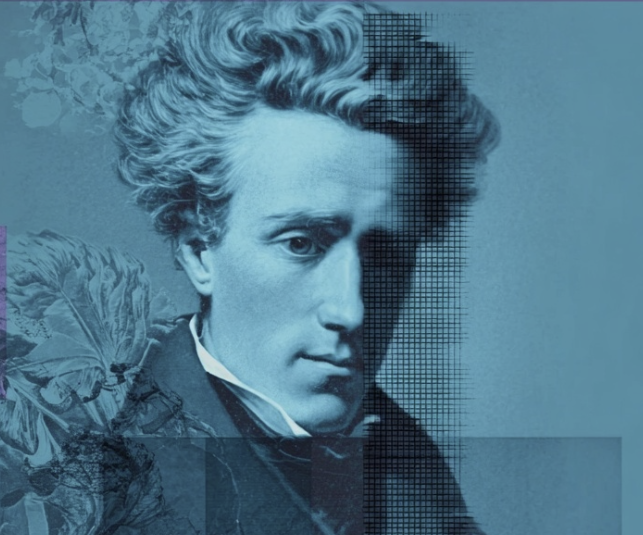
But a punishment like forced labour or even imprisonment - mere loss of liberty - has never functioned without a certain additional element of punishment that certainly concerns the body itself: rationing of food, sexual deprivation, corporal punishment, solitary confinement ... There remains, therefore, a trace of 'torture' in the modern mechanisms of criminal justice - a trace that has not been entirely overcome, but which is enveloped, increasingly, by the non-corporal nature of the penal system
4 months 1 week ago
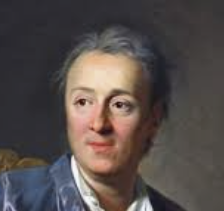
Where is the boundary for the single individual in his concrete existence between what is lack of will and what is lack of ability; what is indolence and earthly selfishness and what is the limitation of finitude? For an existing person, when is the period of preparation over, when this question will not arise again in all its initial, troubled severity; when is the time in existence that is indeed a preparation? Let all the dialecticians convene-they will not be able to decide this for a particular individual in concreto.
2 months 2 weeks ago
On doit exiger de moi que je cherche la vérité, mais non que je la trouve. One may demand of me that I should seek truth, but not that I should find it.
▼
Source
source
No. 29

3 months 1 week ago
...no matter how many instances of white swans we may have observed, this does not justify the conclusion that all swans are white.
▼
Source
source
Ch. 1 "A Survey of Some Fundamental Problems", Section 1: The Problem of Induction, p. 4.

3 months ago
Repentance for one's evil deeds is the safeguard of life.
2 months 1 week ago
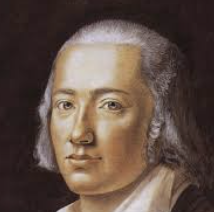
You seek life, and a godly fire Gushes and gleams for you out of the earth, As, with shuddering long, you Hurl yourself down to the flames of the Etna. So by a queen's wanton whim Pearls were dissolved in wine- heed her not! What folly, poet, to cast your riches Into that bright and bubbling cup! Yet still are you holy to me, as the might of the earth That bore you away, audaciously perishing! And I would follow the hero into the depths Did love not hold me.
▼
Source
source
"Empedokles"
2 months 2 weeks ago
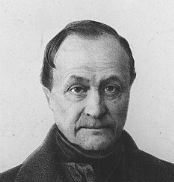
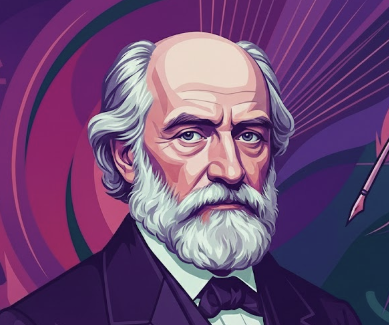
Men are not allowed to think freely about chemistry and biology: why should they be allowed to think freely about political philosophy?
▼
Source
source
As quoted in A Dictionary of Scientific Quotations (1991) by Alan Lindsay Mackay
3 months 1 week ago
Obstinacy is the result of the will forcing itself into the place of the intellect.
▼
Source
source
Vol. 2, Ch. 26, § 321
2 months 1 week ago
The illustrious archbishop of Cambray was of more worth than his chambermaid, and there are few of us that would hesitate to pronounce, if his palace were in flames, and the life of only one of them could be preserved, which of the two ought to be preferred ... Supposing the chambermaid had been my wife, my mother or my benefactor. This would not alter the truth of the proposition. The life of Fenelon would still be more valuable than that of the chambermaid; and justice, pure, unadulterated justice, would still have preferred that which was most valuable. Justice would have taught me to save the life of Fenelon at the expence of the other. What magic is there in the pronoun "my", to overturn the decisions of everlasting truth?
▼
Source
source
Vol.1, bk. 2, ch. 2
Just now
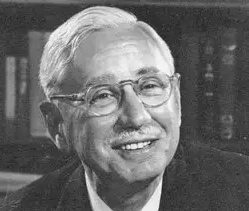
Life is that which is discontent, which struggles and seeks, which suffers and creates.
▼
Source
source
Ch. 1 : Our life begins

6 days ago
Today we have arrived at a point when the three principles [of modern resistance: 1. measure of efficacy, 2. the form of political and military organization correspond to the current forms of economic and social production, 3. democracy and freedom] coincide. The distributed network structure provides the model for an absolutely democratic organization that corresponds to the dominant forms of economic and social production and is also the most powerful weapon against the ruling power structure.
▼
Source
source
88
3 months 1 week ago
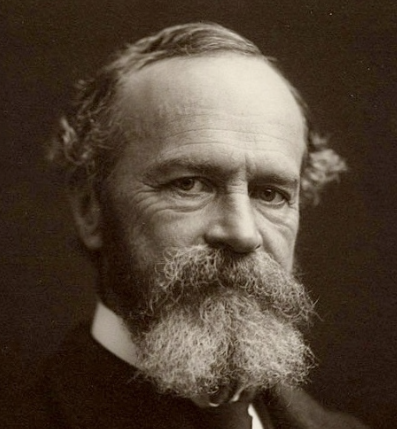
The great thing, then, in all education, is to make our nervous system our ally instead of our enemy.
▼
Source
source
Ch. 4
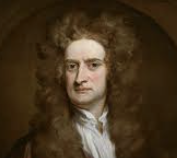
1 month 2 weeks ago
To every action there is always opposed an equal reaction; or, the mutual actions of two bodies upon each other are always equal, and directed to contrary parts.
▼
Source
source
Laws of Motion, III

3 months 1 week ago
I wish that life should not be cheap, but sacred. I wish the days to be as centuries, loaded, fragrant.
▼
Source
source
Considerations by the Way
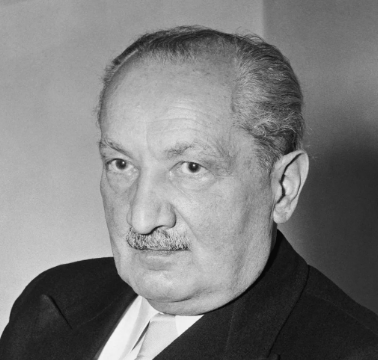
3 months 6 days ago
But in fact there is no circle at all in the formulation of our question. Beings can be determined in their being without the explicit concept of the meaning of being having to be already available. If this were not so there could not have been as yet any ontological knowledge. And probably no one would deny the factual existence of such knowledge. It is true that "being" is "presupposed" in all previous ontology, but not as an available concept-not as the sort of thing we are seeking.
▼
Source
source
Introduction: The Exposition of the Question of the Meaning of Being (Stambaugh translation)
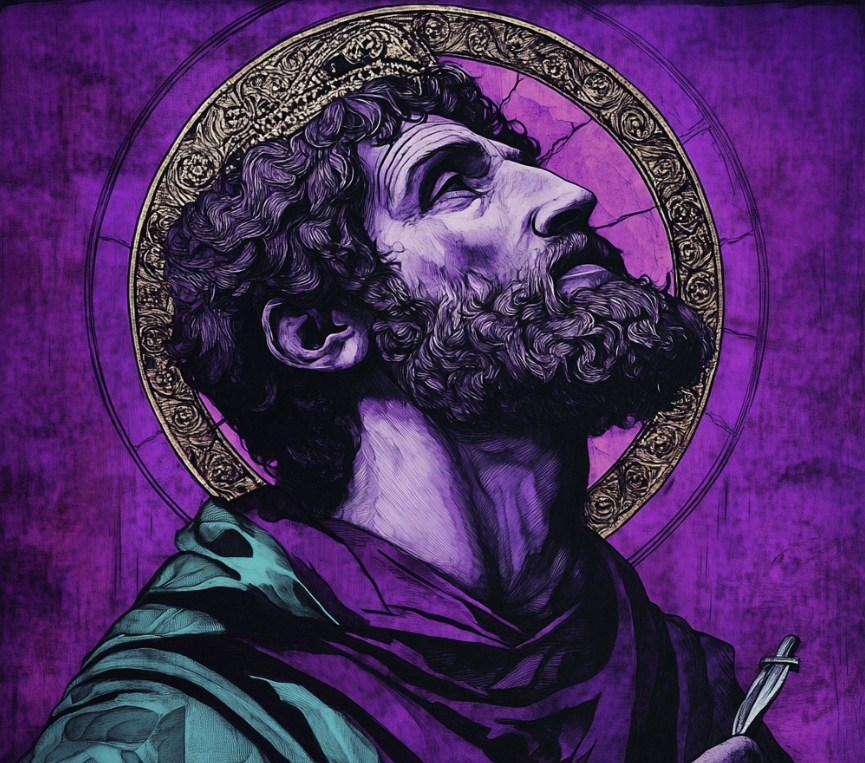
3 months 3 weeks ago
(On the Trinitarian indwelling personally experienced by Saint Augustine) But what is it that I love in loving You? Not corporeal beauty, nor the splendour of time, nor the radiance of the light, so pleasant to our eyes, nor the sweet melodies of songs of all kinds, nor the fragrant smell of flowers, and ointments, and spices, not manna and honey, not limbs pleasant to the embracements of flesh. I love not these things when I love my God; and yet I love a certain kind of light, and sound, and fragrance, and food, and embracement in loving my God, who is the light, sound, fragrance, food, and embracement of my inner man — where that light shines unto my soul which no place can contain, where that sounds which time snatches not away, where there is a fragrance which no breeze disperses, where there is a food which no eating can diminish, and where that clings which no satiety can sunder. This is what I love, when I love my God.
▼
Source
source
X, 6, 8

2 months 6 days ago
The mind advances only when it has the patience to go in circles, in other words, to deepen.
1 month 1 week ago
I don't think there would be many jokes, if there weren't constant frustration and fear and so forth. It's a response to bad troubles like crime.
▼
Source
source
Interview Public Radio International

3 months 1 week ago
A dog cannot relate his autobiography; however eloquently he may bark, he cannot tell you that his parents were honest but poor.
▼
Source
source
Human Knowledge: Its Scope and Limits (1948), part II, chapter 1, p. 74
4 months 1 week ago
The direction of the world overwhelms me at this time. In the long run, all the continents (yellow, black and brown) will spill over onto Old Europe. They are hundreds and hundreds of millions. They are hungry and they are not afraid to die. We no longer know how to die or how to kill. We could preach, but Europe believes in nothing. So, we must wait for the year 1000 or a miracle. For my part, I find it harder and harder to live before a wall.
3 days ago
But the philosophy that killed off truth proclaims unlimited tolerance for the "language games" (i.e., opinions, beliefs and doctrines) that people find useful. The outcome is expressed in the words of Karl Kraus: "Alles ist wahr und auch das Gegenteil." "Everything is true, and also its opposite."
▼
Source
source
"Our Merry Apocalypse" (1997), as quoted in Is God Happy? Selected Essays (Basic Books, 2013), p. 318
4 months 1 week ago
The similarity between Christ and Socrates consists essentially in their dissimilarity. Just as philosophy begins with doubt, so also a life that may be called human begins with irony.

2 months 1 week ago
... people only count their misfortunes; their good luck they take no account of. But if they were to take everything into account, as they should, they'd find that they had their fair share of it.
▼
Source
source
Part 2, Chapter 6 (tr. ?)
2 months 2 days ago
Even the eye that is artificially trained to see color as color, apart from things that colors qualify, cannot shut out the resonances and transfers of value.
▼
Source
source
p. 126
2 months 3 days ago
Every good mathematician is at least half a philosopher, and every good philosopher is at least half a mathematician.
▼
Source
source
Attributed to Frege in: A. A. B. Aspeitia (2000), Mathematics as grammar: 'Grammar' in Wittgenstein's philosophy of mathematics during the Middle Period, Indiana University, p. 25

3 months 2 weeks ago
In this life it is necessary that we be on our guard. To begin with we must be constantly aware of the fact that life here below is best described as being a type of continual warfare. This is a fact that Job, that undefeated soldier of vast experience, tells us so plainly. Yet in this matter the great majority of mankind is often deceived, for the world, like some deceitful magician, captivates their minds with seductive blandishments, and as a result most individuals behave as if there had been a cessation of hostilities.
▼
Source
source
p.61

3 months 2 weeks ago
There are two famous labyrinths where our reason very often goes astray. One concerns the great question of the free and the necessary, above all in the production and the origin of Evil. The other consists in the discussion of continuity, and of the indivisibles which appear to be the elements thereof, and where the consideration of the infinite must enter in.
▼
Source
source
Théodicée (1710)ː Préface

5 days ago
A Muslim who knows French will never be a dangerous Muslim.
▼
Source
source
quoted in Arvidsson, Stefan (2006), Aryan Idols: Indo-European Mythology as Ideology and Science, translated by Sonia Wichmann, Chicago and London: The University of Chicago Press.'(107)
1 month 1 week ago
Particularly in the case of all professional of press-images which testify of the real events. In making reality, even the most violent, emerge to the visible, it makes the real substance disappear. It is like the Myth of Eurydice : when Orpheus turns around to look at her, she vanishes and returns to hell. That is why, the more exponential the marketing of images is growing the more fantastically grows the indifference towards the real world. Finally, the real world becomes a useless function, a collection of phantom shapes and ghost events. We are not far from the silhouettes on the walls of the cave of Plato.

3 months 2 weeks ago
Our preaching does not stop with the law. That would lead to wounding without binding up, striking down and not healing, killing and not making alive, driving down to hell and not bringing back up, humbling and not exalting. Therefore, we must also preach grace and the promise of forgiveness - this is the means by which faith is awakened and properly taught. Without this word of grace, the law, contrition, penitence, and everything else are done and taught in vain.
▼
Source
source
pp. 78-79

3 months 6 days ago
You get tragedy where the tree, instead of bending, breaks.

4 months 1 week ago
In Germany there is much complaining about my "eccentricities." But since it is not known where my center is, it won't be easy to find out where or when I have thus far been "eccentric." That I was a philologist, for example, meant that I was outside my center (which fortunately does not mean that I was a poor philologist). Likewise, I now regard my having been a Wagnerian as eccentric. It was a highly dangerous experiment; now that I know it did not ruin me, I also know what significance it had for me — it was the most severe test of my character.
3 months 1 week ago
Never self-possessed, or prudent, love is all abandonment.
▼
Source
source
p. 158
4 months 1 week ago
One does not decide the truth of a thought according to whether it is right-wing or left-wing.
1 day ago
Is it not a right glorious thing, and set of things, this that Shakspeare has brought us? For myself, I feel that there is actually a kind of sacredness in the fact of such a man being sent into this Earth.
4 months 1 week ago
A nihilist is not one who believes in nothing, but one who does not believe in what exists.
2 months 6 days ago
So long as man is protected by madness he functions and flourishes, but when he frees himself from the fruitful tyranny of fixed ideas, he is lost, ruined.
1 month 1 week ago
To explain the origin of the DNA/protein machine by invoking a supernatural Designer is to explain precisely nothing, for it leaves unexplained the origin of the Designer.
▼
Source
source
Chapter 6 "Origins and Miracles" (p. 141)
1 month 3 weeks ago
The main importance of Francis Bacon's influence does not lie in any peculiar theory of inductive reasoning which he happened to express, but in the revolt against second-hand information of which he was a leader.


1 day ago
Man, little as he may suppose it, is necessitated to obey superiors. He is a social being in virtue of this necessity; nay he could not be gregarious otherwise. He obeys those whom he esteems better than himself, wiser, braver; and will forever obey such; and even be ready and delighted to do it.
CivilSimian.com created by AxiomaticPanic, CivilSimian, Kalokagathia