

3 months 1 day ago
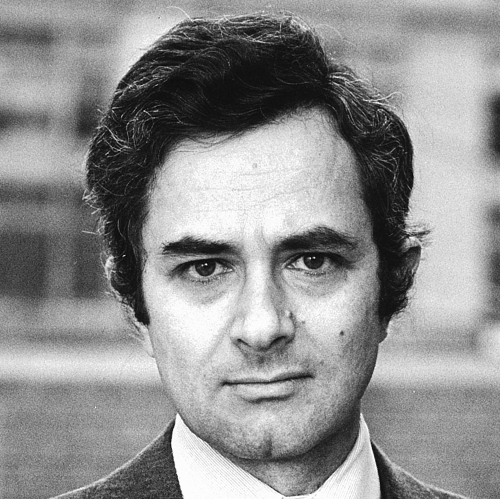
In speaking of the move from subjective to objective characterization, I wish to remain noncommittal about the existence of an endpoint, the completely objective intrinsic nature of the thing, which one might or might not be able to reach. It may be more accurate to think of objectivity as a direction in which the understanding can travel. And in understanding a phenomenon like lightning, it is legitimate to go as far away as one can from a strictly human viewpoint.But in the case of experience, on the other hand, the connexion with a particular point of view seems much closer. It is difficult to understand what could be meant by the objective character of an experience, apart from the particular point of view from which its subject apprehends it. After all, what would be left of what it was like to be a bat if one removed the viewpoint of the bat?
▼
Source
source
p. 173.

2 weeks 5 days ago
I'll admit, I was a naive globalist. I still believe in the ideal, but, I realize that those that hated the idea so much are the authors of the problem they see in it.
Now, I understand clearly, those that author the problem that makes globalization near impossible are also the ones who insist it will never work, nevertheless, human necessity remains a monolith and universal.
1 month 3 weeks ago
What one needs to do at every moment of one's life is to put an end to the old world and to begin a new world.
3 months 6 days ago
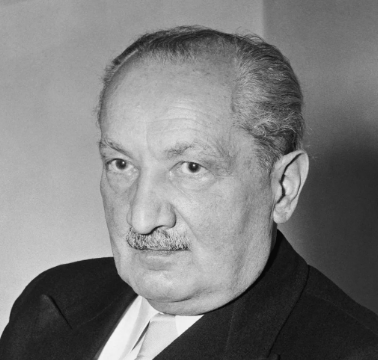
Everyone is the other, and no one is himself. The they, which supplies the answer to the who of everyday Da-sein, is the nobody to whom every Da-sein has always already surrendered itself, in its being-among-one-another.
▼
Source
source
Stambaugh translation
3 months 1 week ago
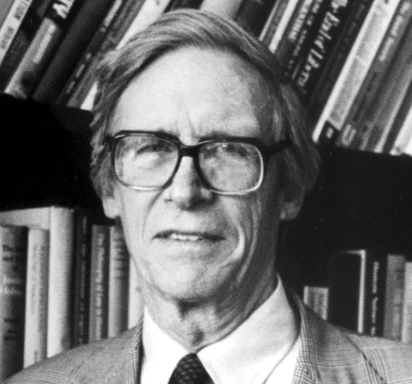
An intuitionist conception of justice is, one might say, but half a conception.
▼
Source
source
Chapter I, Section 8, pg. 41

5 days ago
In situations of de facto diversity, attempts to impose a single way of life on an entire population is a formula for dictatorship.
1 month 1 week ago
Boredom is like a pitiless zooming in on the epidermis of time. Every instant is dilated and magnified like the pores of the face.
▼
Source
source
Chapter 3

1 month 1 week ago
The state monopolizes violence by calling its critics "violent". [...] Hence, we should be wary about those who claim that violence is necessary to curb or check violence; those who praise the forces of law, including the police and the prisons, as the final arbiters. To oppose violence is to understand that violence does not always take the form of the blow.
▼
Source
source
p. 63
2 months 1 week ago
Each citizen of a state promises, in the original compact, that he will promote, as far as lies in his power, all the conditions of the possibility of the state ; hence, also, the condition just mentioned. This he can best do by educating children who may grow up to realize various ends of reason. The state has the right to make this education of children a condition of the state-compact, and thus education becomes an external, legal obligation, which the parents owe to the state.
▼
Source
source
P. 459

2 months 2 weeks ago
There is surely a Physiognomy, which those experienced and Master Mendicants observe... For there are mystically in our faces certain Characters that carry in them the motto of our Souls, wherein he that cannot read A.B.C. may read our natures.
▼
Source
source
Section 2

3 months 1 week ago
He that denies any of the doctrines that Christ has delivered, to be true, denies him to be sent from God, and consequently to be the Messiah; and so ceases to be a Christian.
▼
Source
source
§ 232

1 month 3 weeks ago
The progressive world is necessarily divided into two classes - those who take the best of what there is and enjoy it - those who wish for something better and try to create it. Without these two classes the world would be badly off. They are the very conditions of progress, both the one and the other. Were there none who were discontented with what they have, the world would never reach anything better.

3 months 2 weeks ago
Faith is born and preserved in us by preaching why Christ came, what he brought and gave to us, and the benefits we obtain when we receive him. This happens when Christian liberty - which he gives to us - is rightly taught and we are told in what way as Christians we are all kings and priests and therefore lords of all.
▼
Source
source
p. 70

3 months 1 week ago
Prejudice is an opinion without judgement.
▼
Source
source
"Prejudices", 1764

3 months 1 week ago
Such arguments ill become us, since the time of reformation came, under Gospel light. All distinctions of nations, and privileges of one above others, are ceased; Christians are taught to account all men their neighbours; and love their neighbours as themselves; and do to all men as they would be done by; to do good to all men; and Man-stealing is ranked with enormous crimes. Is the barbarous enslaving our inoffensive neighbours, and treating them like wild beasts subdued by force, reconcilable with all these Divine precepts? Is this doing to them as we would desire they should do to us? If they could carry off and enslave some thousands of us, would we think it just?-One would almost wish they could for once; it might convince more than Reason, or the Bible.

3 months 2 weeks ago
I will follow the good side right to the fire, but not into it if I can help it.
▼
Source
source
Ch. 1
3 months 1 day ago
The essence of the belief that bats have experience is that there is something that it is like to be a bat. Now we know that most bats (the microchiroptera, to be precise) perceive the external world primarily by sonar, or echolocation. ... But bat sonar, though clearly a form of perception, is not similar in its operation to any sense that we possess, and there is no reason to suppose that it is subjectively like anything we can experience or imagine. This appears to create difficulties for the notion of what it is like to be a bat.
▼
Source
source
p. 168.

3 months 1 week ago
The wisest man preaches no doctrines; he has no scheme; he sees no rafter, not even a cobweb, against the heavens. It is clear sky. If I ever see more clearly at one time than at another, the medium through which I see is clearer.

2 months 6 days ago
The flesh spreads, further and further, like a gangrene upon the surface of the globe. It cannot impose limits upon itself, it continues to be rife despite its rebuffs, it takes its defeats for conquests, it has never learned anything. It belongs above all to the realm of the Creator, and it is indeed in the flesh that He has projected His maleficent instincts.
3 months 1 week ago
I am convinced that everything has come down to us from the banks of the Ganges, - astronomy, astrology, metempsychosis, etc.
▼
Source
source
M. de Voltaire par M. Bailly et précédées de quelques lettres de M. de Voltaire a l'auteur, Paris 1777, quoted in E. F. Bryant, The Quest for the Origins of Vedic Culture (2001), Ch. 1

3 months 1 week ago
What does not exist must be something, or it would be meaningless to deny its existence; and hence we need the concept of being, as that which belongs even to the non-existent.
▼
Source
source
Principles of Mathematics (1903), p. 450

3 months 1 week ago
Again, defenders of utility often find themselves called upon to reply to such objections as this-that there is not time, previous to action, for calculating and weighing the effects of any line of conduct on the general happiness. This is exactly as if any one were to say that it is impossible to guide our conduct by Christianity, because there is not time, on every occasion on which anything has to be done, to read through the Old and New Testaments. The answer to the objection is, that there has been ample time, namely, the whole past duration of the human species. During all that time mankind have been learning by experience the tendencies of actions.
▼
Source
source
Ch. 2
3 months 1 week ago
People seem good while they are oppressed, but they only wish to become oppressors in their turn: life is nothing but a competition to be the criminal rather than the victim.
▼
Source
source
Letter to Ottoline Morrell, 17 December, 1920
4 weeks 1 day ago
Wherever literature consoles sorrow, or assuages pain,-wherever it brings gladness to eyes which fail with wakefulness and tears, and ache for the dark house and the long sleep,-there is exhibited, in its noblest form, the immortal influence of Athens.
▼
Source
source
p. 179

3 months 1 week ago
We have ...as M. Ribot says, not memory so much as memories. The visual... tactile... muscular... auditory memory may all vary independently... and different individuals may have them developed in different degrees. As a rule, a man's memory is good in the departments in which his interest is strong; but those departments are apt to be those in which his discriminative sensibility is high. ...[D]ifferences in men's imagining power... the machinery of memory must be largely determined thereby.
▼
Source
source
Ch. 16
3 months 1 week ago
"You're a bitter man," said Candide. "That's because I've lived," said Martin.
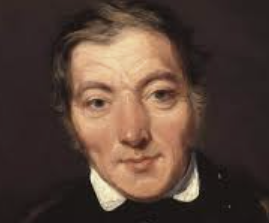
1 month 4 days ago
My friends, I tell you that hitherto you have been prevented from even knowing what happiness really is, solely in consequence of the errors - gross errors - that have been combined with the fundamental notions of every religion that has hitherto been taught to men. And, in consequence, they have made man the most inconsistent, and the most miserable being in existence. By the errors of these systems he has been made a weak, imbecile animal; a furious bigot and fanatic or a miserable hypocrite; and should these qualities be carried, not only into the projected villages, but into Paradise itself, a Paradise would no longer be found!
▼
Source
source
Statement (21 August 1817), as quoted by Jim Herrick, in "Bradlaugh and Secularism: 'The Province of the Real'"

2 months 3 days ago
When men and women agree, it is only in their conclusions; their reasons are always different.
▼
Source
source
Ch. VI: Free Society
2 months 2 weeks ago
Happy are they that go to bed with grave music like Pythagoras.

3 months 1 week ago
There have been men before ... who got so interested in proving the existence of God that they came to care nothing for God himself... as if the good Lord had nothing to do but to exist. There have been some who were so preoccupied with spreading Christianity that they never gave a thought to Christ.
▼
Source
source
Ch. 9

2 months 1 week ago
Thus poetry, regarded as a vehicle of thought, is especially impressive partly because it obeys all the laws of effective speech, and partly because in so doing it imitates the natural utterances of excitement.
▼
Source
source
Pt. I, sec. 6, "The Effect of Poetry Explained"

1 month 3 weeks ago
And here, facing this supreme religious sacrifice, we reach the summit of the tragedy, the very heart of it - the sacrifice of our own individual consciousness upon the alter of the perfected Human Consciousness, of the Divine Consciousness. But is there really a tragedy? ...if we could succeed in understanding and feeling that we were going to enrich Christ, should we hesitate for a moment in surrendering ourselves to Him? Would the stream that flows into the sea, and feels in the freshness of its waters the bitterness of the salt of the ocean, wish to flow back to its source? would it wish to return to the cloud which drew it life from the sea? is it not joy to feel itself absorbed?

3 months 2 weeks ago
It might be wiser for me to avoid Camarina and say nothing of theologians. They are a proud, susceptible race. They will smother me under six hundred dogmas. They will call me heretic and bring thunderbolts out of their arsenals, where they keep whole magazines of them for their enemies. Still they are Folly's servants, though they disown their mistress. They live in the third heaven, adoring their own persons and disdaining the poor crawlers upon earth. They are surrounded with a bodyguard of definitions, conclusions, corollaries, propositions explicit, and propositions implicit. ...They will tell you how the world was created. They will show you the crack where Sin crept in and corrupted mankind.
▼
Source
source
as quoted by James Anthony Froude, Life and Letters of Erasmus: Lectures Delivered at Oxford 1893-4
2 months 2 weeks ago
How shall the dead arise, is no question of my faith; to believe only possibilities, is not faith, but mere philosophy.
▼
Source
source
Section 48

4 days ago
Among all the great men who have philosophized about this remarkable effect, I am more astonished at Kepler than at any other. Despite his open and acute mind, and though he has at his fingertips the motions attributed to the earth, he nevertheless lent his ear and his assent to the moon's dominion over the waters, to occult properties, and to such puerilities.
▼
Source
source
In regard to Kepler's belief of the moon affecting the tides of the Earth, p. 328
3 months 1 week ago
All mortals tend to turn into the thing they are pretending to be.
▼
Source
source
Letter X

1 month 1 week ago
The new overkill is simply an extension of our nervous system into a total ecological service environment. Such a service environment can liquidate or terminate its beneficiaries as naturally as it sustains them.
▼
Source
source
(p. 152)

1 month 3 weeks ago
It is not honourable to attack an enemy without putting yourself at risk.
1 day ago
History, if viewed as a repository for more than anecdote or chronology, could produce a decisive transformation in the image of science by which we are now possessed.

3 months 1 week ago
Liberty, as we all know, cannot flourish in a country that is permanently on a war footing, or even a near war footing. Permanent crisis justifies permanent control of everybody and everything by the agencies of central government.
▼
Source
source
Chapter 1 (p. 14)
2 months 1 week ago
Influences of various kinds conspire to increase corporate action and decrease individual action. And the change is being on all sides aided by schemers, each of whom thinks only of his pet plan and not at all of the general reorganization which his plan, joined with others such, are working out. It is said that the French Revolution devoured its own children. Here, an analogous catastrophe seems not unlikely. The numerous socialistic changes made by Act of Parliament, joined with the numerous others presently to be made, will by-and-by be all merged in State-socialism-swallowed in the vast wave which they have little by little raised."But why is this change described as 'the coming slavery'?," is a question which many will still ask. The reply is simple. All socialism involves slavery.
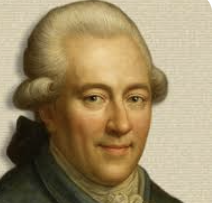
1 month 2 weeks ago
The noble simplicity in the works of nature only too often originates in the noble shortsightedness of him who observes it.
▼
Source
source
H 1
1 month 2 weeks ago
Courage, garrulousness and the mob are on our side. What more do we want?
▼
Source
source
E 32
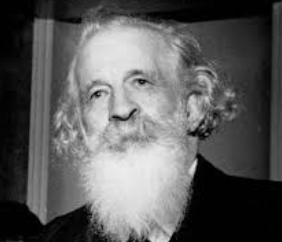
2 months 3 days ago
True poetry is a function of awakening. It awakens us, but it must retain the memory of previous dreams.
▼
Source
source
Introduction

2 months 3 weeks ago
All the good are friends of one another.
▼
Source
source
As quoted in Stromata, v. 14. by Clement of Alexandria

2 months 2 weeks ago
The main business of religions is to purify, control, and restrain that excessive and exclusive taste for well-being which men acquire in times of equality.
▼
Source
source
Book One, Chapter V.

3 months 3 weeks ago
Violence and injury enclose in their net all that do such things, and generally return upon him who began.
▼
Source
source
Book V, lines 1152-1153 (tr. Rouse)
2 months 3 days ago
Technical progress and more comfortable living permit the systematic inclusion of libidinal components into the realm of commodity production and exchange. But no matter how controlled the mobilization of instinctual energy may be (it sometimes amounts to a scientific management of libido), no matter how much it may serve as a prop for the status quo-it is also gratifying to the managed individuals, just as racing the outboard motor, pushing the power lawn mower, and speeding the automobile are fun.
▼
Source
source
p. 75

3 months 5 days ago
In writing what he does not speak, what he would never say and, in truth, would probably never even think, the author of the written speech is already entrenched in the posture of the sophist; the man of non-presence and non-truth. Writing is thus already on the scene. The incompatibility between written and the true is clearly announced at the moment Socrates starts to recount the way in which men are carried out themselves by pleasure, become absent from themselves, forget themselves and die in the thrill of song.
▼
Source
source
Plato's Pharmacy, Pharmacia
CivilSimian.com created by AxiomaticPanic, CivilSimian, Kalokagathia