

3 months 1 week ago
Real culture lives by sympathies and admirations, not by dislikes and disdain - under all misleading wrappings it pounces unerringly upon the human core.
▼
Source
source
The Social Value of the College-Bred

2 months 2 weeks ago
Justice is the first virtue of those who command, and stops the complaints of those who obey.
▼
Source
source
As quoted in The Golden Treasury of Thought : A Gathering of Quotations from the Best Ancient and Modern Authors (1873) by Theodore Taylor, p. 227

3 months 1 week ago
Wherever Law ends, Tyranny begins.
▼
Source
source
Second Treatise of Government, Sec. 202
1 month 1 week ago
Prose is private drama; poetry is corporate drama.
▼
Source
source
(p. 275)
2 months 1 day ago
It is peculiar to "ressentiment criticism" that it does not seriously desire that its demands be fulfilled. It does not want to cure the evil. The evil is merely the pretext for the criticism.
▼
Source
source
L. Coser, trans. (1973), p. 51



3 months 1 week ago
If the slavery of the parents be unjust, much more is their children's; if the parents were justly slaves, yet the children are born free; this is the natural, perfect right of all mankind; they are nothing but a just recompense to those who bring them up: And as much less is commonly spent on them than others, they have a right, in justice, to be proportionably sooner free.

3 months 2 weeks ago
But bounty and hospitality very seldom lead to extravagance; though vanity almost always does.
▼
Source
source
Chapter III, Part V, p. 987.
3 months 1 week ago
He that uses his words loosely and unsteadily will either not be minded or not understood.
▼
Source
source
Book III, Ch. 10, sec. 31
3 months 1 day ago
On James's view, "true" resembles "good" or "rational" in being a normative notion, a compliment paid to sentences that seem to be paying their way and that fit with other sentences which are doing so.
▼
Source
source
Introduction to Consequences of Pragmatism

2 months 6 days ago
He detested objective truths, the burden of argument, sustained reasoning. He disliked demonstrating, he wanted to convince no one. Others are a dialectician's invention.

3 months 1 week ago
Among a people without fellow-feeling, especially if they read and speak different languages, the united public opinion, necessary to the working of the representative government, cannot exist.
▼
Source
source
Ch. XVI: Of Nationality, As Connected with Representative Government (p. 382)

1 month 6 days ago
There's nothing nonsensical about saying that what would evolve if Darwinian selection has its head is something that you don't want to happen. And I could easily imagine trying to go against Darwinism.

1 month 1 week ago
The ethical stand of nonviolence has to be linked to a commitment to radical equality. And more specifically, the practice of nonviolence requires an opposition to biopolitical forms of racism and war logics that regularly distinguish lives worth safeguarding from those that are not-populations conceived as collateral damage, or as obstructions to policy and military aims.
▼
Source
source
p. 62

1 month 2 weeks ago
I believe that man is in the last resort so free a being that his right to be what he believes himself to be cannot be contested.
▼
Source
source
L 98
2 months 1 week ago
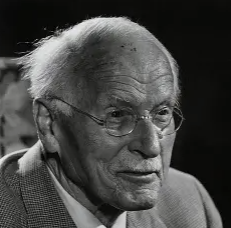
The erotic instinct is something questionable, and will always be so whatever a future set of laws may have to say on the matter. It belongs, on the one hand, to the original animal nature of man, which will exist as long as man has an animal body. On the other hand, it is connected with the highest forms of the spirit. But it blooms only when the spirit and instinct are in true harmony. If one or the other aspect is missing, then an injury occurs, or at least there is a one-sided lack of balance which easily slips into the pathological. Too much of the animal disfigures the civilized human being, too much culture makes a sick animal.

3 months 1 week ago
The principal source of the harm done by the State is the fact that power is its chief end.
▼
Source
source
Principles of Social Reconstruction (1917), Ch. II: The State

2 months 1 week ago
It is vain to expect virtue from women till they are in some degree independent of men; nay, it is vain to expect that strength of natural affection which would make them good wives and mothers. Whilst they are absolutely dependent on their husbands they will be cunning, mean, and selfish.
▼
Source
source
Ch. 9
3 months 2 weeks ago
The value which the workmen add to the materials, therefore, resolves itself in this case into two parts, of which the one pays their wages, the other the profits of the employer upon the whole stock of materials and wages which he advanced.
▼
Source
source
Chapter VI, p. 58.
2 months 3 days ago
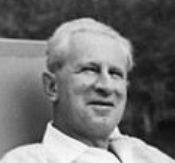
Technical progress and more comfortable living permit the systematic inclusion of libidinal components into the realm of commodity production and exchange. But no matter how controlled the mobilization of instinctual energy may be (it sometimes amounts to a scientific management of libido), no matter how much it may serve as a prop for the status quo-it is also gratifying to the managed individuals, just as racing the outboard motor, pushing the power lawn mower, and speeding the automobile are fun.
▼
Source
source
p. 75

3 months 6 days ago
If a person tells me he has been to the worst places I have no reason to judge him; but if he tells me it was his superior wisdom that enabled him to go there, then I know he is a fraud.
▼
Source
source
Conversation of 1930

1 month 1 week ago
The big advantage of being a chemistry major was the freedom to be tasteless.

1 month 3 weeks ago
Lying takes the form of mass media creating the myth that feminist movement has completely transformed society, so much so that the politics of patriarchal power have been inverted and that men, particularly white men, just like emasculated black men, have become the victims of dominating women. So, it goes, all men (especially black men) must pull together (as in the Clarence Thomas hearings) to support and reaffirm patriarchal domination. Add to this the widely held assumptions that blacks, other minorities, and white women are taking jobs from white men, and that people are poor and unemployed because they want to be, and it becomes most evident that part of our contemporary crisis is created by a lack of meaningful access to truth.
▼
Source
source
Teaching to Transgress: Education as the Practice of Freedom
1 month 6 days ago
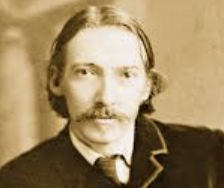
Youth is wholly experimental.
▼
Source
source
Letter to a Young Gentleman Scribner's Magazine (September 1888).
2 months 6 days ago
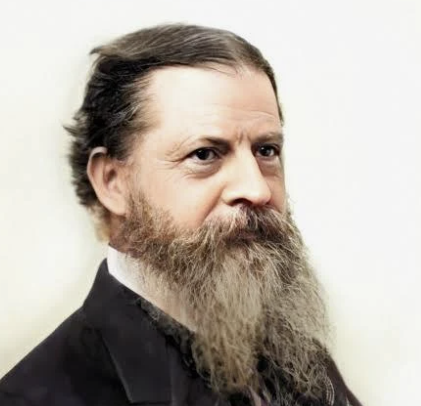
A difficulty which confronts the synechistic philosophy is this. In considering personality, that philosophy is forced to accept the doctrine of a personal God; but in considering communication, it cannot but admit that if there is a personal God, we must have a direct perception of that person and indeed be in personal communication with him. Now, if that be the case, the question arises how it is possible that the existence of this being should ever have been doubted by anybody. The only answer that I can at present make is that facts that stand before our face and eyes and stare us in the face are far from being, in all cases, the ones most easily discerned. That has been remarked since time immemorial.
1 month 3 weeks ago
The bourgeoisie is defined as the social class which does not want to be named.
▼
Source
source
p. 138
3 months 1 week ago
The chief reason warfare is still with us is neither a secret death-wish of the human species, nor an irrepressible instinct of aggression, nor, finally and more plausibly, the serious economic and social dangers inherent in disarmament, but the simple fact that no substitute for this final arbiter in international affairs has yet appeared on the political scene.
▼
Source
source
"On Violence"
2 months 6 days ago
Having destroyed all my connections, burned my bridges, I should feel a certain freedom, and in fact I do. One so intense I am afraid to rejoice in it.

2 months 1 week ago
The end of the philosophical dialogue lies in itself; it can never serve a purpose outside of itself. Just as a sculptor does not cease to be a work of art even if it lies at the bottom of the sea, so indeed every work of philosophy endures, even if uncomprehended in its own time. One would be grateful if it were merely a matter of incomprehension. Instead, the work is usually refitted and appropriated by various entities-some playing the part of the opponent; others, that of the proponent.
▼
Source
source
P.3-4

1 month 3 weeks ago
The soul was not made to dwell in a thing; and when forced to it, there is no part of that soul but suffers violence.
▼
Source
source
in The Simone Weil Reader, p. 155
2 months 6 days ago
Two enemies - the same man divided.
3 months 1 week ago
At best the principles that economists have supposed the choices of rational individuals to satisfy can be presented as guidelines for us to consider when we make our decisions.
▼
Source
source
Chapter IX, Section 84, p. 558
1 month 2 weeks ago
Affectation is a very good word when someone does not wish to confess to what he would none the less like to believe of himself.
▼
Source
source
F 149
3 days ago
Bukharin, like Lenin, regarded the system of basing economic life on mass terror not as a transient necessity but as a permanent principle of socialist organization. He did not shrink from justifying all means of coercion and held, like Trotsky at the same period, that the new system called essentially for the militarization of labour - i.e. the use of police and military force to compel the whole population to work in such places and conditions as the state might arbitrarily decree. Indeed, once the market is abolished there is no longer any free sale of labour or competition between workers, and police coercion is therefore the only means of allocating "human resources". If hired labour is eliminated, only compulsory labour remains. In other words, socialism - as conceived by both Trotsky and Bukharin at this time - is a permanent, nation-wide labour camp.
▼
Source
source
(pg. 28-9)

3 months 1 week ago
It is therefore correct to say that the senses do not err - not because they always judge rightly, but because they do not judge at all.
▼
Source
source
A 293, B 350
2 months 1 week ago
We are on a mission: we are called to the cultivation of the earth.
▼
Source
source
Fragment No. 32
3 months 1 week ago
One good schoolmaster is of more use than a hundred priests.
▼
Source
source
Worship and Church Bells, 1797


3 months 3 weeks ago
Don't hold yourselves cheap, seeing that the creator of all things and of you estimates your value so high, so dear, that he pours out for you every day the most precious blood of his only-begotten Son.
▼
Source
source
216:3:1
2 months 1 week ago
If the world is a precipitation of human nature, so to speak, then the divine world is a sublimation of the same. Both occur in one act. No precipitation without sublimation. What goes lost there in agility, is won here.
▼
Source
source
Fragment No. 96
3 months 3 weeks ago
Nobody should ever doubt that in the washing of rebirth (Titus 3:5) absolutely all sins, from the least to the greatest, are altogether forgiven.
▼
Source
source
229E:2
3 months 1 week ago
An avidity to punish is always dangerous to liberty. It leads men to stretch, to misinterpret, and to misapply even the best of laws. He that would make his own liberty secure must guard even his enemy from oppression; for if he violates this duty he establishes a precedent that will reach to himself.
1 month 1 week ago
The "tragic flaw" is not a detail of characterization, a mere "fly in the ointment", but a structural feature of ordinary consciousness.
▼
Source
source
(p.45)

3 months ago
He who does wrong is more unhappy than he who suffers wrong.
3 months ago
The pleasures that give most joy are the ones that most rarely come.

1 month 3 weeks ago
And killing time is perhaps the essence of comedy, just as the essence of tragedy is killing eternity.
2 months 6 days ago
There was a time when time did not yet exist. ... The rejection of birth is nothing but the nostalgia for this time before time.
3 days ago
It seems to us that the past is our property. Well, on the contrary - we are its property, because we are not able to make changes in it, while it fills the whole of our existence.
▼
Source
source
Original: "Otóż przeciwnie - to my jesteśmy jej własnością, ponieważ nie jesteśmy w stanie dokonać w niej zmian, ona natomiast wypełnia całość naszego istnienia." Klucz niebieski albo opowieści biblijne zebrane ku pouczeniu i przestrodze
3 months ago
All who delight in the pleasures of the belly, exceeding all measure in eating and drinking and love, find that the pleasures are brief and last but a short while-only so long as they are eating and drinking-but the pains that come after are many and endure. The longing for the same things keeps ever returning, and whenever the objects of one's desire are realized forthwith the pleasure vanishes, and one has no further use for them. The pleasure is brief, and once more the need for the same things returns.
CivilSimian.com created by AxiomaticPanic, CivilSimian, Kalokagathia