


1 month 3 weeks ago
Most men have nothing in their heads but their physical needs; put them on a desert island with nothing to occupy their minds and they would go insane. They lack real motive. The curse of civilization is boredom.
▼
Source
source
Chapter Eight, The Outsider as a Visionary

2 weeks 3 days ago
Human beings act, certainly. But none of them knows why they act as they do. There is a scattering of facts, which can be known and reported. Beyond these facts are the stories that are told. Human beings may behave like puppets, but no one is pulling the strings.
▼
Source
source
In The Puppet Theatre: Puppetry, Conspiracy and Ouija Boards (p. 136)

2 months 6 days ago
Always to have lived with the nostalgia to coincide with something, but not really knowing with what - it is easy to shift from unbelief to belief, or conversely. But what is there to convert to, and what is there to abjure, in a state of chronic lucidity?

1 month 1 week ago
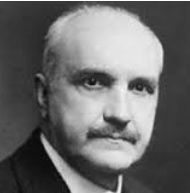
Radio comes to us ostensibly with person to person directness that is private and intimate, while in more urgent fact, it is really a subliminal echo chamber of magic power to touch remote and forgotten chords.
▼
Source
source
(p. 302).
2 months 3 days ago
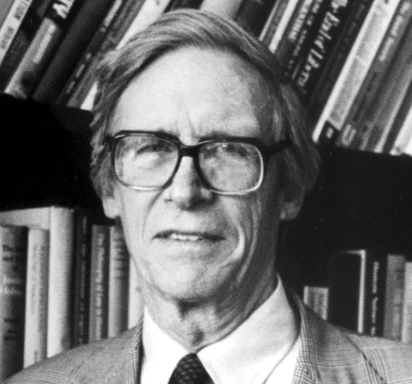
The young man who has not wept is a savage, and the old man who will not laugh is a fool.
▼
Source
source
Ch. 3, P. 57
3 months 1 week ago
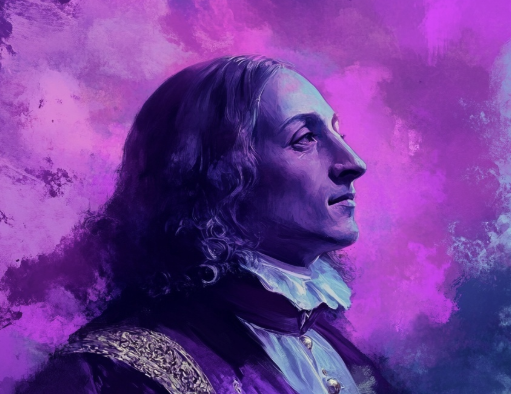
In all sectors of society there should be roughly equal prospects of culture and achievement for everyone similarly motivated and endowed. The expectations of those with the same abilities and aspirations should not be affected by their social class.
▼
Source
source
Chapter II, Section 12, pg. 73
3 months 3 weeks ago
It is not your strength and your natural power that subjects all these people to you. Do not pretend then to rule them by force or to treat them with harshness. Satisfy their reasonable desires; alleviate their necessities; let your pleasure consist in being beneficent; advance them as much as you can, and you will act like the true king of desire.

1 day ago
Consider the great elements of human enjoyment, the attainments and possessions that exalt man's life to its present height, and see what part of these he owes to institutions, to Mechanism of any kind; and what to the instinctive, unbounded force, which Nature herself lent him.

2 months 3 days ago
Brother will betray brother to death, and a father his child. Children will even rise up against their parents and have them put to death.
▼
Source
source
10:21 (HCSB) Said to his disciples.

2 months 2 weeks ago
Few men think; yet all have opinions.
▼
Source
source
Philonous to Hylas. The Second Dialogue. This appears in a passage first added in the third edition

4 months 1 week ago
One will rarely err if extreme actions be ascribed to vanity, ordinary actions to habit, and mean actions to fear.
1 month 3 weeks ago
Once we can see how this question of freedom of the will has been vitiated by post-romantic philosophy, with its inbuilt tendency to laziness and boredom, we can also see how it came about that existentialism found itself in a hole of its own digging, and how the philosophical developments since then have amounted to walking in circles round that hole.
▼
Source
source
p. 214
2 months 6 days ago
To suffer is the great modality of taking the world seriously.
2 months 3 days ago
It is not society's fault that most men seem to miss their vocation. Most men have no vocation.
▼
Source
source
Ch. IV: The Aristocratic Ideal
2 weeks 5 days ago
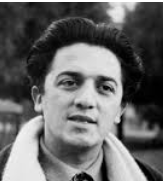
If I'm a cruel satirist at least I'm not a hyprocrite: I never judge what other people do. Neither a politician nor a priest, I never censor what others do. Neither a philospher nor a psychiatrist, I never bother trying to analyze or resolve my fears and neuroses.
▼
Source
source
"Hypocrisy"
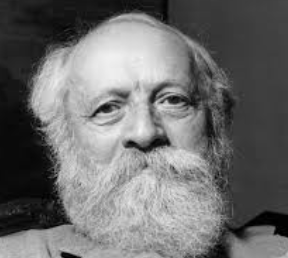
2 months 1 day ago
The philosophical anthropologist ... can know the wholeness of the person and through it the wholeness of man only when he does not leave his subjectivity out and does not remain an untouched observer.
▼
Source
source
p. 148
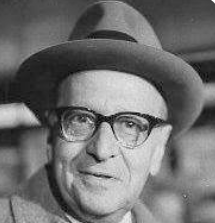
2 months 1 day ago
When an active individual of sound common sense perceives the sordid state of the world, desire to change it becomes the guiding principle by which he organizes given facts and shapes them into a theory. The methods and categories as well as the transformation of the theory can be understood only in connection with his taking of sides. This, in turn, discloses both his sound common sense and the character of the world. Right thinking depends as much on right willing as right willing on right thinking.
▼
Source
source
p. 162.
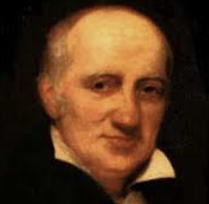
2 months 1 week ago
The proper method for hastening the decay of error is not by brute force, or by regulation which is one of the classes of force, to endeavour to reduce men to intellectual uniformity; but on the contrary by teaching every man to think for himself.
▼
Source
source
Vol. 2, bk. 8, ch. 6

3 months 2 weeks ago
Extreme pride or dejection indicates extreme ignorance of self.
▼
Source
source
Part IV, Prop. LV
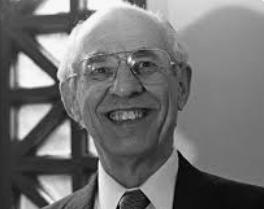
1 month 2 weeks ago
Now, moral philosophers generally prefer to talk about virtues, or about (specific) duties, rights, and so on, rather than about moral images of the world. There are obvious reasons for this; nevertheless, I think that it is a mistake, and that Kant is profoundly right. What we require in moral philosophy is, first and foremost, a moral image of the world, or rather--since, here again, I am more of a pluralist than Kant--a number of complementary moral images of the world.
▼
Source
source
Lecture III: Equality and Our Moral Image of the World
1 month 1 week ago
Receive an injury rather than do one.
▼
Source
source
Maxim 5

1 month 3 weeks ago
The philosophy of Bergson, which is a spiritualist restoration, essentially mystical, medieval, Quixotesque, has been called a demi-mondaine philosophy. Leave out the demi; call it mondaine, mundane. Mundane - yes, a philosophy for the world and not for philosophers, just as chemistry ought to be not for chemists alone. The world desires illusion (mundus vult decipi) - either the illusion antecedent to reason, which is poetry, or the illusion subsequent to reason, which is religion. And Machiavelli has said that whosoever wishes to delude will always find someone willing to be deluded. Blessed are they who are easily befooled!

3 months 5 days ago
I'm very proud that some people think that I'm a danger for the intellectual health of students. When people start thinking of health in intellectual activities, I think there is something wrong. In their opinion I am a dangerous man, since I am a crypto-Marxist, an irrationalist, a nihilist.
▼
Source
source
Truth, Power, Self : An Interview with Michel Foucault

3 months 1 week ago
Let any one try, I will not say to arrest, but to notice or attend to, the present moment of time. One of the most baffling experiences occurs. Where is it, this present? It has melted in our grasp, fled ere we could touch it, gone in the instant of becoming.
▼
Source
source
Ch. 15

3 months 1 week ago
Most men do not feel in themselves the competence required for leading their group to victory, and therefore seek out a captain who appears to possess the courage and sagacity necessary for the achievement of supremacy. Even in religion this impulse appears. Nietzsche accused Christianity of inculcating a slave-morality, but ultimate triumph was always the goal. "Blessed are the meek, for they shall inherit the earth."
▼
Source
source
Ch. 2: Leaders and Followers

1 month 3 days ago
[Asked "Do you still favour English independence?"] No, I don't think I've ever really favoured English independence. My view is that if the Scots want to be independent then we should aim for the same thing. Scottish independence, I don't think the Welsh want independence, the Northern Irish certainly don't. The Scottish desire for independence is, to some extent, a fabrication. They want to identify themselves as Scots but still to be part of a,[sic] to enjoy the subsidy they get from being part of the kingdom. I can see there are Scottish nationalists who envision something more than that, but if that becomes a real political force then yeah, we should try for independence too. As it is, as you know, the Scots have two votes: they can vote for their own parliament and vote to put their people into our parliament, who come to our parliament with no interest in Scotland but an interest in bullying us.

2 months 3 weeks ago
Declining from the public ways, walk in unfrequented paths.
▼
Source
source
Symbol 5
3 months 6 days ago
Our elucidations of the preliminary concept of phenomenology show that its essential character does not consist in its actuality as a philosophical "movement." Higher than actuality stands possibility. We can understand phenomenology solely by seizing upon it as a possibility.
▼
Source
source
Introduction: The Exposition of the Question of the Meaning of Being (Stambaugh translation)
1 day ago
But in the days that are now passing over us, even fools are arrested to ask the meaning of them; few of the generations of men have seen more impressive days. Days of endless calamity, disruption, dislocation, confusion worse confounded: if they are not days of endless hope too, then they are days of utter despair. For it is not a small hope that will suffice, the ruin being clearly, either in action or in prospect, universal. There must be a new world, if there is to be any world at all!

4 months ago
The journey of a thousand miles begins with a single step.
3 months 5 days ago
Is it surprising that prisons resemble factories, schools, barracks, hospitals, which all resemble prisons?
▼
Source
source
Discipline and Punish (1977) as translated by Alan Sheridan, p. 228
3 months 1 week ago
Machines are worshipped because they are beautiful and valued because they confer power; they are hated because they are hideous and loathed because they impose slavery.
▼
Source
source
Ch. 6: Machines and the Emotions

2 months 1 week ago
Humanity may endure the loss of everything: all its possessions may be torn away without infringing its true dignity; - all but the possibility of improvement.
▼
Source
source
"The Vocation of the Scholar" (1794), as translated by William Smith, in The Popular Works of Johann Gottlieb Fichte (1889), Vol. I, Lecture IV, p. 188.

4 months 1 week ago
Confession should be only in secret before God, who knows everything anyway, and thus it could remain hidden in one's innermost being. But at a dinner and a woman! A dinner-it is not some hidden, remote place, nor is the lighting dim, nor is the mood like that among graves, nor are the listeners silent or invisibly present.

3 months 1 week ago
If, while hurrying ostensibly to the temple of truth, we hand the reins over to our personal interests which look aside at very different guiding stars, for instance at the tastes and foibles of our contemporaries, at the established religion, but in particular at the hints and suggestions of those at the head of affairs, then how shall we ever reach the high, precipitous, bare rock whereon stands the temple of truth?
▼
Source
source
E. Payne, trans. (1974) Vol. 1, pp. 22-23

3 months 1 week ago
Not my idea of God, but God.

1 month 1 week ago
The oppression of a majority by a minority, and the demoralization inevitably resulting from it, is a phenomenon that has always occupied me and has done so most particularly of late.
▼
Source
source
I
3 months 1 week ago
When I was a child the atmosphere in the house was one of puritan piety and austerity. There were family prayers at eight o'clock every morning. Although there were eight servants, food was always of Spartan simplicity, and even what there was, if it was at all nice, was considered too good for children. For instance, if there was apple tart and rice pudding, I was only allowed the rice pudding. Cold baths all the year round were insisted upon, and I had to practice the piano from seven-thirty to eight every morning although the fires were not yet lit. My grandmother never allowed herself to sit in an armchair until the evening. Alcohol and tobacco were viewed with disfavor although stern convention compelled them to serve a little wine to guests. Only virtue was prized, virtue at the expense of intellect, health, happiness, and every mundane good.
▼
Source
source
p. 9
3 months 1 week ago
The little honesty that exists among authors is discernible in the unconscionable way they misquote from the writings of others.
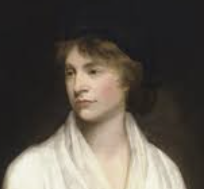
2 months 1 week ago
It is the preservation of the species, not of individuals, which appears to be the design of Deity throughout the whole of nature.
▼
Source
source
Letter 22

3 months 2 weeks ago
Hope is a good breakfast, but it is a bad supper.
▼
Source
source
No. 36
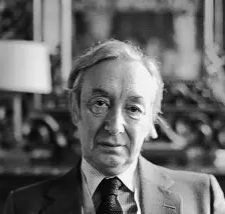
2 months 1 week ago
The traditional disputes of philosophers are, for the most part, as unwarranted as they are unfruitful. The surest way to end them is to establish beyond question what should be the purpose and method of a philosophical enquiry. And this is by no means so difficult a task as the history of philosophy would lead one to suppose. For if there are any questions which science leaves it to philosophy to answer, a straightforward process of elimination must lead to their discovery.
▼
Source
source
Ch. 1, first lines.

2 months 1 week ago
As there must be moderation in other things, so there must be moderation in self-criticism. Perpetual contemplation of our own actions produces a morbid consciousness, quite unlike that normal consciousness accompanying right actions spontaneously done; and from a state of unstable equilibrium long maintained by effort, there is apt to be a fall towards stable equilibrium, in which the primitive nature reasserts itself. Retrogression rather than progression may hence result.
▼
Source
source
Ch. 10, General Conclusions

3 months 1 week ago
Self-command is the main elegance.
▼
Source
source
p. 205
4 months 1 week ago
It was a purely Christian satisfaction to me that if ordinarily there was no one else there was one who in action tried a little to do the doctrine about loving the neighbor, alas, one who precisely by his act also received a frightful into what an illusion Christendom is and indeed, particularly later, also into how the common people let themselves be seduced by wretched journalists, whose striving and fighting for equality can only lead, if it leads to anything, since it is in the service of the lie, to making the elite, in self-defense, proud of their aloofness from the common man, and the common man brazen in his rudeness.
4 months ago
Thus intrigues and conspiracies do not arise, and thievery and robbery do not occur; therefore doors need never be locked.
3 months 1 week ago
I have lived in the pursuit of a vision, both personal and social. Personal: to care for what is noble, for what is beautiful, for what is gentle; to allow moments of insight to give wisdom at more mundane times. Social: to see in imagination the society that is to be created, where individuals grow freely, and where hate and greed and envy die because there is nothing to nourish them. These things I believe, and the world, for all its horrors, has left me unshaken.
3 months 1 week ago
All our scientific and philosophic ideals are altars to unknown gods.
▼
Source
source
Lecture at the Harvard Divinity School (13 March 1884); published in the The Unitarian Review and Religious Magazine as The Dilemma of Determinism
2 months 3 days ago
Suffer it to be so now: for thus it becometh us to fulfil all righteousness.
▼
Source
source
3:15 (KJV) Said to John the Baptist.
CivilSimian.com created by AxiomaticPanic, CivilSimian, Kalokagathia