
...or justify inhumane treatment, human over human, because animals do it...



Try now to answer my third riddle. By what rule to you tell a copy from an original?'

The people are asleep; they remain indifferent. They forge their own chains and do the bidding of their masters to crucify their Christs.
If it is pleasing to observe in nature her desire to paint God in all his works, in which we see some traces of him because they are his images, how much more just is it to consider in the productions of minds the efforts which they make to imitate the essential truth, even in shunning it, and to remark wherein they attain it and wherein they wander from it, as I have endeavored to do in this study.
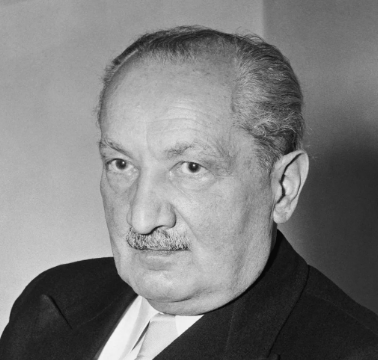
The small are always dependent on the great; they are "small" precisely because they think they are independent. The great thinker is one who can hear what is greatest in the work of other "greats" and who can transform it in an original manner.

Existing is plagiarism.


If a poor person envies a rich person, he is no better than the rich person.

For my part, while I am as convinced a Socialist as the most ardent Marxian, I do not regard Socialism as a gospel of proletarian revenge, nor even, primarily, as a means of securing economic justice. I regard it primarily as an adjustment to machine production demanded by considerations of common sense, and calculated to increase the happiness, not only of proletarians, but of all except a tiny minority of the human race.
Philosophy was never just ontotheology, and even when philosophers were concerned with ontotheology, they were concerned with much more than that. That is the first reason that the idea of a fundamental "crisis" in philosophy and of the "end of philosophy" is deeply mistaken. And if the questions of philosophy are indeed "unsettleable," in the sense that they will always be with us, that is a wonderful thing, not something to be regretted.
One must care about a world one will not see.
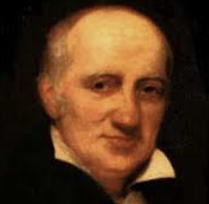
One principle, that I believe is wanting in you, and all our too fervent and impetuous reformers, is the thought, that almost every institution or form of society is good in its place, and in the period of time to which it belongs. How many beautiful and admirable effects grew out of Popery and the monastic institutions, in the period, when they were in their genuine health and vigour! To them we owe almost all our logic and our literature. What excellent effects do we reap, even at this day, from the feudal system and from chivalry! In this point of view, nothing can, perhaps, be more worthy of our applause than the English constitution.
For no one's authority ought to rank so high as to set a value on his words and terms even though nothing clear and determinate lies behind them.

The Crown of Great Britain cannot, in my opinion, be too magnificent. Let us see some great public works set on foot; let it never be said, that the Commons of Great Britain failed in what they owe to the first Crown in the world. Looking up to royalty, I do say, it is the oldest and one of the best parts of our constitution. I wish it should look like royalty; that it should look like a King; like a King of Great Britain.
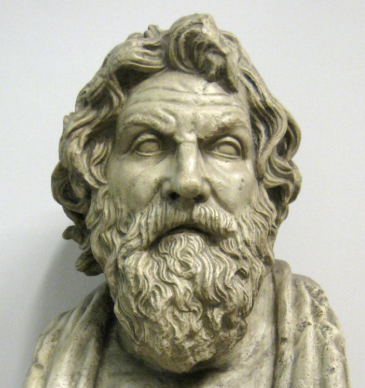
Once, when he was applauded by rascals, he remarked, "I am horribly afraid I have done something wrong."
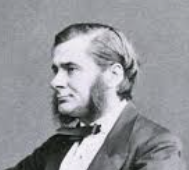
My convictions, positive and negative, on all the matters of which you speak, are of long and slow growth and are firmly rooted. But the great blow which fell on me seemed to stir them to their foundation, and had I lived a couple of centuries earlier I could have fancied a devil scoffing at me and them - and asking me what profit it was to have stripped myself of the hopes and consolations of the mass of mankind? To which my only reply was and is - Oh devil! Truth is better than much profit. I have searched over the grounds of my belief, and if wife and child and name and fame were all to be lost to me one after the other as the penalty, still I will not lie.

Humility is the fruit of inner security and wise maturity. To be humble is to be so sure of one's self and one's mission that one can forego calling excessive attention to one's self and status. And, even more pointedly, to be humble is to revel in the accomplishments or potentials of others -- especially those with whom one identifies and to whom one is linked organically.

Unlike private enterprise which quickly modifies its actions to meet emergencies - unlike the shopkeeper who promptly finds the wherewith to satisfy a sudden demand - unlike the railway company which doubles its trains to carry a special influx of passengers; the law-made instrumentality lumbers on under all varieties of circumstances at its habitual rate. By its very nature it is fitted only for average requirements, and inevitably fails under unusual requirements.
The light will not shame you, if it shows you your own ugliness, and that ugliness so offends you that you perceive the beauty of the light.
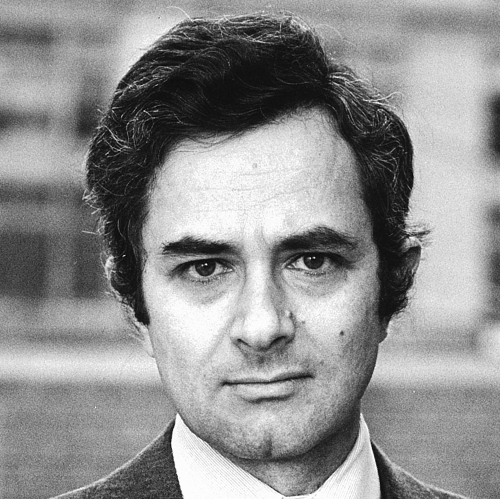
Leading a human life is a full-time occupation, to which everyone devotes decades of intense concern.

Theologian: But what is to love? Philosopher: To be delighted by the happiness of another.
In their nomination to office they will not appoint to the exercise of authority as to a pitiful job, but as to a holy function.
When the objective gaze is turned on human beings and other experiencing creatures, who are undeniably parts of the world, it can reveal only what they are like in themselves. And if the way things are for these subjects is not part of the way things are in themselves, an objective account, whatever it shows, will omit something. So reality is not just objective reality, and the pursuit of objectivity is not an equally effective method of reaching the truth about everything.
These principles it is necessary strictly to attend to, because they will serve much to explain the whole course both of government and real property, wherever the German nations obtained a settlement; the whole of their government depending for the most part upon two principles in our nature,-ambition, that makes one man desirous, at any hazard or expense, of taking the lead amongst others; and admiration, which makes others equally desirous of following him from the mere pleasure of admiration, and a sort of secondary ambition, one of the most universal passions among men. These two principles, strong both of them in our nature, create a voluntary inequality and dependence.
Life is agid. Life is fulgid. Life is a burgeoning, a quickening of the dim primordial urge in the murky wastes of time. Life is what the least of us make most of us feel the least of us make the most of.
The real significance of the Russell paradox, from the standpoint of the modal-logic picture, is this: it shows that no concrete structure can be a standard model for the naive conception of the totality of all sets; for any concrete structure has a possible extension that contains more 'sets'. (If we identify sets with the points that represent them in the various possible concrete structures, we might say: it is not possible for all possible sets to exist in any one world!) Yet set theory does not become impossible. Rather, set theory becomes the study of what must hold in, e.g. any standard model for Zermelo set theory.

Violence, whether spiritual or physical, is a quest for identity and the meaningful.
The characters of self-restrained officials are exceedingly careful and just and conservative, but they lack keenness and a certain quick and active boldness. The courageous natures, on the other hand, are deficient in justice and caution in comparison with the former, but excel in boldness of action; and unless both these qualities are present it is impossible for a state to be entirely prosperous in public and private matters.
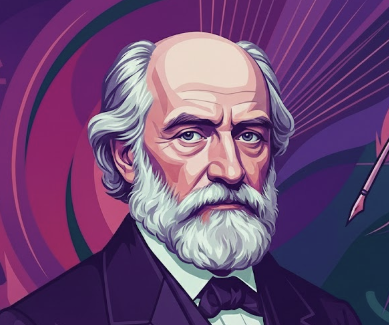
The little honesty that exists among authors is discernible in the unconscionable way they misquote from the writings of others.
Anarchy, in its own nature, is an evil of short duration. The more horrible are the mischiefs it inflicts, the more does it hasten to a close.
Better to be an animal than a man, an insect than an animal, a plant than an insect, and so on. Salvation? Whatever diminishes the kingdom of consciousness and compromises its supremacy.
So long as man is protected by madness he functions and flourishes, but when he frees himself from the fruitful tyranny of fixed ideas, he is lost, ruined.

I construct my memories with my present. I am lost, abandoned in the present. I try in vain to rejoin the past: I cannot escape.

Man is said to be a reasoning animal. I do not know why he has not been defined as an affective or feeling animal. Perhaps that which differentiates him from other animals is feeling rather than reason. More often I have seen a cat reason than laugh or weep. Perhaps it weeps or laughs inwardly - but then perhaps, also inwardly, the crab resolves equations of the second degree.
The essential trait in the moral consciousness, is the control of some feeling or feelings by some other feeling or feelings.
Useless laws weaken the necessary laws.
Even if I set out to make a film about a fillet of sole, it would be about me.

How we hate this solemn Ego that accompanies the learned, like a double, wherever he goes.
Socrates reminds us that it is not the same thing, but almost the opposite, to understand religion and to accept it.
All human laws are nourished by one divine law.

The new tinge to modern minds is a vehement and passionate interest in the relation of general principles to irreducible and stubborn facts. All the world over and at all times there have been practical men, absorbed in 'irreducible and stubborn facts'; all the world over and at all times there have been men of philosophic temperament, who have been absorbed in the weaving of general principles. It is this union of passionate interest in the detailed facts with equal devotion to abstract generalisation which forms the novelty of our present society.
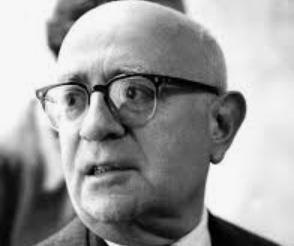
Bourgeois sport [wants] to differentiate itself strictly from play. Its bestial seriousness consists in the fact that instead of remaining faithful to the dream of freedom by getting away from purposiveness, the treatment of play as a duty puts it among useful purposes and thereby wipes out the trace of freedom in it. This is particularly valid for contemporary mass music. It is only play as a repetition of prescribed models, and the playful release from responsibility which is thereby achieved does not reduce at all the time devoted to duty except by transferring the responsibility to the models, the following of which one makes into a duty for himself.

The best and greatest winning is a true friend; and the greatest loss is the loss of time.

Our blight is ideologies - they are the long-expected Antichrist!

The worker's existence is thus brought under the same condition as the existence of every other commodity. The worker has become a commodity, and it is a bit of luck for him if he can find a buyer, And the demand on which the life of the worker depends, depends on the whim of the rich and the capitalists.
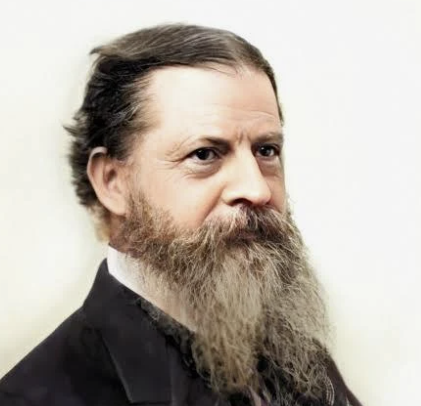
If we endeavor to form our conceptions upon history and life, we remark three classes of men. The first consists of those for whom the chief thing is the qualities of feelings. These men create art. The second consists of the practical men, who carry on the business of the world. They respect nothing but power, and respect power only so far as it [is] exercized. The third class consists of men to whom nothing seems great but reason. If force interests them, it is not in its exertion, but in that it has a reason and a law. For men of the first class, nature is a picture; for men of the second class, it is an opportunity; for men of the third class, it is a cosmos, so admirable, that to penetrate to its ways seems to them the only thing that makes life worth living.

Lend yourself to others, but give yourself to yourself.

Every sensible man, every honorable man, must hold the Christian sect in horror.

Most kings and priests have been despotic, and all religions have been riddled with superstition.
CivilSimian.com created by AxiomaticPanic, CivilSimian, Kalokagathia