

3 months 1 day ago
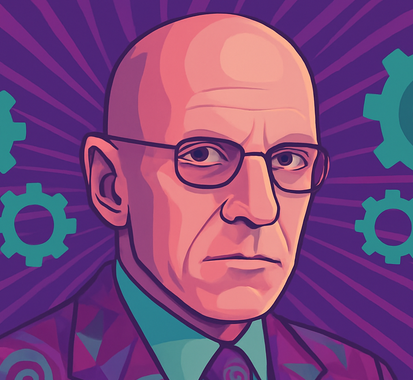
I'm very proud that some people think that I'm a danger for the intellectual health of students. When people start thinking of health in intellectual activities, I think there is something wrong. In their opinion I am a dangerous man, since I am a crypto-Marxist, an irrationalist, a nihilist.
▼
Source
source
Truth, Power, Self : An Interview with Michel Foucault

1 day ago
The more progress that has been made toward eradicating social injustices, the more intolerable the remaining injustices seem, and thus the moral imperative to mobilizing to correct them.

3 months 1 week ago
Our sadness is not sad, but our cheap joys.
▼
Source
source
Pearls of Thought (1881) p. 231

3 months 1 day ago
With a few glorious and glaring exceptions, the shadow of Jim Crow was cast in its new glittering form expressed in the language of superficial diversity... The disarray of a scattered curriculum, the disenchantment of talented yet deferential faculty, and the disorientation of precious students loom large... To witness a faculty enthusiastically support a candidate for tenure then timidly defer to a rejection based on the Harvard administration's hostility to the Palestinian cause was disgusting... We all know the mendacious reasons given had nothing to do with academic standards... This kind of narcissistic academic professionalism, cowardly deference to the anti-Palestinian prejudices of the Harvard administration, and indifference to my Mother's death constitutes an intellectual and spiritual bankruptcy of deep deaths...
▼
Source
source
Quoted in Civil rights activist Cornel West resigns from Harvard, By Jackie Salo, New York Post, July 13, 2021


4 months 1 week ago
Haste is universal because everyone is in flight from himself.
3 months 1 week ago
I do not know but it is too much to read one newspaper a week. I have tried it recently, and for so long it seems to me that I have not dwelt in my native region. The sun, the clouds, the snow, the trees say not so much to me. You cannot serve two masters. It requires more than a day's devotion to know and to possess the wealth of a day.
▼
Source
source
p. 491
1 month 4 weeks ago
The application of scientific formulations of the principle of probability statistically determined is thus a logical corollary of the principle already stated, that the subject matter of scientific findings is relational, not individual. It is for this reason that it is safe to predict the ultimate triumph of the statistical doctrine.
3 weeks 4 days ago
It seems that the creative faculty, and the critical faculty, cannot exist together in their highest perfection.
▼
Source
source
p. 186
3 months 3 weeks ago
Don't you know that a good and excellent person does nothing for the sake of appearances, but only for the sake of having acted right?
▼
Source
source
Book III, ch. 24, 50.

1 month 4 days ago
Faced with information overload, we have no alternative but pattern-recognition.
▼
Source
source
(p. 132)

3 months 1 week ago
I went to Salt Lake City and the Mormons tried to convert me, but when I found they forbade tea and tobacco I thought it was no religion for me.
▼
Source
source
Letter to C. P. Sanger, 23 December, 1929

2 months 1 week ago
The Americans combine the notions of Christianity and of liberty so intimately in their minds, that it is impossible to make them conceive the one without the other; and with them this conviction does not spring from that barren traditionary faith which seems to vegetate in the soul rather than to live.
▼
Source
source
Chapter XVII.

3 months 6 days ago
If the colleges were better, if they ... had the power of imparting valuable thought, creative principles, truths which become powers, thoughts which become talents, - if they could cause that a mind not profound should become profound, - we should all rush to their gates: instead of contriving inducements to draw students, you would need to set policy at the gates to keep order in the in-rushing multitude.
▼
Source
source
The Celebration of Intellect, 1861
2 weeks 5 days ago
The coming of Buddhism to the West may well prove to be the most important event of the Twentieth Century.
▼
Source
source
In Lama Surya Das, Awakening the Buddha Within

1 month 3 weeks ago
Truth is sought not because it is truth but because it is good.
▼
Source
source
p. 213
1 month 4 weeks ago
For Prudence, is but Experience; which equal time, equally bestows on all men, in those things they equally apply themselves unto.
▼
Source
source
The First Part, Chapter 13, p. 60
1 month 3 weeks ago
The "kingdom of God" has become the "other world," which stands mechanically beside "this world"-an opposition unknown to the strongest periods of Christianity.
▼
Source
source
L. Coser, trans. (1961), p. 97
1 week 6 days ago
The irony of scientific progress is that in solving human problems it creates problems that are not humanly soluble. Science has given humans a kind of power over the natural world achieved by no other animal. It has not given humans the ability to remodel the planet according to their wishes. The Earth is not a clock that can be wound up and stopped at will. A living system, the planet will surely rebalance itself. It will do so, however, without any regard for humans.
▼
Source
source
Sweet Morality (p. 212)

4 months 3 days ago
Query: How to contrive not to waste one's time? Answer: By being fully aware of it all the while. Ways in which this can be done: By spending one's days on an uneasy chair in a dentist's waiting room; by remaining on one's balcony all a Sunday afternoon; by travelling by the longest and least-convenient train routes, and of course standing all the way; by queueing at the box-office of theatres and then not booking a seat.

3 months 5 days ago
He wanted to assume his entire condition, to carry the world on his shoulders and to become, in defiance of all, what all have made of him.
▼
Source
source
p. 384
3 months 1 week ago
He will better comprehend the foundations and measures of decency and justice, and have livelier, and more lasting impressions of what he ought to do, by giving his opinion on cases propos'd, and reasoning with his tutor on fit instances, than by giving a silent, negligent, sleepy audience to his tutor's lectures; and much more than by captious logical disputes, or set declamations of his own, upon any question. The one sets the thoughts upon wit and false colours, and not upon truth; the other teaches fallacy, wrangling, and opiniatry; and they are both of them things that spoil the judgment, and put a man out of the way of right and fair reasoning; and therefore carefully to be avoided by one who would improve himself, and be acceptable to others.
▼
Source
source
Sec. 98

3 months 3 weeks ago
It must be said that charity can, in no way, exist along with mortal sin.
▼
Source
source
Disputed Questions: On Charity, c. 1270

3 months 1 week ago
Secrets in manufactures are capable of being longer kept than secrets in trade.
▼
Source
source
Chapter VII, p. 72.

2 days ago
In the same way that the figure of the peasant tends to disappear, so too does the figure of the industrial worker, the service industry worker and all other separate categories.
▼
Source
source
125
1 month 4 weeks ago
In the human reality, all existence that spends itself in procuring the prerequisites of existence is thus an "untrue" and unfree existence. Obviously this reflects the not at all ontological condition of a society based on the proposition that freedom is incompatible with the activity of procuring the necessities of life, that this activity is the "natural" function of a specific class, and that cognition of the truth and true existence imply freedom from the entire dimension of such activity. ... Society still is organized in such a way that procuring the necessities of life constitutes the full-time and life-long occupation of specific social classes, which are therefore unfree and prevented from a human existence. In this sense, the classical proposition according to which truth is incompatible with enslavement by socially necessary labor is still valid.
▼
Source
source
pp. 127-128
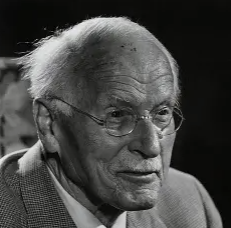
2 months 3 days ago
But we must not forget that only a very few people are artists in life; that the art of life is the most distinguished and rarest of all the arts. Modern Man in Search of a Soul.
▼
Source
source
Section - The Stages of Life

2 months 6 days ago
Every man may claim the fullest liberty to exercise his faculties compatible with the possession of like liberties by every other man.
▼
Source
source
Pt. II, Ch. 4 : Derivation of a First Principle, § 3

1 month 4 weeks ago
I have cast fire upon the world, and see, I am guarding it until it blazes.

2 months 2 days ago
Every utopia about to be realized resembles a cynical dream.

2 months 1 week ago
Every man has some reminiscences which he would not tell to everyone, but only to his friends. He has others which he would not reveal even to his friends, but only to himself, and that in secret. But finally there are still others which a man is even afraid to tell himself, and every decent man has a considerable number of such things stored away. That is, one can even say that the more decent he is, the greater the number of such things in his mind.
▼
Source
source
Part 1, Chapter 11
3 months 1 week ago
Justice, however, never was in reality administered gratis in any country. Lawyers and attornies, at least, must always be paid by the parties; and, if they were not, they would perform their duty still worse than they actually perform it.
▼
Source
source
Chapter I, Part II, p. 778.
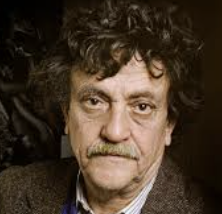
1 month 1 week ago
What television does is rent us friends and relatives who are quite satisfactory. The child watching TV loves these people, you know -- they're in color, and they're talking to the child. Why wouldn't a child relate to these people? And you know, if you can't sleep at 3 o'clock in the morning, you can turn on a switch, and there are your friends and relatives, and they obviously like you. And they're charming. Who wouldn't want Peter Jennings for a relative? This is quite something, to rent artificial friends and relatives right inside the house.
▼
Source
source
Interviewed by Frank Houston, "The Salon Interview: Kurt Vonnegut", Salon
3 months 1 week ago
This freedom from absolute, arbitrary power, is so necessary to, and closely joined with a man's preservation, that he cannot part with it, but by what forfeits his preservation and life together: for a man, not having the power of his own life, cannot, by compact, or his own consent, enslave himself to any one, nor put himself under the absolute, arbitrary power of another, to take away his life, when he pleases.
▼
Source
source
Second Treatise of Civil Government, Ch. IV, sec. 23
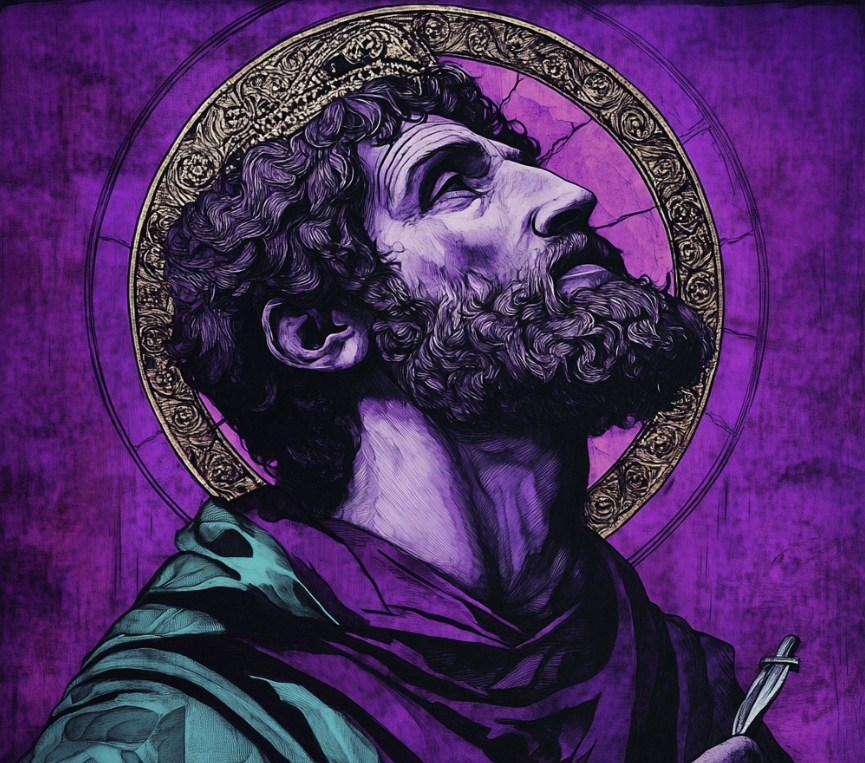
3 months 3 weeks ago
The Word takes to Himself one man, for He takes unity. He does not take schisms to Himself, nor does He take heresies. So it is one man who is taken, and his Head is Christ. This is that "blessed man who hath not walked in the council of the ungodly" (Ps. 1:1); this is he that is assumed. He is not outside of us. Let us be in Him, and we shall be assumed; let us be in Him, and we shall be chosen. Therefore this one man that is taken to become the temple of God, is at once many and one.
▼
Source
source
p.430

1 month 3 weeks ago
Only the feeble resign themselves to final death and substitute some other desire for the longing for personal immortality. In the strong the zeal for perpetuity overrides the doubt of realizing it, and their superabundance of life overflows upon the other side of death.
4 months 1 week ago
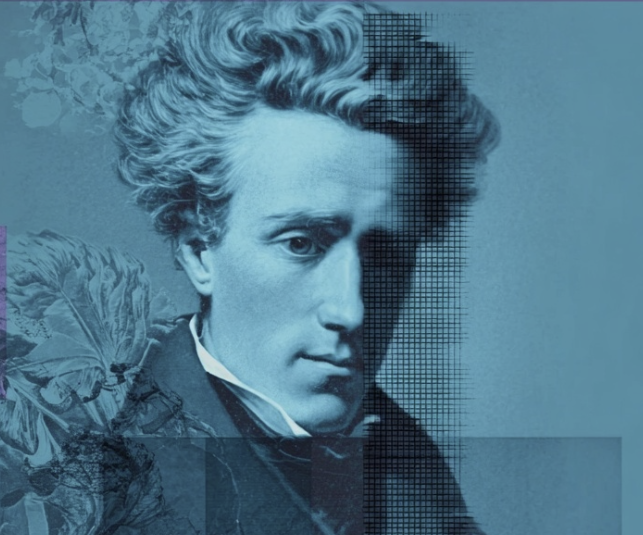
Deep within every human being there still lives the anxiety over the possibility of being alone in the world, forgotten by God, overlooked among the millions and millions in this enormous household. One keeps this anxiety at a distance by looking at the many round about who are related to him as kin and friends, but the anxiety is still there, nevertheless, and one hardly dares think of how he would feel if all this were taken away.

3 months 1 week ago
Nor is it the irrationality of the form which is taken as characteristic. On the contrary, one overlooks the irrational.
▼
Source
source
Vol. II, Ch. I, p. 30.
3 months 1 week ago
What are the earth and all its interests beside the deep surmise which pierces and scatters them?
2 months 2 days ago
Death makes no sense except to people who have passionately loved life. How can one die without having something to part from? Detachment is a negation of both life and death. Whoever has overcome his fear of death has also triumphed over life. For life is nothing but another word for this fear.

4 months 4 days ago
Beholding beauty with the eye of the mind, he will be enabled to bring forth, not images of beauty, but realities (for he has hold not of an image but of a reality), and bringing forth and nourishing true virtue to become the friend of God and be immortal, if mortal man may.
1 month 4 days ago
I neither approve nor disapprove. I merely try to understand. Sexual freedom is as natural to newly tribalized youth as drugs.

4 months 4 days ago
It's my belief that the Universe possesses, in its essence, fractal properties of a very complex sort and that the pursuit of science shares those properties. It follows that any part of the Universe that remains un-understood, and any part of scientific investigation that remains unresolved, however small that might be in comparison to what is understood and resolved, contains within it all the complexity of the original. Therefore, we'll never finish. No matter how far we go, the road ahead will be as long as it was at the start, and that's the secret of the Universe.

2 months 2 weeks ago
If thou intend to do any good; tarry not till to-morrow! for thou knowest not what may chance thee this night.
2 months 6 days ago
Religion is the dream of the human mind. But even in dreams we do not find ourselves in emptiness or in heaven, but on earth, in the realm of reality; we only see real things in the entrancing splendor of imagination and caprice, instead of in the simple daylight of reality and necessity.
▼
Source
source
Preface to Second Edition
3 months 3 weeks ago
Let each look to his own heart: let him not keep hatred against his brother for any hard word; on account of earthly contention let him not become earth.
▼
Source
source
First Homily, Paragraph 11, as translated by H. Browne, Nicene and Post-Nicene Fathers, First Series, Vol. 7 (1888)
2 months 4 days ago
If there is a state, then necessarily there is domination and consequently slavery. A state without slavery, open or camouflaged, is inconceivable - that is why we are enemies of the state.
3 months 3 weeks ago
Why, then, do we wonder any longer that, although in material things we are thoroughly experienced, nevertheless in our actions we are dejected, unseemly, worthless, cowardly, unwilling to stand the strain, utter failures one and all? .
▼
Source
source
Book II, ch. 16, 18
CivilSimian.com created by AxiomaticPanic, CivilSimian, Kalokagathia