


3 months 1 week ago
The Hudson's Bay Company, before their misfortunes in the late war, had been much more fortunate than the Royal African Company.
▼
Source
source
Chapter I, Part III, p. 806.
1 month 2 weeks ago
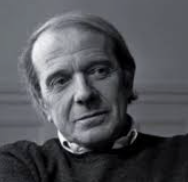
It is at work everywhere, functioning smoothly at times, at other times in firs and starts . It breathes, it heats, it eats. It shits and fucks. What a mistake to have ever said the id. Everywhere it is machines- real ones, not figurative ones: machines driving other machines, machines being driven by other machines, with all the necessary couplings and connections. An organ-machine is plugged into an energy-source-machine: the one produces a flow that the other interrupts The breast is a machine that produces milk, and the mouth a machine coupled to it.
▼
Source
source
The Desiring Machine

7 months 1 week ago
I think that the task of philosophy is not to provide answers, but to show how the way we perceive a problem can be itself part of a problem.
1 month 3 weeks ago
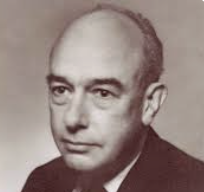
Creatures inveterately wrong in their inductions have a pathetic but praiseworthy tendency to die before reproducing their kind.
▼
Source
source
"Natural Kinds", in Ontological Relativity and Other Essays (1969), p. 126

3 months 5 days ago
We have two bits of evidence about the Somebody. One is the universe He has made. If we used that as our only clue, I think we should have to conclude that He was a great artist (for the universe is a very beautiful place), but also that He is quite merciless and no friend to man (for the universe is a very dangerous and terrifying place.) ...The other bit of evidence is that Moral Law which He has put in our minds. And this is a better bit of evidence than the other, because it is inside information. You find out more about God from the Moral Law than from the universe in general just as you find out more about a man by listening to his conversation than by looking at a house he has built.
▼
Source
source
Book I, Chapter 5, "We Have Cause to Be Uneasy"

3 months 1 day ago
But a punishment like forced labour or even imprisonment - mere loss of liberty - has never functioned without a certain additional element of punishment that certainly concerns the body itself: rationing of food, sexual deprivation, corporal punishment, solitary confinement ... There remains, therefore, a trace of 'torture' in the modern mechanisms of criminal justice - a trace that has not been entirely overcome, but which is enveloped, increasingly, by the non-corporal nature of the penal system

3 months 3 weeks ago
But there is nothing sweeter than to dwell in towers that rise On high, serene and fortified with teachings of the wise, From which you may peer down upon the others as they stray This way and that, seeking the path of life, losing their way: The skirmishing of wits, the scramble for renown, the fight, Each striving harder than the next, and struggling day and night, To climb atop a heap of riches and lay claim to might.
▼
Source
source
Book II, lines 7-13 (tr. Stallings)
2 months 2 days ago
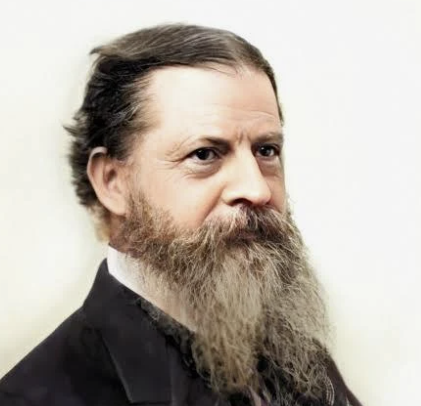
As the mathematics are now understood, each branch - or, if you please, each problem, - is but the study of the relations of a collection of connected objects, without parts, without any distinctive characters, except their names or designating letters. These objects are commonly called points; but to remove all notion of space relations, it may be better to name them monads. The relations between these points are mere complications of two different kinds of elementary relations, which may be termed immediate connection and immediate non-connection. All the monads except as serve as intermediaries for the connections have distinctive designations.
▼
Source
source
p. 268

3 months 1 week ago
Every thing in the world is purchased by labour.
▼
Source
source
Part II, Essay 1: Of Commerce
3 months 3 weeks ago
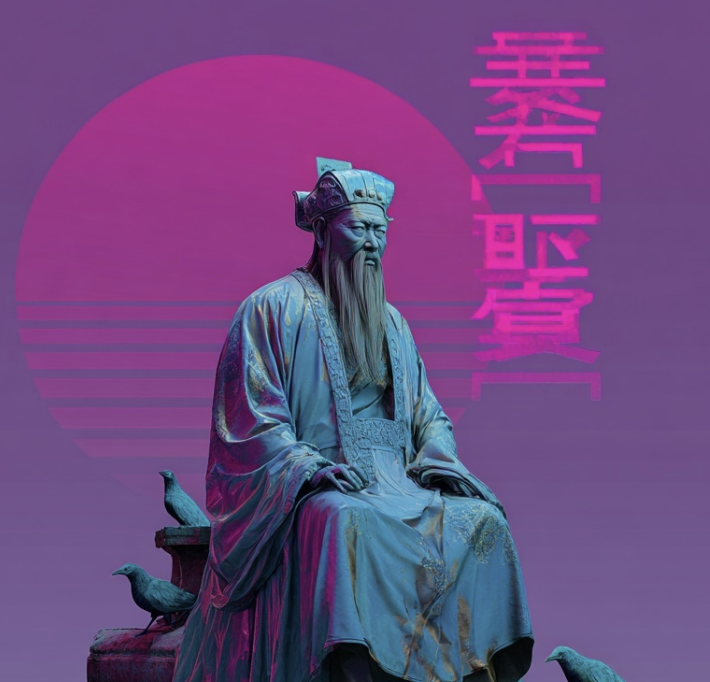
If a man has no humaneness what can his propriety be like? If a man has no humaneness what can his happiness be like?

2 months 2 weeks ago
Know that death comes to everyone, and that wealth will sometimes be acquired, sometimes lost. Whatever griefs mortals suffer by divine chance, whatever destiny you have, endure it and do not complain. But it is right to improve it as much as you can, and remember this: Fate does not give very many of these griefs to good people.
▼
Source
source
As quoted in Divine Harmony: The Life and Teachings of Pythagoras by John Strohmeier and Peter Westbrook.

2 days ago
When the general population no longer constitutes the armed forces, when the army is no longer the people in arms, then empires fall. Today all armies are again tending to become mercenary armies.
▼
Source
source
49

3 months 5 days ago
But when they have realized that it [society] rejects them forever, they themselves assume the ostracism of which they are victims so as not to leave the initiative to their oppressors.
▼
Source
source
p. 65-6

1 month 4 days ago
Faced with information overload, we have no alternative but pattern-recognition.
▼
Source
source
(p. 132)

2 months 3 weeks ago
With a foolish man make no dispute.

3 months 2 weeks ago
The first law that ever God gave to man was a law of pure obedience; it was a commandment naked and simple, wherein man had nothing to inquire after, nor to dispute; forasmuch as to obey is the proper office of a rational soul, acknowledging a heavenly superior and benefactor.
▼
Source
source
Ch. 12, tr. Cotton, 1685

2 months 1 week ago
The lowest degree of education is to distinguish oneself from the ignorant ordinary man. The educated man does not loathe honey even if he finds it in the surgeon's cupping-glass; he realizes that the cupping glass does not essentially alter the honey. The natural aversion from it in such a case rests on popular ignorance, arising from the fact that the cupping-glass is made only for impure blood. Men imagine that the blood is impure because it is in the cupping-glass, and are not aware that the impurity is due to a property.
▼
Source
source
III. The Classes of Seekers, p. 31.

1 month 6 days ago
We know very well that we are only allowed to go on eating our dinner, to finish seeing the new play, or to enjoy to the end the ball, the Christmas fete, the promenade, the races or, the hunt, thanks to the policeman's revolver or the soldier's rifle, which will shoot down the famished outcast who has been robbed of his share, and who looks round the corner with covetous eyes at our pleasures, ready to interrupt them instantly, were not policeman and soldier there prepared to run up at our first call for help.
▼
Source
source
Chapter XII, Conclusion-Repent Ye, for the Kingdom of Heaven is at Hand

3 months 1 day ago
Technically speaking, since our complex societies are highly susceptible to interferences and accidents,they certainly offer ideal opportunities for a prompt disruption of normal activities. These disruptions can, with minimum expense, have considerably destructive consequences. Global terrorism is extreme both in its lack of realistic goals and in its cynical exploitation of the vulnerability of complex systems.
▼
Source
source
Habermas (2004) in: Giovanna Borradori (2004) Philosophy in a Time of Terror: : Dialogues with Jurgen Habermas and Jacques Derrida. p. 34

2 months 1 week ago
So many of my thoughts and feelings are shared by the English that England has turned into a second native land of the mind for me.
▼
Source
source
Journeys to England and Ireland, 1835.


3 months 1 day ago
This aristocratic thesis is... the demos, the people, are the most numerous... also comprised of the most ordinary, and... even the worst, citizens. Therefore... what is best for the demos cannot be what is best for the polis... the city.
1 month 6 days ago
Service of the people by sciences and arts will only exist when men live with the people and as the people live, and without presenting any claims will offer their scientific and artistic services, which the people will be free to accept or decline as they please.
1 month 3 weeks ago
If philosophy is still necessary, it is so only in the way it has been from time immemorial: as critique, as resistance to the expanding heteronomy, even if only as thought's powerless attempt to remain its own master and to convict of untruth, by their own criteria, both a fabricated mythology and a conniving, resigned acquiescence. ... It is incumbent upon philosophy ... to provide a refuge for freedom. Not that there is any hope that it could break the political tendencies that are throttling freedom throughout the world both from within and without and whose violence permeates the very fabric of philosophical argumentation.
▼
Source
source
p. 10

3 months 1 week ago
Either Man will abolish war, or war will abolish Man.
▼
Source
source
Fact and Fiction (1961), Part IV, Ch. 10: "Can War Be Abolished?", p. 276

2 months 1 week ago
Law and arbitrary power are in eternal enmity. Name me a magistrate, and I will name property; name me power, and I will name protection. It is a contradiction in terms, it is blasphemy in religion, it is wickedness in politics, to say that any man can have arbitrary power. In every patent of office the duty is included. For what else does a magistrate exist? To suppose for power is an absurdity in idea. Judges are guided and governed by the eternal laws of justice, to which we are all subject. We may bite our chains, if we will, but we shall be made to know ourselves, and be taught that man is born to be governed by law; and he that will substitute will in the place of it is an enemy to God.
▼
Source
source
Speech in opening the impeachment of Warren Hastings (16 February 1788), quoted in The Works of the Right Honourable Edmund Burke, Volume the Ninth (1899), p. 458
3 months 3 weeks ago
To those whose talents are above mediocrity, the highest subjects may be announced. To those who are below mediocrity, the highest subjects may not be announced.
2 months 1 week ago
Happiest are the people who give most happiness to others.
▼
Source
source
As quoted in Happyology by Harald W. Tietze, p. 28

3 months 6 days ago
Undoubtedly we have no questions to ask which are unanswerable. We must trust the perfection of the creation so far, as to believe that whatever curiosity the order of things has awakened in our minds, the order of things can satisfy. Every man's condition is a solution in hieroglyphic to those inquiries he would put. He acts it as life, before he apprehends it as truth.
▼
Source
source
Introduction
1 month 4 weeks ago
For such is the nature of men, that howsoever they may acknowledge many others to be more witty, or more eloquent, or more learned; Yet they will hardly believe there be many so wise as themselves: For they see their own wit at hand, and other men's at a distance.
▼
Source
source
The First Part, Chapter 13, p. 61

1 month 2 weeks ago
Phenomenology is not a philosophy; it is a philosophical method, a tool. It is like an adjustable spanner that can be used for dismantling a refrigerator or a car, or used for hammering in nails, or even for knocking somebody out.
▼
Source
source
p. 92
1 month 2 weeks ago
When I'm bored, my sense of values goes to sleep. But it's not dead, only asleep. A crisis can wake it up and make the world seem infinitely important and interesting. But what I need to learn is the trick of shaking them awake myself . . . And incidentally, another name for the sense of values is intelligence. A stupid person is a person whose values are narrow.
▼
Source
source
p. 57

3 months 2 days ago
It seems to me that, in every culture, I come across a chapter headed Wisdom. And then I know exactly what is going to follow: Vanity of vanities, all is vanity.
▼
Source
source
Conversation of 1934
3 months 2 weeks ago
Wars begin when you will, but they do not end when you please. Variant translation: Wars are begun at will but not ended at will.
▼
Source
source
Book III, Chapter 7.
1 month 4 days ago
War has become the environment of our time if only because it is an accelerated form of innovation and education.
▼
Source
source
(p. 381)
3 months 5 days ago
To choose this or that is to affirm at the same time the value of what we choose, because we can never choose evil. We always choose the good, and nothing can be good for us without being good for all.
▼
Source
source
Existentialism and Human Emotions

2 months 1 week ago
But man is a Noble Animal, splendid in ashes, and pompous in the grave, solemnizing Nativities and Deaths with equal lustre, nor omitting Ceremonies of Bravery, in the infamy of his nature. Life is a pure flame, and we live by an invisible Sun within us.
▼
Source
source
Chapter V

1 month 2 weeks ago
The people are asleep; they remain indifferent. They forge their own chains and do the bidding of their masters to crucify their Christs.
▼
Source
source
(p. 304)

4 months 1 week ago
Human justice is very prolix, and yet at times quite mediocre; divine justice is more concise and needs no information from the prosecution, no legal papers, no interrogation of witnesses, but makes the guilty one his own informer and helps him with eternity's memory.
3 months 5 days ago
The human imagination has seldom had before it an object so sublimely ordered as the medieval cosmos. If it has an aesthetic fault, it is perhaps, for us who have known romanticism, a shade too ordered. For all its vast spaces it might in the end afflict us with a kind of claustrophobia. Is there nowhere any vagueness? No undiscovered by-ways? No twilight? Can we never really get out of doors?
▼
Source
source
The Discarded Image: An Introduction to Medieval and Renaissance Literature, 1964
1 month 2 weeks ago
Christianity is most admirably adapted to the training of slaves, to the perpetuation of a slave society; in short, to the very conditions confronting us to-day.... The rulers of the earth have realized long ago what potent poison inheres in the Christian religion. That is the reason they foster it; that is why they leave nothing undone to instill it into the blood of the people. They know only too well that the subtleness of the Christian teachings is a more powerful protection against rebellion and discontent than the club or the gun.
4 months 1 week ago
Everything that depends on the action of nature is by nature as good as it can be, and similarly everything that depends on art or any rational cause, and especially if it depends on the best of all causes. To entrust to chance what is greatest and most noble would be a very defective arrangement.
3 months 5 days ago
I do not understand! I understand nothing! I cannot understand nor do I want to understand! I want to believe! To Believe!
▼
Source
source
Act 1
2 months 2 days ago
Some minds will jump here jump to the conclusion that a past idea cannot in any sense be present. But that is hasty and illogical. How extravagant too, to pronounce our whole knowledge of the past to be mere delusion! Yet it would seem that the past is completely beyond the bounds of possible experience as a Kantian thing-in-itself.
3 months 5 days ago
He yawned. He had finished the day and he had also finished with his youth. Various well-bred moralities had already discreetly offered him their services: disillusioned epicureanism, smiling tolerance, resignation, common sense stoicism - all the aids whereby a man may savour, minute by minute, like a connoisseur, the failure of a life.
▼
Source
source
L'âge de raison (The Age of Reason)
3 days ago
There are no conventions, no tabus, no gods, no priests, princes, fathers, or revelations which they must accept. ... The prison door is wide open. They stagger out into trackless space under a blinding sun.
▼
Source
source
Preface

1 month 3 weeks ago
It has often been said that every man who has suffered misfortunes prefers to be himself, even with his misfortunes, rather than to be someone else without them. For unfortunate men, when they preserve their normality in their misfortune - that is to say, when they endeavor to persist in their own being - prefer misfortune to non-existence. For myself I can say that when a as a youth, and even as a child, I remained unmoved when shown the most moving pictures of hell, for even then nothing appeared to me quite so horrible as nothingness itself. It was a furious hunger of being that possessed me, an appetite for divinity, as one of our ascetics [San Juan de los Angeles] has put it.

3 months 2 weeks ago
Since the law is good, the will, which is hostile to it, cannot be good.
▼
Source
source
Thesis 87
2 months 3 days ago
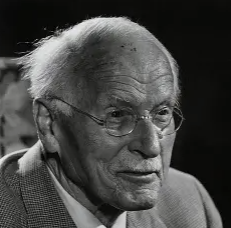
Great and enduring civilizations like those of the Hindus and the Chinese were built upon this foundation and developed from it a discipline of self-knowledge which they brought to a high pitch of refinement both in philosophy and practice.
▼
Source
source
Carl Jung, Modern Man in Search of a Soul. quoted in Hindu Culture, K. Guru Dutt, and quoted in Gewali, Salil (2013). Great Minds on India. New Delhi: Penguin Random House.

1 month ago
My life was not useless; I gave important truths to the world, and it was only for want of understanding that they were disregarded. I have been ahead of my time.
▼
Source
source
Deathbed statement (November 1858), in response to a church minister who asked if he regretted wasting his life on fruitless projects; as quoted in Harold Hill : A People's History
CivilSimian.com created by AxiomaticPanic, CivilSimian, Kalokagathia