

2 months 2 weeks ago
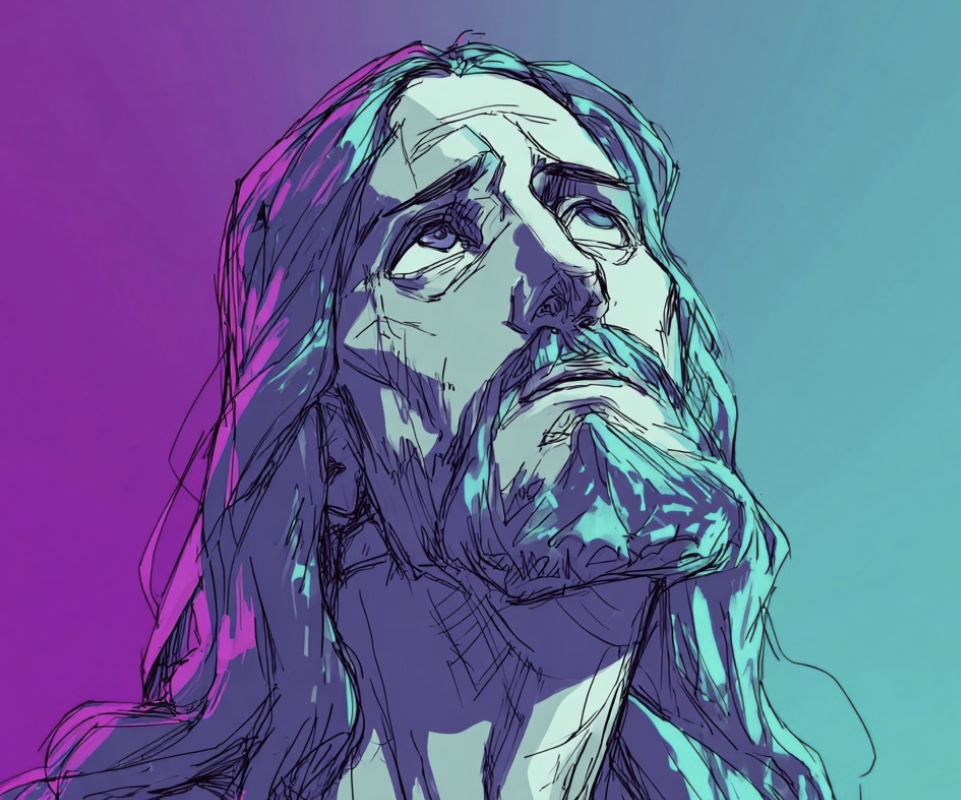
His disciples said to Him, "When will the Kingdom come?" Jesus said, "It will not come by waiting for it. It will not be a matter of saying 'Here it is' or 'There it is.' Rather, the Kingdom of the Father is spread out upon the earth, and men do not see it."
4 months 1 week ago
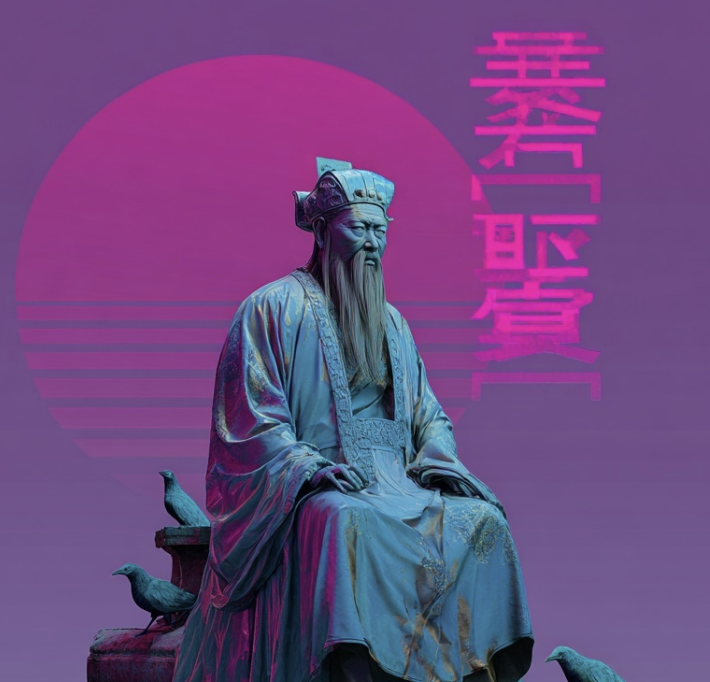
The way of the superior man may be found, in its simple elements, in the intercourse of common men and women; but in its utmost reaches, it shines brightly through Heaven and Earth.
2 months 1 week ago
Bourgeois norms are experienced as the evident laws of a natural order-the further the bourgeois class propagates its representations, the more naturalized they become.
▼
Source
source
p. 140

2 months 2 weeks ago
Dead of night. No one, nothing but the society of the moments. Each pretends to keep us company, then escapes - desertion after desertion.

2 months 1 week ago
The eulogies of my intelligence are positively intended to evade the question "Is what she says true?"
▼
Source
source
Letter to her parents (1943), as quoted in the Introduction by Siân Miles p. 2
3 months 3 weeks ago
Whatever my own practice may be, I have no doubt that it is a part of the destiny of the human race, in its gradual improvement, to leave off eating animals, as surely as the savage tribes have left off eating each other when they came in contact with the more civilized.
▼
Source
source
p. 245

3 months 3 weeks ago
No congress, nor mob, nor guillotine, nor fire, nor all together, can avail, to cut out, burn, or destroy the offense of superiority in persons. The superiority in him is inferiority in me.
▼
Source
source
p. 65

2 weeks ago
Much has been said of Mahomet's propagating his Religion by the sword. It is no doubt far nobler what we have to boast of the Christian Religion, that it propagated itself peaceably in the way of preaching and conviction. Yet withal, if we take this for an argument of the truth or falsehood of a religion, there is a radical mistake in it. The sword indeed: but where will you get your sword! Every new opinion, at its starting, is precisely in a minority of one. In one man's head alone, there it dwells as yet. One man alone of the whole world believes it; there is one man against all men. That he take a sword, and try to propagate with that, will do little for him. You must first get your sword! On the whole, a thing will propagate itself as it can. We do not find, of the Christian Religion either, that it always disdained the sword, when once it had got one.
4 days ago
The clock of communism has stopped striking. But its concrete building has not yet come crashing down. For that reason, instead of freeing ourselves, we must try to save ourselves from being crushed by its rubble.
▼
Source
source
How We Must Rebuild Russia in Komsomolskaya Pravda
4 months 3 weeks ago
After these matters we ought perhaps next to discuss pleasure. For it is thought to be most intimately connected with our human nature, which is the reason why in educating the young we steer them by the rudders of pleasure and pain; it is thought, too, that to enjoy the things we ought and to hate the things we ought has the greatest bearing on virtue of character. For these things extend right through life, with a weight and power of their own in respect both to virtue and to the happy life, since men choose what is pleasant and avoid what is painful; and such things, it will be thought, we should least of all omit to discuss, especially since they admit of much dispute.

2 months 3 weeks ago
They made and recorded a sort of institute and digest of anarchy, called the rights of man, in such a pedantic abuse of elementary principles as would have disgraced boys at school; but this declaration of rights was worse than trifling and pedantic in them; as by their name and authority they systematically destroyed every hold of authority by opinion, religious or civil, on the minds of the people. By this mad declaration they subverted the state; and brought on such calamities as no country, without a long war, has ever been known to suffer, and which may in the end produce such a war, and perhaps, many such.
▼
Source
source
Speech in the House of Commons (9 February 1790), quoted in The Parliamentary History of England, From the Earliest Period to the Year 1803, Vol. XXVIII (1816), column 358

1 month 2 days ago
I'll admit, I was a naive globalist. I still believe in the ideal, but, I realize that those that hated the idea so much are the authors of the problem they see in it.
Now, I understand clearly, those that author the problem that makes globalization near impossible are also the ones who insist it will never work, nevertheless, human necessity remains a monolith and universal.
3 months 3 weeks ago
If the stars should appear one night in a thousand years, how would men believe and adore, and preserve for many generations the remembrance of the city of God which had been shown! But every night come out these envoys of beauty, and light the universe with their admonishing smile.
▼
Source
source
Nature
3 months 3 weeks ago
Correct and accurate conclusions may be arrived at if we carefully observe the relation of the spheres of concepts, and only conclude that one sphere is contained in a third sphere, when we have clearly seen that this first sphere is contained in a second, which in its turn is contained in the third. On the other hand, the art of sophistry lies in casting only a superficial glance at the relations of the spheres of the concepts, and then manipulating these relations to suit our purposes, generally in the following way: - When the sphere of an observed concept lies partly within that of another concept, and partly within a third altogether different sphere, we treat it as if it lay entirely within the one or the other, as may suit our purpose.
▼
Source
source
Vol. I, Ch. 10, as translated by R. B. Haldane
3 months 2 weeks ago
Generally speaking, all the authorities exercising individual control function according to a double mode; that of binary division and branding (mad/sane; dangerous/harmless; normal/abnormal); and that of coercive assignment, of differential distribution (who he is; where he must be; how he is to be characterized' how he is to be recognized' how a constant surveillance is to be exercised over him in a individual way, etc.).
▼
Source
source
Part Four, Complete and austere institutions
1 month 2 weeks ago
[Asked "Do you still favour English independence?"] No, I don't think I've ever really favoured English independence. My view is that if the Scots want to be independent then we should aim for the same thing. Scottish independence, I don't think the Welsh want independence, the Northern Irish certainly don't. The Scottish desire for independence is, to some extent, a fabrication. They want to identify themselves as Scots but still to be part of a,[sic] to enjoy the subsidy they get from being part of the kingdom. I can see there are Scottish nationalists who envision something more than that, but if that becomes a real political force then yeah, we should try for independence too. As it is, as you know, the Scots have two votes: they can vote for their own parliament and vote to put their people into our parliament, who come to our parliament with no interest in Scotland but an interest in bullying us.

3 months 3 weeks ago
The qualities most useful to ourselves are, first of all, superior reason and understanding, by which we are capable of discerning the remote consequences of all our actions, and of foreseeing the advantage or detriment which is likely to result from them: and secondly, self-command, by which we are enabled to abstain from present pleasure or to endure present pain, in order to obtain a greater pleasure or to avoid a greater pain in some future time. In the union of those two qualities consists the virtue of prudence, of all the virtues that which is most useful to the individual.
▼
Source
source
Chap. II.
4 months 6 days ago
She is the sum of nature's universe.To her perfection all of beauty tends.
▼
Source
source
Chapter XIV, lines 49-50 (tr. Barbara Reynolds)
2 months 2 weeks ago
The sphere of consciousness shrinks in action; no one who acts can lay claim to the universal, for to act is to cling to the properties of being at the expense of being itself, to form a reality to reality's detriment.
3 months 3 weeks ago
There are other letters for the child to learn than those which Cadmus invented.
1 month ago
The repression of liberty that took place in the countries in which Communist regimes were established cannot be adequately explained as a product of backwardness, or of errors in the application of Marxian theory. It was the result of a resolute attempt to realize an Enlightenment utopia - a condition of society in which no serious form of conflict any longer exists.
▼
Source
source
'Isaiah Berlin: The Value of Decency' (p.99)
1 month 2 weeks ago
They are in you and me; they created us, body and mind; and their preservation is the ultimate rationale for our existence. They have come a long way, those replicators. Now they go by the name of genes, and we are their survival machines.
▼
Source
source
Ch. 2. The replicators

3 months 3 weeks ago
The offender never forgives.
▼
Source
source
Émile et Sophie, ou Les Solitaires, "Lettre Première", 1781
2 weeks ago
A man perfects himself by work much more than by reading.
4 months 1 week ago
Some of their faults people readily admit, but others not so readily.
▼
Source
source
Book II, ch. 21, 1

3 months 3 weeks ago
The best authorities are unanimous in saying that a war with H-bombs might possibly put an end to the human race. It is feared that if many H-bombs are used there will be universal death, sudden only for a minority, but for the majority a slow torture of disease and disintegration. Many warnings have been uttered by eminent men of science and by authorities in military strategy. None of them will say that the worst results are certain. What they do say is that these results are possible, and no one can be sure that they will not be realized. We have not yet found that the views of experts on this question depend in any degree upon their politics or prejudices. They depend only, so far as our researches have revealed, upon the extent of the particular expert's knowledge. We have found that the men who know most are the most gloomy.
1 month 2 weeks ago
I'm not one of those who wants to stop Christian traditions. This is historically a Christian country. I'm a cultural Christian the same way as many of my friends call themselves cultural Jews or cultural Muslims. So, yes, I love singing carols along with everybody else. I'm not one of those who wants to purge our society of our Christian history.
▼
Source
source
BBC's Have Your Say
2 months 1 week ago
There continue to be complex debates about what Nietzsche understood truth to be. Quite certainly, he did not think, in pragmatist spirit, that beliefs are true if they serve our interests or welfare: we have just seen some of his repeated denials of this idea. The more recently fashionable view is that he was the first of the deniers, thinking that there is no such thing as truth, or that truth is what anyone thinks it is, or that it is a boring category that we can do without. This is also wrong, and more deeply so. Nietzsche did not think that the ideal of truthfulness went into retirement when its metaphysical origins were discovered, and he did not suppose, either, that truthfulness could be detached from a concern for the truth. Truthfulness as an ideal retains its power, and so far from his seeing truth as dispensable or malleable, his main question is how it can be made bearable.
▼
Source
source
p. 16
3 months 3 weeks ago
All the interests of my reason, speculative as well as practical, combine in the three following questions: 1. What can I know? 2. What ought I to do? 3. What may I hope?
▼
Source
source
B 832-833
2 months 2 weeks ago
And be sure of this: I am with you always, even to the end of the age.
▼
Source
source
Jesus in Matthew 28:20
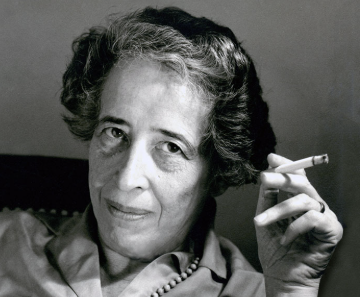
3 months 3 weeks ago
The trouble with Eichmann was precisely that so many were like him, and that the many were neither perverted nor sadistic, that they were, and still are, terribly and terrifyingly normal. From the viewpoint of our legal institutions and of our moral standards of judgment, this normality was much more terrifying than all the atrocities put together, for it implied - as had been said at Nuremberg over and over again by the defendants and their counsels - that this new type of criminal, who is in actual fact hostis generis humani, commits his crimes under circumstances that make it well-nigh impossible for him to know or to feel that he is doing wrong.
▼
Source
source
Epilogue
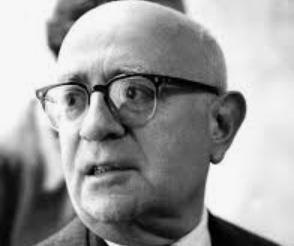
2 months 1 week ago
We are really no longer ourselves a part of nature at the moment when we notice, when we recognize, that we are a part of nature.
▼
Source
source
Probleme der Moralphilosophie (Frankfurt: Suhrkamp, 1996), p. 154; as quoted in Andrew Bowie, Adorno and the Ends of Philosophy (Cambridge: Polity, 2013), p. 94

3 months 3 weeks ago
Jupiter: I committed the first crime by creating men as mortals. After that, what more could you do, you the murderers?
Aegisteus: Come on; they already had death in them: at most you simply hastened things a little.
▼
Source
source
Act 2

3 months 2 weeks ago
The ceremonial (hot or cold) as opposed to the haphazard (lukewarm) characterizes piety.
▼
Source
source
Ch. 7 : Remarks on Frazer's Golden Bough, p. 127

1 month 3 weeks ago
What is the Jew?...What kind of unique creature is this whom all the rulers of all the nations of the world have disgraced and crushed and expelled and destroyed; persecuted, burned and drowned, and who, despite their anger and their fury, continues to live and to flourish. What is this Jew whom they have never succeeded in enticing with all the enticements in the world, whose oppressors and persecutors only suggested that he deny (and disown) his religion and cast aside the faithfulness of his ancestors?! The Jew - is the symbol of eternity. ... He is the one who for so long had guarded the prophetic message and transmitted it to all mankind. A people such as this can never disappear. The Jew is eternal. He is the embodiment of eternity.
▼
Source
source
Attributed in "The Final Resolution", in Jewish World Periodical (1908), p. 189
1 month 3 weeks ago
Challenge, and not desire, lies at the heart of seduction.
▼
Source
source
(p. 57)

4 months 1 week ago
For as children tremble and fear everything in the blind darkness, so we in the light sometimes fear what is no more to be feared than the things that children in the dark hold in terror and imagine will come true. This terror, therefore, and darkness of mind must be dispelled not by the rays of the sun and glittering shafts of daylight, but by the aspect and law of nature.
▼
Source
source
Book II, lines 55-61 (tr. Rouse)

1 month 3 weeks ago
There is absolutely no inevitability, so long as there is a willingness to contemplate what is happening.
▼
Source
source
[A chapter sub-heading attributed by McLuhan to Alfred North Whitehead]
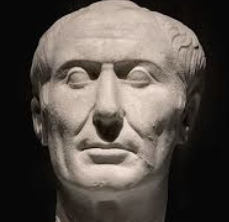
1 month 3 weeks ago
He who is bent on doing evil can never want occasion.
▼
Source
source
Maxim 459
2 months 3 weeks ago
You have theories enough concerning the Rights of Men. It may not be amiss to add a small degree of attention to their Nature and disposition.
▼
Source
source
Letter to Charles-Jean-François Depont (November 1789), quoted in Alfred Cobban and Robert A. Smith (eds.), The Correspondence of Edmund Burke, Volume VI: July 1789-December 1791 (1967), p. 46
1 month 3 weeks ago
If a work of art is to explore new environments, it is not to be regarded as a blueprint but rather as a form of action-painting.
▼
Source
source
To Wilfred Watson, October 6 1965. Letters of Marshall McLuhan (1987), p. 325
3 months 2 weeks ago
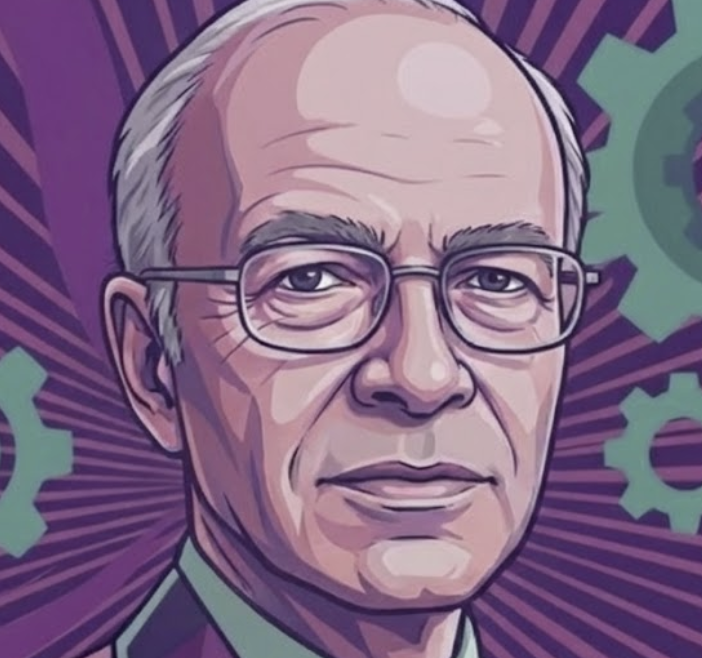
When my ability to reason shows me that the suffering of another being is very similar to my own suffering and matters just as much to that other being as my own suffering matters to me, then my reason is showing me something that is undeniably true. ... The perspective on ourselves that we get when we take the point of view of the universe also yields as much objectivity as we need if we are to find a cause that is worthwhile in a way that is independent of our own desires. The most obvious such cause is the reduction of pain and suffering, wherever it is to be found.
▼
Source
source
p. 238
2 months 2 weeks ago
Although a poem be not made by counting of syllables upon the fingers, yet "numbers" is the most poetical synonym we have for verse, and "measure" the most significant equivalent for beauty, for goodness, and perhaps even for truth. Those early and profound philosophers, the followers of Pythagoras, saw the essence of all things in number, and it was by weight, measure, and number, as we read in the Bible, that the Creator first brought Nature out of the void.
▼
Source
source
Interpretations of Poetry and Religion (1900), p. 251
1 month 3 weeks ago
The sculptural qualities of the image dim down the purely personal identity.
▼
Source
source
(p. 369)

2 months 1 week ago
But our Don Quixote, the inward, the immortal Don Quixote, conscious of his own comicness, does not believe that his doctrines will triumph in this world, because they are not of it. And it is better that they should not triumph. And if the world wished to make Don Quixote king, he would retire alone to the mountain, fleeing from the king-making crowds, as Christ retired alone to the mountain when, after the miracle of the loaves and fishes, they sought to proclaim him king. He left the title of king for the inscription written over the cross.

4 months 3 weeks ago
Art furnishes us with eyes and hands and above all the good conscience to be able to turn ourselves into such a phenomenon.
2 months 2 weeks ago
Everyone who has left houses or brothers or sisters or father or mother or children or fields for my sake will receive a hundred times as much and will inherit eternal life.
▼
Source
source
19:29
2 months 3 weeks ago
We must not always judge of the generality of the opinion by the noise of the acclamation.
▼
Source
source
No. 1

1 week 1 day ago
"They are slaves," people declare. Nay, rather they are men. "Slaves!" No, comrades. "Slaves!" No, they are unpretentious friends. "Slaves!" No, they are our fellow-slaves, if one reflects that Fortune has equal rights over slaves and free men alike.
CivilSimian.com created by AxiomaticPanic, CivilSimian, Kalokagathia