

2 months 1 week ago
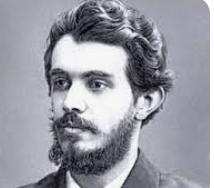
It is difficult to fit the work of Nikolai Berdyaev into any neat category. The label that was used most frequently to characterize him was that of an "existential Christian philosopher" but ... his voice is equally relevant to psychology and psychoanalysis and it also constitutes a uniquely original commentary on the very nature of the person in our postmodern world especially in relation to spirituality.
▼
Source
source
Renos K. Papadopoulos, in C.G. Jung and Nikolai Berdyaev: Individuation and the Person (2011) by Georg Nicolaus, Foreword, p. xiii

3 months 3 weeks ago
This great increase of the quantity of work which, in consequence of the division of labour, the same number of people are capable of performing, is owing to three different circumstances; first, to the increase of dexterity in every particular workman; secondly, to the saving of the time which is commonly lost in passing from one species of work to another; and lastly, to the invention of a great number of machines which facilitate and abridge labour, and enable one man to do the work of many.
▼
Source
source
Chapter I

2 months 3 weeks ago
How often misused words generate misleading thoughts!
▼
Source
source
Ch. 8, Humanity
1 month 6 days ago
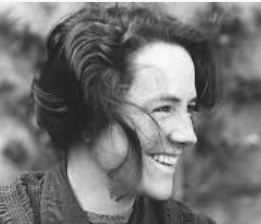
The wave of the future is coming and there is no fighting it.
▼
Source
source
The Wave of the Future

2 months 2 weeks ago
All they that take the sword shall perish with the sword.
▼
Source
source
Matthew 26:52 (KJV)
2 months 1 week ago
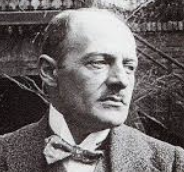
The fake love of ressentiment man offers no real help, since for his perverted sense of values, evils like "sickness" and "poverty" have become goods.
▼
Source
source
L. Coser, trans. (1961), p. 92
2 months 2 weeks ago
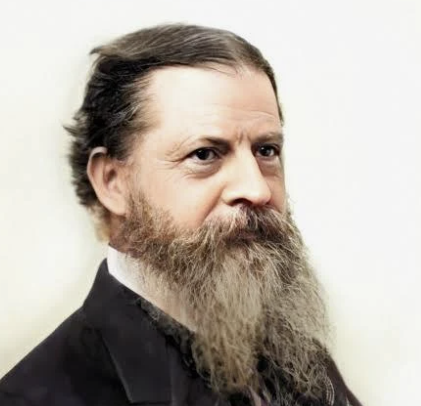
I think that I have succeeded in making it clear that this doctrine gives room for explanations of many facts which without it are absolutely and hopelessly inexplicable; and further that it carries along with it the following doctrines: first, a logical realism of the most pronounced type; second, objective idealism; third, tychism, with its consequent thoroughgoing evolutionism. We also notice that the doctrine presents no hindrences to spiritual influences, such as some philosophies are felt to do.
2 months 2 weeks ago
I came to set fire to the earth, and I wish it were already on fire!
▼
Source
source
12:49 (CEV)
2 months 2 weeks ago
I will destroy this house, and no one will be able to build it....
4 months 1 week ago
Corpses are more fit to be cast out than dung.

2 months 1 week ago
Any madness in us gains from being expressed, because in this way one gives a human form to what separates us from humanity.
▼
Source
source
p. 76
4 months 1 day ago
Marriage is like a cage; one sees the birds outside desperate to get in, and those inside equally desperate to get out.
▼
Source
source
Book III, Ch. 5

4 months 1 day ago
... a penny saved is better than a penny earned.
▼
Source
source
The Duty of a Husband and Wife (17 March 1539), No. 4408. LW 54:337
2 months 3 weeks ago
This method of mental training is, therefore, the immediate preparation for the moral; it completely destroys the root of immorality by never allowing sensuous enjoyment to become the motive. Formerly, that was the first motive to be stimulated and developed, because it was believed that otherwise the pupil could not be influenced or controlled at all.
▼
Source
source
General Nature of New Eduction contiunued p. 31

2 months 6 days ago
Perhaps power is never free from a feeling of lack.
3 months 3 weeks ago
The three great things that govern mankind are reason, passion and superstition. The first governs a few, the two last share the bulk of mankind and possess them in their turns. But superstition most powerfully produces the greatest mischief.
▼
Source
source
Journal entry (16 May 1681), quoted in Maurice Cranston, John Locke: A Biography (1957; 1985), p. 200

2 months 1 week ago
Males learn to lie as a way of obtaining power, and females not only do the same but they also lie to pretend powerlessness.
▼
Source
source
Chapter 3, pg. 59

2 weeks 5 days ago
The political program of nation building in countries like Afghanistan and Iraq is one central example of the productive project of biopower and war. Nothing could be more postmodernist and antiessentialist than this notion of nation building.

4 months 2 weeks ago
What will be left of the power of example if it is proved that capital punishment has another power, and a very real one, which degrades men to the point of shame, madness, and murder?

3 months 3 weeks ago
Ever from one who comes to-morrow Men wait their good and truth to borrow.
▼
Source
source
Merlin's Song, II

2 weeks ago
We will not praise Mahomet's moral precepts as always of the superfinest sort; yet it can be said that there is always a tendency to good in them; that they are the true dictates of a heart aiming towards what is just and true.
1 month 1 week ago
It is surely delightful, Sir, to look forward to that period when a series of liberal and prudent measures shall have delivered islands, so highly favoured by the bounty of Providence, from the curse inflicted on them by the frantic rapacity of man. Then the peasant of the Antilles will no longer crawl in listless and trembling dejection round a plantation from whose fruits he must derive no advantage, and a hut whose door yields him no protection; but, when his cheerful and voluntary labour is performed, he will return with the firm step and erect brow of a British citizen from the field which is his freehold to the cottage which is his castle.
▼
Source
source
Speech to a meeting of the Anti-Slavery Society held in Freemasons' Tavern (25 June 1824), quoted in Report of the Committee of the Society for the Mitigation and Gradual Abolition of Slavery Throughout the British Dominions, Volume I (1824), p. 77

2 months 2 weeks ago
Whenever I happen to be in a city of any size, I marvel that riots do not break out everyday: Massacres, unspeakable carnage, a doomsday chaos. How can so many human beings coexist in a space so confined without hating each other to death?

3 days ago
In the presence of the total reality upon which our conduct is founded, our knowledge is characterized by peculiar limitations and aberrations. We cannot say in principle that "error is life and knowledge is death," because a being involved in persistent errors would continually act wide of the purpose, and would thus inevitably perish.
▼
Source
source
p. 444
4 months 1 day ago
There is no passion so contagious as that of fear.
2 months 3 weeks ago
Men are qualified for civil liberty in exact proportion to their disposition to put moral chains upon their own appetites, - in proportion as their love to justice is above their rapacity, - in proportion as their soundness and sobriety of understanding is above their vanity and presumption, - in proportion as they are more disposed to listen to the counsels of the wise and good, in preference to the flattery of knaves. Society cannot exist, unless a controlling power upon will and appetite be placed somewhere; and the less of it there is within, the more there must be without. It is ordained in the eternal constitution of things, that men of intemperate minds cannot be free. Their passions forge their fetters.
2 months 3 weeks ago
It is the function of a judge not to make but to declare the law, according to the golden mete-wand of the law and not by the crooked cord of discretion.
▼
Source
source
Preface to Brissot's Address
3 months 2 weeks ago
It was an important moment. The old partners of the spectacle of punishment, the body and the blood, gave way. A new character came of the scene, masked. It was the end of a certain kind of tragedy; comedy began, with shadow play, faceless voices, impalpable entities. The apparatus of punitive justice must now bite into this bodiless reality.
▼
Source
source
pp. 17
1 month 3 weeks ago
There is absolutely no inevitability, so long as there is a willingness to contemplate what is happening.
▼
Source
source
[A chapter sub-heading attributed by McLuhan to Alfred North Whitehead]
3 months 3 weeks ago
We may well call it black diamonds. Every basket is power and civilization. For coal is a portable climate. It carries the heat of the tropics to Labrador and the polar circle; and it is the means of transporting itself withersoever it is wanted. Watt and Stephenson whispered in the ear of mankind their secret, that a half-ounce of coal will draw two tons a mile, and coal carries coal, by rail and by boat, to make Canada as warm as Calcutta, and with its comfort brings its industrial power.
▼
Source
source
Wealth
4 months 6 days ago
Rules necessary for demonstrations. To prove all propositions, and to employ nothing for their proof but axioms fully evident of themselves, or propositions already demonstrated or admitted; Never to take advantage of the ambiguity of terms by failing mentally to substitute definitions that restrict or explain them.
2 months 2 weeks ago
Love, a tacit agreement between two unhappy parties to overestimate each other. p. 111, first American edition
▼
Source
source
1970

4 months 1 week ago
Leaving virtue without proper cultivation; not thoroughly discussing what is learned; not being able to move towards righteousness of which a knowledge is gained; and not being able to change what is not good: these are the things which occasion me solicitude.
2 months 3 weeks ago
You rejoice in having made a convert to Atheism. I think there is something unnatural in a zeal of proselytism in an Atheist. I do not believe in an intellectual God, a God made after the image of man. In the vulgar acceptation of the word, therefore, I think a man is right who does not believe in God, but I am also persuaded that a man is wrong who is without religion.
▼
Source
source
Letter to H. B. Rosser (7 March 1820), quoted in C. Kegan Paul, William Godwin: His Friends and Contemporaries, Vol. II (1876), p. 263
3 months 3 weeks ago
Consider the Koran... this wretched book was sufficient to start a world-religion, to satisfy the metaphysical need of countless millions for twelve hundred years, to become the basis of their morality and of a remarkable contempt for death, and also to inspire them to bloody wars and the most extensive conquests. In this book we find the saddest and poorest form of theism. Much may be lost in translation, but I have not been able to discover in it one single idea of value.
▼
Source
source
E. Payne, trans., Vol. II, Ch. XVII: On Man's Need for Metaphysics

3 months 3 weeks ago
Morality is a subject that interests us above all others: We fancy the peace of society to be at stake in every decision concerning it; and 'tis evident, that this concern must make our speculations appear more real and solid, than where the subject is, in a great measure, indifferent to us. What affects us, we conclude can never be a chimera; and as our passion is engag'd on the one side or the other, we naturally think that the question lies within human comprehension; which, in other cases of this nature, we are apt to entertain some doubt of. Without this advantage I never should have ventur'd upon a third volume of such abstruse philosophy, in an age, wherein the greatest part of men seem agreed to convert reading into an amusement, and to reject every thing that requires any considerable degree of attention to be comprehended.
▼
Source
source
Part 1, Section 1
2 weeks ago
"The people may eat grass": hasty words, which fly abroad irrevocable-and will send back tidings.
▼
Source
source
Pt. I, Bk. III, ch. 9.
3 months 3 weeks ago
It goes without saying that the normal durability of fixed capital is calculated on the supposition that all the conditions under which it can perform its functions normally during that time are fulfilled, just as we assume, in placing a mans life at 30 years on the average,that he will wash himself.
▼
Source
source
Volume II, Ch. VIII, p. 176-177.
3 months 2 weeks ago
Citizens of a Jeffersonian democracy can be as religious or irreligious as they please as long as they are not "fanatical." That is, they must abandon or modify opinion on matters of ultimate importance, the opinions that may hitherto have given sense and point to their lives, if these opinions entail public actions that cannot be justified to most of their fellow citizens.
2 months 2 weeks ago
Most men's conscience, habits, and opinions are borrowed from convention and gather continual comforting assurances from the same social consensus that originally suggested them.
▼
Source
source
Ch. VIII: Ideal Society
1 month 3 weeks ago
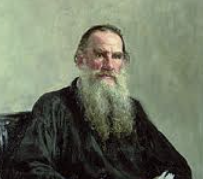
The man who holds the divine theory of life recognizes life not in his own individuality, and not in societies of individualities (in the family, the clan, the nation, the tribe, or the government), but in the eternal undying source of life-in God; and to fulfill the will of God he is ready to sacrifice his individual and family and social welfare. The motor power of his life is love. And his religion is the worship in deed and in truth of the principle of the whole-God.
▼
Source
source
Chapter IV, Christianity Misunderstood by Men of Science
4 months 1 day ago
Christ ought to be preached with this goal in mind - that we might be moved to faith in him so that he is not just a distant historical figure but actually Christ for you and me.
▼
Source
source
p. 69
3 months 3 weeks ago
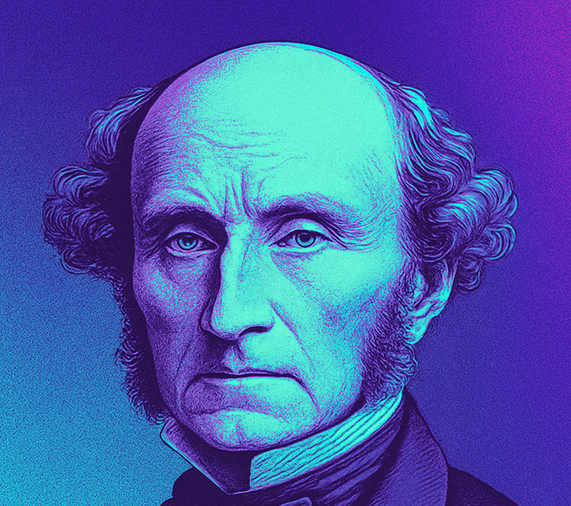
Human nature is not a machine to be built after a model, and set to do exactly the work prescribed for it, but a tree, which requires to grow and develop itself on all sides, according to the tendency of the inward forces which make it a living thing.
▼
Source
source
Ch. III: Of Individuality, As One of the Elements of Well-Being
3 months 3 weeks ago
For a very small expence the public can facilitate, can encourage, and can even impose upon almost the whole body of the people, the necessity of acquiring those most essential parts of education.
▼
Source
source
Chapter I, Part III, Article II, p. 847.
2 months 1 week ago
Feeling does not succeed in converting consolation into truth, nor does reason succeed in converting truth into consolation.
3 months 3 weeks ago
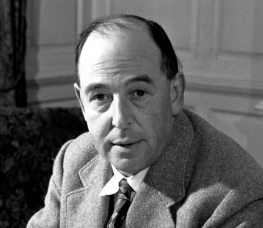
If we cannot "practice the presence of God," it is something to practice the absence of God, to become increasingly aware of our unawareness till we feel like man who should stand beside a great cataract and hear no noise, or like a man in a story who looks in a mirror and finds no face there, or a man in a dream who stretches his hand to visible objects and gets no sensation of touch. To know that one is dreaming is to no longer be perfectly asleep. Bur for news of the fully waking world you must go to my betters.
▼
Source
source
"Charity"
1 month 3 weeks ago
The professional tends to classify and to specialize, to accept uncritically the ground rules of the environment. The ground rules provided by the mass response of his colleagues serves as a pervasive environment of which he is contentedly unaware.
▼
Source
source
(p. 93)

4 months 2 days ago
The monuments of wit survive the monuments of power.
▼
Source
source
Essex's Device

4 months 1 week ago
For human beings, the measure of every action is the impression of the senses.
▼
Source
source
Book I, ch. 28, 10
CivilSimian.com created by AxiomaticPanic, CivilSimian, Kalokagathia