


3 months 3 weeks ago
I mean, a genuinely productive society. I mean you could produce plenty of goods without much freedom, but I think the whole sort of creative life of man is ultimately impossible without a considerable measure of individual freedom, of initiative, creation, all these things which we value, and I think value properly, are impossible without a large measure of freedom.


1 month 2 weeks ago
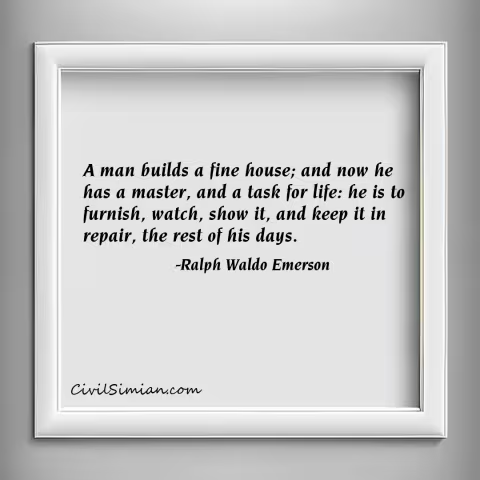
Amid a multitude of projects, no plan is devised.
▼
Source
source
Maxim 319

1 week 1 day ago
I cannot help believing that Mucius was all the more lucky because he manipulated the flames as calmly as if he were holding out his hand to the manipulator. He had wiped out all his previous mistakes; he finished the war unarmed and maimed; and with that stump of a hand he conquered two kings.
1 day ago
How many of us are able to distinguish between the odors of noon and midnight, or of winter and summer, or of a windy spell and a still one? If man is so generally less happy in the cities than in the country, it is because all these variations and nuances of sight and smell and sound are less clearly marked and lost in the general monotony of gray walls and cement pavements.
▼
Source
source
p. 129

2 months 5 days ago
Everywhere and always, since its very inception, Christianity has turned the earth into a vale of tears; always it has made of life a weak, diseased thing, always it has instilled fear in man, turning him into a dual being, whose life energies are spent in the struggle between body and soul. In decrying the body as something evil, the flesh as the tempter to everything that is sinful, man has mutilated his being in the vain attempt to keep his soul pure, while his body rotted away from the injuries and tortures inflicted upon it.The Christian religion and morality extols the glory of the Hereafter, and therefore remains indifferent to the horrors of the earth. Indeed, the idea of self-denial and of all that makes for pain and sorrow is its test of human worth, its passport to the entry into heaven.

2 months 2 weeks ago
The ideal of Morality has no more dangerous rival than the ideal of highest Strength, of most powerful life; which also has been named (very falsely as it was there meant) the ideal of poetic greatness. It is the maximum of the savage; and has, in these times, gained, precisely among the greatest weaklings, very many proselytes. By this ideal, man becomes a Beast-Spirit, a Mixture; whose brutal wit has, for weaklings, a brutal power of attraction.

2 months 4 weeks ago
The noblest Digladiation is in the Theatre of ourselves.
▼
Source
source
Part I, Section XXIV

3 months 3 weeks ago
Do not allow your dreams of a beautiful world to lure you away from the claims of men who suffer here and now.
▼
Source
source
p. 485

1 month 3 weeks ago
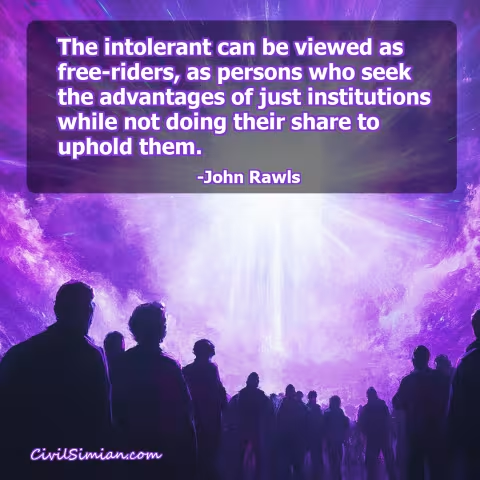
Plato is my friend - Aristotle is my friend - but my greatest friend is truth.
▼
Source
source
These are notes in Latin that Newton wrote to himself that he titled: Quaestiones Quaedam Philosophicae [Certain Philosophical Questions] (c. 1664)
2 months 1 day ago
The behaviour of individuals is the tool with which the organisation achieves its targets.
▼
Source
source
p. 108.

3 months 3 weeks ago
That books do not take the place of experience, and that learning is no substitute for genius, are two kindred phenomena; their common ground is that the abstract can never take the place of the perceptive.
▼
Source
source
E. Payne, trans., Vol. II, Ch. 7, p. 74

2 months 2 weeks ago
If death is as horrible as is claimed, how is it that after the passage of a certain period of time we consider happy any being, friend or enemy, who has ceased to live?
1 month 2 weeks ago
It's almost impossible to say anything against Islam in this country, because you are accused of being racist or Islamophobic.
▼
Source
source
2008 comment quoted in "Fury over Richard Dawkins's burka jibe as atheist tells of his 'visceral revulsion' at Muslim dress", Daily Mail

2 months 3 weeks ago
He who seeks freedom for anything but freedom's self is made to be a slave.
▼
Source
source
p. 204

4 months 2 days ago
States as great engines move slowly.
▼
Source
source
Book II
4 months 1 week ago
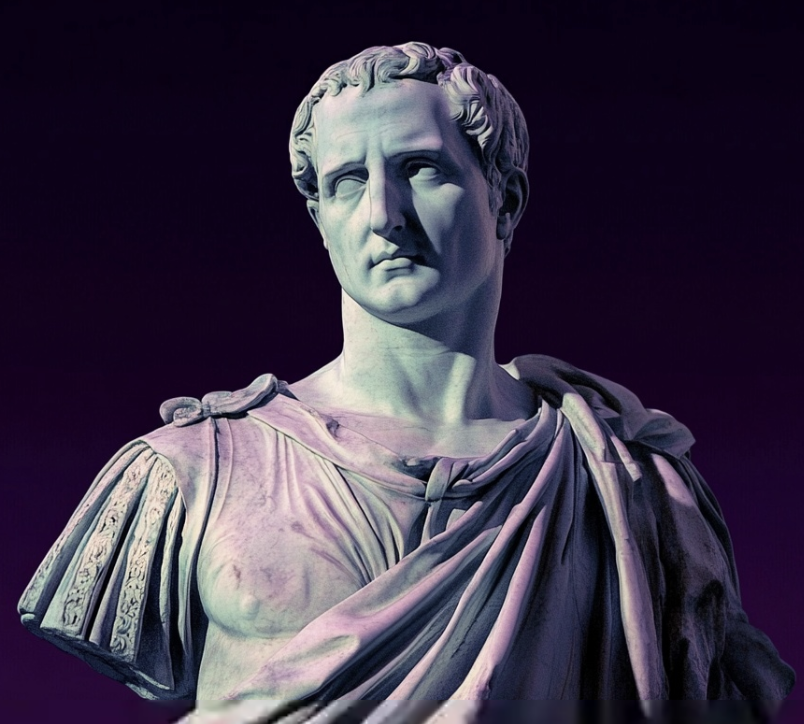
I am a Roman citizen.
▼
Source
source
Against Verres [In Verrem], part 2, book 5, section 57; reported in Cicero, The Verrine Orations, trans. L. H. G. Greenwood (1935), vol. 2, p. 629
1 month 2 weeks ago
We are not born free, nor do we come into this world with a self-identity and autonomy of our own. We achieve those things, through the conflict and cooperation that weave us into the social fabric.
▼
Source
source
Where We Are: The State of Britain Now
2 months 2 weeks ago
All religions, with their gods, their demigods, and their prophets, their messiahs and their saints, were created by the credulous fancy of men who had not attained the full development and full possession of their faculties. Consequently, the religious heaven is nothing but a mirage in which man, exalted by ignorance and faith, discovers his own image, but enlarged and reversed - that is, divinized. The history of religion, of the birth, grandeur, and decline of the gods who have succeeded one another in human belief, is nothing, therefore, but the development of the collective intelligence and conscience of mankind.
1 month 2 weeks ago
There has been progress in design, but not progress in accomplishment.
▼
Source
source
Chapter 7 "Constructive Evolution" (p. 186)

3 months 2 weeks ago
If the only alternative to fascism we produce is a corporate-driven, milquetoast, neoliberal Democratic Party, fascism will come to America. Let us be very clear. It's like a Weimar America.
▼
Source
source
Speaking to Chris Hedges on The Real News Network, Cornel West's presidential candidacy is 'for the least of these'. June 16, 2023.
3 months 3 weeks ago
Dissimulation is innate in woman, and almost as much a quality of the stupid as of the clever.
▼
Source
source
"Of Women"
1 day ago
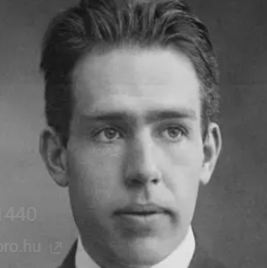
Never express yourself more clearly than you are able to think.
▼
Source
source
As quoted in Values of the Wise : Humanity's Highest Aspirations (2004) by Jason Merchey, p. 63
2 months 1 week ago
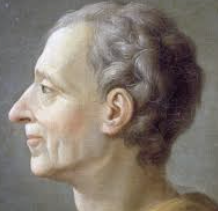
Of all kind of authors there are none I despise more than compilers, who search every where for shreds of other men's works, which they join to their own, like so many pieces of green turf in a garden: they are not at all superior to compositors in a printing house, who range the types, which, collected together, make a book, towards which they contribute nothing but the labours of the hand. I would have original writers respected, and it seems to me a kind of profanation to take those pieces from the sanctuary in which they reside, and to expose them to a contempt they do not deserve. When a man hath nothing new to say, why does not he hold his tongue? What business have we with this double employment?"
▼
Source
source
No. 66.
2 months 2 weeks ago
Fear is the antidote to boredom: the remedy must be stronger than the disease.
2 months 3 weeks ago
Pour recueillir les biens inestimables qu'assure la liberté de la presse, il faut savoir se soumettre aux maux inévitables qu'elle fait naître. Translation: In order to enjoy the inestimable benefits that the liberty of the press ensures, it is necessary to submit to the inevitable evils it creates.
▼
Source
source
Chapter XI.
2 weeks 1 day ago
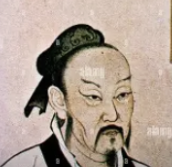
He who exerts his mind to the utmost knows his nature.
▼
Source
source
7A:1, as translated by Wing-tsit Chan in A Source Book in Chinese Philosophy (1963), p. 62

3 months 3 weeks ago
The truth remains that, after adolescence has begun, "words, words, words," must constitute a large part, and an always larger part as life advances, of what the human being has to learn.
▼
Source
source
"The Acquisition of Ideas"

2 months 2 weeks ago
The ordinary logic has a great deal to say about genera and species, or in our nineteeth century dialect, about classes. Now a class is a set of objects comprising all that stand to one another in a special relation of similarity. But where ordinary logic talks of classes the logic of relatives talks of systems. A system is a set of objects comprising all that stands to one another in a group of connected relations. Induction according to ordinary logic rises from the contemplation of a sample of a class to that of a whole class; but according to the logic of relatives it rises from the comtemplation of a fragment of a system to the envisagement of the complete system.
▼
Source
source
Vol. IV, par. 5
3 months 1 week ago
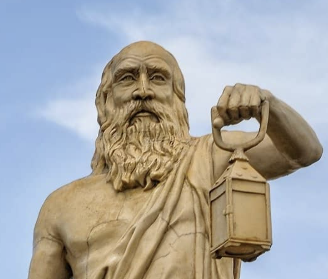
He lit a lamp in broad daylight and said, as he went about, "I am looking for a human."
▼
Source
source
Diogenes Laërtius, vi. 41. This line is frequently translated as "I am looking for an honest man."

4 months 1 week ago
So far as it goes, a small thing may give an analogy of great things, and show the tracks of knowledge.
▼
Source
source
Book II, lines 123-124 (tr. Rouse)
2 months 1 week ago
In old days the plastic arts, music, and poesy were so germane to man in his totality that his Transcendence plainly manifest in them. ... What is to-day obvious to all is a decay in the essence of art. ... the opposition to man's true nature as man.
2 months ago
If the importance of science does not lie in its constituting the whole of human knowledge, even less does it lie, in my view, in its technological applications. Science at the best is a way of coming to know, and hopefully a way of acquiring some reverence for, the wonders of nature. The philosophical study of science, at the best, has always been a way of coming to understand both some of the nature and some of the limitations of human reason. These seem to me to be sufficient grounds for taking science and philosophy of science seriously; they do not justify science worship.
▼
Source
source
"Introduction: Science as approximation to truth"

4 months 2 weeks ago
Knowing that certain nights whose sweetness lingers will keep returning to the earth and sea after we are gone, yes, this helps us to die.
4 months 1 week ago
In matters that are so obscure and far beyond our vision, we find in Holy Scripture passages which can be interpreted in very different ways without prejudice to the faith we have received. In such cases, we should not rush in headlong and so firmly take our stand on one side that, if further progress in the search for truth justly undermines this position, we too fall with it.
▼
Source
source
I, xviii, 37. Modern translation by J.H. Taylor
4 months 3 weeks ago
But it is clear there is a difference in the ends proposed: for in some cases they are activities, and in others results beyond the mere activities, and where there are certain ends beyond and beside the actions, the results are naturally superior to the activities. Now, as there are numerous kinds of actions and numerous arts and sciences, it follows that the ends are also various. Thus the end of the healing art is health, of ship-building ships, of strategy victory, of economy wealth.
4 months 1 week ago
The superfluities of the rich are the necessaries of the poor. They who possess superfluities, possess the goods of others.
▼
Source
source
Patrologia Latina, vol. 37, p. 1922
2 months 2 weeks ago
Man has ever expressed some symbolical Philosophy of his Being in his Works and Conduct; he announces himself and his Gospel of Nature; he is the Messiah of Nature.
3 months 3 weeks ago
We live together, we act on, and react to, one another; but always and in all circumstances we are by ourselves. The martyrs go hand in hand into the arena; they are crucified alone. Embraced, the lovers desperately try to fuse their insulated ecstacies into a single self-transcendence; in vain. By its very nature every embodied spirit is doomed to suffer and enjoy in solitude.
▼
Source
source
Page 159
1 month 2 days ago
God may not play dice but he enjoys a good round of Trivial Pursuit every now and again.
▼
Source
source
"God"
2 months 3 weeks ago
The territorial aristocracy of former ages was either bound by law, or thought itself bound by usage, to come to the relief of its serving-men and to relieve their distresses. But the manufacturing aristocracy of our age first impoverishes and debases the men who serve it and then abandons them to be supported by the charity of the public.
▼
Source
source
Book Two, Chapter XX.

2 months 3 weeks ago
By adverting to the dignity of this high calling our ancestors have turned a savage wilderness into a glorious empire: and have made the most extensive, and the only honorable conquests, not by destroying, but by promoting the wealth, the number, the happiness of the human race.

2 months 2 weeks ago
And be sure of this: I am with you always, even to the end of the age.
▼
Source
source
Jesus in Matthew 28:20
3 days ago
The most profound reason... why the metropolis conduces to the urge for the most individual personal existence... appears to me to be the following: the development of modern culture is characterized by the preponderance of what one may call the "objective spirit" over the "subjective spirit."
▼
Source
source
p. 421 as cited in: Kenneth Allan (2009) Explorations in Classical Sociological Theory: Seeing the Social World. p. 212

3 months 3 weeks ago
Nothing makes the earth seem so spacious as to have friends at a distance; they make the latitudes and longitudes.
▼
Source
source
Pearls of Thought (1881) p. 95

3 months 3 weeks ago
I have learned to seek my happiness by limiting my desires, rather than in attempting to satisfy them.
▼
Source
source
Attributed to John Stuart Mill in The Phrenological Journal and Science of Health, Vol. LXXXV (September 1887), p. 170
3 months 3 weeks ago
That power should be exercised over any portion of mankind without any obligation of consulting them, is only tolerable while they are in an infantine, or a semi-barbarous state. In any civilized condition, power ought never to be exempt from the necessity of appealing to the reason, and recommending itself by motives which justify it to the conscience and feelings, of the governed.
▼
Source
source
Thoughts on Parliamentary Reform (1859), p. 24
CivilSimian.com created by AxiomaticPanic, CivilSimian, Kalokagathia