

2 months 3 days ago
What are novels? What is the secret of the charm of every romance that ever was written? The first thing in a good novel is to place the persons together in circumstances which naturally call out the high feelings and thoughts of the character, which afford food for sympathy between them on these points - romantic events they are called. The second is that the heroine has generally no family ties (almost invariably no mother), or, if she has, these do not interfere with her entire independence. These two things constitute the main charm of reading novels.

4 months 3 weeks ago
The liar is a person who uses the valid designations, the words, in order to make something which is unreal appear to be real. He says, for example, "I am rich," when the proper designation for his condition would be "poor." He misuses fixed conventions by means of arbitrary substitutions or even reversals of names. If he does this in a selfish and moreover harmful manner, society will cease to trust him and will thereby exclude him. What men avoid by excluding the liar is not so much being defrauded as it is being harmed by means of fraud. Thus, even at this stage, what they hate is basically not deception itself, but rather the unpleasant, hated consequences of certain sorts of deception. It is in a similarly restricted sense that man now wants nothing but truth: he desires the pleasant, life-preserving consequences of truth. He is indifferent toward pure knowledge which has no consequences; toward those truths which are possibly harmful and destructive he is even hostilely inclined.
3 months 1 week ago
As money grows, care follows it and the hunger for more.
▼
Source
source
Book III, ode xvi, line 17

4 months 1 day ago
The obliteration of the evil hath been practised by two means, some kind of redemption or expiation of that which is past, and an inception or account de novo for the time to come. But this part seemeth sacred and religious, and justly; for all good moral philosophy (as was said) is but a handmaid to religion.
▼
Source
source
Book II, xxii, 14

3 months 3 weeks ago
There was once a millionaire who bought an infinite number of pairs of shoes and, whenever he bought a pair of shoes, he also bought a pair of socks. We can make a selection choosing one out of each pair of shoes, because we can choose always the right shoe or always the left shoe. Thus, so far as the shoes are concerned, selections exist. But, as regards the socks, where there is no distinction of right and left, we cannot use this rule of selection.
▼
Source
source
pp. 93-93

2 months 3 weeks ago
Brothers, love is a teacher; but one must know how to acquire it, for it is hard to acquire, it is dearly bought, it is won slowly by long labour. For we must love not only occasionally, for a moment, but for ever. Everyone can love occasionally, even the wicked can.
▼
Source
source
Book VI, Chapter 3: Conversations and Exhortations of Father Zossima
Just now
Such religion as there can be in modern life, every individual will have to salvage from the churches for himself.
▼
Source
source
p. 397

2 weeks 3 days ago
The capitalist call workers to the factory, for example, directing them to collaborate and communicate in production and giving them the means to do so. In the paradigm of immaterial production, in contrast, labor itself tends to produce the means of interaction, communication, and cooperation for production directly. Affective labor always directly constructs a relationship.
▼
Source
source
147

6 days ago
Treat your inferiors as you would be treated by your betters.
▼
Source
source
Line 11 This can be related to other expressions on the ethics of reciprocity, often referred to as the variants of the Golden Rule.
1 month 4 weeks ago
To conclude: there are two well-known minor ways in which language has mattered to philosophy. On the one hand there is a belief that if only we produce good definitions, often marking out different senses of words that are confused in common speech, we will avoid the conceptual traps that ensnared our forefathers. On the other hand is a belief that if only we attend sufficiently closely to our mother tongue and make explicit the distinctions there implicit, we shall avoid the conceptual traps. One or the other of these curiously contrary beliefs may nowadays be most often thought of as an answer to the question Why does language matter to philosophy? Neither seems to me enough.
▼
Source
source
Ian Hacking (1975), Why Does Language Matter to Philosophy?, p. 7.
3 months 3 weeks ago
If any philosopher had been asked for a definition of infinity, he might have produced some unintelligible rigmarole, but he would certainly not have been able to give a definition that had any meaning at all.
▼
Source
source
Ch. 5: Mathematics and the Metaphysicians

4 months 1 week ago
Perfect is the virtue which is according to the Mean! Rare have they long been among the people, who could practice it!

2 months 2 weeks ago
Can it really be that for us existence means exile, and nothingness, home?

3 months 2 weeks ago
I do not believe in what is often called... 'exact terminology'... [or] in definitions... [they] do not... add to exactness... I especially dislike pretentious terminology and... pseudo-exactness concerned with it.

3 months 3 weeks ago
My form remains one, though the matter in it changes continually. I am, in that respect, like a curve in a waterfall.
▼
Source
source
Ch. 16: "Miracles of the New Creation"
2 months 5 days ago
Whatever is merely positive is lifeless. Negativity is essential to vitality.
3 months 2 weeks ago
In brief, it is my thesis that human misery is the most urgent problem of a rational public policy and that happiness is not such a problem.
▼
Source
source
p. 485

3 months 3 weeks ago
Solvency is maintained by means of the national debt, on the principle, "If you will not lend me the money, how can I pay you?"
▼
Source
source
Ability
2 months 1 week ago
Philosophy ... must not bargain away anything of the emphatic concept of truth.
▼
Source
source
p. 7
3 months 3 weeks ago
Shallow men believe in luck.
▼
Source
source
Worship
1 week ago
When people were committed to the idea that in the field of religion only one plan must be adopted, bloody wars resulted. With the acknowledgment of the principle of religious freedom these wars ceased. The market economy safeguards peaceful economic co-operation because it does not use force upon the economic plans of the citizens. If one master plan is to be substituted for the plans of each citizen, endless fighting must emerge. Those who disagree with the dictator's plan have no other means to carry on than to defeat the despot by force of arms.
3 months 3 weeks ago
I am to talk about Apologetics. Apologetics means of course Defence. The first question is - what do you propose to defend? Christianity, of course...
▼
Source
source
"Christian Apologetics" (1945), p. 89
6 days ago
It is disgraceful, instead of proceeding ahead, to be carried along, and then suddenly, amid the whirlpool of events, to ask in a dazed way: "How did I get into this condition?"
4 months 3 weeks ago
Music directly represents the passion of the soul. If one listens to the wrong kind of music, he will become the wrong kind of person.

4 months 6 days ago
For no fact is so simple we believe it at first sight, And there is nothing that exists so great or marvellous That over time mankind does not admire it less and less.
▼
Source
source
Book II, lines 1026-1029 (tr. Stallings)
3 months 5 days ago
The Pythagoreans made kindness to beasts a training in humanity and pity.
▼
Source
source
3, 20, 7

2 months 3 weeks ago
It is reconciled in policy; and politics ought to be adjusted, not to human reasonings, but to human nature; of which the reason is but a part; and by no means the greatest part.
▼
Source
source
Observations on a Late Publication on the Present State of the Nation (1769), page 78

3 months 3 weeks ago
Morality is not properly the doctrine of how we may make ourselves happy, but how we may make ourselves worthy of happiness.

4 months 2 weeks ago
Self-education is, I firmly believe, the only kind of education there is.
Just now
I truly cannot say what the person who still has hope for man should think of the imminence of quasi-apocalyptic destruction. It would certainly force many to face the existential problem in all its nakedness, and subject them to extreme trials; but is this a worse evil than that of mankind's safe, secure, satisfied, and total consignment to the kind of happiness that befits Nietzsche's "last man": a comfortable consumer civilization of socialized human animals, aided by all the discoveries of science and industry and reproducing demographically in a squirming, catastrophic crescendo?
▼
Source
source
p. 140
3 months 3 weeks ago
I like mathematics because it is not human and has nothing particular to do with this planet or with the whole accidental universe - because, like Spinoza's God, it won't love us in return.
▼
Source
source
Letter to Lady Ottoline Morrell, March, 1912, as quoted in Gaither's Dictionary of Scientific Quotations (2012), p. 1318
2 days ago
Cities are, first of all, seats of the highest economic division of labor. They produce thereby such extreme phenomena as in Paris the remunerative occupation of the quatorzième. They are persons who identify themselves by signs on their residences and who are ready at the dinner hour in correct attire, so that they can be quickly called upon if a dinner party should consist of thirteen persons. In the measure of its expansion, the city offers more and more the decisive conditions of the division of labor. It offers a circle which through its size can absorb a highly diverse variety of services.
▼
Source
source
p. 420
3 months 3 weeks ago
But you must see that if two things are alike, then it is a further question whether the first is copied from the second, or the second from the first, or both from a third.''What would the third be?''Some have thought that all these loves were copies of our love for the Landlord.'
▼
Source
source
Pilgrim's Regress 59
2 months 2 weeks ago
The feeling of being ten thousand years behind, or ahead, of the others, of belonging to the beginnings or to the end of humanity...

3 months 3 weeks ago
On the death of a friend, we should consider that the fates through confidence have devolved on us the task of a double living, that we have henceforth to fulfill the promise of our friend's life also, in our own, to the world.
▼
Source
source
February 28, 1840
1 week 5 days ago
The subject of a gestalt demonstration knows that his perception has shifted because he can make it shift back and forth repeatedly while he holds the same book or piece of paper in his hands. Aware that nothing in his environment has changed, he directs his attention increasingly not to the figure (duck or rabbit) but to the lines of the paper he is looking at. Ultimately he may even learn to see those lines without seeing either of the figures, and he may then say (what he could not legitimately have said earlier) that it is these lines that he really sees but that he sees them alternately as a duck and as a rabbit. ...As in all similar psychological experiments, the effectiveness of the demonstration depends upon its being analyzable in this way. Unless there were an external standard with respect to which a switch of vision could be demonstrated, no conclusion about alternate perceptual possibilities could be drawn. p. 114 (3rd edn.)
2 months ago
Decision making processes are aimed at finding courses of action that are feasible or satisfactory in the light of multiple goals and constraints.
▼
Source
source
p. 274.

2 months 2 weeks ago
Every plant, which my heavenly Father hath not planted, shall be rooted up. Let them alone: they be blind leaders of the blind. And if the blind lead the blind, both shall fall into the ditch.
▼
Source
source
15:13-14 (KJV)

1 week 6 days ago
Our grand business undoubtedly is, not to see what lies dimly at a distance, but to do what lies clearly at hand.
3 days ago
When in the spring the withered gray of the pastures gives place to green, this is due to the millions of young shoots which sprout up freshly from the old roots. In like manner the revival of thought which is essential for our time can only come through a transformation of the opinions and ideals of the many brought about by individual and universal reflection about the meaning of life and of the world.
▼
Source
source
p. 10
2 months 1 week ago
The notion that one can discover large patterns or regularities in the procession of historical events is naturally attractive to those who are impressed by the success of the natural sciences in classifying, correlating, and above all predicting.

3 months 4 weeks ago
I live from day to day, and content myself with having enough to meet my present and ordinary needs; for the extraordinary, all the provision in the world could not suffice.
▼
Source
source
Ch. 14
2 weeks 4 days ago
The totalitarian states, whether of the fascist or the communist persuasion, are more than superficially alike as dictatorships, in the suppression of dissent, and in operating planned and directed economies. They are profoundly alike.
▼
Source
source
Ch. V: "The Totalitarian Regimes", §7, p. 89
3 months 4 weeks ago
A man of understanding has lost nothing, if he has himself.
▼
Source
source
Ch. 39

4 months 3 weeks ago
It is as useless for a person to want first of all to decide the externals and after that the fundamentals as it is for a cosmic body, thinking to form itself, first of all to decide the nature of its surface, to what bodies it should turn its light, which its dark side, without first letting the harmony of centrifugal and centripetal forces realize its existence and letting the rest come of itself. One must learn to know oneself before knowing anything else (gnothi seauton). Not until a person has inwardly understood himself and then sees the course he is to take does his life gain peace and meaning.


2 months 1 week ago
Were art to redeem man, it could do so only by saving him from the seriousness of life and restoring him to an unexpected boyishness. The symbol of art is seen again in the magic flute of the Great God Pan which makes the young goats frisk at the edge of the grove. All modern art begins to appear comprehensible and in a way great when it is interpreted as an attempt to instill youthfulness into an ancient world.
▼
Source
source
"Art a Thing of No Consequence"
1 month 2 weeks ago
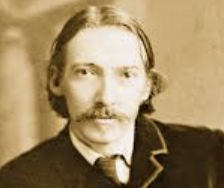
It is as natural and as right for a young man to be imprudent and exaggerated, to live in swoops and circles, and beat about his cage like any other wild thing newly captured, as it is for old men to turn gray, or mothers to love their offspring, or heroes to die for something worthier than their lives.
▼
Source
source
Crabbed Age and Youth.

2 months 1 week ago
But if ether is nothing but an hypothesis explanatory of light, air on the other hand, is a thing that is directly felt; and even if it did not enable us to explain the phenomenon of sound, we should nevertheless always be directly aware of it, and above all, of the lack of it in moments of suffocation or air-hunger. And in the same way God Himself, not the idea of God, may become a reality that is immediately felt; and even though the idea of God does not enable us to explain either the existence or essence of the Universe, we have at times the direct feeling of God, above all in moments of spiritual suffocation. And the feeling, mark it well, for all that is tragic in it and the whole tragic sense of life is founded upon this - this feeling is a feeling of hunger for God, of the lack of God. To believe in God is, in the first instance... to wish that there may be a God, to be unable to live without Him.

1 month 2 weeks ago
The population of the US is nearly 300 million, including many of the best educated, most talented, most resourceful, humane people on earth. By almost any measure of civilised attainment, from Nobel prize-counts on down, the US leads the world by miles. You would think that a country with such resources, and such a field of talent, would be able to elect a leader of the highest quality. Yet, what has happened? At the end of all the primaries and party caucuses, the speeches and the televised debates, after a year or more of non-stop electioneering bustle, who, out of that entire population of 300 million, emerges at the top of the heap? George Bush.
▼
Source
source
"Bin Laden's victory " The Guardian
CivilSimian.com created by AxiomaticPanic, CivilSimian, Kalokagathia