

3 weeks ago
Of course, not everything old is beautiful, any more than everything black, or everything white, or everything young. But the notion that old means ugly is every bit as harmful as the prejudice that black is ugly. In one way it is even more pernicious. The notion that only what is new and young is beautiful poisons our relationship to the past and to our own future. It keeps us from understanding our roots and the greatest works of our culture and other cultures. It also makes us dread what lies ahead of us and leads many to shirk reality.
▼
Source
source
Time is an Artist (1978) Epilogue : Old is Beautiful

1 month 3 weeks ago
To say that the activity of science and art helps humanity's progress, if by that activity we mean the activity which now calls itself by those names, is as though one said that the clumsy, obstructive splashing of oars in a boat moving down stream assists the boat's progress. It only hinders it... The proof of this is seen in the confession made by men of science that the achievements of the arts and sciences are inaccessible to the labouring masses on account of the unequal distribution of wealth.

3 months 3 weeks ago
We later learned that all the nineteen passengers in the non-smoking compartment had been killed. When the plane had hit the water a hole had been made in the plane and the water had rushed in. I had told a friend at Oslo who was finding me a place that he must find me a place where I could smoke, remarking jocularly, 'If I cannot smoke, I shall die'. Unexpectedly, this turned out to be true.

3 months 3 weeks ago
Truth, Goodness, Beauty - those celestial thrins,Continually are born; e'en now the Universe,With thousand throats, and eke with greener smiles,Its joy confesses at their recent birth.
▼
Source
source
June 14, 1838
3 months 1 week ago
I think of the course of human history as a long, swelling, increasingly polyphonic poem - a poem that leads up to nothing save itself. When the species is extinct, "human nature's total message" will not be a set of propositions, but a set of vocabularies - the more, and the more various, the better.
▼
Source
source
Response to Hartshorne in 'Rorty and Pragmatism, The Philosopher Responds to his Critics', p. 33
3 months 3 weeks ago
In man (as the only rational creature on earth) those natural capacities which are directed to the use of his reason are to be fully developed only in the race, not in the individual.
▼
Source
source
Second Thesis
3 months 3 weeks ago
Either Man will abolish war, or war will abolish Man.
▼
Source
source
Fact and Fiction (1961), Part IV, Ch. 10: "Can War Be Abolished?", p. 276
3 months 4 weeks ago
Fear of evil is greater than the evil itself.
▼
Source
source
Act III, scene xi
1 month 3 weeks ago
I know-as we all do-very little of the practice and the spoken and written doctrine of former times on the subject of non-resistance to evil. I knew what had been said on the subject by the fathers of the Church-Origen, Tertullian, and others-I knew too of the existence of some so-called sects of Mennonites, Herrnhuters, and Quakers, who do not allow a Christian the use of weapons, and do not enter military service; but I knew little of what had been done by these so-called sects toward expounding the question.
▼
Source
source
Preface
3 months 3 weeks ago
The possession of self-conscious reason, which belongs to us of the present world, did not arise suddenly, nor did it grow only from the soil of the present. This possession must be regarded as previously present, as an inheritance, and as the result of labour - the labour of all past generations of men.
▼
Source
source
Introduction p. 2 Ibid

4 months 1 day ago
Wherever you encounter truth, look upon it as Christianity.
▼
Source
source
As quoted in Erasmus of Rotterdam (1934) by Stefan Zweig, Eden Paul, and Cedar Paul, p. 91; reprinted in Erasmus - The Right to Heresy (2008) by Stefan Zweig, p. 62

4 months 1 day ago
To God, truly, the Giver and Architect of Forms, and it may be to the angels and higher intelligences, it belongs to have an affirmative knowledge of forms immediately, and from the first contemplation. But this assuredly is more than man can do, to whom it is granted only to proceed at first by negatives, and at last to end in affirmatives, after exclusion has been exhausted.
▼
Source
source
Aphorism XV
3 months 3 weeks ago
Every parting gives a foretaste of death, every reunion a hint of the resurrection.
▼
Source
source
Vol. 2, Ch. 26, § 310, as translated by Eric F. J. Payne

3 months 2 weeks ago
It is wrong to think that belief in freedom always leads to victory; we must always be prepared for it to lead to defeat. If we choose freedom, then we must be prepared to perish along with it. Poland fought for freedom as no other country did. The Czech nation was prepared to fight for its freedom in 1938; it was not lack of courage that sealed its fate. The Hungarian Revolution of 1956 - the work of young people with nothing to lose but their chains - triumphed and then ended in failure. ... Democracy and freedom do not guarantee the millennium. No, we do not choose political freedom because it promises us this or that. We choose it because it makes possible the only dignified form of human coexistence, the only form in which we can be fully responsible for ourselves. Whether we realize its possibilities depends on all kinds of things - and above all on ourselves.

3 months 2 weeks ago
One can say that the author is an ideological product, since we represent him as the opposite of his historically real function. (When a historically given function is represented in a figure that inverts it, one has an ideological production.) The author is therefore the ideological figure by which one marks the manner in which we fear the proliferation of meaning.
▼
Source
source
What is an author?
2 months 3 weeks ago
All presentation, all demonstration-and the presentation of thought is demonstration-has, according to its original determination-and this is all that matters to us-the cognitive activity of the other person as its ultimate aim.
▼
Source
source
Z. Hanfi, trans., in The Fiery Brook (1972), p. 67
3 months 4 weeks ago
Men never do good unless necessity drives them to it; but when they are free to choose and can do just as they please, confusion and disorder become rampant.
▼
Source
source
Book 1, Ch. 3 (as translated by LJ Walker and B Crick)
1 month 1 week ago
Life cannot exist without a certain conformity to the surrounding universe - that conformity involves a certain amount of happiness in excess of pain. In short, as we live we are paid for living.
4 months 1 week ago
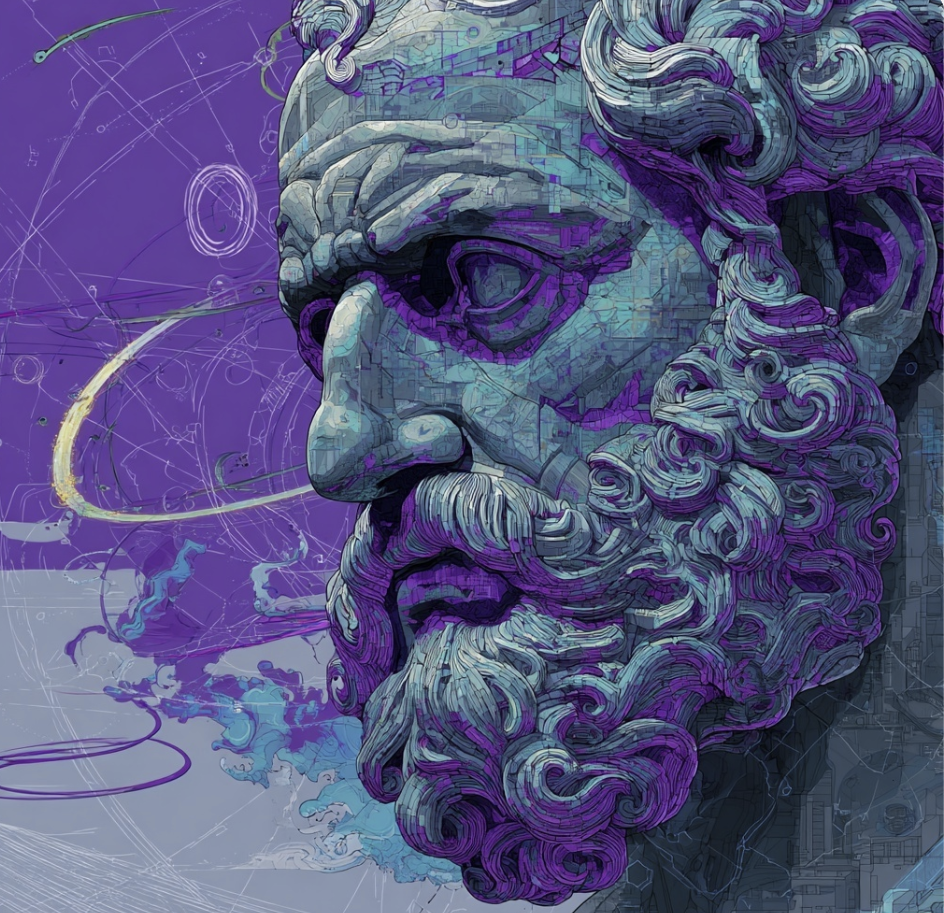
The wise is one only. It is unwilling and willing to be called by the name of Zeus.

2 months 3 weeks ago
Every pleasure raises the tide of life; every pain lowers the tide of life.
▼
Source
source
Ch. 6, The Biological View
2 months 1 week ago
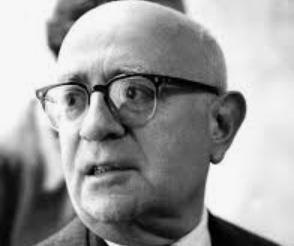
Regressive listeners behave like children. Again and again and with stubborn malice, they demand the one dish they have once been served.
▼
Source
source
p. 290

1 month ago
I'll admit, I was a naive globalist. I still believe in the ideal, but, I realize that those that hated the idea so much are the authors of the problem they see in it.
Now, I understand clearly, those that author the problem that makes globalization near impossible are also the ones who insist it will never work, nevertheless, human necessity remains a monolith and universal.

2 months 3 weeks ago
When he entered into the Whig party, he did not conceive that they pretended to any discoveries. They did not affect to be better Whigs, than those were who lived in the days in which principle was put to the test. Some of the Whigs of those days were then living. They were what the Whigs had been at the Revolution; what they had been during the reign of queen Anne; what they had been at the accession of the present royal family.
▼
Source
source
p. 409

3 months 3 weeks ago
The supreme enjoyment is in satisfaction with oneself ; it is in order to deserve this satisfaction that we are placed on earth and endowed with freedom.
▼
Source
source
As quoted in Dreamer of Democracy by James Miller and Jim Miller, p. 194.
2 months 1 week ago
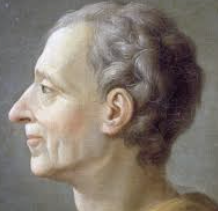
People here argue about religion interminably, but it appears that they are competing at the same time to see who can be the least devout.
▼
Source
source
No. 46. (Usbek writing to Rhedi)

3 months 3 weeks ago
Accumulate, accumulate! That is Moses and the prophets!
▼
Source
source
Vol. I, Ch. 24, Section 3, pg. 652.
1 month 1 week ago
If a well were sunk at our feet in the midst of the city of Norwich, the diggers would very soon find themselves at work in that white substance almost too soft to be called rock, with which we are all familiar as "chalk".

3 months 3 weeks ago
The word liberty in the mouth of Mr. Webster sounds like the word love in the mouth of a courtesan.
▼
Source
source
February 12, 1851; cf. the remark of John Wilkes about Samuel Johnson, "Liberty is as ridiculous in his mouth as Religion in mine" (20 March 1778), quoted in Boswell's Life of Johnson, 1791
1 month 1 day ago
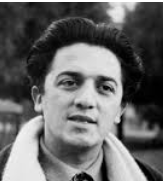
Money is everywhere but so is poetry. What we lack are the poets.
▼
Source
source
Poets
2 weeks 4 days ago
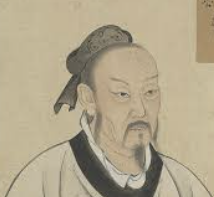
Learning proceeds until death and only then does it stop. ... Its purpose cannot be given up for even a moment. To pursue it is to be human, to give it up to be a beast.
▼
Source
source
Readings in Classical Chinese Philosophy (2001), p. 258
2 months 1 week ago
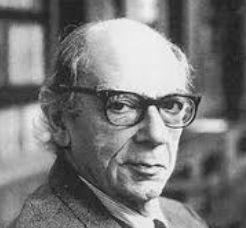
The notion that one can discover large patterns or regularities in the procession of historical events is naturally attractive to those who are impressed by the success of the natural sciences in classifying, correlating, and above all predicting.
4 months 1 day ago
For I find that even those that have sought knowledge for itself and not for benefit, or ostentation, or any practical enablement in the course of their life, have nevertheless propounded to themselves a wrong mark, namely, satisfaction, which men call truth, and not operation. For as in the courts and services of princes and states, it is a much easier matter to give satisfaction than to do the business; so in the inquiring of causes and reasons it is much easier to find out such causes as will satisfy the mind of man, and quiet objections, than such causes as will direct him and give him light to new experiences and inventions.
▼
Source
source
Valerius Terminus: Of the Interpretation of Nature (ca. 1603), in Works, Vol. 1; The Works of Francis Bacon (1857), Vol. 3, p. 232

2 months 1 week ago
No human being escapes the necessity of conceiving some good outside himself towards which his thought turns in a movement of desire, supplication, and hope. consequently, the only choice is between worshipping the true God or an idol. Every atheist is an idolater - unless he is worshipping the true God in his impersonal aspect. The majority of the pious are idolaters.
▼
Source
source
Last Notebook (1942) p. 308
3 months 3 weeks ago
The degree of one's emotion varies inversely with one's knowledge of the facts - the less you know the hotter you get.
▼
Source
source
Attributed to Russell in Distilled Wisdom (1964) by Alfred Armand Montapert, p. 145
1 month 1 week ago
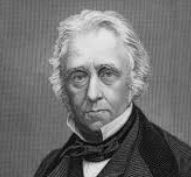
To sum up the whole, we should say that the aim of the Platonic philosophy was to exalt man into a god. The aim of the Baconian philosophy was to provide man with what he requires while he continues to be man. The aim of the Platonic philosophy was to raise us far above vulgar wants. The aim of the Baconian philosophy was to supply our vulgar wants. The former aim was noble; but the latter was attainable.
▼
Source
source
'Lord Bacon', The Edinburgh Review (July 1837), quoted in T. B. Macaulay, Critical and Historical Essays Contributed to The Edinburgh Review, Vol. II (1843), p. 395
3 months 4 weeks ago
A prudent man should always follow in the path trodden by great men and imitate those who are most excellent.
▼
Source
source
The Prince (1513), Ch. 6; translated by Luigi Ricci

3 months 3 weeks ago
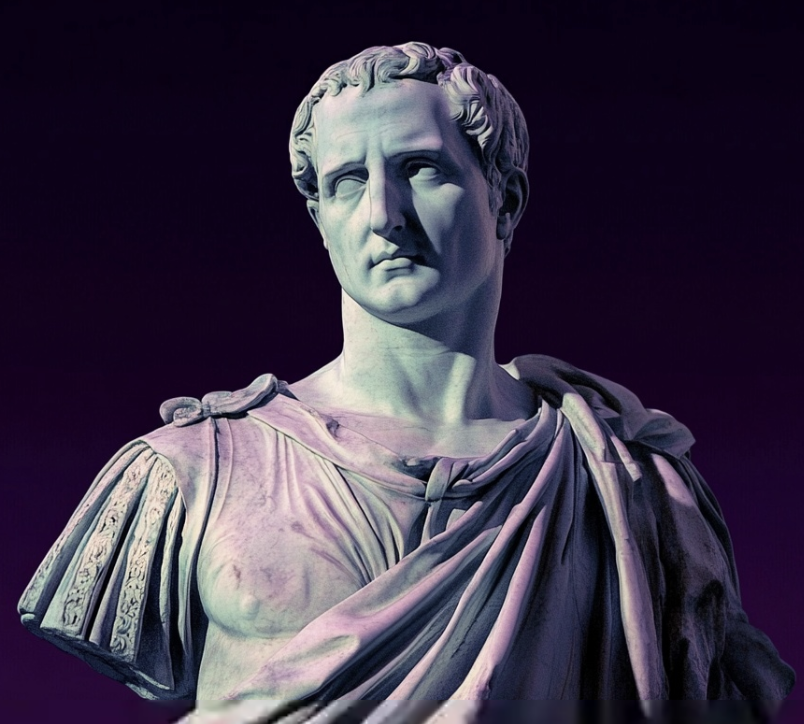
On est ce qu'on veut. A man is what he wills himself to be.
4 months 1 week ago
After death the sensation is either pleasant or there is none at all. But this should be thought on from our youth up, so that we may be indifferent to death, and without this thought no one can be in a tranquil state of mind. For it is certain that we must die, and, for aught we know, this very day. Therefore, since death threatens every hour, how can he who fears it have any steadfastness of soul?
▼
Source
source
section 74

3 months 3 weeks ago
Why did it occur to anyone to believe in only one God? And conversely why did it ever occur to anyone to believe in many gods? To both these questions we must return the same answer: Because that is how the human mind happens to work. For the human mind is both diverse and simple, simultaneously many and one. We have an immediate perception of our own diversity and of that of the outside world. And at the same time we have immediate perceptions of our own oneness.
▼
Source
source
"One and Many," p. 12
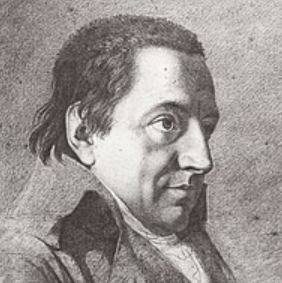
2 months 3 weeks ago
On condition that you protect my rights, I will protect your rights. How, then, does some party obtain the right to claim the protection of the other? Evidently, by actually protecting the rights of the other. But if this is so, no party will ever obtain a strictly legal claim to the protection of the other.
▼
Source
source
P. 220

3 months 3 weeks ago
There have been men before ... who got so interested in proving the existence of God that they came to care nothing for God himself... as if the good Lord had nothing to do but to exist. There have been some who were so preoccupied with spreading Christianity that they never gave a thought to Christ.
▼
Source
source
Ch. 9


1 month 2 weeks ago
Environment is process, not container.
▼
Source
source
(p. 30)
1 month 2 weeks ago
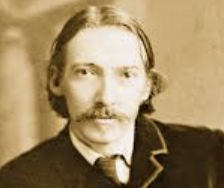
Man is a creature who lives not upon bread alone, but principally by catchwords; and the little rift between the sexes is astonishingly widened by simply teaching one set of catchwords to the girls and another to the boys.
▼
Source
source
Virginibus Puerisque, Ch. 2.

3 months 2 weeks ago
Philosophical problems can be compared to locks on safes, which can be opened by dialing a certain word or number, so that no force can open the door until just this word has been hit upon, and once it is hit upon any child can open it.
▼
Source
source
Ch. 9 : Philosophy, p. 175
2 months 3 weeks ago
What man is to be, he must become; and as he is to be a being for himself, must become through himself. Nature completed all her works; only from man did she withdraw her hands, and precisely thereby gave him over to himself. Cultivability, as such, is the character of mankind. The impossibility of subsuming to the human form any other conception than that of his own Ego, is it, which forces every man inwardly to consider every other man as his equal.
▼
Source
source
P. 119
3 months 3 weeks ago
The unity is brought about by force.
▼
Source
source
Notebook I, The Chapter on Money, p. 70.

4 months 6 days ago
Cease therefore to be dismayed by the mere novelty and so to reject reason from your mind with loathing: weigh the questions rather with keen judgment and if they seem to you to be true, surrender, or if the thing is false, gird yourself to the encounter.
▼
Source
source
Book II, lines 1040-1043 (tr. Munro)

3 months 3 weeks ago
There is but one indefectibly certain truth, and that is the truth that pyrrhonistic scepticism itself leaves standing, - the truth that the present phenomenon of consciousness exists.
▼
Source
source
The Will to Believe, 1897
CivilSimian.com created by AxiomaticPanic, CivilSimian, Kalokagathia